
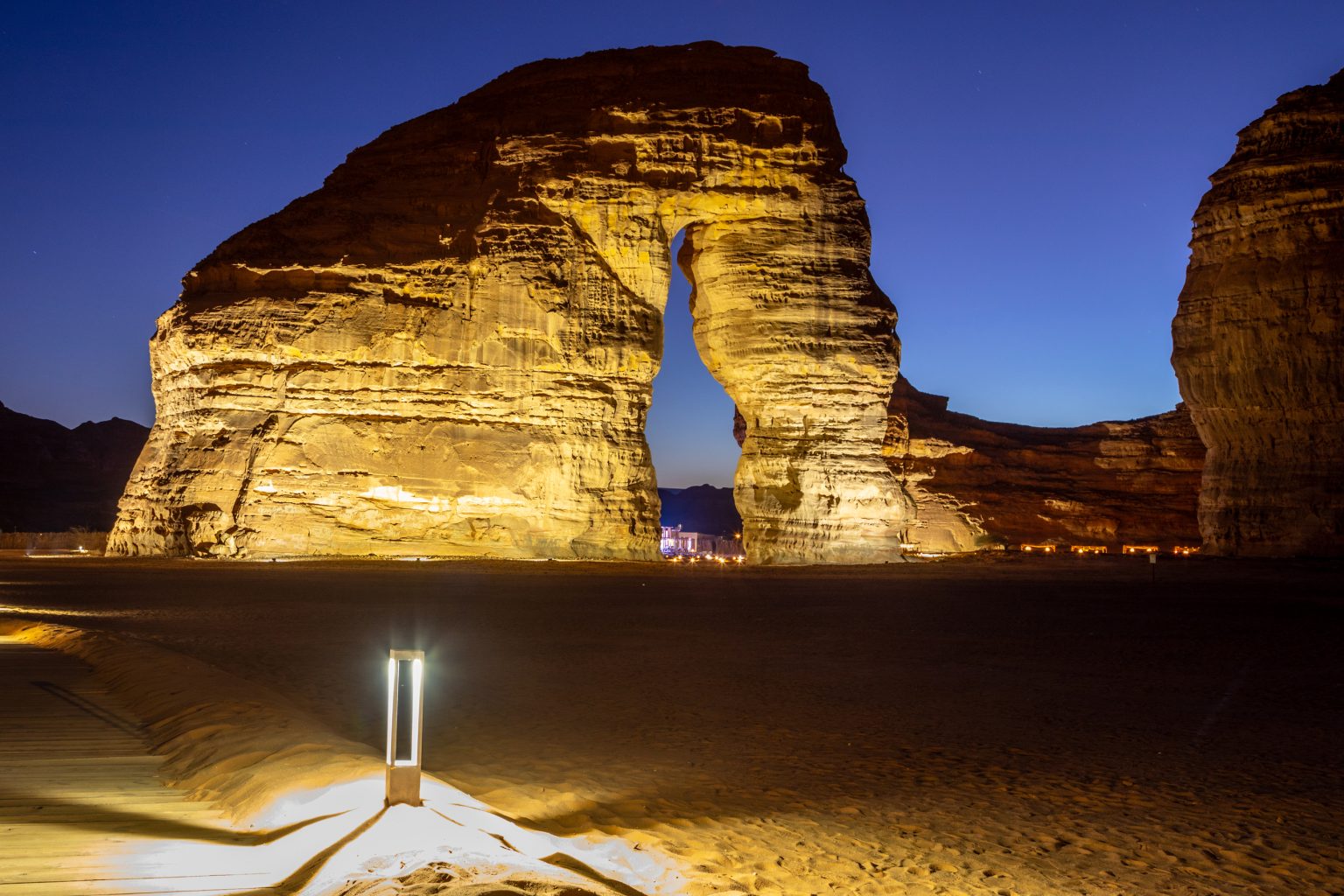
The deserts of Saudi Arabia reveal a remarkable range of landscapes, from immense sand dunes to sculpted sandstone valleys and rocky plateaus. Across the country, these environments preserve traces of ancient trade routes, archaeological settlements, and traditions shaped by life in arid conditions. The Empty Quarter and the historic landscapes of AlUla offer two very different ways to experience this diversity.
- Understanding Saudi Arabia’s Desert Landscapes
- The Empty Quarter (Rub’ al Khali)
- AlUla and Hegra (Madain Salih)
- Red Sand Dunes Near Riyadh
- The Nafud Desert and Northern Arabia
- Preparing for Your Saudi Desert Journey
- What to Know Before Visiting the Saudi Desert
- Safety Considerations in Saudi Arabia’s Desert
- Exploring the Saudi Desert
- Cultural and Historical Highlights
- Food and Comfort in the Desert
- Photography in the Saudi Desert
- Best Time to Visit the Saudi Arabian Desert
- Planning a Responsible Desert Journey
Exploring the Saudi Arabian desert requires careful preparation, cultural awareness, and respect for the environment. Whether you are planning a guided expedition into remote dunes, visiting ancient rock-cut tombs, or camping beneath clear skies, this guide covers the practical details needed for a safer and more rewarding journey.
Understanding Saudi Arabia’s Desert Landscapes
The Empty Quarter (Rub’ al Khali)
The Empty Quarter (Rub’ al Khali) is the world’s largest continuous sand desert, extending across Saudi Arabia and parts of Oman, the United Arab Emirates, and Yemen. Its immense dunes, open horizons, and remote terrain create some of the most challenging conditions for desert travel.
This region is best suited to carefully organized expeditions with experienced guides and appropriate four-wheel-drive vehicles. Visitors may experience:
- Dune landscapes: Explore vast expanses of sand shaped by wind.
- Off-road expeditions: Travel along suitable routes with experienced desert drivers.
- Desert photography: Capture the changing colours and shadows of the dunes.
- Stargazing: Enjoy the night sky far from major urban centres.
- Remote camping: Experience the desert with suitable equipment and professional support.
The Empty Quarter is not a destination for casual, unprepared driving. Long distances, limited services, and difficult terrain make reliable transport, sufficient supplies, and emergency planning essential.
AlUla and Hegra (Madain Salih)
In northwestern Saudi Arabia, AlUla offers a different desert landscape, characterized by sandstone cliffs, narrow valleys, rock formations, and archaeological sites. The area combines natural scenery with evidence of ancient communities and trade networks.
Nearby, Hegra, also known as Madain Salih, was the first site in Saudi Arabia inscribed on the UNESCO World Heritage List. It is renowned for its monumental Nabataean tombs carved into sandstone outcrops.
Visitors can explore:
- Hegra’s rock-cut tombs: Discover the architecture and inscriptions of the Nabataean civilization.
- Elephant Rock: View a distinctive natural sandstone formation.
- AlUla’s sandstone valleys: Photograph cliffs, rock formations, and desert scenery.
- Historical settlements: Learn about the area’s long history of human habitation and trade.
- Guided heritage experiences: Visit archaeological attractions through authorized tours where required.
Access to certain sites may require advance booking or an organized tour. Check current visitor arrangements before travelling, especially during busy seasons.
Red Sand Dunes Near Riyadh
Travellers staying in the capital can reach several desert areas without undertaking a long journey. Thumama and the red dunes around AlUyaynah and other areas near Riyadh offer opportunities for outdoor excursions, although access and permitted activities vary by location.
Popular activities may include:
- Guided four-wheel-drive trips.
- Sandboarding on suitable dunes.
- Short desert outings during cooler hours.
- Photography at sunrise and sunset.
- Camping in authorized locations.
Choose a reputable operator for dune driving and check whether your intended location permits camping or independent off-road activities. Proximity to Riyadh does not eliminate the risks associated with heat, soft sand, or unfamiliar terrain.
The Nafud Desert and Northern Arabia
The Nafud Desert, often called An Nafud, is known for its reddish sand, crescent-shaped dunes, and broad arid landscapes in northern Saudi Arabia. It forms part of the country’s wider desert environment and has connections to historic settlement and travel routes.
Depending on the destination, visitors may encounter:
- Extensive dune fields.
- Rocky terrain and open desert plains.
- Archaeological and historical sites.
- Opportunities for landscape photography.
- Seasonal changes in vegetation following rainfall.
The northern desert region offers a different experience from the Empty Quarter. Routes, road conditions, and available facilities vary, so plan according to the specific destination rather than treating the entire region as a single type of terrain.
Preparing for Your Saudi Desert Journey
Choosing the Right Desert Destination
Each region offers a different combination of scenery, activities, and practical requirements.
- The Empty Quarter: Best suited to organized expeditions and travellers prepared for remote conditions.
- AlUla and Hegra: Ideal for archaeology, sandstone landscapes, and guided cultural visits.
- Red dunes near Riyadh: Convenient for shorter desert excursions and selected outdoor activities.
- The Nafud Desert: Offers northern desert scenery, expansive dunes, and opportunities to explore regional heritage.
- The AlUla region and surrounding valleys: Suitable for combining natural landmarks with historical attractions.
Your choice should reflect your available time, budget, interests, and experience with outdoor travel. A short guided trip near a major city requires a different level of preparation from a multi-day expedition into remote dunes.
Cultural Awareness and Local Traditions
Desert life has played an important role in Saudi Arabia’s history. Bedouin heritage includes varied traditions associated with hospitality, poetry, camel husbandry, oral storytelling, and knowledge of the local environment.
Cultural practices differ between communities and regions, so avoid assuming that every tradition is shared in the same way throughout the country.
When visiting traditional settings:
- Dress respectfully and follow local expectations.
- Ask permission before photographing people.
- Follow the host’s guidance during cultural activities.
- Respect private property and culturally significant locations.
- Choose knowledgeable local guides where possible.
- Support local businesses and authorized tourism providers.
Approaching cultural experiences with respect allows visitors to learn about local heritage without treating traditions as a performance designed solely for tourists.
Planning and Logistics
Desert travel requires more planning than a typical journey between Saudi Arabia’s major cities. Some destinations have limited services, and remote routes may offer few opportunities to refuel or obtain supplies.
Before departure:
- Map your route and estimate realistic driving times.
- Confirm accommodation and tour arrangements.
- Check fuel availability and road conditions.
- Arrange an experienced guide for remote expeditions where appropriate or required.
- Carry sufficient water, food, and emergency supplies.
- Download maps and prepare a navigation backup.
- Share your itinerary with someone when travelling into remote areas.
Check current local regulations and travel advisories before visiting remote regions. Access restrictions may vary by location and can change.
What to Know Before Visiting the Saudi Desert
Clothing for Desert Conditions
Lightweight, breathable clothing helps manage daytime heat, while long sleeves and trousers protect against direct sunlight and blowing sand.
Useful clothing and accessories include:
- Loose-fitting, breathable shirts and trousers.
- A wide-brimmed hat or suitable head covering.
- UV-protective sunglasses.
- A scarf or shemagh for protection against sun, wind, and dust.
- Comfortable, closed footwear.
- A warm jacket or fleece for cold evenings.
- Additional layers for winter camping.
Desert temperatures can fall considerably after sunset, particularly during winter. Check the forecast for your destination and bring enough warm clothing for overnight stays.
Footwear and Personal Essentials
Footwear should match the terrain and planned activities. Walking on soft sand differs from exploring rocky valleys or archaeological sites.
Pack the following essentials:
- Sturdy walking shoes or hiking boots.
- High-SPF sunscreen.
- Lip balm and moisturizer.
- A reusable water bottle.
- A small daypack.
- A flashlight or headlamp.
- A fully charged phone and power bank.
- Offline maps or another navigation backup.
For organized tours, confirm which equipment is supplied and whether additional items are required.
Hydration and Health
Heat and physical exertion can increase the risk of dehydration, particularly during summer and on long excursions. Carry enough drinking water for the entire activity and additional supplies in case of delays.
A basic personal health kit should include:
- Personal medication.
- Bandages and antiseptic wipes.
- Appropriate pain relief.
- Any medication required for known allergies.
- Sunscreen and lip balm.
- Electrolyte replacement products when appropriate.
- Other essential first-aid supplies.
Drink water regularly and adjust your activity to the conditions. Water requirements vary with temperature, exertion, and individual needs, so a fixed quantity is not suitable for every trip.
Safety Considerations in Saudi Arabia’s Desert
Managing Extreme Heat
Summer temperatures in parts of Saudi Arabia can exceed 45°C, making strenuous outdoor activities dangerous during the hottest hours. Conditions vary by region and elevation, but heat exposure should always be considered when planning a desert visit.
For safer travel:
- Schedule strenuous activities for early morning or late afternoon.
- Drink water regularly.
- Wear sun-protective clothing.
- Rest in shade or suitable shelter.
- Avoid unnecessary physical exertion during extreme heat.
- Follow local weather warnings and guide instructions.
Watch for dizziness, nausea, headache, or unusual weakness. Confusion, collapse, or other severe symptoms may indicate a medical emergency and require urgent assistance.
Navigation and Distance Awareness
Saudi Arabia’s deserts cover extensive areas, and distances between settlements can be much greater than they appear on a map. Sand, dust, unfamiliar tracks, and poor visibility can also make navigation difficult.
In remote areas, particularly the Empty Quarter, preparation should include:
- An experienced guide and suitable vehicle.
- Adequate fuel and emergency supplies.
- A navigation system with offline maps.
- A backup communication plan where possible.
- A clear route and expected return time.
- Knowledge of local access restrictions.
Do not rely exclusively on a mobile phone or GPS device. Electronic navigation is useful, but it cannot replace route planning, suitable equipment, and local knowledge.
Sandstorms and Weather Changes
Strong winds can raise sand and dust, reducing visibility and making driving hazardous. Conditions may deteriorate quickly in exposed desert terrain.
If a sandstorm develops:
- Stop outdoor activities and follow your guide’s instructions.
- If driving, slow down safely and stop away from traffic when visibility becomes dangerously poor.
- Avoid continuing across dunes or unfamiliar tracks.
- Protect your eyes and face from blowing sand.
- Remain in suitable shelter until conditions improve.
- Follow local weather warnings and official advice.
Do not attempt to maintain a planned schedule when visibility or road conditions make travel unsafe.
Exploring the Saudi Desert
4×4 Desert Driving
A suitable four-wheel-drive vehicle is important for many deep-desert journeys, particularly on soft sand and remote tracks. However, having a 4×4 does not automatically make every route safe.
Before setting out:
- Check the vehicle’s condition and tyre pressure.
- Carry a suitable spare tyre and basic recovery equipment.
- Ensure sufficient fuel for the planned route.
- Keep drinking water and emergency supplies in the vehicle.
- Follow established and permitted tracks.
- Avoid steep dunes unless you have the appropriate training and support.
- Follow instructions from experienced local drivers.
Tyre-pressure adjustments depend on the vehicle and terrain. Follow manufacturer guidance or advice from a qualified local operator, and reinflate tyres appropriately before returning to faster, firmer roads.
For visitors without off-road experience, a guided excursion is generally the safer option.
Camel Trekking
Camel trekking offers a slower way to experience desert landscapes and learn about the historical role of camels in the Arabian Peninsula. Guided rides may be available near established tourist destinations and at selected camps.
Before booking:
- Choose an operator that prioritizes animal welfare.
- Confirm the ride’s duration and terrain.
- Follow the handler’s instructions when mounting and dismounting.
- Wear comfortable trousers and suitable footwear.
- Bring water and sun protection.
- Ask about any age or mobility requirements.
Short rides may suit many visitors, while longer treks require additional preparation and stamina. Availability and routes vary between destinations.
Camping and Desert Nights
Camping offers opportunities to experience the desert after sunset, when temperatures fall and the night sky becomes more visible away from artificial lighting.
Accommodation options may include:
- Traditional-style camps with basic facilities.
- Family-friendly camps with shared amenities.
- Organized overnight excursions with meals and equipment.
- More comfortable desert lodges in selected destinations.
Before booking, confirm what is included, such as tents, bedding, meals, toilets, and transport. If camping independently, check local regulations and use permitted locations.
For overnight stays, prepare for cold conditions and follow these precautions:
- Bring suitable sleeping equipment and warm layers.
- Keep food stored securely.
- Use fires only where explicitly permitted.
- Avoid disturbing wildlife.
- Take rubbish away or dispose of it in designated facilities.
- Respect other campers and nearby communities.
Cultural and Historical Highlights
Hegra and AlUla
Hegra, part of the AlUla region, is renowned for its monumental Nabataean tombs carved into sandstone. Its archaeological importance provides a valuable perspective on the communities that once lived and traded across the region.
Other notable attractions include:
- Elephant Rock: A natural sandstone formation shaped by erosion.
- AlUla’s sandstone valleys: Landscapes of cliffs, rock formations, and open desert.
- Hegra’s archaeological sites: Tombs and inscriptions associated with the Nabataean civilization.
- Historic settlements: Remains that illustrate the region’s long history of habitation.
Some attractions require advance reservations or guided access. Check official visitor information before travelling, and follow instructions designed to protect archaeological remains.
Bedouin Life and Traditions
Bedouin communities have diverse histories and traditions across the Arabian Peninsula. In Saudi Arabia, aspects of desert heritage remain visible through hospitality, traditional crafts, camel-related practices, poetry, and falconry.
Cultural experiences may introduce visitors to:
- Arabic coffee and dates: Common features of hospitality in many settings.
- Falconry: A practice with a long history in the region.
- Traditional crafts: Including selected forms of textile work and other handmade items.
- Poetry and oral storytelling: Cultural practices that preserve local histories and expressions.
- Camel traditions: Reflecting the animal’s historical importance for transport and livelihoods.
Practices differ across communities and settings. Choose experiences that provide accurate cultural context, and ask permission before photographing people or private activities.
Ancient Trade Routes
Saudi Arabia’s deserts formed part of historical trade and travel networks connecting settlements across the Arabian Peninsula. Oases, wells, caravan routes, and towns supported movement through otherwise challenging environments.
Visitors interested in this history can explore:
- Archaeological remains at authorized sites.
- Historic settlements and traditional buildings.
- Heritage museums and interpretation centres.
- Guided visits explaining the region’s trading history.
- Landscapes associated with ancient routes and oasis life.
Not every historical feature is open to visitors. Follow local access rules and avoid disturbing archaeological material.
Food and Comfort in the Desert
Traditional Desert Cuisine
Saudi cuisine varies by region, but rice dishes, grilled meats, bread, dates, and coffee feature in many meals and hospitality settings.
Depending on the destination and accommodation, visitors may encounter:
- Kabsa: A rice dish commonly prepared with meat or chicken and spices.
- Mandi: A rice-and-meat dish found in different regional variations.
- Grilled lamb or chicken.
- Traditional breads.
- Dates and Arabic coffee.
- Soups and other regional dishes.
Menus vary between camps, restaurants, and local communities. If you have dietary requirements, inform your operator in advance. For remote journeys, carry enough food for the planned duration and possible delays.
Staying Comfortable
Long drives, early starts, dry air, and temperature changes can make desert travel tiring. A few practical habits help maintain comfort.
- Take regular breaks.
- Keep water within easy reach.
- Wear breathable clothing during the day.
- Bring warm layers for the evening.
- Use lip balm and moisturizer if needed.
- Keep snacks in sealed containers.
- Organize your daypack so essential items are easy to access.
Allow time to rest between activities rather than filling every day with strenuous excursions.
Photography in the Saudi Desert
Best Photography Locations
Saudi Arabia offers varied subjects for desert photography, from large dunes to sandstone formations and historic sites.
Consider these locations:
- The Empty Quarter: Expansive dunes and changing sand patterns.
- Elephant Rock in AlUla: A distinctive geological formation.
- Hegra: Nabataean tombs and sandstone architecture, photographed within permitted areas.
- Red dunes near Riyadh: Suitable for capturing contrasting sand colours and shadows.
- Tabuk’s desert landscapes: Rocky terrain, sandstone formations, and open horizons.
Early morning and late afternoon often provide softer light and stronger shadows. Check site rules before using tripods or photographing protected archaeological locations.
Protecting Camera Equipment
Sand, dust, wind, and heat can damage cameras and lenses. Protective storage is especially important when travelling in open vehicles or walking across exposed terrain.
Useful precautions include:
- Carrying a protective camera bag.
- Keeping lenses covered when not in use.
- Avoiding lens changes in windy conditions.
- Bringing spare batteries and memory cards.
- Using a clean microfiber cloth.
- Keeping equipment out of direct sunlight when possible.
- Following the manufacturer’s cleaning and maintenance guidance.
When photographing people, ask permission and respect their preferences.
Best Time to Visit the Saudi Arabian Desert
Ideal Travel Season
For many destinations, November to March is a comfortable period for outdoor desert activities. Temperatures are generally milder than during the hottest months, although conditions vary between regions and elevations.
Winter nights can be cold, especially during camping trips. Bring suitable layers and check overnight forecasts before travelling.
Seasonal planning should reflect your priorities:
- Wildlife and outdoor activities: Cooler months often provide more comfortable conditions.
- Desert camping: Prepare for cold nights and changing temperatures.
- Archaeological visits in AlUla: Check opening times and seasonal visitor arrangements.
- Remote expeditions: Confirm road conditions, access rules, and the operator’s schedule.
Summer travel may still be possible for selected activities, but extreme heat can make long periods outdoors unsafe. Follow local advice and avoid strenuous excursions during the hottest hours.
Seasonal Events
The cooler season brings festivals and cultural activities to destinations including AlUla and Riyadh. Programmes and dates vary from year to year.
If you plan to attend an event:
- Check current dates and official schedules.
- Reserve accommodation early when demand is high.
- Confirm transport and access arrangements.
- Review any visitor rules or restrictions.
- Check the weather before travelling.
Do not assume that an event runs on the same dates every year.
Planning a Responsible Desert Journey
A successful trip through Saudi Arabia’s deserts depends on choosing a suitable destination, preparing for the conditions, and respecting local regulations. Underestimating distances, carrying too little water, overlooking cold nights, or entering remote terrain without appropriate support can create avoidable risks.
Before departure, make sure you have:
- Checked the forecast and route conditions.
- Confirmed accommodation and tour arrangements.
- Packed sufficient water, food, and emergency supplies.
- Prepared suitable transport and navigation equipment.
- Checked permits and access requirements where applicable.
- Learned the relevant wildlife and camping rules.
- Respected local communities and protected sites.
Responsible travel helps preserve both the natural landscapes and the cultural heritage that make these destinations distinctive.
From the Empty Quarter to AlUla’s Ancient Landscapes
The Saudi Arabian desert is not a single landscape. The immense dunes of the Empty Quarter, the sandstone formations of AlUla, the archaeological heritage of Hegra, and the red sands near Riyadh each offer a different perspective on the country’s geography and history.
The most rewarding journey begins with realistic planning, suitable guidance, and respect for the environment and local communities. By matching your itinerary to the season and terrain, you can explore Saudi Arabia’s desert regions more safely while gaining a deeper appreciation of their natural and cultural diversity.