
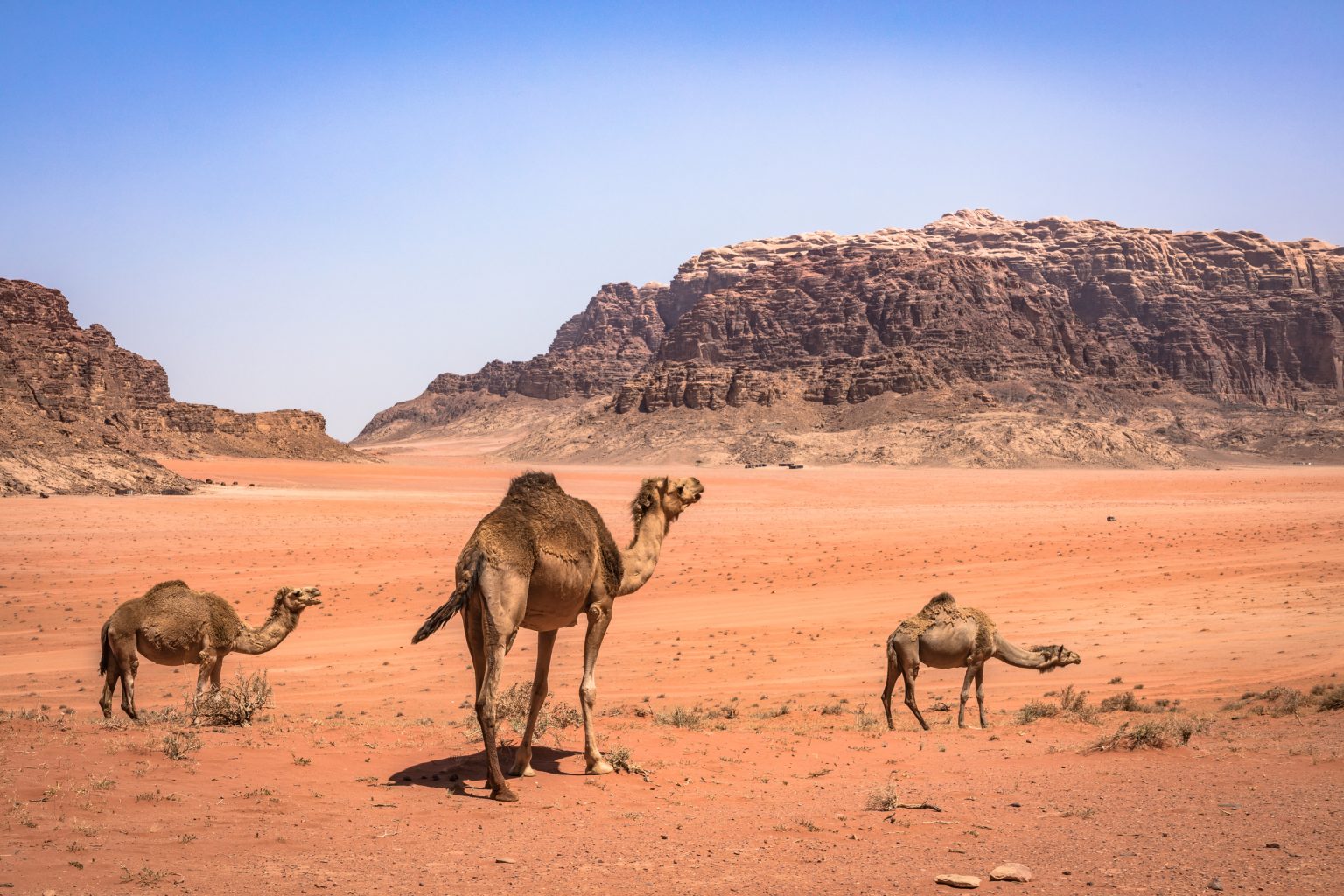
Jordan is best known for Petra and the Dead Sea, but its Jordanian desert offers a very different side of the country. From the red sandstone mountains of Wadi Rum to the basalt plains and open plateaus of the Eastern Desert, the landscape changes considerably across the country.
- What the Desert in Jordan Looks Like
- Animals That Live in the Jordanian Desert
- Desert Plants and Vegetation
- Best Places to See Plants and Animals in Jordan’s Desert
- Wadi Rum Protected Area
- Shaumari Wildlife Reserve
- Azraq Wetland Reserve
- Basalt Plains and the Eastern Desert
- Things to Do in the Jordanian Desert
- Desert Camping with Bedouin Hosts
- Camel Rides and Desert Walks
- Stargazing in Wadi Rum
- 4×4 Desert Excursions
- What Is the Best Time to Visit?
- How to Stay Safe in the Jordanian Desert
- Jordan’s Desert Landscapes and Living Heritage
The Wadi Rum desert is the most famous desert destination, but it is only part of Jordan’s dry landscapes. Foxes, gazelles, ibex, birds of prey, reptiles, and drought-resistant plants survive in these harsh environments, while Bedouin communities maintain a strong connection with the land.
What the Desert in Jordan Looks Like
Jordan’s desert contains several distinct landscapes, shaped by wind, erosion, ancient waterways, and geological activity.
Wadi Rum, often called the Valley of the Moon, is the country’s best-known desert landscape. Its sandstone mountains, narrow valleys, red and orange sands, and natural rock formations have made it a popular destination for travelers and filmmakers.
Beyond Wadi Rum, the Eastern Desert covers a large area east of Amman. Its landscape includes basalt plains, gravel deserts, dry valleys, salt-covered areas, and historic routes that once connected settlements and trading centers.
Farther south, near Aqaba, the terrain becomes more mountainous. Granite and sandstone formations create rocky habitats for reptiles, birds, and small mammals.
Jordan’s desert landscapes include:
- Red and orange sand
- Sandstone mountains
- Basalt plains
- Gravel deserts
- Rocky valleys
- Dry riverbeds
- Salt flats and seasonal wetlands
This geological variety helps explain why Jordan’s desert supports different plant and animal communities across relatively small areas.
Animals That Live in the Jordanian Desert
Jordan’s dry environments support wildlife that has adapted to heat, limited water, and seasonal food availability.
Desert Mammals and Predators
The Arabian oryx is one of Jordan’s most important conservation species. Once extinct in the wild in Jordan, it has been reintroduced through conservation programs, including efforts at the Shaumari Wildlife Reserve.
Other mammals found in Jordan’s desert regions include:
- Arabian gazelles
- Ibex
- Arabian red foxes
- Rüppell’s foxes
- Caracals
- Striped hyenas
- Arabian wolves
- Sand cats
- Jerboas
- Desert hares
Many of these animals are difficult to spot because they are nocturnal, cautious, or widely dispersed across remote terrain.
The sand cat is particularly well adapted to sandy desert environments. It is mostly active at night and can survive with limited access to surface water.
Birds of the Jordanian Desert
Jordan lies along an important migration route between Europe, Asia, and Africa, making it a rewarding destination for birdwatching.
Desert and open-country species include:
- Sand partridges
- Larks
- Wheatears
- Shrikes
- Doves
- Tristram’s starlings
Birds of prey can also be seen over rocky valleys and open plains. Eagles, hawks, kestrels, and other raptors use the landscape to search for small mammals and reptiles.
During migration periods, wetlands and wadis can attract additional species. Areas around Azraq are particularly important for migratory birds.
The Tristram’s starling is one of Jordan’s distinctive resident birds. It is strongly associated with rocky landscapes, particularly around Wadi Rum and other parts of southern Jordan.
Reptiles and Desert Insects
Jordan’s rocky and sandy deserts provide suitable habitats for many reptiles and insects.
Visitors may encounter:
- Agamas
- Geckos
- Skinks
- Horned vipers
- Sand boas
- Scorpions
- Spiders
- Ants and other insects
Most snakes and other reptiles avoid people and are more active during cooler periods. Many small desert creatures are nocturnal, leaving tracks and other signs in the sand that may disappear after wind reshapes the surface.
These smaller species are an essential part of the ecosystem, providing food for birds, reptiles, foxes, and other predators.
Desert Plants and Vegetation
Although much of Jordan’s desert appears barren, it supports a range of plants adapted to limited rainfall and poor soils.
Common desert vegetation includes:
- Acacia trees
- Tamarisk
- Saltbush
- Wormwood
- Ghada shrubs
- Seasonal grasses
- Desert wildflowers
Many desert plants reduce water loss through small leaves, deep roots, or other adaptations to dry conditions. Trees and shrubs also provide food, shade, and shelter for birds, insects, and mammals.
Around wadis and oases, vegetation can become considerably denser. Palm groves, shrubs, and seasonal plants provide important resources for wildlife, particularly after rainfall.
Following seasonal rain, some areas can produce short-lived displays of wildflowers, especially where soil and moisture conditions are favorable.
Best Places to See Plants and Animals in Jordan’s Desert
Wadi Rum Protected Area
Wadi Rum is Jordan’s best-known desert destination and an excellent place to experience its sandstone landscapes.
Depending on the season and location, visitors may encounter:
- Lizards and other reptiles
- Foxes
- Gazelles
- Ibex in suitable areas
- Birds of prey
- Desert birds
The combination of mountains, valleys, sand, and wildlife also makes Wadi Rum a popular destination for landscape photography.
Shaumari Wildlife Reserve
The Shaumari Wildlife Reserve was established as a conservation area for species that had become rare or disappeared from Jordan. Arabian oryx and gazelles are among the wildlife associated with the reserve.
It is also a practical destination for visitors interested in conservation and desert wildlife.
Azraq Wetland Reserve
The Azraq Wetland Reserve lies within the Eastern Desert and provides an important water source for wildlife and migratory birds.
Its wetlands create a striking contrast with the surrounding dry landscape and support a variety of birds, aquatic species, and desert wildlife.
Basalt Plains and the Eastern Desert
The basalt landscapes east of Amman cover a large and relatively remote part of Jordan. The region combines geological features, historic sites, dry plains, and wildlife habitats.
Foxes, gazelles, reptiles, and numerous bird species can be found in suitable areas, although wildlife sightings are often less predictable than in protected reserves.
Things to Do in the Jordanian Desert
Desert Camping with Bedouin Hosts
Camping in Wadi Rum offers an opportunity to experience the desert after sunset. Visitors can enjoy traditional food, learn about local customs, and observe the night sky away from major sources of artificial light.
Camel Rides and Desert Walks
Camel rides are a traditional way to explore parts of Wadi Rum. Guided walks can also reveal animal tracks, plants, rock formations, and archaeological features that are easy to miss when traveling by vehicle.
Stargazing in Wadi Rum
Wadi Rum is well known for its clear night skies. Away from urban areas, visitors can often see the Milky Way and a large number of stars when weather conditions are favorable.
4×4 Desert Excursions
Four-wheel-drive tours are one of the easiest ways to explore the wider Wadi Rum landscape. Routes can include narrow valleys, sand dunes, rock bridges, viewpoints, and ancient rock art sites.
What Is the Best Time to Visit?
October to April is generally a comfortable period for exploring Jordan’s desert. Daytime temperatures are more suitable for hiking, wildlife watching, and outdoor activities than during the hottest part of summer.
Winter nights can be very cold, particularly in exposed desert camps and higher areas, so warm clothing is essential.
During summer, daytime temperatures can become extremely high, especially in Wadi Rum and the Eastern Desert. Outdoor activities are better planned for early morning or late afternoon.
Rainfall is limited and irregular, but when rain does occur, vegetation can respond quickly and some animals become more active.
How to Stay Safe in the Jordanian Desert
Desert travel is safer and more enjoyable when visitors prepare properly.
- Carry sufficient drinking water.
- Use sunscreen, a hat, and protective clothing.
- Wear closed footwear in rocky and sandy areas.
- Avoid approaching or feeding wildlife.
- Do not handle snakes, insects, or unfamiliar plants.
- Follow marked routes and local regulations.
- Use an experienced Bedouin guide or licensed tour operator in remote areas.
- Use a suitable 4×4 vehicle for off-road travel.
- Carry navigation and emergency equipment on remote journeys.
- Avoid strenuous activities during the hottest part of the day.
- Bring warm clothing when camping during winter.
Wildlife should always be observed from a safe distance. In remote areas, visitors should also make sure someone knows their planned route and expected return time.
Jordan’s Desert Landscapes and Living Heritage
Jordan’s desert is much more varied than its famous red sands might suggest. Wadi Rum offers towering sandstone mountains and open valleys, while the Eastern Desert contains basalt plains, gravel landscapes, historic routes, and important wildlife habitats. Wetlands such as Azraq add another environment to the country’s dry regions.
Wildlife ranges from Arabian oryx and gazelles to foxes, sand cats, birds of prey, reptiles, and countless smaller desert species. Bedouin traditions add another important dimension, particularly around Wadi Rum, where desert travel, hospitality, camel riding, and traditional knowledge remain closely connected to the landscape.
Exploring Jordan’s desert can therefore involve much more than visiting a famous viewpoint. From wildlife reserves and wetlands to sandstone valleys, desert camps, and starlit nights, the region offers a varied experience shaped by geology, wildlife, and human life.