
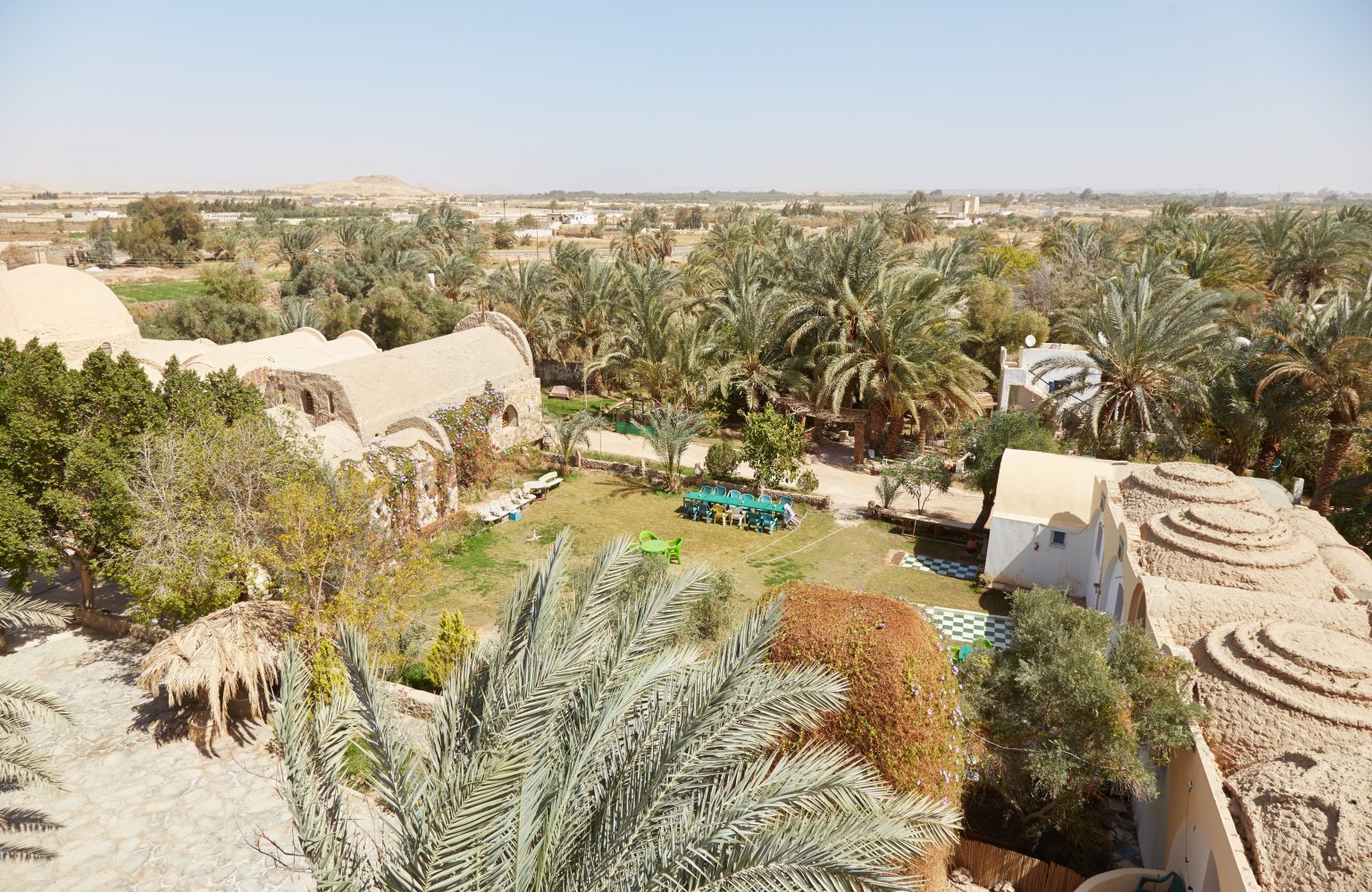
More than 90% of Egypt is desert, yet the country is often associated with its ancient temples, tombs, and the Nile Valley. Beyond these famous landmarks, the Egyptian desert covers a vast area of dunes, rocky plateaus, mountain valleys, oases, and salt lakes. From the Western Desert of Egypt to the Eastern Desert and Sinai, these landscapes support wildlife and plant species adapted to extreme conditions.
- Desert Landscapes of Egypt
- The Western Desert: Dunes, Oases, and Limestone Landscapes
- The Eastern Desert: Mountains Between the Nile and Red Sea
- Sinai: Mountains, Valleys, and Desert Ecosystems
- Animals That Live in Egypt’s Desert
- Desert Plants and the Life of Egypt’s Oases
- Where to Find Nature in Egypt’s Desert
- Ways to Experience Egypt’s Desert Nature
- Weather and the Best Time to Visit
- Staying Safe in Egypt’s Desert
- Exploring Egypt Beyond the Nile Valley
The Great Sand Sea, the White Desert, the Black Desert, and the oases around Siwa and Dakhla are among the country’s most distinctive natural areas. Together, they show how wind, water, geology, and human settlement have shaped Egypt’s desert environments over thousands of years.
Desert Landscapes of Egypt
Egypt’s desert can be broadly divided into three major regions: the Western Desert, the Eastern Desert, and the deserts of Sinai. Each has different geology, terrain, vegetation, and wildlife.
The Western Desert: Dunes, Oases, and Limestone Landscapes
The Western Desert covers most of Egypt’s land area and contains some of the country’s best-known desert attractions.
From Siwa, travelers can reach the edge of the Great Sand Sea, an extensive region of dunes extending toward the Libyan border. Farther east, the Black Desert is characterized by dark volcanic hills and rocky ground, while the White Desert is known for its pale chalk formations shaped by wind erosion.
The Western Desert also contains several major oases, including:
- Siwa Oasis, known for date palms, olive groves, salt lakes, and traditional settlements.
- Bahariya Oasis, a gateway to the Black and White Deserts.
- Farafra Oasis, located close to the White Desert.
- Dakhla Oasis, with agricultural areas, historic settlements, and desert landscapes.
- Kharga Oasis, one of the largest oases in Egypt.
These oases create pockets of vegetation and water within an otherwise extremely dry environment.
The Eastern Desert: Mountains Between the Nile and Red Sea
The Eastern Desert stretches between the Nile Valley and the Red Sea. Unlike the dune-dominated landscapes of parts of the Western Desert, it is characterized by rugged mountains, rocky plateaus, dry valleys, and ancient mineral and mining routes.
The region contains numerous wadis and mountain ranges, some of which have been used since ancient times for mining, transportation, and trade. Its rocky terrain also provides habitats that differ from those found in the Western Desert.
Near the Red Sea coast, desert landscapes meet marine environments around destinations such as Hurghada and Marsa Alam.
Sinai: Mountains, Valleys, and Desert Ecosystems
The Sinai Peninsula has a distinct desert environment shaped by mountains, rocky valleys, and dry plains. Southern Sinai is particularly known for its granite peaks and rugged terrain around the St. Catherine area.
The landscape also has a strong connection with Bedouin communities, whose knowledge of local routes, water sources, plants, and seasonal conditions has developed over generations.
From the mountains of southern Sinai to the coastal areas around Nuweiba, the peninsula offers a wide range of desert habitats.
Animals That Live in Egypt’s Desert
Egypt’s deserts may appear empty at first, but a variety of mammals, birds, reptiles, and invertebrates have adapted to the region’s heat and limited water.
Mammals of the Egyptian Desert
The dromedary camel is the animal most closely associated with traditional desert travel in Egypt. With its single hump and ability to tolerate long periods with limited water, it has been used for transportation and trade for thousands of years.
Other mammals found in suitable desert habitats include:
- Rüppell’s fox, a small desert fox that feeds on rodents, insects, and other small animals.
- Dorcas gazelles, which are well adapted to dry environments and can obtain much of their water from food.
- Egyptian wildcats, although sightings are uncommon.
- Hares, which are mainly active during cooler periods.
- Jerboas, small nocturnal rodents that move quickly across sandy and gravelly terrain.
- Nubian ibex, particularly in the rocky mountains of Sinai and other suitable areas.
- Dorcas gazelles and other small desert mammals, which are most active around dawn and dusk.
Many desert animals avoid the hottest part of the day. Visitors are therefore more likely to notice tracks or signs of activity than the animals themselves.
Birds Above the Desert
Egypt is an important route for migratory birds traveling between Europe, Asia, and Africa. Desert valleys, oases, wetlands, and coastal areas provide resting and feeding sites during migration.
Birds that may be seen in desert and semi-desert environments include:
- Larks and sandgrouse, adapted to open dry habitats.
- Shrikes, which hunt insects and small animals.
- Doves, often associated with oases and settlements.
- Hoopoes and bee-eaters, particularly around areas with vegetation.
- Vultures, falcons, and eagles, which can be seen over rocky mountains and open desert.
- Warblers and other small migratory birds around oases and cultivated areas.
Wetlands and salt lakes near desert settlements can attract additional migratory species, particularly during spring and autumn.
Reptiles, Snakes, and Invertebrates
Reptiles are well adapted to Egypt’s hot and dry conditions. Lizards and geckos can be found around rocky terrain, dunes, and areas with sparse vegetation.
The Egyptian spiny-tailed lizard, commonly known as the dabb, is one of the better-known large desert lizards in the region. It feeds mainly on vegetation and is associated with arid rocky and sandy habitats.
Other desert animals include:
- Small lizards and geckos.
- Horned vipers and other desert snakes.
- Scorpions, which are mainly active at night.
- Beetles, ants, grasshoppers, and other insects.
These smaller animals form an important part of desert food webs and provide prey for birds, reptiles, and mammals.
Desert Plants and the Life of Egypt’s Oases
Egypt’s desert vegetation is sparse but highly adapted to drought, heat, saline soils, and limited rainfall. Some plants survive in open desert, while others depend on groundwater, seasonal runoff, or oasis irrigation.
The oases of Siwa, Bahariya, Dakhla, and Kharga support a much wider range of vegetation, including:
- Date palms, which are central to oasis agriculture.
- Olive trees, particularly important in Siwa.
- Fig and pomegranate trees in cultivated oasis areas.
- Herbs and other agricultural plants grown where irrigation is available.
- Tamarisk, which tolerates dry and saline conditions.
- Acacia trees, particularly in suitable valleys and rocky desert environments.
- Salt-tolerant shrubs, which can survive in difficult soils.
Oasis vegetation provides food, shade, and shelter for birds, insects, and small mammals.
After occasional rainfall, some desert areas can briefly develop grasses and small wildflowers. These changes may be short-lived, but they can provide additional food for insects and other animals.
Where to Find Nature in Egypt’s Desert
Egypt offers several distinct desert destinations, each with its own landscape and wildlife.
White Desert
The White Desert is famous for its pale chalk and limestone formations shaped by wind erosion. Some formations resemble mushrooms, animals, or other shapes, making the area particularly popular with photographers.
Black Desert
The Black Desert near Bahariya contains dark volcanic hills and rocky terrain. The landscape becomes especially striking around sunrise and sunset, when the changing light emphasizes the contrast between the dark hills and surrounding desert.
Siwa Oasis
Siwa combines desert landscapes with palm groves, salt lakes, springs, and agricultural areas. The surrounding Great Sand Sea provides a dramatic contrast to the green oasis.
Eastern Desert
The Eastern Desert offers rugged mountains, dry valleys, and access to the Red Sea coast. Areas around Hurghada and Marsa Alam provide opportunities to explore desert terrain alongside coastal environments.
Sinai
The mountains and valleys around St. Catherine provide some of Sinai’s most distinctive desert scenery. Nuweiba and other parts of the peninsula offer additional landscapes where rocky mountains meet sandy and coastal environments.
Ways to Experience Egypt’s Desert Nature
Desert Camping
Camping in the White Desert is one of the best-known ways to experience Egypt’s desert landscapes. Clear skies can provide excellent stargazing conditions, while the surrounding chalk formations look very different under moonlight.
4×4 Desert Safaris
Guided 4×4 excursions can reach remote areas of the Western Desert, including the Great Sand Sea, Bahariya, the Black Desert, and surrounding valleys. These trips can combine wildlife observation with geology and photography.
Exploring Springs and Oases
Siwa and other oases provide a completely different desert experience. Visitors can explore palm gardens, springs, salt lakes, agricultural areas, and traditional settlements.
Hiking in Sinai’s Valleys
Guided hikes in the mountains of Sinai can introduce visitors to local geology, desert plants, wildlife tracks, and Bedouin knowledge of the landscape. Routes around St. Catherine are particularly known for their mountainous terrain.
Weather and the Best Time to Visit
The cooler months from October to April are generally the most comfortable period for exploring Egypt’s deserts. Winter offers pleasant daytime temperatures in many areas, although nights can become very cold, particularly in the Western Desert and at higher elevations in Sinai.
- October to April: Generally the most comfortable period for desert travel, hiking, camping, and wildlife observation.
- Spring and autumn: Good conditions for outdoor activities, with migratory birds also passing through Egypt.
- Summer: Extremely hot conditions, especially in exposed desert areas. Outdoor activities are best planned for early morning or late afternoon.
- After rainfall: Temporary pools and fresh vegetation can appear in some areas, although rainfall is generally limited and highly variable.
Travelers should check local weather conditions before heading into remote areas.
Staying Safe in Egypt’s Desert
Remote desert travel requires careful planning. Guided excursions are strongly recommended outside established tourist areas, particularly in the Western Desert and remote parts of Sinai.
- Carry sufficient water for the entire journey.
- Wear lightweight clothing during the day and carry warmer layers for cold desert nights.
- Use sturdy, closed footwear when walking across rocky or sandy terrain.
- Apply sunscreen and protect your head and eyes from strong sunlight.
- Avoid touching or approaching snakes, scorpions, and other wildlife.
- Travel with a licensed local guide and experienced driver in remote areas.
- Carry offline maps or GPS navigation because mobile coverage may be limited.
- Follow local access restrictions and security advice, especially in remote border and desert regions.
Wild animals should be observed from a safe distance and never fed or disturbed.
Exploring Egypt Beyond the Nile Valley
Egypt’s desert is far more varied than a landscape of sand and rocks. The Western Desert contains enormous dune fields, chalk formations, volcanic hills, and green oases, while the Eastern Desert is dominated by mountains and dry valleys. Sinai adds another environment of rugged peaks, granite valleys, and Bedouin cultural heritage.
The White Desert, the dunes around Siwa, the mountains of the Eastern Desert, and the landscapes of southern Sinai each offer a different way to experience Egypt’s dry regions. Wildlife may be difficult to spot, but tracks, birds, reptiles, and hardy plants reveal how life survives in these environments.
For travelers, Egypt’s deserts provide an opportunity to explore the country’s natural side beyond its famous archaeological sites. Oases, mountains, dunes, wildlife, and ancient routes together make the desert an important part of Egypt’s landscape and cultural heritage.