
Atacama Desert: Salt Flats, Volcanoes, Wildlife, and Starry Skies
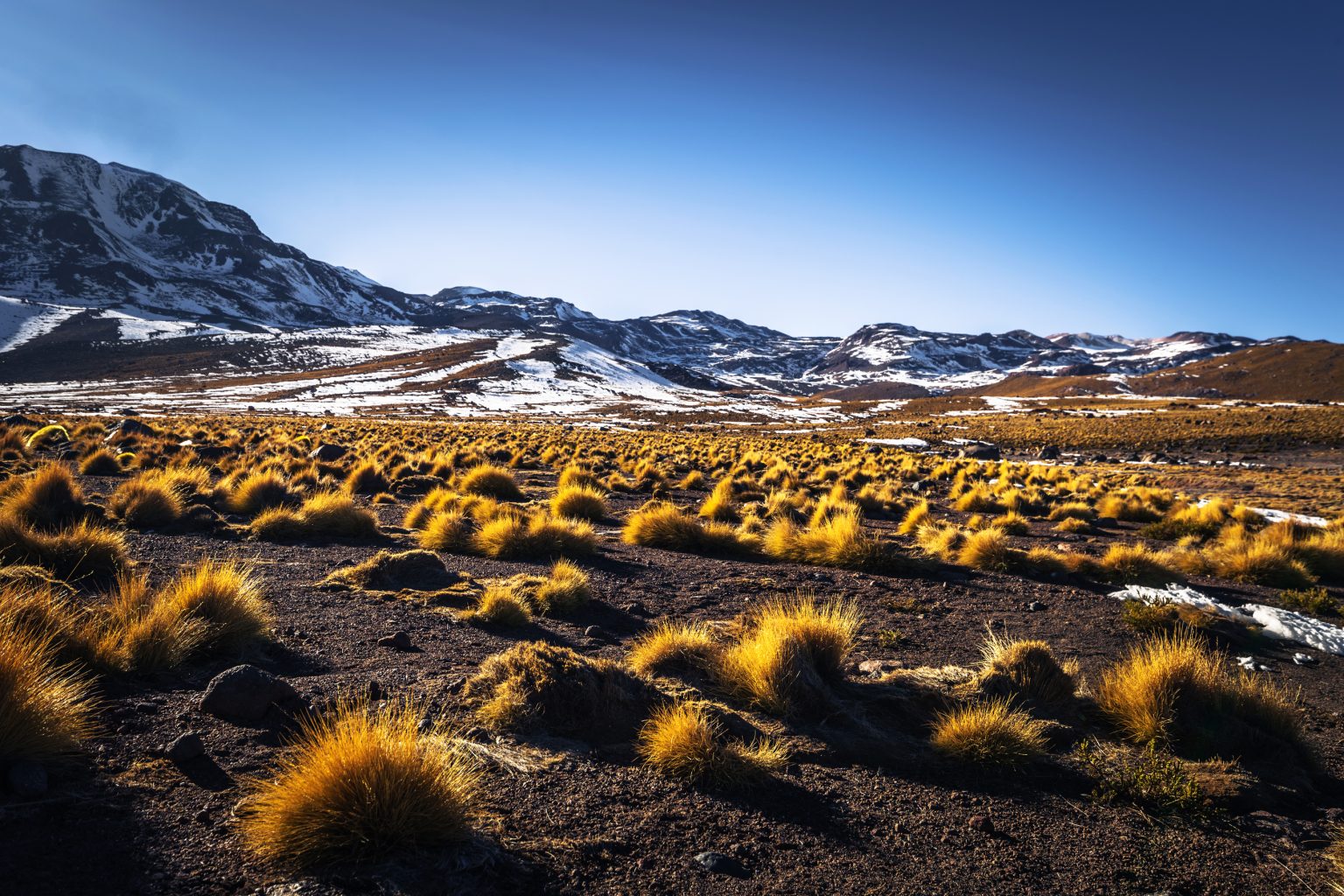
Northern Chile is home to one of the driest desert environments on Earth. The Atacama Desert stretches between the Pacific coast and the Andes, covering a landscape of salt flats, volcanic peaks, high-altitude lagoons, rocky valleys, and sand dunes. Some surrounding mountains rise above 6,000 meters, creating dramatic contrasts between the desert floor and the Andes.
- How Chile’s Desert Landscapes Are Shaped
- Valle de la Luna and the Cordillera de la Sal
- The Altiplano: Chile’s High Andean Plateau
- Salar de Atacama: Salt, Water, and Wildlife
- El Tatio Geysers
- Wildlife of Chile’s Desert
- Plants That Survive in the Chilean Desert
- The Best Places to See Desert Wildlife and Nature in Chile
- San Pedro de Atacama and Its Surroundings
- Laguna Chaxa
- Miscanti and Miñiques Lagoons
- Valle de la Luna
- El Tatio Geysers
- Los Flamencos National Reserve
- Ways to Experience the Atacama Desert
- Stargazing Under Exceptionally Clear Skies
- Hiking and Volcano Excursions
- Wildlife Watching
- Exploring the Desert by 4×4
- Visiting Atacameño Communities
- Weather and the Best Time to Visit
- Staying Safe in Chile’s Desert
- Exploring the Atacama Through Nature and Science
Despite its extreme dryness, the Chile desert supports wildlife in areas where water and vegetation are available. Vicuñas graze across the high plateau, flamingos feed in mineral-rich lagoons, foxes move through rocky valleys, and specialized plants survive with very little moisture. The region is also known for exceptionally clear skies, making the Atacama Desert an important destination for astronomy and desert travel.
How Chile’s Desert Landscapes Are Shaped
The Atacama is not a single type of desert. Its landscape changes considerably with altitude, distance from the coast, and proximity to the Andes.
Major environments include:
- Salt flats and salt crusts
- High-altitude lagoons
- Sand dunes
- Volcanic landscapes
- Geothermal fields and geysers
- Rocky valleys and canyons
The combination of extreme aridity, high elevation, volcanic activity, and mineral-rich water creates habitats that are very different from those found in many other deserts.
Valle de la Luna and the Cordillera de la Sal
Valle de la Luna, or Moon Valley, is one of the best-known landscapes near San Pedro de Atacama. Its name comes from the unusual terrain, which includes eroded rock formations, salt deposits, ridges, and large dunes.
Wind and occasional water erosion have shaped the surrounding Cordillera de la Sal, creating steep slopes and exposed rock formations. The area is particularly popular for hiking, photography, and sunset excursions.
The Altiplano: Chile’s High Andean Plateau
The Chilean Altiplano lies at elevations commonly above 3,500 meters, with some areas reaching considerably higher. The landscape includes volcanic mountains, broad plains, wetlands, and mineral-rich lagoons.
Wildlife adapted to these elevations includes:
- Vicuñas
- Andean foxes
- Vizcachas
- Flamingos
- Andean condors
- Hardy grasses and high-altitude shrubs
Temperatures can change sharply between day and night. Strong sunlight, cold winds, and low oxygen levels are all part of the high-altitude environment.
Salar de Atacama: Salt, Water, and Wildlife
The Salar de Atacama is Chile’s largest salt flat. Its surface contains extensive salt crusts and brine-rich areas, while lagoons around its margins provide important feeding and breeding habitats for flamingos.
The contrast between the white salt surface, blue water, and surrounding volcanoes makes the area one of the most recognizable landscapes in northern Chile.
El Tatio Geysers
At roughly 4,300 meters above sea level, El Tatio is one of the world’s highest geothermal fields. Early in the morning, steam rises from geysers, hot springs, and fumaroles as the cold mountain air meets the geothermal heat below.
The geothermal landscape is especially impressive at sunrise, when the temperature difference makes the steam columns more visible.
Wildlife of Chile’s Desert
Life in the Atacama is concentrated around places where water, vegetation, and suitable shelter are available. The surrounding Altiplano provides additional habitats for species adapted to high elevations.
Animals of the High Desert
The vicuña is one of the most recognizable animals of the Chilean Altiplano. This wild South American camelid is closely adapted to cold, dry high-altitude environments and feeds mainly on grasses.
Other mammals include:
- Andean foxes, also known as culpeos, which inhabit mountains, valleys, and highland environments.
- Vizcachas, rabbit-like rodents that live among rocky slopes and cliffs.
- Pumas, which occur across parts of the Andes but are rarely seen by visitors.
- Darwin’s leaf-eared mouse, a small rodent adapted to dry environments.
- Other small mammals that occupy highland grasslands, rocky terrain, and desert valleys.
These animals cope with limited water, cold nights, intense solar radiation, and sparse vegetation.
Flamingos, Condors, and Other Birds
The lagoons and wetlands of the Atacama and Altiplano support several species of flamingo. Important species include:
- Andean flamingos
- James’s flamingos
- Chilean flamingos
They feed mainly on algae and small aquatic organisms in shallow, mineral-rich waters.
Other birds found in the region include:
- Andean condors, which can be seen soaring around mountain areas.
- Puna ibises, associated with high-altitude wetlands and grasslands.
- Andean avocets, which feed in shallow water.
- Giant coots, found around suitable high-altitude lakes.
- Finches and other small highland birds.
- Hummingbirds, particularly around vegetation and water sources.
The lagoons around San Pedro de Atacama and the Altiplano are especially important for birdwatching.
Reptiles and Invertebrates
The Atacama’s extreme dryness limits the number of reptiles and insects found in the most arid areas, but several species have adapted to the region’s conditions.
Depending on the habitat, visitors may encounter:
- Atacama lizards
- Iguanas and other lizards
- Small snakes
- Desert ants
- Beetles and other insects
Near the coast, fog known as camanchaca provides moisture that supports small ecosystems and specialized organisms.
Plants That Survive in the Chilean Desert
Vegetation becomes increasingly sparse toward the driest parts of the Atacama. Where moisture is available, however, specialized plants can survive through fog capture, deep roots, or adaptations to high-altitude conditions.
Plants That Depend on Fog
Along parts of the coastal desert, camanchaca can provide an important source of moisture.
Some plants adapted to these conditions include:
- Tillandsias, which can absorb moisture from the atmosphere.
- Fog-dependent cacti and other specialized plants in suitable coastal environments.
- Small shrubs and other plants capable of using atmospheric moisture.
Plants of the High Plateau
Higher elevations support a different plant community, including:
- Tola shrubs
- High-altitude grasses
- Yareta, a slow-growing cushion plant found in the Andes
Yareta grows extremely slowly and forms dense green cushions close to the ground, allowing it to withstand cold temperatures, strong winds, and intense sunlight.
The Flowering Desert
In some years, unusual rainfall events can trigger a flowering desert in parts of northern Chile. When sufficient moisture reaches dormant seeds, large areas can briefly develop flowers in shades of pink, purple, yellow, and other colors.
This phenomenon is highly dependent on rainfall and does not occur every year or across the entire Atacama.
The Best Places to See Desert Wildlife and Nature in Chile
San Pedro de Atacama and Its Surroundings
San Pedro de Atacama is the main tourism base for exploring many of the region’s major landscapes. From here, travelers can reach salt flats, lagoons, volcanic landscapes, geysers, and desert valleys.
Laguna Chaxa
Located within the Salar de Atacama, Laguna Chaxa is one of the best-known places for observing flamingos. The shallow waters and surrounding salt landscape create important feeding areas for these birds.
Miscanti and Miñiques Lagoons
These high-altitude lagoons are surrounded by volcanoes and open Andean landscapes. Vicuñas, flamingos, and other highland birds can be found in the wider area.
Valle de la Luna
Moon Valley offers an accessible introduction to the geology of the Atacama. Its salt formations, dunes, ridges, and eroded rock surfaces are particularly popular around sunset.
El Tatio Geysers
El Tatio combines geothermal activity with high-altitude desert scenery. Early morning is the best time to visit because the temperature difference makes the steam particularly visible.
Los Flamencos National Reserve
The Los Flamencos National Reserve protects several important ecosystems around San Pedro de Atacama, including salt flats, lagoons, highland wetlands, and desert landscapes.
Ways to Experience the Atacama Desert
Stargazing Under Exceptionally Clear Skies
The Atacama is internationally recognized for astronomical observation because of its high altitude, extremely dry climate, and limited cloud cover in many areas. Visitors can join astronomy tours to observe the Milky Way, planets, nebulae, and other celestial objects.
Hiking and Volcano Excursions
The region offers hiking routes through valleys, salt landscapes, and high-altitude terrain. Some volcanoes, including Licancabur, can be climbed by experienced trekkers with appropriate preparation and local guidance.
Wildlife Watching
Guided excursions can help travelers find flamingos, vicuñas, foxes, and highland birds. Early morning and late afternoon are often productive periods for wildlife observation.
Exploring the Desert by 4×4
Four-wheel-drive excursions provide access to remote salt flats, lagoons, valleys, and high-altitude landscapes that are difficult to reach independently.
Visiting Atacameño Communities
The Indigenous Atacameño, or Lickanantay, communities have a long history in the region. Visits to local communities and villages can introduce travelers to traditional agriculture, crafts, food, and knowledge of the desert environment.
Weather and the Best Time to Visit
The Atacama is dry throughout the year, but conditions vary considerably according to altitude and location.
- April to November: Generally dry conditions and clear skies make this a popular period for desert travel and astronomy.
- December to February: Temperatures can be warmer at lower elevations, while the highlands may receive occasional summer rainfall during the Altiplanic winter.
- High-altitude areas: Nights can become extremely cold, sometimes dropping below freezing even when daytime temperatures are comfortable.
- Coastal areas: Conditions are influenced by the Pacific and the Humboldt Current, with cooler temperatures and frequent fog in some areas.
Because altitude varies greatly, travelers should check conditions for each destination rather than treating the entire Atacama as having one climate.
Staying Safe in Chile’s Desert
The combination of extreme dryness and high altitude requires careful preparation.
- Carry enough water for the entire excursion.
- Use sunscreen, sunglasses, and protective clothing.
- Wear layers because temperatures can change rapidly.
- Allow time to acclimatize to high altitude, especially when visiting the Altiplano.
- Use an experienced guide for remote areas and high-altitude routes.
- Travel by suitable 4×4 vehicle when roads and terrain require it.
- Avoid walking on fragile vegetation or disturbing salt and wetland environments.
- Follow local instructions around geothermal areas, cliffs, and restricted zones.
Altitude sickness can affect visitors who ascend too quickly, particularly above 3,000 meters. Travelers should take symptoms seriously and descend if they become severe.
Exploring the Atacama Through Nature and Science
The Atacama is defined by its combination of extreme dryness, high altitude, volcanic terrain, salt flats, and specialized ecosystems. Around San Pedro de Atacama, visitors can move from the eroded landscapes of Valle de la Luna to flamingo-filled lagoons, high-altitude volcanoes, and the geothermal fields of El Tatio.
Wildlife is concentrated around the places where water and vegetation are available. Vicuñas graze across the Altiplano, flamingos feed in shallow lagoons, foxes move through mountain valleys, and hardy plants survive in conditions that leave much of the surrounding terrain almost bare.
For travelers interested in Atacama Desert wildlife, astronomy, geology, and high-altitude landscapes, northern Chile offers a rare combination of natural environments within a relatively compact region. The desert is not simply an expanse of sand and rock. Its salt flats, volcanoes, lagoons, plants, and wildlife reveal how life can persist under some of the most demanding conditions on the planet.