
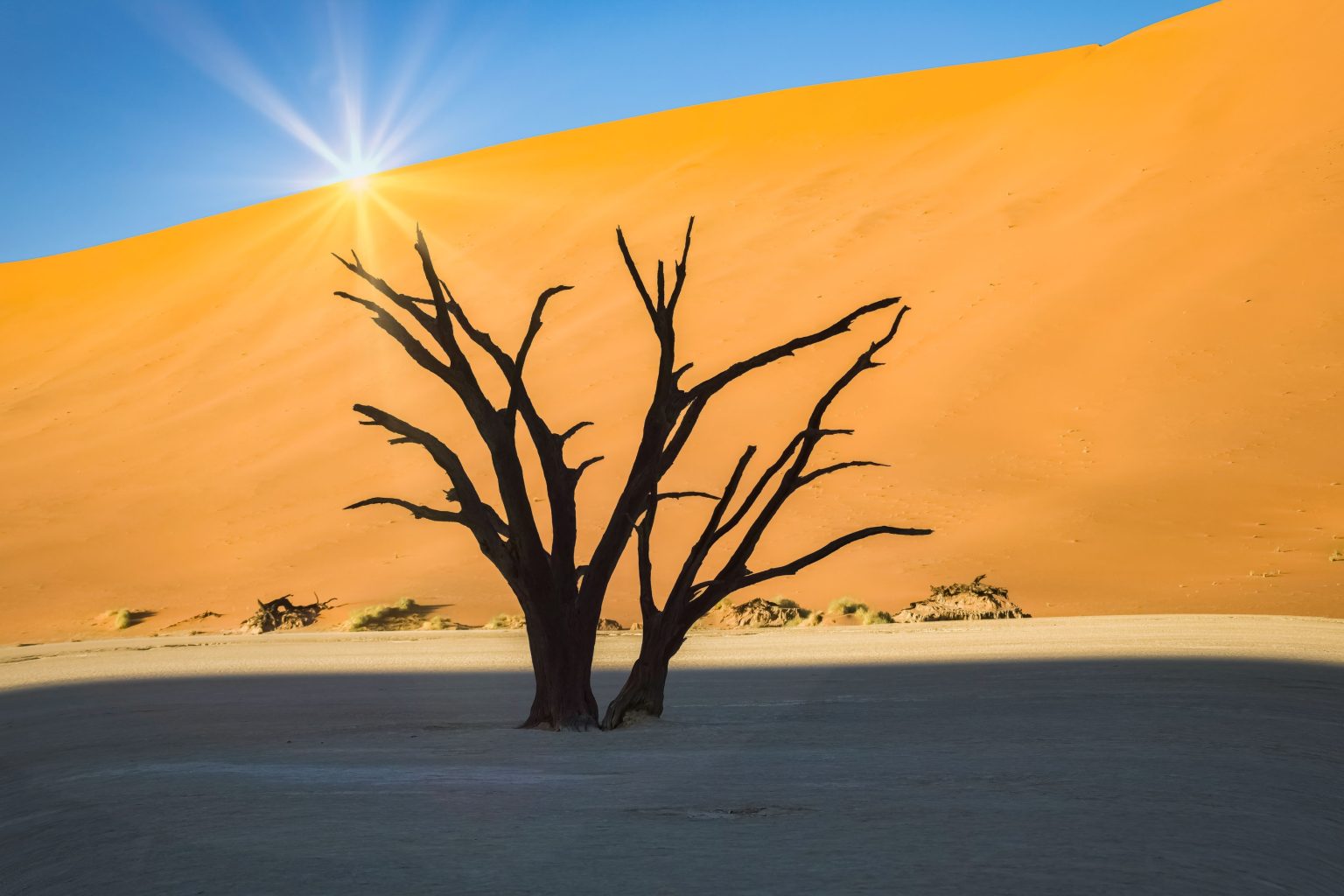
Namibia is home to some of Africa’s most distinctive dry landscapes, from towering coastal dunes to red sandy plains and remote rocky valleys. The Namib Desert in Namibia is known for its ancient geology and dramatic dune fields, while the Kalahari Desert supports more vegetation and a different range of wildlife. These Namibia desert travel tips cover destination choices, essential equipment, road safety, cultural awareness, and practical ways to explore the country’s desert regions responsibly.
- Understanding Namibia’s Desert Landscapes
- The Namib Desert and Sossusvlei Dunes
- The Kalahari Desert in Eastern Namibia
- The Skeleton Coast Desert Region
- Preparing for a Trip to Namibia’s Desert Regions
- What to Pack for Namibia’s Deserts
- Safety Tips for Traveling in Namibia’s Deserts
- Getting Around and Staying in the Desert
- Cultural Awareness in Namibia’s Desert Regions
- Food and Comfort in Namibia’s Desert Regions
- Photography in Namibia’s Desert Landscapes
- Best Time to Visit Namibia’s Deserts
- Planning a Safe and Respectful Journey Through Namibia’s Deserts
Understanding Namibia’s Desert Landscapes
The Namib Desert and Sossusvlei Dunes
The Namib Desert stretches along Namibia’s Atlantic coast and is widely regarded as one of the oldest deserts on Earth. Its landscapes include enormous sand dunes, gravel plains, dry riverbeds, and rugged mountain areas. Around Sossusvlei and Deadvlei, some dunes rise hundreds of metres, creating the striking scenery for which the region is famous.
Early morning and late afternoon are particularly popular times for photography, when low-angle sunlight reveals contrasts across the dunes. Deadvlei is known for its pale clay pan and dark, long-dead camel thorn trees, which stand against the surrounding sand.
Wildlife survives in this arid environment, although sightings vary by location and season. Species found in parts of the Namib include oryx and springbok, which are adapted to dry conditions.
When visiting the dune areas:
- Start walks early to avoid the strongest daytime heat.
- Carry sufficient drinking water.
- Wear suitable footwear for loose sand.
- Follow park rules and remain within permitted areas.
- Allow extra time for walking across dunes, where progress can be physically demanding.
Sossusvlei is a major visitor destination, but conditions can still be harsh. Check current access arrangements before setting out, particularly if your itinerary includes the final approach to the dunes.
The Kalahari Desert in Eastern Namibia
The Kalahari Desert extends across parts of several southern African countries, including eastern Namibia. Compared with the coastal Namib, it often has more vegetation, with red sand dunes, grasses, shrubs, and scattered trees.
The Kalahari is frequently described as a semi-desert because rainfall and vegetation vary across the region. Its habitats support wildlife such as antelope, birds, and other animals adapted to dry environments. Wildlife viewing depends on the area, season, and local conditions.
The region is also home to San communities with distinct languages, histories, and cultural traditions. Their knowledge of local environments is an important part of the area’s cultural heritage, but traditions differ between communities and should not be treated as one uniform way of life.
Travelers interested in the Kalahari can consider:
- Guided wildlife drives in suitable reserves.
- Nature walks with qualified local guides.
- Cultural visits arranged with community involvement.
- Photography of red dunes, open plains, and local wildlife.
- Overnight stays at established camps or lodges.
Choose operators carefully and ask how cultural activities are organized, including whether local communities are directly involved and benefit from the visit.
The Skeleton Coast Desert Region
The Skeleton Coast is one of Namibia’s most distinctive coastal environments, where the Namib Desert meets the Atlantic Ocean. Cold ocean currents and coastal fog influence the region’s conditions, creating a landscape of dunes, gravel plains, exposed beaches, and sparse vegetation.
The area is known for shipwreck remains in some locations, seal colonies, and its remote coastal scenery. Fog, wind, and limited services can make travel challenging, and access rules vary across different sections of the coast.
Before visiting:
- Confirm which areas are open to visitors.
- Check whether permits or organized transport are required.
- Review road conditions and fuel availability.
- Carry suitable clothing for cool, windy weather.
- Consider a guided excursion for remote or restricted areas.
Not every part of the Skeleton Coast has the same access requirements. Check the current rules for your intended destination rather than assuming that a single permit or tour arrangement applies to the entire region.
Preparing for a Trip to Namibia’s Desert Regions
Choosing the Right Desert Experience
Namibia offers a wide range of activities, from established sightseeing routes to demanding journeys through remote terrain. The right option depends on your experience, travel schedule, budget, and preferred level of independence.
Possible experiences include:
- Self-drive desert trips along suitable public roads and established routes.
- Guided 4×4 excursions into areas where specialized vehicles or local knowledge are useful.
- Dune climbing and photography around Sossusvlei and other approved visitor areas.
- Wildlife viewing in suitable reserves and conservancies.
- Hiking and nature walks where trails and conditions permit.
- Hot-air balloon flights offered by operators in selected areas, subject to weather and availability.
- Cultural visits arranged respectfully with local communities.
Camel trekking is not a standard activity across Namibia’s main desert destinations, so confirm its availability and location before including it in an itinerary.
For remote areas such as sections of the Skeleton Coast or Damaraland, experienced guides can provide valuable support. In established destinations, independent travel may be practical when road conditions, access rules, and your vehicle are suitable.
Setting Realistic Travel Expectations
Namibia’s desert regions cover large distances, and towns and fuel stations can be far apart. Many routes use gravel roads, where average speeds are often lower than on paved highways.
Plan for:
- Longer driving times than the map may suggest.
- Limited mobile coverage outside populated areas.
- Dust, gravel, and changing road surfaces.
- Restricted services in remote regions.
- Temperature changes between day and night.
- Possible delays caused by weather or vehicle problems.
Avoid scheduling too many distant attractions into one day. A more flexible itinerary reduces fatigue and leaves time to enjoy the landscape safely.
What to Pack for Namibia’s Deserts
Clothing for Desert Conditions
Lightweight clothing helps manage daytime heat, while long sleeves and trousers protect against sunlight, wind, and dust. Even in warmer seasons, evenings can be cold, especially in exposed areas or during winter.
Pack the following:
- Breathable, long-sleeved shirts.
- Lightweight trousers.
- A warm jacket or fleece for evenings.
- A wind-resistant outer layer.
- A wide-brimmed hat or cap.
- UV-protective sunglasses.
- High-SPF sunscreen.
- A scarf or neck covering for dusty conditions.
Neutral colours can be practical for outdoor activities, but comfort, sun protection, and suitability for the weather matter more than colour alone.
Footwear and Essential Items
Choose footwear according to the terrain and activities you have planned. Walking over loose dunes requires more effort than walking on firm paths, while rocky areas call for shoes with good grip.
Useful items include:
- Sturdy walking shoes or hiking boots.
- A small daypack.
- A headlamp or flashlight.
- A reusable water bottle or hydration system.
- Offline maps and a reliable navigation device.
- A power bank and charging cables.
- A basic first-aid kit.
- Protective bags for cameras and electronics.
For remote driving, additional vehicle equipment may be necessary. Check the route and rental conditions before departure rather than assuming that a standard rental car includes everything required for off-road travel.
Water, Food, and Personal Care
Water planning is essential in Namibia’s arid regions. The amount needed depends on the weather, activity level, journey length, and availability of supplies. Carry enough for the planned route and an additional reserve in case of delays.
Personal supplies should include:
- Drinking water and extra supplies for remote travel.
- Non-perishable snacks.
- Sunscreen and lip balm.
- Personal medication.
- Basic first-aid supplies.
- Insect repellent where appropriate.
- Bags for carrying rubbish out of natural areas.
Do not rely on finding shops, refreshments, or drinking water along remote roads. Confirm where supplies are available before leaving towns or established accommodation.
Safety Tips for Traveling in Namibia’s Deserts
Navigation and Distance Awareness
Long distances and sparse settlements make navigation an important part of desert travel. GPS and mobile navigation apps are useful, but devices may lose signal or battery power.
Before departure:
- Download maps for offline use.
- Carry a paper map as a backup.
- Share your route and expected arrival time with someone.
- Inform your accommodation provider of your plans when appropriate.
- Check road conditions and estimated driving times.
- Refuel whenever practical before entering remote areas.
Driving at night is best avoided on unfamiliar rural roads because wildlife may cross unexpectedly and hazards can be harder to see.
Managing Heat and Sun Exposure
The sun can be intense throughout the year, especially when walking over exposed dunes or spending hours outdoors without shade. Heat-related illness can develop even when travelers feel accustomed to warm weather.
Reduce the risk by following these precautions:
- Schedule demanding activities for early morning or late afternoon.
- Drink water regularly.
- Wear sun-protective clothing and a hat.
- Take breaks in shade when available.
- Avoid strenuous activity during extreme heat.
- Follow local advice about weather and trail conditions.
If you experience dizziness, nausea, weakness, or other symptoms of heat illness, stop the activity and seek help. Severe symptoms require urgent medical attention.
Wildlife Awareness
Namibia’s dry environments support a range of wildlife, with species varying between coastal areas, desert plains, rocky valleys, and reserves. Depending on the region, travelers may encounter oryx, springbok, foxes, elephants, hyenas, or other animals.
Some wildlife is adapted to harsh conditions, but animals should never be approached or treated as predictable. To reduce risks:
- Observe wildlife from a safe distance.
- Remain inside your vehicle in designated wildlife areas unless local rules permit otherwise.
- Follow your guide’s instructions.
- Never feed or handle wild animals.
- Secure food and rubbish at campsites.
- Take care when walking around camp after dark.
Desert-adapted elephants occur in parts of northwestern Namibia, including areas of Damaraland and the Kunene region. Sightings are not guaranteed, and travelers should use experienced guides who understand local wildlife behaviour.
Getting Around and Staying in the Desert
Desert Driving and 4×4 Travel
A reliable vehicle is essential for many Namibian road trips, but a 4×4 vehicle is not required for every destination. Established tourist routes and many gravel roads may be suitable for an ordinary vehicle when conditions allow, while soft sand, remote tracks, and certain off-road routes require more capable transport.
Before choosing your vehicle, check:
- Whether the planned roads require a 4×4.
- Whether the rental agreement permits the intended route.
- Current road and weather conditions.
- The availability of a spare tire and basic tools.
- Whether recovery equipment is needed.
- Fuel availability and distance between stations.
Reducing tire pressure can improve traction on suitable sandy terrain, but it should only be done by someone who understands the correct procedure and can reinflate the tires before returning to firm roads. Incorrect tire pressure can damage tires or affect vehicle handling.
For remote journeys, carry sufficient water, food, navigation equipment, and emergency communication options. If you lack off-road experience, consider traveling with a qualified guide.
Camping and Desert Lodges
Accommodation in Namibia ranges from basic campsites to comfortable lodges and specialist desert properties. Facilities vary widely, so check the details before booking.
When comparing options, ask about:
- Drinking water and meal arrangements.
- Toilets and shower facilities.
- Electricity and charging access.
- Bedding and sleeping equipment.
- Road access and vehicle requirements.
- Safety guidance for wildlife around the property.
Namibia’s dark skies can provide excellent stargazing opportunities when weather conditions are favourable. Bring warm layers for nighttime viewing and use a headlamp when moving around camp.
Store food and rubbish securely, follow fire restrictions, and use established camping areas wherever possible.
Cultural Awareness in Namibia’s Desert Regions
Local Communities and Traditions
Namibia is home to many communities with distinct languages, histories, and cultural traditions. The Himba people, particularly associated with northwestern Namibia, and San communities in several parts of southern Africa have different histories and ways of life. They should not be presented as interchangeable representatives of a single desert culture.
Cultural visits can provide opportunities to learn about local architecture, livelihoods, crafts, and relationships with the land. The quality and ethics of these experiences depend on how they are organized.
For a respectful visit:
- Choose community-led or community-supported experiences where possible.
- Ask permission before taking photographs.
- Follow guidance about appropriate dress and behaviour.
- Respect private homes and restricted places.
- Avoid making assumptions about traditions or daily life.
- Ask questions politely and accept when someone does not wish to participate.
A responsible cultural visit should give local people control over how their heritage is presented and should provide clear benefits to the community.
Responsible Desert Travel
Desert ecosystems can be fragile, particularly where vegetation grows slowly and wildlife depends on limited resources. Vehicle tracks, rubbish, and disturbance can have lasting effects.
Travel responsibly by following these practices:
- Stay on designated roads and approved tracks.
- Avoid driving over sensitive vegetation or dunes without permission.
- Take rubbish away with you.
- Conserve water at camps and lodges.
- Keep a safe distance from wildlife.
- Follow fire restrictions.
- Support locally owned accommodation and reputable guides.
- Respect land access rules and protected areas.
These measures help protect Namibia’s natural landscapes and support tourism that benefits local communities.
Food and Comfort in Namibia’s Desert Regions
Local Food and Supplies
Food options vary between towns, remote lodges, campsites, and organized tours. Larger settlements offer more choice, while remote accommodation may require meals to be arranged in advance.
Depending on where you travel, you may find:
- Grilled meats and other regional dishes.
- Stews and vegetable-based meals.
- Fresh bread and simple packed lunches.
- Fruit, snacks, and refreshments in larger towns.
- Meals prepared by lodges or tour operators.
Food traditions differ among Namibia’s communities, so avoid assuming that one menu represents the entire country. If you have allergies or dietary restrictions, inform your accommodation or guide before arrival.
For long driving days, carry practical snacks and drinking water. Check opening hours and supply options before entering remote areas.
Staying Comfortable
Small preparations can make long desert days easier.
- Drink water regularly.
- Protect your skin from sun and wind.
- Keep essential supplies within easy reach.
- Wear suitable footwear for walking on sand or gravel.
- Bring warm layers for cold evenings.
- Secure food and rubbish at campsites.
- Take breaks during long drives.
If conditions become uncomfortable or unsafe, adjust the schedule rather than pushing through heat, fatigue, or deteriorating road conditions.
Photography in Namibia’s Desert Landscapes
Best Locations and Light Conditions
Namibia offers a wide range of photographic subjects, from towering dunes to coastal scenery and wildlife. Popular locations include:
- Sossusvlei and Deadvlei: distinctive dunes, clay pans, and dead camel thorn trees.
- The Namib Desert: gravel plains, rocky landscapes, and expansive horizons.
- The Kalahari: red sand, grasses, and scattered trees.
- The Skeleton Coast: coastal dunes, fog, and Atlantic scenery.
- Damaraland: rugged landscapes and opportunities to observe wildlife responsibly.
Early morning and late afternoon often provide softer light and stronger contrasts across dunes and rock formations. Coastal fog and wind can change conditions quickly, so remain flexible.
Protecting Camera Equipment
Fine dust and sand can enter cameras, lenses, and electronic equipment. Heat and cold can also affect batteries and other components.
Protect your gear by:
- Keeping equipment in a closed protective bag when not in use.
- Avoiding lens changes in windy or dusty conditions.
- Carrying a lens cloth and suitable cleaning supplies.
- Bringing spare batteries and memory cards.
- Protecting electronics from excessive heat.
- Securing tripods and lightweight accessories in strong wind.
At cultural and archaeological sites, follow photography restrictions and avoid disturbing the landscape to improve a composition.
Best Time to Visit Namibia’s Deserts
Ideal Travel Seasons
The most suitable season depends on the region and the type of experience you want. Namibia’s desert areas do not all share the same weather conditions.
- Namib Desert and Sossusvlei: the cooler, drier months are often comfortable for dune walks and photography, although early mornings can be cold.
- Kalahari: cooler periods can be suitable for outdoor activities, while summer heat may make midday excursions less comfortable.
- Skeleton Coast: coastal fog, wind, and cool conditions can occur throughout the year.
- Damaraland: wildlife viewing and road conditions vary by location and season.
These are general guidelines rather than guarantees. Check local forecasts, park information, and road conditions before finalizing your itinerary.
Seasonal Planning and Access
Weather affects more than comfort. Rain can change road conditions, while heat may make strenuous walks difficult. Some remote areas also have specific access rules or permit requirements.
Before your trip:
- Confirm opening times and access restrictions.
- Check road conditions close to departure.
- Book accommodation and guided excursions where necessary.
- Review the expected temperatures for day and night.
- Build flexibility into your schedule.
- Confirm fuel and supply stops for remote routes.
Planning around the conditions of each destination helps you avoid rushing and makes it easier to adapt if weather or access changes.
Planning a Safe and Respectful Journey Through Namibia’s Deserts
Namibia’s desert landscapes offer remarkable variety, from the red dunes of the Namib to the vegetated sands of the Kalahari and the rugged coastline of the Skeleton Coast. Damaraland adds another dimension through its rocky scenery and desert-adapted wildlife, while the country’s cultural diversity provides important context for understanding these places.
The most common planning mistakes are underestimating driving distances, carrying insufficient water, and assuming that every remote route requires the same vehicle or access arrangements. Check local conditions, prepare for temperature changes, and choose guides carefully when traveling into isolated areas.
With thoughtful preparation and respect for local communities and fragile ecosystems, Namibia’s desert regions offer rewarding opportunities for wildlife observation, photography, cultural learning, and exploration across some of southern Africa’s most distinctive landscapes.