
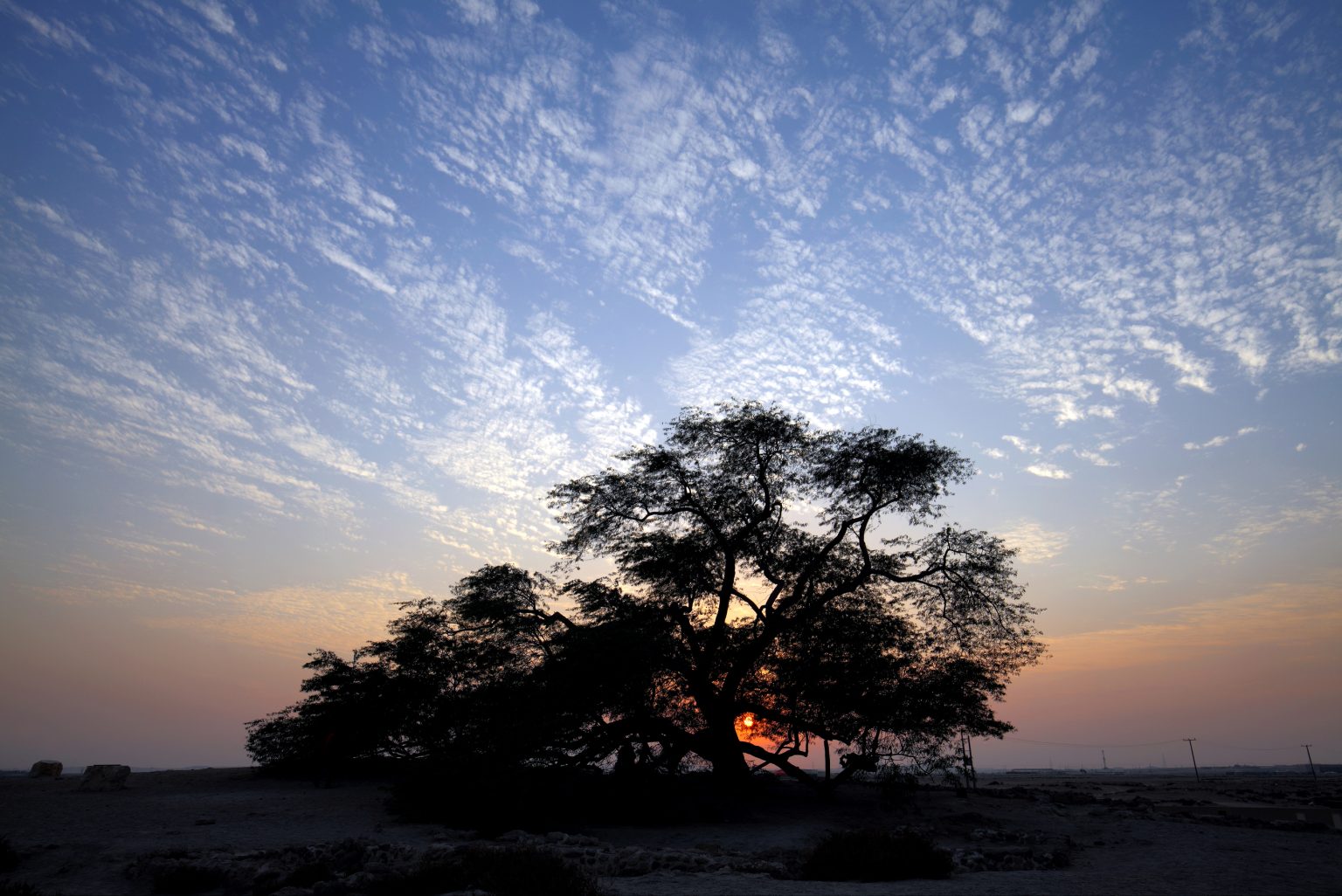
Although Bahrain’s desert landscapes are smaller than those of Saudi Arabia and the UAE, they offer a distinctive combination of natural landmarks, archaeological heritage, and accessible outdoor experiences. Sandy plains, gravel-covered ground, and rocky terrain create a different desert setting from the vast dune fields found elsewhere in the Arabian Peninsula.
- Understanding Bahrain’s Desert Landscape
- Preparing for Your Desert Trip in Bahrain
- What to Bring to Bahrain’s Desert
- Safety Considerations in Bahrain’s Desert
- Exploring and Traveling Through the Desert
- Cultural and Historical Highlights
- Food and Comfort in the Desert
- Photography in Bahrain’s Desert
- Best Time to Visit Bahrain’s Desert
- Planning a Safe and Responsible Desert Experience
This guide covers practical Bahrain desert travel tips for exploring the Sakhir Desert, visiting the famous Tree of Life, and enjoying outdoor activities during the cooler months. With suitable preparation and respect for local regulations, visitors can discover Bahrain’s desert heritage comfortably and responsibly.
Understanding Bahrain’s Desert Landscape
The Sakhir Desert
Sakhir, in southern Bahrain, is one of the country’s best-known areas for desert outings. It combines open arid landscapes with major attractions, including the Bahrain International Circuit, home of the Bahrain Grand Prix.
Beyond the circuit, the surrounding area offers opportunities to experience Bahrain’s desert scenery and seasonal outdoor activities. During the cooler months, visitors may find organized excursions, camping areas, and local events.
When planning a visit, keep in mind that access conditions and permitted activities vary by location. Check local guidance before driving off-road or setting up camp.
The Tree of Life Area
The Tree of Life is one of Bahrain’s most recognizable natural landmarks. Located in the southern Sakhir area, this mature tree has survived for centuries in an arid setting without an obvious nearby water source. Its age and continued growth have made it a popular destination for visitors interested in nature and local heritage.
The surrounding landscape is relatively open, making the site suitable for photography and a short stop during a wider tour of southern Bahrain.
Visitors should protect the tree and its surroundings by following posted rules, avoiding damage to the branches and roots, and taking all rubbish away.
Rocky Plains and Desert Terrain
Bahrain’s arid landscapes include sandy stretches, gravel plains, and limestone formations. Although the country does not have the enormous dune systems found in some neighbouring destinations, its open terrain provides a different perspective on the Arabian Desert environment.
Depending on the location, visitors can enjoy:
- Landscape photography across open plains.
- Short walks in suitable areas.
- Stargazing away from bright urban lighting.
- Visits to natural and archaeological landmarks.
- Guided outdoor excursions during cooler weather.
The relatively short distances between many attractions make it possible to combine desert stops with other destinations on the island.
Preparing for Your Desert Trip in Bahrain
Understanding the Climate
Bahrain has very hot summers and generally milder winters. High temperatures and direct sunlight can make daytime desert activities uncomfortable or unsafe during the hottest months.
For many visitors, November to March is a convenient period for outdoor exploration. Conditions still vary, so check the forecast before hiking, camping, or spending extended periods outside.
Use these precautions when planning your visit:
- Schedule walks and outdoor activities for early morning or late afternoon.
- Carry enough drinking water for the full outing.
- Check for strong winds, dust, or other weather warnings.
- Bring an extra layer for cooler winter evenings.
- Avoid strenuous activities during extreme heat.
Choosing the Right Desert Experience
Bahrain offers several ways to explore its arid landscapes, from short sightseeing trips to organized outdoor activities.
- Guided desert tours: Learn about local landscapes and landmarks with an experienced guide.
- Cultural visits: Explore aspects of Bahrain’s history and desert heritage.
- Photography outings: Visit the Tree of Life and other suitable locations in favourable light.
- Camping: Experience the outdoors during the authorized camping season and in permitted areas.
- Stargazing: Enjoy the night sky from a suitable location away from excessive artificial light.
Choose activities according to the weather, your available time, and the access rules for each site. A guided experience can be especially useful if you are unfamiliar with the area.
Planning and Timing
Bahrain’s compact size makes it relatively easy to visit several attractions in one day, but a little planning still improves the experience.
Before leaving:
- Map your route and check driving times.
- Confirm opening hours and access arrangements.
- Carry water and basic emergency supplies.
- Tell someone your plans if you intend to visit a remote area.
- Check whether permits or advance arrangements are needed for camping.
- Leave enough time to return before dark if travelling independently.
Avoid assuming that every open stretch of land is suitable for driving, walking, or overnight stays.
What to Bring to Bahrain’s Desert
Clothing for Desert Conditions
Lightweight, breathable clothing is useful in Bahrain’s warm climate. Long sleeves and loose-fitting trousers can provide protection from the sun while remaining comfortable outdoors.
Consider bringing:
- Lightweight shirts and trousers.
- A wide-brimmed hat or other effective sun protection.
- UV-protective sunglasses.
- Comfortable walking shoes.
- A scarf or neck covering for dusty conditions.
- A light jacket for cooler evenings during winter.
Choose footwear according to the terrain and the activities planned. Ordinary walking shoes are usually sufficient for short visits to accessible attractions, while rougher ground may require sturdier footwear.
Footwear and Essential Equipment
A small daypack helps keep supplies organized during a desert outing. Useful items include:
- Comfortable walking shoes or sturdy sneakers.
- A reusable water bottle.
- Sunscreen and lip balm.
- A fully charged mobile phone.
- A portable power bank.
- A small flashlight or headlamp for evening activities.
- Offline maps if you plan to travel beyond familiar roads.
For organized activities, check with the operator about any additional equipment required.
Hydration and Personal Care
Heat and dry conditions can increase fluid loss, particularly during walking or other physical activities. Carry enough water for the expected duration of your visit, with extra supplies in case of delays.
A basic personal-care kit can include:
- Drinking water and suitable electrolyte supplies when needed.
- Sunscreen and lip balm.
- Moisturizer.
- Bandages and basic first-aid supplies.
- Personal medication.
- Tissues or wet wipes.
Keep water accessible rather than packed away where it is difficult to reach.
Safety Considerations in Bahrain’s Desert
Managing Heat and Sun Exposure
Heat and sun exposure are important considerations even when visiting locations close to roads or towns. Temperatures can rise quickly, and open terrain may offer little shade.
To reduce the risk of heat-related illness:
- Plan strenuous activities for cooler hours.
- Take regular breaks in shaded or air-conditioned places.
- Drink water frequently.
- Wear sun-protective clothing and apply sunscreen as directed.
- Reduce activity when conditions become excessively hot.
- Stop and seek urgent assistance if serious symptoms such as confusion, collapse, or severe weakness develop.
Do not rely on the short distance to the nearest town as a substitute for preparation.
Navigating the Desert Safely
Bahrain’s desert areas are relatively compact, but open terrain can still be confusing, especially after dark or away from established roads.
Follow these guidelines:
- Stay on established routes unless you have suitable local guidance.
- Check access restrictions before entering unfamiliar land.
- Avoid driving on soft sand without an appropriate vehicle and experience.
- Carry sufficient water and a charged phone.
- Let someone know your intended route.
- Avoid isolated areas at night if you are unfamiliar with the terrain.
For off-road excursions, an experienced local operator can help assess conditions and choose a suitable route.
Staying Connected
Mobile coverage is generally available across much of Bahrain, but reception should not be treated as guaranteed everywhere. A charged phone is useful, yet it cannot replace a sensible travel plan.
Before departure:
- Charge your phone and power bank.
- Save important directions and contact details offline.
- Share your itinerary with someone if visiting a remote area.
- Keep emergency supplies in your vehicle.
- Confirm your return arrangements before starting an excursion.
These simple steps are useful even for short trips outside built-up areas.
Exploring and Traveling Through the Desert
Reaching Desert Sites
Many popular attractions in southern Bahrain can be reached using paved roads. A standard vehicle is generally suitable for visiting accessible sites such as the Tree of Life and areas around Sakhir.
However, vehicle requirements depend on the route. A four-wheel-drive vehicle may be appropriate for certain off-road excursions, but it is not necessary for every desert visit.
Before driving, check:
- Whether the destination is accessible by public roads.
- Whether private land or restricted areas lie along the route.
- Road and weather conditions.
- Parking arrangements at the attraction.
- Whether the activity requires a guide or specialist vehicle.
Do not drive onto sand or rough terrain simply because it appears accessible.
Off-Road Activities
Organized off-road excursions can offer a closer look at Bahrain’s arid landscapes. Activities may be available through local operators or as part of seasonal outdoor events.
For a safer experience:
- Choose an experienced operator with appropriate vehicles.
- Follow the guide’s instructions.
- Use the required safety equipment.
- Confirm what the excursion includes before booking.
- Avoid attempting unfamiliar off-road routes independently.
Responsible driving also means avoiding damage to vegetation, archaeological remains, and other sensitive areas.
Camping and Night Experiences
Desert camping in Bahrain is particularly associated with the cooler season. Depending on the arrangements, visitors may encounter anything from simple tent setups to organized camps offering meals and other facilities.
Camping is subject to local rules, designated locations, and seasonal arrangements. Check the current requirements with the relevant authorities before setting up a tent or booking an overnight experience.
Prepare for an overnight stay by bringing:
- A suitable tent and sleeping equipment.
- Warm layers for cooler evenings.
- Drinking water and enough food.
- A flashlight or headlamp.
- A first-aid kit.
- Bags for collecting and removing rubbish.
Clear nights can provide opportunities for stargazing, particularly away from bright lights. Keep noise low, respect nearby campers, and follow all fire-safety restrictions.
Cultural and Historical Highlights
The Tree of Life
The Tree of Life is a major attraction in Bahrain’s southern desert landscape. Estimated to be more than 400 years old, it is known for surviving in an arid setting without an obvious nearby water source.
Visitors can combine a stop at the tree with other attractions in the Sakhir area. The site also has connections to archaeological discoveries made nearby, adding historical interest to its natural appeal.
When visiting, follow any barriers or instructions intended to protect the tree. Avoid climbing or damaging its branches, and do not leave rubbish behind.
Ancient Burial Mounds
Bahrain is known for its extensive archaeological burial mounds, associated with ancient Dilmun and Tylos periods. These remains are distributed across different parts of the island, rather than being confined to the southern desert.
Some of the best-known archaeological areas include:
- A’ali burial mounds: Notable for their large concentration of ancient graves and royal burial mounds.
- Dilmun Burial Mounds: An extensive archaeological property documenting burial traditions from the Early Dilmun period.
- Tylos-period burial sites: Archaeological remains associated with a later period of Bahrain’s history.
These sites offer insight into Bahrain’s long history as a settlement and trading centre. Check access conditions before visiting, as some archaeological areas are protected or have restricted entry.
Bedouin Heritage and Local Traditions
Bahrain’s cultural history includes connections to desert life, traditional hospitality, oral storytelling, and regional customs. Modern life has changed how these traditions are practised, but cultural events and local experiences can still introduce visitors to aspects of the country’s heritage.
Visitors can show respect by following local guidance and dressing appropriately for the setting.
Useful practices include:
- Ask permission before photographing people.
- Respect private property and restricted areas.
- Follow instructions at cultural and archaeological sites.
- Learn about the specific tradition or event you plan to attend.
- Support local businesses and authorized guides.
Approaching cultural experiences with curiosity and respect helps make visits more rewarding.
Food and Comfort in the Desert
Traditional Desert Cuisine
Food served at organized camps or outdoor gatherings may include familiar regional dishes and refreshments. Depending on the setting, visitors may find:
- Grilled meats.
- Rice dishes.
- Flatbreads.
- Arabic coffee.
- Dates and other traditional refreshments.
The selection varies by provider and event. If you are exploring independently, carry enough food for the outing and avoid relying on finding shops or restaurants near remote locations.
Staying Comfortable Outdoors
Even a short desert visit can become tiring in hot, dry, or dusty conditions. Simple preparations make outdoor activities more comfortable.
- Take regular breaks.
- Wear breathable clothing.
- Protect your skin from direct sunlight.
- Keep water within easy reach.
- Carry tissues or wet wipes.
- Protect electronic devices from dust and heat.
- Avoid overloading your itinerary with strenuous activities.
Allow time to rest and adjust your plans if the weather becomes uncomfortable.
Photography in Bahrain’s Desert
Best Locations and Timing
Bahrain’s arid landscapes provide opportunities for photographing natural landmarks, open terrain, and archaeological features.
Consider these subjects:
- The Tree of Life: Photograph the tree against the surrounding open landscape.
- Sakhir: Capture the contrast between arid terrain and the area’s modern landmarks.
- Rocky and gravel plains: Look for patterns, textures, and variations in the ground.
- Ancient burial mounds: Photograph only from permitted areas and follow site restrictions.
Early morning and late afternoon often provide softer light and more comfortable temperatures. Night photography can also be rewarding where conditions and access allow.
Protecting Photography Equipment
Dust, sand, wind, and heat can affect cameras and other electronic equipment. Keep gear protected when it is not in use.
Useful precautions include:
- Carrying a protective camera bag.
- Keeping lenses covered when not in use.
- Avoiding lens changes in dusty or windy conditions.
- Bringing spare batteries and memory cards.
- Carrying a clean microfiber cloth.
- Keeping equipment out of direct sunlight whenever possible.
When photographing people, ask permission and respect their preferences.
Best Time to Visit Bahrain’s Desert
Ideal Travel Season
For many outdoor activities, November to March is a comfortable period to explore Bahrain’s desert areas. Temperatures are generally more suitable for walking, sightseeing, and camping than during the hottest summer months.
Winter evenings can still feel cool, so bring an extra layer if you plan to stay outdoors after sunset.
Summer visits may be possible for short outings, but strenuous activities should be avoided during extreme heat. Check the weather forecast and follow local advice before setting out.
Seasonal Events
The cooler months can bring seasonal camping and outdoor activities to southern Bahrain. Availability, permitted camping locations, and event schedules may change from one season to the next.
If you plan to camp or attend an organized event:
- Check current dates and access conditions.
- Confirm whether a permit is required.
- Reserve organized experiences in advance when necessary.
- Follow the designated camping and environmental rules.
- Check for updates before travelling.
Planning ahead is especially useful during busy periods when popular sites and organized activities may attract more visitors.
Planning a Safe and Responsible Desert Experience
Common mistakes include underestimating the heat, carrying too little water, and assuming that every open area is available for camping or off-road driving. Relying entirely on a mobile phone for navigation can also create problems in unfamiliar locations.
Before setting out, make sure you have:
- Checked the forecast and route.
- Packed enough water and basic supplies.
- Confirmed site access and any permit requirements.
- Prepared a charged phone and navigation backup.
- Chosen clothing and equipment suitable for the weather.
- Respected local customs and protected archaeological areas.
Responsible travel helps preserve Bahrain’s natural and historical sites while allowing visitors to enjoy them safely.
Bahrain Desert Travel Essentials
Bahrain’s desert landscapes offer an accessible introduction to the country’s natural scenery and heritage. From the famous Tree of Life to the open terrain of Sakhir and the island’s ancient archaeological sites, there is plenty to explore beyond its urban attractions.
The most rewarding desert experience in Bahrain begins with choosing suitable activities, preparing for the weather, and checking local access rules. With thoughtful planning and respect for the environment, visitors can discover a distinctive side of Bahrain without travelling far from its towns and cities.