
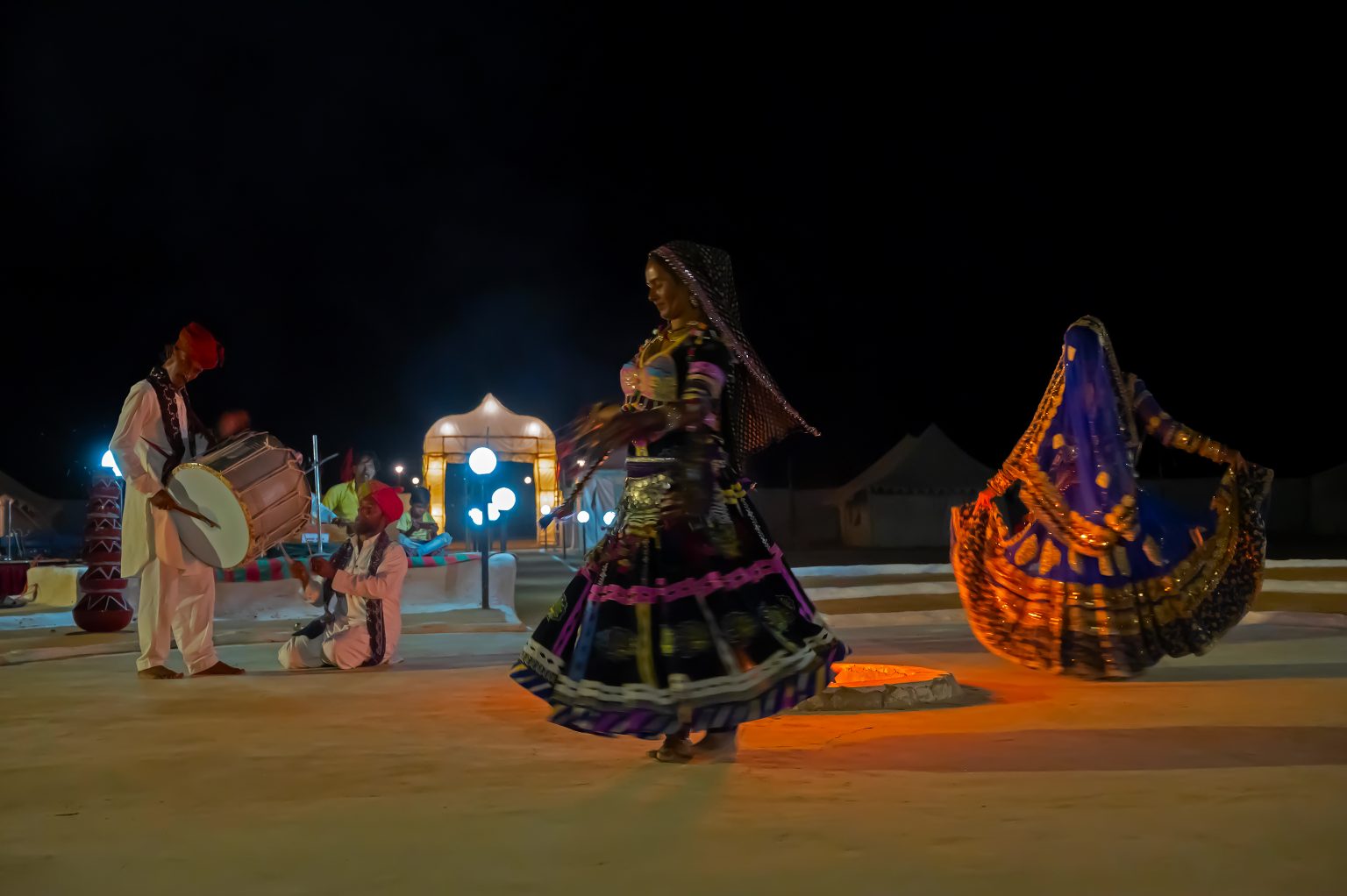
As evening falls across Rajasthan, folk music and traditional performances bring a different energy to the desert towns. Drums, string instruments, colorful costumes, and decorated camels are part of the region’s cultural celebrations.
- The Cultural Heritage of the Thar Desert
- The Most Celebrated Festivals of the Thar Desert Region
- Jaisalmer Desert Festival
- Pushkar Camel Fair
- Bikaner Camel Festival
- Marwar Festival in Jodhpur
- Kolayat Fair near Bikaner
- Music and Dance Traditions of Rajasthan
- What to Expect at a Rajasthan Desert Festival
- When to Experience Thar Desert Festivals
- Responsible Travel During Festivals
- A Three-Day Plan for the Jaisalmer Desert Festival
- Experience Rajasthan Through Its Desert Festivals
Several well-known events take place in and around the Thar Desert, including the Jaisalmer Desert Festival, the Pushkar Camel Fair, and the Bikaner Camel Festival. Each has its own character, combining local traditions with opportunities to discover Rajasthan’s music, crafts, food, and history.
For travelers interested in Rajasthan desert festivals, these gatherings offer a closer look at the communities and cultural practices that continue to shape life in western India.
The Cultural Heritage of the Thar Desert
The Thar Desert is home to long-established communities with diverse languages, customs, music, and artistic traditions. Trade routes, pastoral livelihoods, royal courts, religious practices, and local celebrations have all influenced Rajasthan’s cultural heritage.
Festivals provide opportunities for musicians, dancers, craftspeople, traders, and visitors to come together. Some events focus on livestock trading, while others emphasize religious observances or the history of particular regions.
During festival season, visitors may encounter:
- Traditional folk music and dance performances.
- Camel displays, livestock markets, and animal-related competitions.
- Handcrafted textiles, jewelry, pottery, and other regional products.
- Religious ceremonies and pilgrimages.
- Local food, storytelling, and cultural exhibitions.
These traditions are not identical across Rajasthan. Each town and community has its own practices, and festival programs can change from year to year.
The Most Celebrated Festivals of the Thar Desert Region
Jaisalmer Desert Festival
The Jaisalmer Desert Festival, also known as Maru Mahotsav, is one of Rajasthan’s best-known desert-themed cultural events. Usually scheduled in January or February, it presents regional folk arts and competitions against the historic setting of Jaisalmer and the surrounding desert.
Festival highlights may include:
- Decorated camel processions and camel-related competitions.
- Rajasthani folk music and dance performances.
- Turban-tying contests and competitions celebrating traditional moustaches.
- Puppet shows, acrobatics, and other cultural performances.
- Evening programs at desert venues near the Sam Sand Dunes, depending on the official schedule.
The festival offers visitors an opportunity to see traditional costumes, hear regional music, and explore aspects of Rajasthani culture in one visit. Events and locations can vary, so check the published program before arranging transport or accommodation.
Best for: Cultural travelers, photographers, families, and visitors interested in Rajasthan’s folk arts.
Pushkar Camel Fair
The Pushkar Camel Fair takes place in the town of Pushkar, near Ajmer, generally during October or November. It combines livestock trading with religious observances and cultural activities. The event is particularly associated with the annual gathering around Kartik Purnima, an important date in the Hindu calendar.
Visitors may experience:
- Camel and livestock trading, including horses and other animals.
- Traditional competitions, which have included longest-moustache contests.
- Cultural performances and local entertainment.
- Pilgrimage activities around Pushkar Lake and its temples.
- Markets selling handicrafts, clothing, and regional products.
The religious side of the fair is important to many participants. Visitors should observe local customs around temples, bathing areas, and ceremonies, and ask before photographing worshippers.
Additional tourist activities may be offered during the fair, but options such as hot-air balloon rides depend on the operator, weather, and current arrangements. They should not be assumed to be part of the standard festival program.
Best for: Travelers interested in livestock fairs, photography, local markets, and Hindu pilgrimage traditions.
Bikaner Camel Festival
Held in Bikaner, the Camel Festival celebrates the camel’s historic importance in the region’s transport, trade, and desert livelihoods. The event is generally organized in January, although exact dates should be confirmed through Rajasthan Tourism.
Depending on the program, visitors may see:
- Decorated camel processions.
- Camel beauty competitions and breed displays.
- Camel races or other camel-related events.
- Rajasthani folk music and dance.
- Food stalls, handicraft markets, and evening entertainment.
Bikaner also has a rich architectural and culinary heritage, making it worthwhile to explore the city beyond the festival grounds. Visitors can plan time for its historic buildings, local markets, and regional food.
Best for: Camel enthusiasts, families, photographers, and travelers interested in the relationship between desert life and animal husbandry.
Marwar Festival in Jodhpur
The Marwar Festival celebrates the folk culture and historical heritage of the Marwar region, with Jodhpur serving as its main urban setting. The event is known for music and performances that draw on regional stories, traditions, and historical figures.
Festival activities have included:
- Folk music and traditional dance.
- Performances at heritage venues such as Mehrangarh Fort.
- Puppet shows and cultural demonstrations.
- Camel-related displays and competitions in some editions.
- Public events celebrating the arts and traditions of Marwar.
The festival is often associated with the September-to-October period in the traditional calendar, although dates vary. For example, the 2026 edition is listed for October 24 and 25 by Incredible India. Check the official schedule for the year you plan to visit.
Jodhpur is not located in the middle of a remote dune field, but it is an important destination for understanding the history and culture of Rajasthan’s wider desert region.
Best for: Heritage enthusiasts, folk-music fans, and travelers combining cultural events with visits to historic forts and palaces.
Kolayat Fair near Bikaner
The Kolayat Fair, also known as the Kapil Muni Fair, is a religious gathering held near Kolayat Lake in the Bikaner district. It usually takes place in November around Kartik Purnima, although the calendar date changes each year.
The fair is especially associated with religious observances, including:
- Ritual bathing in Kolayat Lake.
- Visits to temples and other religious sites.
- Devotional activities and gatherings of pilgrims.
- Local markets and entertainment associated with the fair.
The atmosphere differs from the camel-focused celebrations of Jaisalmer and Bikaner. Religious observances are central to the event, so visitors should dress appropriately, follow instructions around sacred areas, and respect those taking part in ceremonies.
Best for: Cultural travelers interested in religious traditions and local pilgrimage gatherings.
Music and Dance Traditions of Rajasthan
Rajasthan’s folk arts reflect the region’s diverse communities and histories. Music and dance are performed at festivals, family occasions, religious gatherings, and cultural events, with styles varying between regions and performers.
Traditional Musical Instruments
Instruments commonly associated with Rajasthani folk music include:
- Dholak: A double-headed hand drum used to provide rhythm for songs and dances.
- Sarangi: A bowed string instrument known for its expressive sound.
- Algoza: A pair of flutes played together, associated with several folk-music traditions in northwestern India.
- Khartal: Wooden clappers used to create rhythmic patterns.
Other instruments, including regional string instruments and different types of drums, may also feature in performances.
Traditional Dance Forms
Visitors may encounter several recognizable dance traditions during cultural festivals:
- Kalbelia: A dance tradition associated with the Kalbelia community, known for flowing movements and distinctive costumes.
- Ghoomar: A traditional group dance characterized by circular movements and swirling skirts.
- Chari: A dance associated with balancing decorated pots on the head, sometimes featuring fire in particular performances.
Not every festival presents all these forms, and performances may vary according to the participating artists and event organizers.
What to Expect at a Rajasthan Desert Festival
Festival experiences depend on the location, schedule, and type of event. A camel fair, a folk-art celebration, and a religious gathering can offer very different activities.
During the Day
Visitors may find:
- Camel displays, livestock trading, and organized competitions.
- Handicraft stalls selling textiles, jewelry, pottery, and souvenirs.
- Folk performances and cultural demonstrations.
- Local food vendors and temporary markets.
- Opportunities to explore nearby historic sites and traditional neighborhoods.
In the Evening
Depending on the program, evening activities may include:
- Live folk music and dance performances.
- Cultural shows at historic venues or outdoor stages.
- Traditional food and local market visits.
- Performances near desert dunes during selected events.
Overnight desert camps and stargazing excursions can sometimes be arranged separately through local operators. They are not automatically included in a festival ticket or schedule, so confirm transport, accommodation, and activity details before booking.
Travel tip: Reserve accommodation early for major events, particularly in Jaisalmer and Pushkar. Check cancellation terms and the distance between your accommodation and the festival venues.
When to Experience Thar Desert Festivals
Rajasthan’s main festival season for these events generally falls between autumn and winter, but each celebration follows its own calendar.
- September to October: The Marwar Festival is commonly associated with this period, although the exact dates vary.
- October to November: The Pushkar Camel Fair usually takes place during these months.
- November: The Kolayat Fair is held around Kartik Purnima.
- January: The Bikaner Camel Festival is generally scheduled during this month.
- January or February: The Jaisalmer Desert Festival is usually held during this period.
The cooler months are often more comfortable for exploring Rajasthan’s outdoor attractions. However, daytime temperatures can still be warm, while desert nights may become cold. Pack layers and check local weather forecasts.
Because dates can change, confirm the official calendar before purchasing flights, booking non-refundable accommodation, or planning a multi-city itinerary.
Responsible Travel During Festivals
Large gatherings can place pressure on local services, public spaces, and the animals involved in livestock events. Visitors can help make their trip more respectful by following a few practical guidelines:
- Ask permission before photographing performers, residents, or pilgrims.
- Follow local rules around temples, religious ceremonies, and sacred bathing areas.
- Buy directly from local craftspeople when possible, and ask about the origin of handmade products.
- Reduce single-use plastic and dispose of waste properly.
- Follow event rules around animals and avoid activities that cause distress or unsafe handling.
- Dress appropriately for the setting and respect requests to avoid restricted areas.
- Use licensed guides and established operators for excursions outside town.
Responsible travel means appreciating cultural traditions without treating them as performances created solely for visitors.
A Three-Day Plan for the Jaisalmer Desert Festival
A three-day visit can combine festival activities with time to explore Jaisalmer’s historic center and nearby desert landscapes. Adjust the plan to the official program, which may change each year.
Day 1: Discover Jaisalmer
Explore Jaisalmer Fort and the old city, allowing time for historic streets, architecture, local shops, and regional food. Attend an evening festival performance if one is scheduled and accessible that day.
Day 2: Explore the Festival
Spend the day attending the available cultural events, camel displays, competitions, and craft markets. Check the schedule in advance because not all activities take place at the same venue.
If an evening program is planned near Sam Sand Dunes, arrange transport and confirm the return journey before setting out.
Day 3: Visit the Surrounding Desert
Choose a guided excursion or an established desert activity suited to your interests. Options may include visiting nearby dunes, learning about local communities, or arranging a desert camp through a reputable operator.
Confirm what is included in the booking, whether transport is provided, and whether the activity follows local environmental and animal-welfare requirements.
This itinerary leaves room for the festival itself while allowing time to explore the city and surrounding landscape.
Experience Rajasthan Through Its Desert Festivals
Rajasthan’s festivals bring together different aspects of the region’s cultural life, from camel trading and traditional crafts to folk music, dance, and religious observances. Jaisalmer, Pushkar, Bikaner, Jodhpur, and Kolayat each offer a distinct experience, so the best choice depends on whether you are most interested in desert landscapes, local arts, livestock fairs, or spiritual traditions.
Plan around confirmed dates, allow time to explore beyond the main event, and approach performances and ceremonies with respect. The result is a more meaningful way to discover the people, traditions, and history of the Thar Desert.