
The Nazca Desert in southern Peru is known for enormous ancient designs etched into its arid plains, but its appeal extends beyond the famous geoglyphs. Travellers can explore archaeological sites, visit ingenious pre-Columbian irrigation systems and venture into the surrounding desert landscape. This guide to Nazca Lines and desert attractions covers the main places to visit, practical travel advice and activities for discovering one of Peru’s most remarkable regions. Whether you are interested in ancient history or desert adventures in Peru, Nazca offers a combination of cultural heritage and striking natural scenery.
- Geography, Climate and Natural Setting of the Nazca Desert
- Flying Over the Nazca Lines: A View from Above
- Cerro Blanco: One of South America’s Highest Sand Dunes
- Cahuachi: The Ceremonial Centre of the Nazca Culture
- Cantalloc Aqueducts: Ancient Engineering in an Arid Landscape
- Off-Road Adventures Across Nazca’s Valleys and Dunes
- Best Time to Visit the Nazca Desert
- What to Bring to the Nazca Desert
- Sample Three-Day Nazca Desert Itinerary
- Day 1: Nazca Lines and Cantalloc Aqueducts
- Day 2: Cerro Blanco and the Desert Landscape
- Day 3: Cahuachi Archaeological Complex
- Responsible Travel in the Nazca Desert
- Discovering the Lasting Legacy of Nazca
Geography, Climate and Natural Setting of the Nazca Desert
The Nazca region lies in the Department of Ica on Peru’s southern Pacific coast, roughly 400 kilometres south of Lima. Its arid landscape includes the plains associated with the Nazca and Palpa geoglyphs, dry valleys, rocky hills and extensive sand dunes.
The region sits between the Pacific coastal environment and the western slopes of the Andes. Rainfall is extremely low across much of the desert, helping preserve the geoglyphs, although natural processes and human activity still pose conservation challenges.
Key Facts About the Nazca Region
- Location: Department of Ica, southern Peru, including the provinces of Nazca and Palpa.
- Landscape: Arid plains, sandy dunes, rocky terrain and agricultural valleys.
- Climate: Generally dry, with strong sunshine and significant differences between daytime and nighttime temperatures.
- Main travel bases: Nazca town is convenient for flights and nearby archaeological attractions. Ica is farther north and works better for travellers combining several destinations in the wider region.
- Heritage significance: The Lines and Geoglyphs of Nasca and Palpa are recognised as a UNESCO World Heritage Site.
Conditions vary across the region, so a single elevation or temperature range cannot describe every attraction. The town, the coastal plains and the higher dunes around Cerro Blanco have different environments.
Flying Over the Nazca Lines: A View from Above
A flight over the Nazca Lines is one of the best-known experiences in southern Peru. From the air, visitors can see large geometric designs and figures depicting animals, plants and other forms across the desert surface.
The geoglyphs were created by removing the darker surface stones to expose lighter ground beneath. Their scale, precision and variety make them an important record of pre-Columbian societies in the region.
What to Look for During a Flight
Recognisable figures include:
- The Hummingbird: One of the best-known animal designs.
- The Monkey: A large figure distinguished by its curled tail.
- The Spider: Another prominent zoomorphic geoglyph.
- The Condor: A bird figure associated with the wider collection of designs.
- The Hands: A human-related figure among the well-known images.
- Geometric lines and shapes: Long straight lines, trapezoids, spirals and other patterns extending across the plains.
The UNESCO-listed area contains thousands of lines and designs, although the number and classification of individual figures depend on the survey and the area being considered. Researchers continue to study their purposes and cultural significance. Interpretations include ritual and religious functions, but there is no single explanation that accounts for every design.
Practical Tips for a Nazca Lines Flight
Scenic flights generally depart from María Reiche Neuman Airport near Nazca, subject to the operator’s schedule and weather conditions.
Before booking:
- Check weather conditions: Wind, visibility and other operational factors can affect departures.
- Ask about the flight route: The figures included and the duration of a flight depend on the operator and conditions.
- Prepare for motion sickness: Small aircraft may bank repeatedly to give passengers views of the designs. If you are prone to nausea, ask your healthcare professional about suitable precautions before travelling.
- Allow schedule flexibility: Delays and cancellations can occur, so avoid planning an important onward connection immediately after the flight.
- Follow aviation rules: Listen to the pilot and crew and use the required safety equipment.
Morning flights are often popular, but they are not guaranteed to have the calmest conditions or the clearest views. Follow the operator’s current guidance rather than relying on a fixed departure time.
Cerro Blanco: One of South America’s Highest Sand Dunes
Cerro Blanco is a remarkable dune near Nazca, rising to approximately 2,076 to 2,078 metres above sea level. It is widely described by Peruvian tourism sources as the highest sand dune in South America.
Its elevation does not mean that the dune itself rises more than two kilometres above the surrounding desert floor. The summit’s altitude includes the height of the underlying terrain, while the sandy slope rises substantially above the surrounding landscape.
The area attracts hikers, photographers and experienced sandboarding enthusiasts. From higher points, visitors can see broad sections of the Nazca landscape and the surrounding Andean foothills.
Activities at Cerro Blanco
- Guided trekking: The ascent involves a demanding walk over sand and uneven terrain. Routes and walking times vary.
- Sandboarding: Descending the steep sandy slopes can be an exciting activity, but it requires appropriate equipment, guidance and an assessment of conditions.
- Landscape photography: The changing light can reveal contrasting textures across the dunes and nearby hills.
- Desert observation: The summit offers a broad perspective on the relationship between the coastal desert and the Andes.
Preparing for the Climb
Cerro Blanco should not be treated as a casual walk. Loose sand makes climbing physically demanding, and the exposed environment can be hot even when temperatures in Nazca town feel comfortable.
Plan to:
- Travel with a guide familiar with the route.
- Start early enough to reduce exposure to the strongest daytime heat.
- Carry sufficient drinking water and sun protection.
- Wear sturdy footwear suitable for sand and uneven ground.
- Confirm the expected duration and difficulty before departure.
- Check weather conditions and avoid the ascent if conditions are unsafe.
For sandboarding, use an operator with appropriate equipment and safety guidance. Do not attempt steep descents beyond your ability.
Cahuachi: The Ceremonial Centre of the Nazca Culture
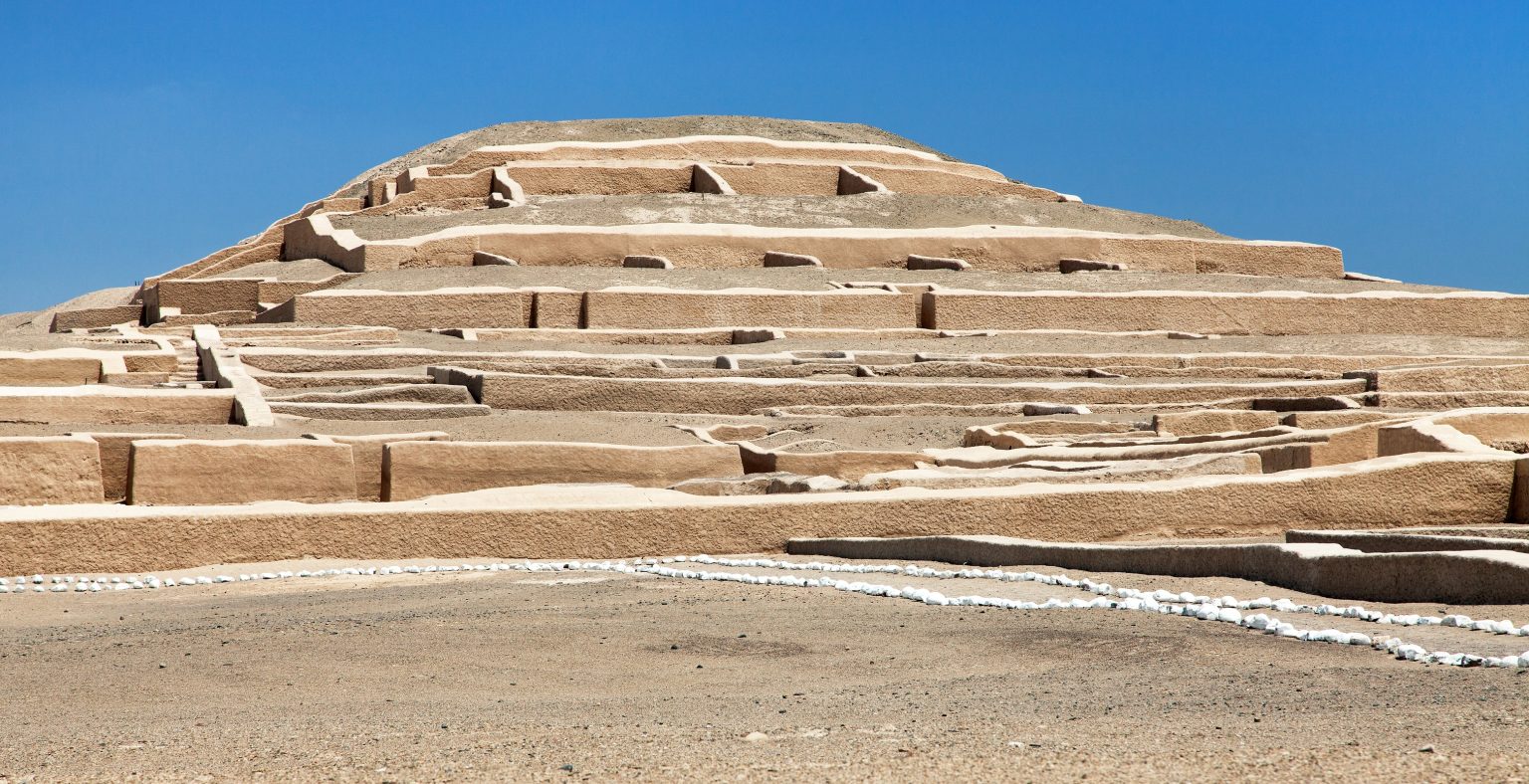
Cahuachi is an important archaeological complex associated with the ancient Nazca culture. Located in the Nazca Valley, it contains adobe structures, ceremonial architecture and large earthen platforms that reflect the organisation and beliefs of the people who used the site.
The complex developed during the early centuries BCE and CE, with its main period of importance falling within the history of the Nazca culture. Its buildings and layout suggest a major ceremonial role, although archaeologists continue to investigate how the site functioned over time.
What to See at Cahuachi
- Adobe pyramids and platforms: Large earthen structures demonstrate the scale of construction at the site.
- Ceremonial areas: The complex contains architectural features associated with collective and religious activities.
- Archaeological landscapes: The wider setting helps visitors understand the relationship between the settlement, the valley and nearby desert plains.
- Ongoing research: Excavations and conservation work continue to improve knowledge of the ancient Nazca society.
Cahuachi is an important destination for travellers interested in archaeology and pre-Columbian history. Access arrangements can vary, and some parts of the complex may be restricted to protect the ruins. Check current visitor rules and consider arranging a knowledgeable local guide.
Cantalloc Aqueducts: Ancient Engineering in an Arid Landscape
The Cantalloc Aqueducts, near Nazca town, demonstrate how communities in this dry region developed ways to manage groundwater and support agriculture. The system is associated with the ancient Nazca culture and includes underground channels and distinctive spiral-shaped access structures.
These structures helped people reach, inspect and maintain parts of the water system. Their design reflects an understanding of local terrain and the importance of managing limited water resources.
Why the Aqueducts Are Important
- Groundwater management: The channels helped convey water through an environment with very low rainfall.
- Spiral access structures: These distinctive openings provided access to parts of the system for maintenance and water collection.
- Agricultural history: The aqueducts illustrate how irrigation supported settlement and cultivation in the Nazca region.
- Living heritage: The remains provide evidence of engineering knowledge developed long before modern irrigation infrastructure.
The exact number of aqueducts and their current operational condition should not be assumed from general descriptions. Some parts of the wider irrigation system have continued to serve local agricultural needs, but the condition of individual structures varies.
Visitors should remain on permitted paths and avoid entering or climbing into the aqueducts unless access is explicitly authorised.
Off-Road Adventures Across Nazca’s Valleys and Dunes
The desert around Nazca offers opportunities for guided excursions beyond its main archaeological attractions. Depending on the route, visitors can encounter sand dunes, rocky terrain, dry valleys and viewpoints across the surrounding landscape.
Four-wheel-drive vehicles can be useful on appropriate desert tracks, but off-road driving is not permitted everywhere. Archaeological protection areas, private land and fragile desert surfaces may have restrictions.
What an Excursion May Include
- Dune exploration: Visit suitable sandy areas with an authorised operator.
- Landscape photography: Photograph the contrast between dunes, rocky hills and the dry valley environment.
- Nature observation: Look for desert-adapted birds and other wildlife without disturbing them. Sightings depend on location and conditions.
- Rural scenery: Explore agricultural valleys and settlements where access is permitted.
- Connections to nearby destinations: Longer itineraries can combine Nazca with other parts of the Ica region, although distances and travel times should be planned carefully.
Choose an operator who understands local access rules and knows which areas are suitable for vehicle excursions. Never drive across the Nazca geoglyphs or enter protected archaeological areas in a vehicle.
Best Time to Visit the Nazca Desert
Nazca has an arid climate, but weather and travel conditions still vary by month, altitude and activity. There is no universal season that guarantees ideal conditions for every excursion.
April to October
These months are often suitable for exploring the desert, visiting archaeological attractions and arranging outdoor activities. Conditions are generally dry, although wind, cloud and temperature changes can still affect individual plans.
November to March
Temperatures can be warmer during this period. The region remains predominantly arid, but conditions may vary, and unusual rainfall associated with broader weather patterns can affect roads or excursions.
Planning Your Visit
For many travellers, May to September is a practical period to consider for hiking and desert exploration. However, flight availability, visibility and outdoor conditions should be checked close to departure.
- Confirm flight schedules and weather-related restrictions before booking.
- Plan demanding walks for cooler parts of the day.
- Carry water and sun protection throughout the year.
- Bring a light jacket for early mornings and evenings.
- Allow extra time for activities that depend on weather or operator availability.
What to Bring to the Nazca Desert
The right equipment depends on whether you are taking a scenic flight, visiting archaeological sites or joining a strenuous desert excursion.
Essentials
- Sun protection: A wide-brimmed hat, sunglasses and sunscreen.
- Water: Carry enough for your planned activities, with additional supplies for longer walks.
- Comfortable footwear: Choose sturdy shoes for archaeological paths and uneven terrain.
- Lightweight clothing: Breathable fabrics are useful during warm daytime conditions.
- A light jacket: Early mornings and evenings can feel cooler than expected.
- Snacks: Useful for longer excursions, especially when food stops are not included.
- Cash and payment options: Confirm payment methods with tour providers and local businesses before departure.
Optional Equipment
- Camera or binoculars: Useful for landscapes and wildlife observation.
- Headlamp: Helpful for early starts or permitted evening activities.
- GPS or offline maps: Valuable on remote routes, although they should not replace a knowledgeable guide.
- Tripod: Useful for landscape photography when there is a safe and permitted place to set it up.
Drone use is subject to applicable rules and restrictions, especially around protected archaeological areas. Check the current regulations and obtain any required authorisation before bringing a drone into the field.
Sample Three-Day Nazca Desert Itinerary
Three days provide a practical introduction to Nazca’s major attractions without requiring every activity to be rushed into a single day.
Day 1: Nazca Lines and Cantalloc Aqueducts
Arrive in Nazca and confirm your scenic flight with a licensed operator. If weather and schedules allow, take a flight over the geoglyphs and look for recognisable figures and geometric patterns.
In the afternoon, visit the Cantalloc Aqueducts, allowing time to learn about the irrigation system and its role in the region’s agricultural history. Confirm opening arrangements and transport before setting out.
Day 2: Cerro Blanco and the Desert Landscape
Begin early with a guided excursion to Cerro Blanco if weather and fitness levels make the climb appropriate. Allow sufficient time for the ascent and descent, and carry enough water and sun protection.
If a full climb is not suitable, choose a less demanding desert outing or a guided photography excursion. Sandboarding should be arranged with an experienced operator and should match your ability.
Day 3: Cahuachi Archaeological Complex
Spend the final day exploring Cahuachi and learning about the ancient Nazca culture. A knowledgeable guide can help explain the adobe structures, ceremonial setting and relationship between the archaeological complex and the wider valley.
Return to Nazca with enough time for your onward journey. If access to Cahuachi is restricted on your chosen date, arrange an alternative archaeological or cultural visit rather than entering areas that are closed to visitors.
Responsible Travel in the Nazca Desert
The Nazca region contains fragile archaeological remains and a distinctive desert environment. Responsible behaviour helps protect both.
- Protect the geoglyphs: Never walk or drive on the lines, figures or restricted archaeological surfaces.
- Follow marked routes: Use authorised paths and observe site instructions.
- Choose knowledgeable guides: Local guides can explain the cultural context and help you avoid restricted areas.
- Leave no waste: Carry rubbish out of remote locations and dispose of it appropriately.
- Respect archaeological structures: Do not touch, climb or remove material from ancient buildings and irrigation systems.
- Observe wildlife responsibly: Keep your distance and avoid disturbing animals.
- Check activity permits: Confirm the rules for flights, vehicle excursions, photography and drone use before departure.
The geoglyphs have survived for centuries partly because of the region’s dry conditions, but they remain vulnerable to damage. Even small disturbances can have lasting consequences.
Discovering the Lasting Legacy of Nazca
The Nazca Desert brings together ancient geoglyphs, archaeological architecture, ingenious water systems and a landscape shaped by extreme aridity. The Nazca Lines remain its best-known attraction, but places such as Cerro Blanco, Cahuachi and the Cantalloc Aqueducts reveal other dimensions of the region’s natural and cultural history.
A well-planned visit combines these attractions with realistic travel times, suitable preparation and respect for protected sites. Rather than treating Nazca as a single mystery to solve, take time to understand the archaeological evidence, the environment and the people who continue to live and work in the region. The result is a richer journey through one of Peru’s most distinctive desert landscapes.