
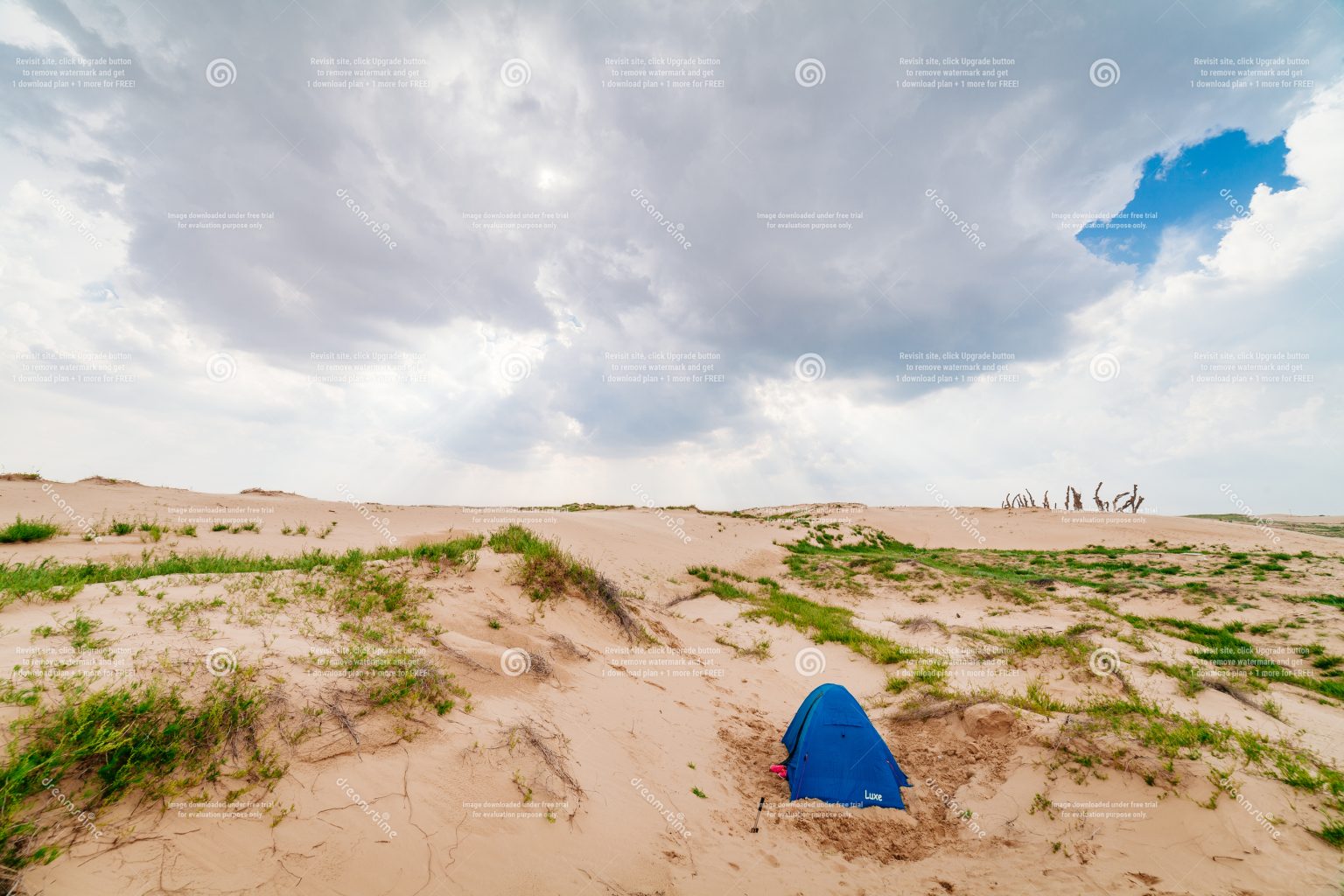
Desert camping in China offers a chance to experience landscapes ranging from vast sand seas and remote lakes to historic oases and desert-edge forests. From the Badain Jaran Desert in Inner Mongolia to the Taklamakan in Xinjiang, each region presents different opportunities for outdoor exploration, photography and cultural discovery. This guide covers the best-known destinations, practical camping advice, seasonal conditions and responsible ways to explore China’s deserts.
- Why Desert Camping in China Is Special
- Best Desert Camping Destinations in China
- 1. Badain Jaran Desert, Inner Mongolia
- 2. Mingsha Shan and Crescent Moon Spring, Dunhuang
- 3. Taklamakan Desert, Xinjiang
- 4. Ejina and Its Golden Poplar Forests, Inner Mongolia
- 5. Lop Nur and Eastern Xinjiang
- What to Expect When Camping in China’s Deserts
- What to Bring for Desert Camping
- Best Time to Camp in China’s Deserts
- Stargazing in China’s Desert Skies
- Responsible Desert Camping
- Sample Three-Day Camping Itinerary: Badain Jaran Desert
- Day 1: Reach the Desert and Begin the Excursion
- Day 2: Explore the Dunes and Lakes
- Day 3: Morning Photography and Return
- Why Desert Camping in China Leaves a Lasting Impression
Why Desert Camping in China Is Special
China’s deserts are more than expanses of sand. They contain distinctive geological formations, fragile ecosystems and landscapes connected to historic trade routes and regional cultures.
What makes desert camping in China distinctive:
- Varied landscapes: Explore giant dunes, gravel plains, salt basins, oases and desert-edge woodlands.
- Silk Road heritage: Discover historic settlements and cultural sites that developed along routes linking China with Central Asia.
- Stargazing opportunities: Remote areas can offer dark skies away from urban lighting when weather conditions are favourable.
- Regional cultures: Learn about local traditions through appropriate, community-based experiences with Mongolian, Uyghur and other communities.
- Remote wilderness: Some destinations offer a sense of isolation, although access, facilities and visitor restrictions vary considerably.
Not every desert is suitable for independent camping. Established tourist areas may provide organised overnight experiences, while remote dunes and protected landscapes can require specialist guides, advance arrangements or permission.
Best Desert Camping Destinations in China
1. Badain Jaran Desert, Inner Mongolia
Known for its extraordinary dunes and inter-dunal lakes, the Badain Jaran Desert is one of China’s most distinctive desert landscapes. Located on the Alxa Plateau in northwestern China, it was inscribed on the UNESCO World Heritage List in 2024 as Badain Jaran Desert: Towers of Sand and Lakes.
Some of its giant dunes rise dramatically above the surrounding terrain. UNESCO identifies the tallest stabilised sand mega-dune within the listed property as having a relative height of approximately 460 metres. The desert also contains numerous lakes, many of them saline, separated by towering sand ridges.
Highlights of a Badain Jaran excursion:
- Giant dunes: Explore impressive sand formations with an experienced local driver or guide.
- Inter-dunal lakes: Observe the lakes from authorised viewpoints and learn about the unusual desert environment.
- Badain Jaran Temple: Visit this remote Buddhist temple if it is included in your confirmed itinerary and access is available.
- Desert photography: Capture the contrasts between dunes, water and changing light.
- Night-sky viewing: Enjoy the darkness when skies are clear and conditions permit.
Camping in Badain Jaran requires particular care. Much of the landscape has no paved roads, and tourism is managed to protect the dunes, lakes and groundwater systems.
Before booking an overnight trip:
- Confirm whether camping is permitted at the proposed location.
- Ask whether tents, meals, sleeping equipment and transport are included.
- Check the route, weather forecast and emergency arrangements.
- Follow local instructions around lakes and protected areas.
Do not assume that every lake, including Bilutu Lake, is an authorised campsite or that a tent can be set up freely beside the water. A specialist local operator can advise on permitted overnight arrangements.
Best for: Travellers seeking dramatic dune scenery, photography and a carefully organised remote-desert experience.
2. Mingsha Shan and Crescent Moon Spring, Dunhuang
Near Dunhuang in Gansu Province, Mingsha Shan is famous for its large dunes and its proximity to Crescent Moon Spring, a small oasis beside the sand. Dunhuang’s historic importance along the Silk Road makes the area particularly appealing to travellers who want to combine desert scenery with cultural attractions.
This is a more accessible destination than the remote interior of the Taklamakan, although access to individual activities and overnight areas remains subject to local rules.
Things to do around Dunhuang:
- Explore Mingsha Shan: Walk along designated routes and enjoy views over the dunes.
- Ride a camel: Choose an organised excursion where this activity is available.
- Try sandboarding: Check current facilities, activity availability and safety requirements.
- Visit Crescent Moon Spring: See the oasis and its surrounding historic-style buildings.
- Explore the Mogao Caves: Visit this UNESCO World Heritage Site, renowned for Buddhist murals, sculptures and manuscripts associated with the Silk Road.
Camping should be arranged through an authorised campsite or operator rather than assumed to be permitted beside Crescent Moon Spring or anywhere within the scenic area. Travellers who prefer greater comfort can look for established accommodation near Dunhuang and organise daytime desert excursions.
For a first desert trip, this arrangement can provide a practical balance of outdoor activities, cultural heritage and reliable visitor services.
Best for: First-time desert travellers, families and visitors interested in both dunes and history.
3. Taklamakan Desert, Xinjiang
The Taklamakan Desert is a vast sand desert in the Tarim Basin of Xinjiang. Its shifting dunes, remote interior and historic connections to Silk Road oases make it one of China’s most formidable desert environments.
However, it is not a destination for casual, unplanned camping. Long distances, limited services and uncertain communications can make independent travel hazardous.
What a well-planned desert expedition may offer:
- Views of large sand dunes and the surrounding arid landscape.
- Visits to accessible desert-edge locations arranged through local operators.
- Opportunities to learn about historic oasis settlements and regional trade routes.
- Night-sky photography away from artificial lighting.
- Guided exploration along routes suitable for the vehicle and season.
Important planning considerations:
- Do not travel deep into the desert alone.
- Confirm the route, permits and access conditions before departure.
- Carry adequate drinking water, food, fuel and emergency equipment for the planned journey.
- Use reliable navigation and a backup communication method where mobile coverage is limited.
- Check weather and road conditions, and avoid routes that have not been verified as safe and open.
Historic Silk Road sites around the Tarim Basin are not necessarily accessible from the same route, and the desert should not be treated as one continuous camping area. Plan around specific destinations and authorised access points.
Best for: Experienced travellers joining a specialist, properly equipped expedition.
4. Ejina and Its Golden Poplar Forests, Inner Mongolia
Ejina Banner in western Inner Mongolia is widely known for its autumn poplar forests, which turn golden during a relatively short seasonal period. The combination of desert-edge scenery, waterways and colourful trees creates a different experience from camping among giant dunes.
The best-known autumn scenery attracts many visitors, so accommodation and transport may be busy during peak foliage periods.
What to experience in Ejina:
- Visit designated viewing areas in the poplar forests.
- Explore nearby desert-edge landscapes on authorised routes.
- Photograph the contrast between golden foliage and arid surroundings.
- Learn about local life and the environmental conditions that sustain these woodlands.
- Check for seasonal cultural events and tourism programmes.
The exact timing of autumn colours varies with weather and seasonal conditions. The Ejina poplar forests should not be confused with an unrestricted desert camping zone: overnight stays must follow the rules of the specific site.
For travellers interested in camping, confirm whether an established campsite or organised overnight excursion is available outside protected forest areas.
Best for: Autumn photographers, nature lovers and travellers who want to combine desert landscapes with seasonal scenery.
5. Lop Nur and Eastern Xinjiang
Lop Nur is a remote, historically significant area in eastern Xinjiang, associated with an ancient lake basin, major environmental changes and archaeological research. It is also known for its harsh desert conditions.
This is not a standard tourist camping destination. Access to remote areas can be restricted, and the region’s isolation makes independent expeditions particularly risky.
For travellers interested in the region:
- Learn about Lop Nur’s geography and environmental history through reputable educational sources.
- Visit accessible destinations in Xinjiang that interpret the region’s desert landscapes and Silk Road heritage.
- Consult qualified local operators about whether any proposed itinerary is authorised and suitable for visitors.
- Verify current restrictions before making travel arrangements.
Do not attempt to enter restricted or undeveloped areas without the required permission and professional support. For most visitors, established attractions elsewhere in Xinjiang offer a safer and more practical way to explore the region’s desert environments.
Best for: Researchers and authorised specialist expeditions, rather than ordinary independent campers.
What to Expect When Camping in China’s Deserts
Facilities differ widely between established tourist camps and remote expeditions. Some organised experiences provide tents, sleeping mats, meals and guides, while others require visitors to bring most of their own equipment.
Depending on the destination and package, an overnight experience may include:
- A tent or other designated accommodation.
- Sleeping mats and basic bedding.
- Meals and drinking water supplied by the operator.
- Guided walks or camel rides where available.
- Evening stargazing when weather conditions allow.
- Transport to and from the camping area.
Comfortable glamping or lodge-style accommodation may be available near selected tourist destinations, but it should not be assumed to exist in remote parts of Badain Jaran or the Taklamakan.
Daytime Heat and Cold Nights
Desert temperatures can vary significantly between day and night, and conditions differ by season, elevation and location. A hot afternoon can be followed by a cold evening, while winter nights can become severely cold.
Prepare for changing conditions by:
- Checking the forecast for the specific destination and dates.
- Bringing insulating layers even when daytime temperatures are warm.
- Using a sleeping bag suitable for the expected overnight low.
- Protecting yourself from sun, wind and blowing sand.
- Confirming the availability of shade, shelter and drinking water.
Do not rely on a single temperature range for all of China’s deserts. The conditions around Dunhuang, the high dunes of Badain Jaran and the remote Taklamakan can differ substantially.
What to Bring for Desert Camping
A suitable packing list depends on whether you are joining an organised overnight stay or undertaking a remote expedition.
Essential Items
- Sleeping bag: Choose one rated for the expected minimum overnight temperature.
- Warm layers: Bring an insulated jacket and clothing suitable for cold evenings.
- Headlamp or flashlight: Carry spare batteries or a reliable rechargeable alternative.
- Sun protection: Pack sunscreen, sunglasses and a wide-brimmed hat.
- Drinking water: Carry enough for the activity, with an additional reserve for delays.
- Food and snacks: Bring suitable provisions if meals are not included.
- Navigation: Download offline maps and carry a dependable GPS or other backup.
- First-aid supplies: Include personal medication and basic emergency items.
Useful Extras
- A power bank or suitable solar charger.
- A tripod for night photography.
- Binoculars for observing landscapes and wildlife from a distance.
- Dust-resistant bags for cameras and electronic devices.
- A reusable water bottle and a way to keep equipment organised.
- Emergency communication equipment for remote journeys without reliable mobile coverage.
For remote camping, ask the operator exactly what equipment is provided. Avoid carrying unnecessary gear, but never leave out essential safety equipment simply to reduce pack weight.
Best Time to Camp in China’s Deserts
There is no single best season for every desert destination. Weather, elevation, visitor demand and local access rules all affect the experience.
April to June
Spring can provide suitable conditions for some desert excursions, with warm days and cooler nights. Wind and dust may affect visibility, and temperatures can vary considerably between destinations.
Check the forecast before planning long walks or remote overnight trips.
July to August
Summer can bring intense heat, particularly in lower desert basins and exposed dune fields. Strenuous activities may need to be limited to cooler hours, and some remote trips may be unsuitable under extreme conditions.
Carry sufficient water and follow local advice about heat and route safety.
September to October
Early autumn is often a popular time for desert travel, although the best conditions depend on the destination. Ejina is especially well known for its golden poplar foliage, while other areas may offer comfortable conditions for outdoor activities.
Book accommodation in advance if visiting popular seasonal attractions.
November to March
Winter can bring very cold nights and difficult conditions in remote areas. Camping may still be possible through a properly equipped operator, but it requires suitable clothing, sleeping equipment and careful planning.
For many visitors, May, September and early October are useful months to consider, depending on the destination. Always check the local forecast and current access arrangements before booking.
Stargazing in China’s Desert Skies
Remote desert areas can offer excellent opportunities for stargazing in China, particularly when skies are clear and artificial lighting is limited. The experience depends on weather, moonlight, dust and the amount of light pollution around the chosen campsite.
Places to consider include:
- Badain Jaran: The remote dunes and lakes create dramatic foregrounds for night photography, where overnight access is authorised.
- Dunhuang: Areas outside the brightest parts of the city may offer opportunities for desert photography, subject to local access rules.
- Selected areas of Xinjiang: Remote desert-edge locations can provide dark skies when conditions are suitable and travel is properly arranged.
Tips for Desert Stargazing
- Check the moon phase if you want to photograph faint stars or the Milky Way.
- Use a tripod and a camera setting suited to low-light photography.
- Bring warm clothing because temperatures can fall after sunset.
- Protect lenses and other equipment from fine sand.
- Remain at the permitted campsite or follow your guide’s instructions.
- Avoid disturbing wildlife or other visitors with bright lights and noise.
The Milky Way is not visible in the same way throughout the year, and clear skies cannot be guaranteed. Plan around the season, weather forecast and moonlight rather than relying on a promise of perfect night-sky conditions.
Responsible Desert Camping
China’s desert environments include fragile dune systems, lakes, vegetation and cultural sites. Responsible travel helps protect these places while reducing risks to visitors.
Follow these principles:
- Leave no waste: Pack out rubbish and dispose of it at appropriate facilities.
- Use authorised campsites: Do not assume that camping is permitted beside lakes, in protected forests or on private land.
- Protect vegetation: Avoid trampling plants or driving over sensitive desert surfaces.
- Respect local communities: Ask permission before photographing people or entering private property.
- Follow fire rules: Use fires only where explicitly permitted and never leave them unattended.
- Choose qualified operators: For remote trips, check the operator’s experience, route plan and emergency arrangements.
- Respect access restrictions: Do not enter closed, protected or restricted areas without the required authorisation.
Desert ecosystems often recover slowly from damage. Keeping campsites clean and following local guidance helps preserve these landscapes for future visitors.
Sample Three-Day Camping Itinerary: Badain Jaran Desert
A three-day trip to Badain Jaran can offer a useful introduction to its giant dunes and lakes, provided a suitable operator confirms the route and overnight arrangements. The itinerary below is a planning framework, not a guarantee that every stop or campsite is available.
Day 1: Reach the Desert and Begin the Excursion
Arrive at the agreed regional meeting point in the Alxa area. Meet your guide, check the vehicle and supplies, and travel into the desert along an authorised route.
Explore selected dunes and viewpoints as conditions allow. If an overnight stay has been arranged at an approved location, set up camp or settle into the accommodation provided by the operator.
Day 2: Explore the Dunes and Lakes
Spend the day visiting selected parts of the dune and lake landscape with your guide. A visit to Badain Jaran Temple may be possible if it is included in the itinerary and access is available.
Allow time for photography, rest and meals. In the evening, enjoy stargazing if weather and site conditions permit.
Do not assume that camping or picnicking is permitted directly beside every lake.
Day 3: Morning Photography and Return
Take advantage of the morning light for photography before packing up and following the agreed return route.
Confirm your onward transport in advance. Continuing directly to Zhangye may require additional travel time and should not be treated as an automatic extension of the desert excursion.
Important: Arrange transport, overnight accommodation, meals and route permissions before departure. The final itinerary will depend on the operator, current conditions and permitted access.
Why Desert Camping in China Leaves a Lasting Impression
Desert camping in China brings together striking natural landscapes, historic trade routes and opportunities to experience remote environments at a slower pace. Badain Jaran offers extraordinary dunes and lakes, Dunhuang combines desert scenery with Silk Road heritage, and selected areas of Xinjiang provide access to some of the country’s most extensive desert landscapes.
The best trip is not necessarily the one that travels farthest into the wilderness. It is the one planned around realistic routes, suitable equipment and respect for local rules.
Choose an appropriate destination, prepare for changing conditions and leave the landscape undisturbed. That way, China’s deserts can be experienced for their scale, quiet and natural beauty without putting visitors or fragile environments at unnecessary risk.