
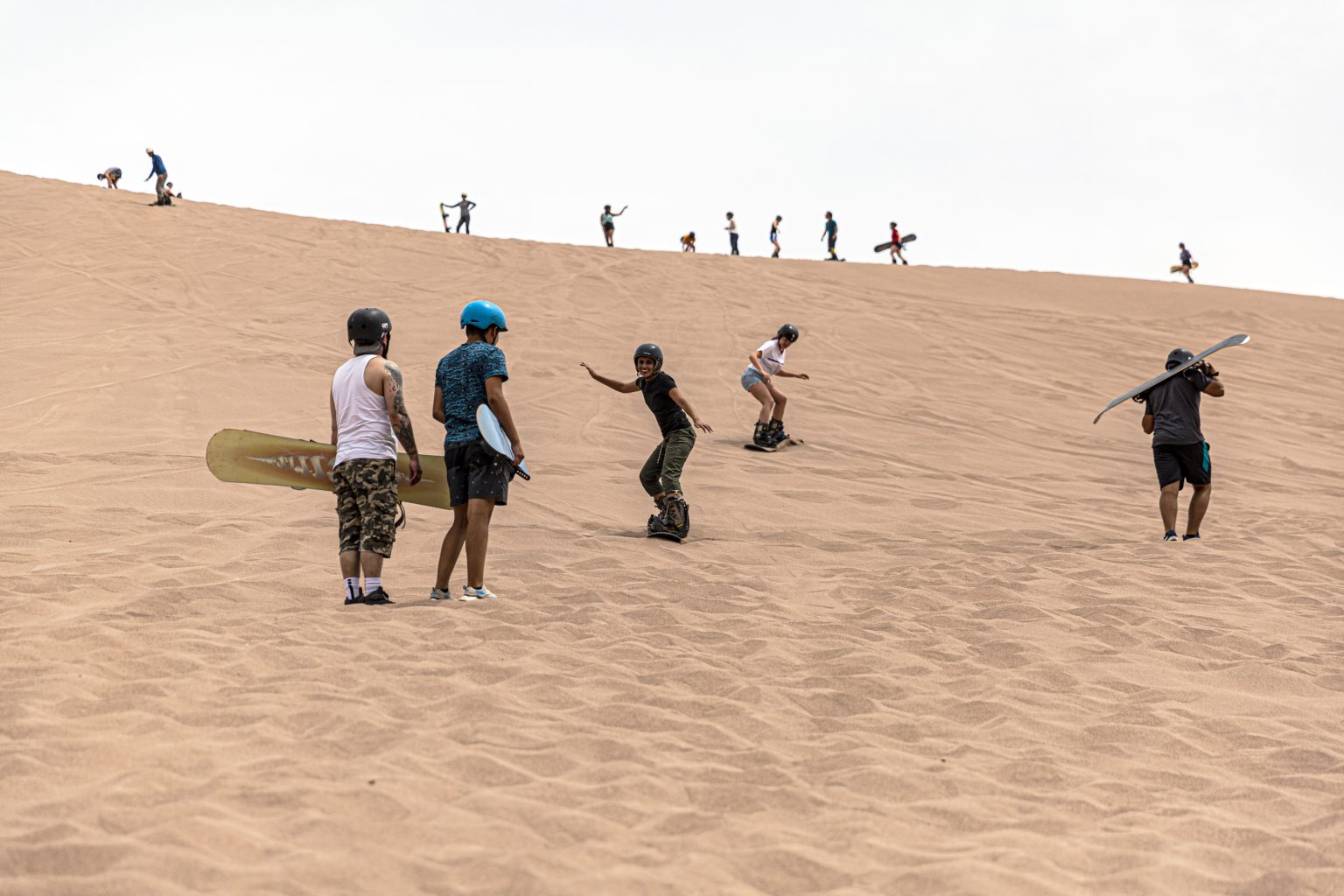
Sandboarding in Chile: Adventure on the Atacama Dunes
The sand shifts beneath your feet, the sky turns gold, and the wind sweeps across the dunes. At the top of a slope, you secure your board, listen to your instructor, and prepare for the descent. A few seconds later, you are gliding across the sand with the vast desert stretching around you.
- Why Try Sandboarding in Chile?
- Best Places for Sandboarding in Chile
- Valle de la Muerte near San Pedro de Atacama
- Sea of Dunes near Copiapó
- Cerro Dragón in Iquique
- Concón Dunes near Valparaíso
- What to Expect During a Sandboarding Session
- Best Time for Sandboarding in Chile
- What to Wear and Bring
- Sandboarding Safety and Responsible Travel
- Sandboarding Tours and Costs in Chile
- Sample Three-Day Sandboarding Itinerary in Northern Chile
- Day 1: Sandboarding near San Pedro de Atacama
- Day 2: Explore Valle de la Luna
- Day 3: Desert Culture and Stargazing
- More Experiences to Combine with Sandboarding
- Discover Chile’s Dunes on a Sandboard
Sandboarding in Chile combines outdoor adventure with some of the country’s most striking landscapes. From the sculpted dunes near San Pedro de Atacama to the expansive sand fields around Copiapó, Atacama Desert sandboarding offers a chance to experience northern Chile beyond its salt flats and volcanic viewpoints. Whether you are a beginner or an experienced board rider, the right location and preparation can make your sandboarding adventure in Chile both exciting and rewarding.
Why Try Sandboarding in Chile?
Chile’s varied geography includes extensive desert landscapes, coastal dunes, and steep sandy slopes. In the north, the Atacama Desert provides several settings for sandboarding, with guided experiences available around established tourist destinations.
Unlike snowboarding, sandboarding takes place on loose or compacted sand. The board moves differently across the surface, and climbing back to the top of a dune can require considerable effort, especially in hot and dry conditions.
Reasons to try this activity include:
- Desert adventure: Descend sandy slopes surrounded by the distinctive landscapes of northern Chile.
- Beginner-friendly experiences: Many guided sessions include basic instruction and equipment, so previous boarding experience is not always necessary.
- Scenic viewpoints: Dunes and nearby rock formations offer opportunities for landscape photography.
- Outdoor exercise: Walking uphill through loose sand adds a physical challenge to the activity.
- Flexible excursions: Some tours combine sandboarding with guided walks or time to explore the surrounding desert.
The experience depends on the slope, weather, equipment, and your comfort level. Start on a gentle dune and follow the instructor’s advice before attempting steeper descents.
Best Places for Sandboarding in Chile
Valle de la Muerte near San Pedro de Atacama
<text> </text>
Often called Valle de la Muerte, or Death Valley, this destination near San Pedro de Atacama is one of the best-known places for sandboarding in the Atacama Desert. It is also referred to as Valle de Marte, or Mars Valley, in tourism materials.
The area lies among the distinctive rock formations of the Cordillera de la Sal. Sandy slopes, eroded hills, and open desert views create a striking setting for a guided sandboarding session.
Highlights include:
- Dune descents: Try different slopes according to your ability and the instructor’s recommendations.
- Desert scenery: Observe the contrast between sandy surfaces and the surrounding rock formations.
- Sunset views: Late-afternoon light can bring warm colors to the dunes and nearby hills, subject to tour schedules and site access.
- Guided instruction: Learn how to position your feet, control your balance, and descend more confidently.
- Photography stops: Capture the landscape between runs without interfering with other riders.
The dunes are close to San Pedro de Atacama, making them convenient for a half-day excursion. Many local tours provide transport, boards, protective equipment, and an instructor.
Sandboarding here involves repeated uphill walks, so allow time to rest and drink water between runs. The combination of dry air, sun exposure, and the area’s elevation can make the activity more demanding than it first appears.
Sea of Dunes near Copiapó
The Sea of Dunes, south of Copiapó in the Atacama Region, is another major destination for sandboarding. Chile’s official tourism information describes this dune field as covering more than 300 square kilometers, making it the country’s largest dune field.
The broad sandy terrain offers a different experience from the smaller excursion areas around San Pedro de Atacama. The dunes are a draw for adventure travelers, photographers, and visitors interested in exploring the wider Atacama landscape.
Experiences to consider include:
- Sandboarding on selected slopes: Choose suitable dunes based on current conditions and your experience.
- Dune photography: Photograph the changing lines, textures, and shadows across the sand.
- Guided desert exploration: Learn about the area’s geology and the forces that shaped its landscape.
- Scenic viewpoints: Visit suitable locations for views across the dune field, particularly when the light is softer.
The dune field is south of Copiapó, and access depends on the route and the specific area you intend to visit. Some interior roads and dune approaches require a suitable 4×4. An organized tour is a practical option if you are unfamiliar with the terrain.
Do not assume that every dune is open for riding or unrestricted vehicle access. Follow local guidance, avoid fragile surfaces, and use established access routes.
Cerro Dragón in Iquique
Cerro Dragón, near Iquique in northern Chile, is a notable urban dune landscape. Its large sand formation rises beside the city, creating a striking contrast between the desert environment and the surrounding urban area.
Iquique has a long association with board sports, and the wider region attracts visitors interested in sandboarding and other outdoor activities. However, access, permitted riding areas, and current conditions should be checked locally before planning a session.
Potential highlights include:
- Large dune scenery: View the scale of the sand formation from suitable public viewpoints.
- Desert and coastal contrasts: Experience the relationship between the dry landscape and the Pacific coast.
- Photography: Capture the changing patterns on the sand and the surrounding city.
- Local outdoor culture: Ask local operators about current sandboarding opportunities and suitable slopes.
Cerro Dragón is not part of the San Pedro de Atacama excursion area, so plan it as a separate destination. If sandboarding is your main goal, confirm whether a guided session or equipment rental is available for your travel dates.
Concón Dunes near Valparaíso
Chile’s sandboarding opportunities are not limited to the Atacama Desert. The Concón Dunes, near the coastal city of Viña del Mar and the wider Valparaíso area, offer a different setting shaped by coastal winds and nearby urban development.
This destination can suit travelers who want to experience sandy slopes without making a long journey into northern Chile. Local conditions and access rules vary, so check which activities are permitted before bringing equipment or attempting a descent.
Things to consider include:
- Coastal scenery: Enjoy views of the surrounding coastal landscape from permitted viewpoints.
- Beginner sessions: Ask local providers whether instruction or equipment rental is available.
- Short outings: The dunes can be considered as part of a wider visit to the Valparaíso coast.
- Environmental protection: Follow marked routes and respect restrictions designed to protect the dune ecosystem.
Concón is a coastal dune destination, not an Atacama Desert location. Its landscape and climate differ from the dry interior of northern Chile, so it offers a distinct alternative for travelers exploring several parts of the country.
What to Expect During a Sandboarding Session
A typical sandboarding tour in Chile begins with transport to the selected dunes or a meeting point near the activity area. The guide provides equipment and explains how to use the board before the first descent.
A guided session may include:
- Equipment fitting: Check that your board, boots or footwear, and protective gear are suitable.
- Basic instruction: Learn the recommended stance, how to start, and how to slow down or stop.
- Practice on a gentle slope: Build confidence before attempting more challenging terrain.
- Repeated descents: Walk back uphill and try again when the instructor confirms that it is safe.
- Rest and photography breaks: Take time to recover and enjoy the surrounding landscape.
Some riders prefer standing on the board, while others may be offered a seated or lying-down style depending on the equipment and operator. Follow the instructor’s recommendations rather than experimenting with unfamiliar techniques on steep slopes.
Sandboarding is not completely effortless. Walking uphill through soft sand can be tiring, and falls are part of learning for some participants. Choose a session that matches your fitness and comfort level, and stop if you feel dizzy, unusually fatigued, or unwell.
Best Time for Sandboarding in Chile
Sandboarding is available in several parts of Chile, but the most comfortable time depends on the destination, local weather, and tour schedule. The Atacama is generally dry, yet daytime sun can be intense and temperatures can change significantly after sunset.
Spring and Autumn
Spring and autumn can offer comfortable conditions for outdoor activities in northern Chile. Temperatures vary between locations, so check the forecast for the exact dune area rather than relying on national seasonal averages.
For a better experience:
- Choose a morning or late-afternoon departure when offered.
- Check the wind forecast and any local weather warnings.
- Carry enough drinking water for the duration of the session.
- Bring a light layer for cooler conditions after the activity.
Summer
Summer can provide long daylight hours, but direct sun and hot sand can make uphill walking demanding. The period from December to March is also a popular travel season in many parts of Chile, so booking ahead may be useful.
If you visit during summer:
- Avoid unnecessary exposure during the hottest part of the day.
- Use sunscreen and secure sunglasses.
- Drink water regularly, even when you do not feel very thirsty.
- Follow the guide’s advice if wind, heat, or sand conditions become unsuitable.
Winter
Winter can still offer opportunities for sandboarding in northern Chile, but cooler temperatures, wind, and changing conditions may affect comfort and tour schedules. Bring suitable layers and check whether your chosen operator is running the excursion.
There is no single season that guarantees ideal conditions at every destination. Confirm the local forecast and tour availability shortly before departure.
What to Wear and Bring
The right clothing and equipment help protect you from sun, sand, and wind. Most guided excursions supply the board and may include other protective gear, but inclusions differ between operators.
Clothing and Protection
- Comfortable outdoor clothing: Choose garments that allow you to bend, walk, and move freely.
- Closed shoes: Protect your feet during the walk up the dunes and around the activity area.
- Long socks: These may help prevent sand rubbing against your skin when suitable boots are provided.
- Sunglasses or protective goggles: Protect your eyes from bright light and blowing sand.
- A hat: Useful before and after riding, provided it can be secured in windy conditions.
- A light jacket: Helpful during cool mornings, windy periods, or after sunset.
- Sunscreen: Apply it before the session and reapply as directed.
Useful Essentials
- Drinking water: Carry enough for the session, with additional water when conditions are hot or the walk is strenuous.
- A small backpack: Keep personal items secure and leave unnecessary belongings behind.
- A phone or camera: Protect electronic devices from fine sand and dust.
- A power bank: Useful for longer outings or when taking many photographs.
- Personal medication: Bring any essential medication you normally need and inform the guide of relevant safety concerns.
Before booking, ask whether the tour includes a helmet, goggles, boots, transport, and entrance fees. Never assume that all packages provide identical equipment.
Sandboarding Safety and Responsible Travel
A good sandboarding experience depends on choosing an appropriate slope, using suitable equipment, and following local instructions. Sand can appear soft, but speed, uneven surfaces, hidden rocks, and collisions can still cause injuries.
Follow these precautions:
- Start on a gentle slope: Build your confidence before attempting steeper dunes.
- Listen to your instructor: Follow advice on stance, speed, stopping, and safe falling techniques.
- Keep a safe distance: Wait until the previous rider has cleared the landing area before descending.
- Check the slope: Do not ride where rocks, people, vehicles, or other obstacles create hazards.
- Use recommended protective equipment: Wear the helmet and other gear supplied or required by the operator.
- Rest when needed: Repeated climbs can be strenuous, particularly in hot conditions or at altitude.
- Protect against the sun: Use sunscreen, sunglasses, and suitable clothing.
- Respect access restrictions: Ride only in areas where the activity is permitted.
Avoid sandboarding during unsafe wind conditions or when the guide determines that the slope is unsuitable. Do not drive vehicles across dunes unless the route and activity are explicitly authorized.
Responsible visitors should also carry out all rubbish, avoid disturbing wildlife, and refrain from damaging vegetation or fragile desert surfaces.
Sandboarding Tours and Costs in Chile
The price of a sandboarding tour in Chile depends on the destination, duration, group size, transport, equipment, and instruction provided. Tours around San Pedro de Atacama may include hotel pickup, a local guide, a board, and protective equipment, while other services may charge separately for site entry or transport.
When comparing options, ask whether the price includes:
- Sandboard rental: Confirm that a suitable board is provided.
- Protective equipment: Check whether a helmet, goggles, and boots are included.
- Instruction: Find out whether a guide teaches beginners and supervises descents.
- Transport: Confirm pickup arrangements and the return journey.
- Entrance fees: Ask whether site or reserve fees are included.
- Water or refreshments: Check what is supplied and what you should bring.
- Activity duration: Confirm the actual time spent sandboarding rather than the total time including transfers.
Prices and operating conditions change, so request a current quote directly from the provider. Read the cancellation policy and check minimum-age or participation restrictions before paying.
For beginners, a guided tour is often the most practical choice because it combines equipment, instruction, and local knowledge. Experienced riders should still confirm access rules and the suitability of the terrain.
Sample Three-Day Sandboarding Itinerary in Northern Chile
This sample itinerary combines sandboarding with nearby sightseeing while keeping the main destinations geographically realistic. It assumes San Pedro de Atacama is your base and should be adjusted to current tour schedules, weather, and access conditions.
Day 1: Sandboarding near San Pedro de Atacama
Start with a guided session at the dunes around Valle de la Muerte or Valle de Marte. Learn the basics, practice on suitable slopes, and allow time for rest between descents.
After the activity, return to San Pedro de Atacama to explore the town, browse local craft shops, or enjoy a relaxed meal. Avoid scheduling strenuous high-altitude activities immediately afterward if you feel tired.
Day 2: Explore Valle de la Luna
Visit Valle de la Luna to see the distinctive formations of the Cordillera de la Sal. Follow designated access routes and visitor rules, and allow time for the viewpoints and short walks included in your visit.
This is a landscape-focused day rather than an additional sandboarding session. Check the reserve’s opening hours and entry arrangements in advance, and stay overnight in authorized accommodation.
Day 3: Desert Culture and Stargazing
Spend the day exploring San Pedro de Atacama and nearby attractions that suit your interests. You might visit Toconao, explore local craft shops, or join an authorized astronomy tour after dark.
If your priority is visiting the Sea of Dunes near Copiapó, plan it as a separate regional trip rather than trying to combine it with this short San Pedro itinerary. The two destinations are far apart and require separate transport and scheduling.
More Experiences to Combine with Sandboarding
Chile offers plenty of outdoor activities that can complement a sandboarding trip. Choose experiences near your base to avoid spending too much time traveling.
- Desert photography: Capture the colors, textures, and shadows of the dunes.
- Stargazing: Join an astronomy experience near San Pedro de Atacama, subject to weather and moonlight.
- Valle de la Luna: Explore designated viewpoints and geological formations in the Cordillera de la Sal.
- Local culture in Toconao: Discover regional crafts and learn about life in the Atacama.
- Coastal exploration near Iquique: If visiting Cerro Dragón, combine the trip with suitable coastal activities and local sightseeing.
- Dune landscapes near Copiapó: Plan a separate excursion to the Sea of Dunes for a different perspective on Chile’s desert terrain.
Activities in protected areas may require tickets, reservations, or authorized guides. Check current rules before adding them to your itinerary.
Discover Chile’s Dunes on a Sandboard
From the accessible dunes near San Pedro de Atacama to the expansive Sea of Dunes near Copiapó, sandboarding in Chile offers a memorable way to experience the country’s varied desert landscapes. Each destination has its own terrain, access requirements, and atmosphere, so the best choice depends on your travel plans and riding experience.
Choose a suitable slope, prepare for the sun and dry conditions, and follow the guidance of an experienced operator. With the right equipment and realistic expectations, a sandboarding session can become a rewarding highlight of a trip through Chile’s desert regions.