
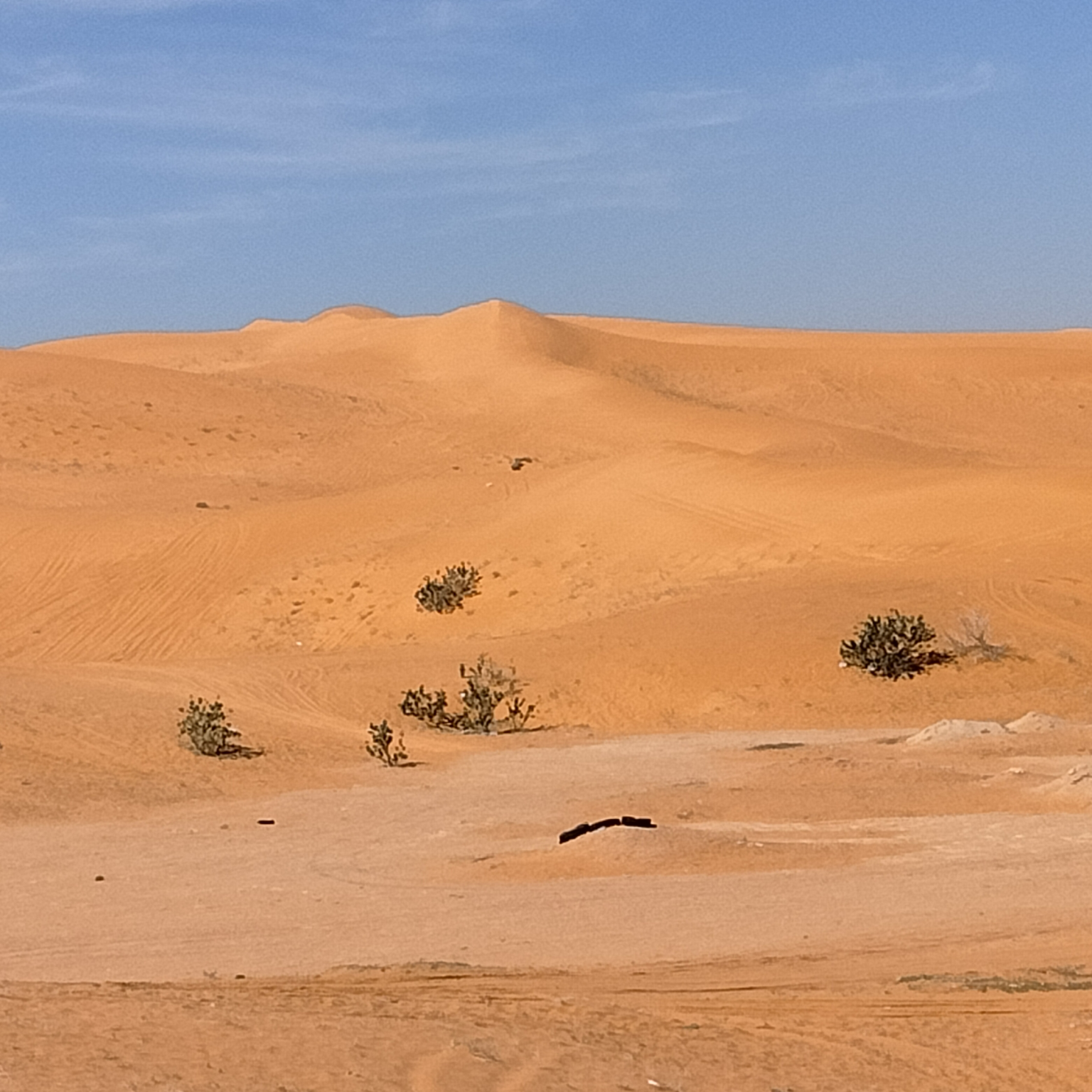
The Al-Nafud Desert, in northern Saudi Arabia, is one of the Arabian Peninsula’s major sand deserts. Known for its reddish dunes, broad sandy plains, and scattered rocky landscapes, it extends across parts of Ha’il, Al-Jawf, and Tabuk and forms the northern section of Saudi Arabia’s wider desert system.
- Where Is the Al-Nafud Desert Located?
- Key Access Points to Al-Nafud
- How to Get to the Al-Nafud Desert
- Best Time to Visit the Al-Nafud Desert
- Top Things to Do in the Al-Nafud Desert
- Explore the Red Dunes
- Visit the Jubbah Rock Art Site
- 4×4 Desert Adventures
- Dune Bashing and Sandboarding
- Discover Ha’il, the Desert Gateway
- Camping and Stargazing
- Suggested 3-Day Al-Nafud Desert Itinerary
- Where to Stay in and Around Al-Nafud
- Bedouin Culture and Desert Heritage
- Practical Travel Tips
- Hidden Gems Near Al-Nafud
- Where Red Sand Meets Ancient Arabia
Covering more than 65,000 square kilometers, Al-Nafud stretches roughly from the area around Sakaka in the north toward Ha’il in the south. Its red sand, influenced by iron-rich minerals, contrasts strongly with dark basalt formations and sandstone outcrops found around parts of the desert.
The region is also important for archaeology. Ancient rock art, former lake environments, caravan routes, and historic settlements around the desert show that northern Arabia supported human activity long before modern roads crossed the region.
Where Is the Al-Nafud Desert Located?
The Al-Nafud Desert lies mainly across the northern Saudi regions of Ha’il, Al-Jawf, and Tabuk.
To the south, Al-Nafud connects with the Ad-Dahna Desert. Ad-Dahna then extends southward toward the Rub’ al Khali (Empty Quarter), creating a major chain of sandy desert environments across the Arabian Peninsula.
Approximate dimensions include:
- Length: around 290 kilometers
- Width: up to approximately 225 kilometers
- Area: more than 65,000 square kilometers
The distinctive red color of the sand is associated with iron oxide and other mineral components. The intensity of the color changes according to sunlight, moisture, and viewing conditions.
Key Access Points to Al-Nafud
Several cities and settlements provide access to different parts of the desert:
- Ha’il: A major southern gateway and an important base for desert excursions.
- Sakaka: A northern access point with nearby archaeological and cultural attractions.
- Tayma: An ancient oasis west of the main desert landscape.
- Tabuk: A useful western base for exploring the wider region and its historic routes.
How to Get to the Al-Nafud Desert
From Riyadh
Travelers can drive north toward Ha’il, a journey of roughly 650 kilometers depending on the exact starting point and route. The drive generally takes around 7–8 hours.
Ha’il is one of the most practical bases for organizing 4×4 excursions into accessible parts of the southern Al-Nafud.
From Al-Jawf or Tabuk
From Tabuk, the journey toward the Al-Nafud region can take several hours depending on the destination and route.
From Sakaka, travelers can reach nearby desert and archaeological areas by road before continuing onto more remote tracks with a suitable 4×4.
Nearest Airports
- Ha’il International Airport (HAS): Convenient for the southern part of the desert.
- Al-Jawf Airport (AJF): Useful for northern Al-Nafud and Al-Jawf attractions.
- Tabuk Airport (TUU): Suitable for western access and wider regional itineraries.
Best Time to Visit the Al-Nafud Desert
Al-Nafud has a continental desert climate, with very hot summers and cold winter nights.
Seasonal conditions can be summarized as follows:
- October to April: Generally the most comfortable period for outdoor activities.
- November to March: Particularly suitable for camping, hiking, photography, and desert excursions.
- May to September: Temperatures can become very high, especially during the middle of the day.
- Winter nights: Can become close to freezing in some areas, so warm clothing is important for overnight camping.
For most visitors, November through March offers the best balance between daytime temperatures and nighttime conditions.
Top Things to Do in the Al-Nafud Desert
Explore the Red Dunes
The large dunes are the defining feature of Al-Nafud. Some dune systems rise to significant heights, while broad corridors between them create routes for 4×4 vehicles and walking excursions.
The dunes are particularly attractive for:
- Landscape photography
- Sunrise and sunset viewing
- Hiking in suitable areas
- Sandboarding
- 4×4 exploration
- Desert camping
Specific dune areas around Ha’il and other parts of the region can vary in accessibility, so local guidance is useful when leaving established roads.
Visit the Jubbah Rock Art Site
Jubbah, located near the southern Al-Nafud region, is one of the most important archaeological landscapes in northern Saudi Arabia.
Its sandstone outcrops contain prehistoric rock art depicting animals, human figures, hunting scenes, and other aspects of ancient life. Some engravings are thousands of years old and provide evidence of periods when the region had a much wetter climate.
Jubbah forms part of the Hail Region Rock Art World Heritage property, inscribed by UNESCO in 2015.
The surrounding archaeological landscape also includes evidence of former lakes and human occupation, showing how environmental conditions in northern Arabia changed over time.
4×4 Desert Adventures
Guided 4×4 excursions from Ha’il can take travelers into the sandy interior of Al-Nafud.
Depending on the route, excursions may include:
- Large dune fields
- Sandy valleys
- Rocky formations
- Remote viewpoints
- Desert camping locations
- Archaeological sites
Off-road travel should be undertaken with a properly equipped vehicle and an experienced local driver.
Dune Bashing and Sandboarding
Selected dune areas are suitable for sandboarding and controlled off-road driving. These activities are best planned during the cooler months and should be carried out with operators familiar with local terrain and safety conditions.
Discover Ha’il, the Desert Gateway
Ha’il is more than a starting point for desert excursions. The city has a long association with regional trade, pilgrimage routes, and the history of northern Arabia.
Notable attractions include:
- Qishlah Fortress
- A’arif Fort
- Traditional markets
- Local restaurants and cafés
- Shops selling regional crafts and products
Exploring Ha’il before or after a desert trip provides useful context for the region’s history and culture.
Camping and Stargazing
Remote areas of Al-Nafud have relatively low levels of artificial light, making them suitable for stargazing on clear nights.
A desert camp may include:
- Arabic coffee and dates
- Traditional meals
- Fire-side gatherings
- Local music or poetry
- Overnight accommodation in tents
Visitors should choose established camps or experienced operators when possible, particularly for first-time desert travelers.
Suggested 3-Day Al-Nafud Desert Itinerary
Day 1: Ha’il and Local Heritage
- Arrive in Ha’il
- Explore Qishlah Fortress
- Visit A’arif Fort or another local attraction
- Explore traditional markets
- Enjoy a regional dinner
- Overnight in Ha’il
Day 2: Jubbah and the Red Dunes
- Morning departure toward Jubbah
- Explore the rock art and archaeological landscape
- Continue toward selected Al-Nafud dune areas
- Sunset photography
- Overnight desert camping
Day 3: Desert Exploration and Return
- Early morning walk or sandboarding
- Breakfast at the camp
- Explore additional dune landscapes with a 4×4
- Return to Ha’il
- Visit local markets before departure
Travelers interested in combining Al-Nafud with Tayma, Al-Jawf, or Tabuk should allow additional days rather than trying to cover the entire region in one short trip.
Where to Stay in and Around Al-Nafud
In Ha’il
Ha’il offers the widest range of accommodation and services for travelers visiting the southern Al-Nafud.
Options include:
- Hotels such as Millennium Hail Hotel
- Local hotels and furnished apartments
- Guesthouses and smaller accommodations
Desert Camps
Depending on the season and current operation, travelers may also find:
- Jubbah-area desert camps
- Bedouin-style camps
- Private desert camps
- Guided 4×4 camping arrangements
Remote accommodation can be seasonal, so availability and facilities should be confirmed before departure.
Bedouin Culture and Desert Heritage
The wider Al-Nafud and Ha’il region has long been associated with Bedouin communities, including the Shammar and Aniza tribal groups.
Traditional desert culture includes:
- Arabic coffee and dates as expressions of hospitality
- Nabati poetry
- Camel husbandry
- Falconry
- Carpet and textile crafts
- Knowledge of desert routes and water sources
The region’s cultural heritage is closely connected to movement across northern Arabia, including historic trade, pilgrimage, and pastoral routes.
Practical Travel Tips
Traveling beyond the main roads requires careful preparation.
- Use a 4×4 vehicle for remote dune routes.
- Travel with an experienced local guide when entering unfamiliar desert areas.
- Carry additional water and fuel.
- Use GPS navigation with offline maps.
- Bring warm clothing for winter nights.
- Protect yourself from strong sun exposure.
- Check road and weather conditions before leaving populated areas.
- Respect archaeological sites and never touch or remove rock art or artifacts.
- Avoid driving over fragile vegetation or restricted areas.
- Follow local regulations and leave no waste behind.
Hidden Gems Near Al-Nafud
Several nearby destinations can extend a trip beyond the main dunes.
- Jubbah Rock Art Site: One of northern Arabia’s most important prehistoric landscapes.
- Tayma Oasis: An ancient oasis with a long history of settlement and trade.
- Sakaka and Al-Jawf: A region rich in archaeological remains, historic settlements, and desert landscapes.
- Al-Nafud dune areas: Remote sections of the desert offer opportunities for photography and camping.
- Ha’il’s historic sites: Forts and traditional areas provide cultural context before heading into the dunes.
Where Red Sand Meets Ancient Arabia
The Al-Nafud Desert is defined by more than its red dunes. Its location within Saudi Arabia’s larger desert system connects it geographically with Ad-Dahna and the Rub’ al Khali, while its archaeological sites reveal how people adapted to changing environmental conditions across northern Arabia.
The contrast between red sand, dark rock, former lake landscapes, and ancient rock art gives the region a distinctive character. A visit can combine desert driving and camping with archaeological exploration and the cultural heritage of Ha’il and the surrounding communities.
For travelers exploring northern Saudi Arabia, Al-Nafud offers a destination where large-scale dune landscapes, ancient human history, wildlife, and regional desert culture come together in one of the country’s most distinctive desert environments.