
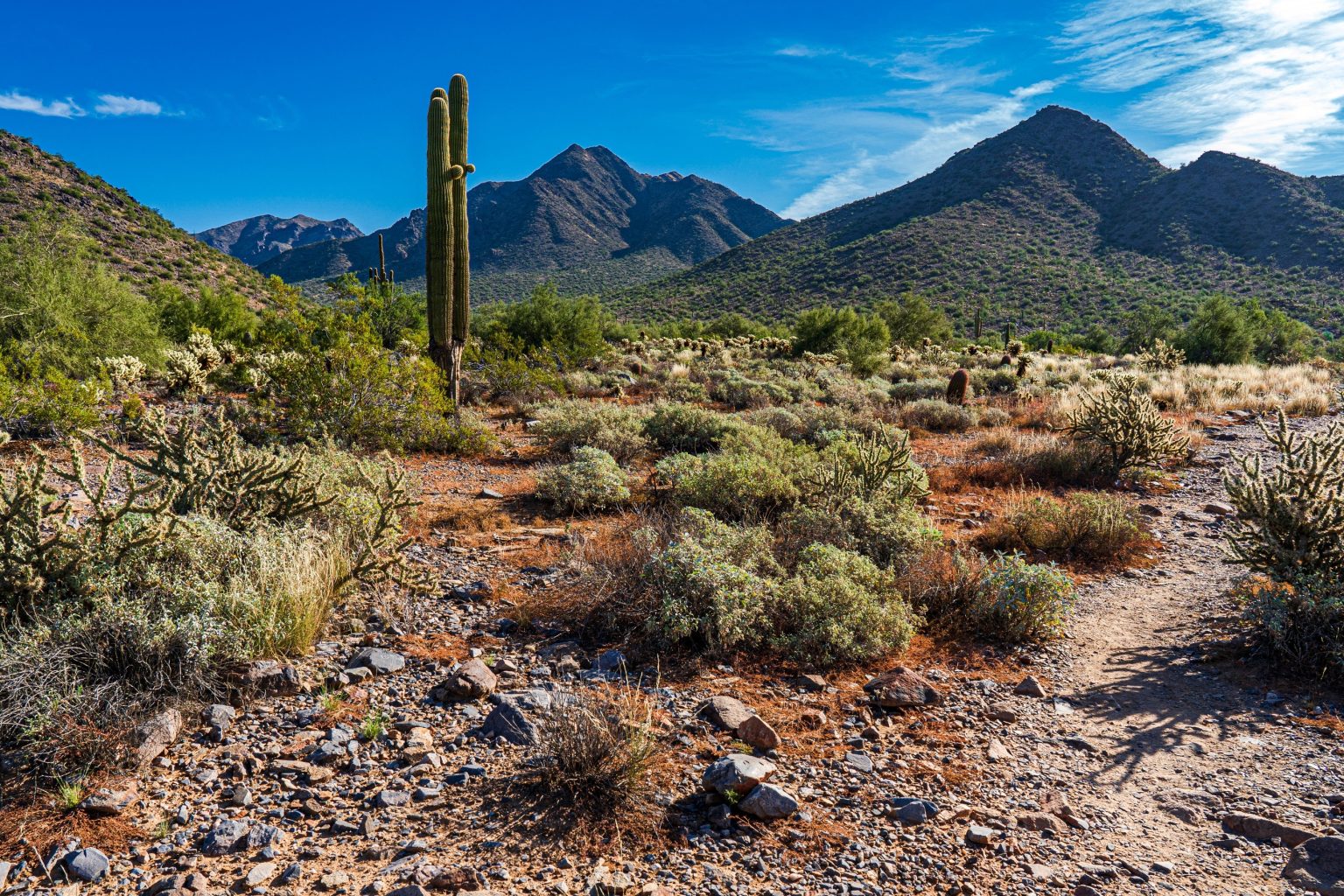
The Sonoran Desert stretches across southwestern Arizona, southeastern California, and northwestern Mexico. Unlike many desert regions dominated by bare sand or rock, the Sonoran supports an unusually rich variety of plants and animals, helped in part by its two distinct rainy seasons.
- Where Is the Sonoran Desert Located?
- Landscape: Mountains, Valleys, and Cactus Plains
- Climate: Heat, Rain, and Seasonal Change
- Flora: Plants Adapted to a Changing Desert
- Fauna: Wildlife Adapted to Heat and Drought
- Cultural Heritage of the Sonoran Desert
- Best Places to Visit in the Sonoran Desert
- Saguaro National Park
- Organ Pipe Cactus National Monument
- Desert Botanical Garden
- Kofa National Wildlife Refuge
- Suggested 2-Day Sonoran Desert Itinerary
- Where to Stay
- Practical Travel Tips
- Hidden Gems
- Exploring the Sonoran Desert
Its landscape combines mountain ranges, broad valleys, rocky slopes, dry washes, and extensive cactus forests. The iconic saguaro cactus is one of its defining features, while seasonal rainfall can bring wildflowers, flowing washes, and rapid changes in vegetation.
The Sonoran is considered one of the most biologically diverse deserts in North America, and its combination of warm temperatures, seasonal rainfall, varied elevation, and proximity to the Gulf of California helps explain this exceptional ecological diversity.
Where Is the Sonoran Desert Located?
The Sonoran Desert spans parts of southwestern Arizona, southeastern California, and northwestern Mexico, including large areas of the Mexican states of Sonora and Baja California.
- Approximate coordinates: 32°N, 112°W
- Area: about 260,000 km² (100,000 sq mi)
- Elevation: from near sea level to more than 1,200 meters in some areas
Important locations within or near the Sonoran Desert include:
- Tucson Basin
- Phoenix metropolitan area
- Saguaro National Park
- Organ Pipe Cactus National Monument
- Parts of the Gulf of California region
The desert’s climate is influenced by both the Pacific and Gulf of California regions, as well as surrounding mountain ranges. These geographic factors contribute to its distinctive rainfall pattern and biological diversity.
Landscape: Mountains, Valleys, and Cactus Plains
The Sonoran Desert has a varied landscape rather than a single dominant landform.
Broad desert valleys are separated by rugged mountain ranges, while dry river channels known as arroyos cross the lower terrain. Cactus forests and shrublands cover many areas, particularly where conditions provide enough seasonal moisture.
After favorable winter or summer rainfall, desert plants can produce large displays of flowers. Wildflower intensity varies considerably from year to year depending on the amount and timing of precipitation.
The combination of mountains, valleys, rocky slopes, and vegetation creates a wide range of habitats within the desert.
Climate: Heat, Rain, and Seasonal Change
One of the Sonoran Desert’s defining characteristics is its two rainy seasons, which distinguish it from many other North American deserts.
- Annual rainfall: approximately 75–380 mm, varying considerably by location and elevation
- Summer temperatures: can reach 38–46°C (100–115°F)
- Winter temperatures: can fall to around 5–10°C (40–50°F) in some areas
Winter Rain
From approximately December to March, cooler conditions and Pacific weather systems can bring rainfall to parts of the desert.
Summer Monsoon
From roughly July to September, moisture from the Gulf of California and surrounding regions can produce thunderstorms, heavy rainfall, flash floods, and rapid changes in desert vegetation.
These seasonal rains are essential to many plants and animals and can temporarily fill normally dry washes.
Flora: Plants Adapted to a Changing Desert
The Sonoran Desert contains thousands of plant species, with vegetation varying according to elevation, soil, rainfall, and local conditions.
Saguaro Cactus
The saguaro cactus (Carnegiea gigantea) is one of the best-known symbols of the American Southwest. Mature saguaros can live for more than 100 years and reach heights of around 12 meters or more under suitable conditions.
Their large white flowers bloom mainly in late spring and are Arizona’s state flower.
Organ Pipe Cactus
The organ pipe cactus grows particularly well in the southern Sonoran Desert, including areas near the Mexican border. Its multiple upright stems give it a distinctive appearance.
Ocotillo
Ocotillo is a tall, spiny plant that can produce clusters of bright red flowers following favorable rainfall. It can also lose its leaves during dry periods to reduce water loss.
Palo Verde
Palo verde trees have green bark capable of photosynthesis, an adaptation that allows the tree to continue producing energy even when leaves are absent.
Desert Wildflowers
Following favorable rainfall, species such as:
- Poppies
- Lupines
- Brittlebush
- Other seasonal wildflowers
can produce colorful displays across parts of the desert.
The timing and intensity of flowering vary from year to year.
Fauna: Wildlife Adapted to Heat and Drought
Sonoran Desert wildlife has developed a range of adaptations to high temperatures, limited water, and seasonal food availability. Many species are most active after sunset.
Mammals
- Coyotes
- Bobcats
- Mountain lions
- Javelinas
- Kangaroo rats
Kangaroo rats are particularly well adapted to arid conditions and can obtain much of their required moisture from food.
Birds
- Gila woodpeckers, which frequently nest in saguaro cavities
- Cactus wrens, Arizona’s state bird
- Hawks
- Greater roadrunners
The relationship between birds and cacti is especially important, with saguaros providing nesting sites, food resources, and shelter.
Reptiles
- Gila monsters, one of the world’s few venomous lizards
- Desert tortoises
- Various snakes and lizards
Many reptiles regulate their activity around temperature, becoming more active during cooler periods.
Cultural Heritage of the Sonoran Desert
People have lived in the Sonoran Desert for thousands of years. Indigenous communities developed agricultural, hunting, gathering, and water-management practices suited to the region’s seasonal environment.
Important Indigenous groups associated with the region include the Tohono O’odham, Akimel O’odham, and Yaqui.
Traditional knowledge includes the use of desert plants for food, medicine, tools, and other purposes. The saguaro also holds significant cultural importance for the Tohono O’odham and other Indigenous communities.
Visitors should respect tribal lands, cultural sites, and local regulations when traveling through areas with Indigenous connections.
Best Places to Visit in the Sonoran Desert
Saguaro National Park
Located on both sides of Tucson, Saguaro National Park protects extensive saguaro forests along with desert mountains and hiking trails.
The park is particularly popular for hiking, scenic drives, wildlife observation, and sunset photography.
Organ Pipe Cactus National Monument
Organ Pipe Cactus National Monument protects a large section of the Sonoran Desert near the Mexican border. Its landscape includes organ pipe and saguaro cacti, mountain ranges, and desert valleys.
Desert Botanical Garden
The Desert Botanical Garden in Phoenix showcases desert plants from Arizona and other regions around the world. It provides an accessible introduction to Sonoran Desert vegetation without requiring a long backcountry excursion.
Kofa National Wildlife Refuge
Kofa National Wildlife Refuge contains rugged mountains and desert habitat west of the main Phoenix and Tucson areas. It is particularly known for its population of desert bighorn sheep and remote landscapes.
Suggested 2-Day Sonoran Desert Itinerary
Day 1
Morning: Hike in Saguaro National Park and explore the surrounding desert vegetation.
Afternoon: Visit the Arizona-Sonora Desert Museum to learn more about regional wildlife and plant life.
Evening: Photograph the saguaro forests around sunset.
Day 2
Morning: Drive toward Organ Pipe Cactus National Monument.
Afternoon: Explore the Ajo Mountains and surrounding desert landscapes.
Night: Join a stargazing experience or observe the night sky from a suitable low-light area.
A longer trip allows travelers to explore more of the desert without spending most of the day driving between distant locations.
Where to Stay
Tucson
- Loews Ventana Canyon Resort
- JW Marriott Starr Pass
Tucson provides the widest range of accommodation, restaurants, supplies, and guided activities for visitors exploring southern Arizona.
Ajo and Organ Pipe Area
- Sonoran Desert Inn
- Twin Peaks Campground
Camping and simple accommodation can be useful for travelers planning early starts or nighttime photography.
Practical Travel Tips
- Best time to visit: generally October to April for comfortable daytime conditions
- Avoid prolonged exposure to extreme summer heat when possible.
- Carry more water than you expect to need, particularly when hiking.
- Wear sunscreen, a hat, and appropriate hiking footwear.
- Never touch, climb on, or damage cacti.
- Check trail and road conditions before entering remote areas.
- Obtain any required permits for backcountry camping.
- During summer storms, avoid washes and other areas vulnerable to flash flooding.
- Respect Indigenous cultural sites and protected areas.
Hidden Gems
Travelers looking beyond the most visited attractions can consider:
- Gates Pass, known for sunset views over the Tucson area
- Ironwood Forest National Monument, with rugged desert terrain and diverse vegetation
- San Xavier del Bac Mission, an important historic site near Tucson
- Ajo Mountains Scenic Drive, offering views across one of the region’s distinctive mountain landscapes
Exploring the Sonoran Desert
The Sonoran Desert stands apart from many desert regions because of its combination of seasonal rainfall, mountains, extensive cactus forests, and unusually high biological diversity. The saguaro is its most recognizable plant, but the wider ecosystem includes thousands of plant species and a broad range of mammals, birds, reptiles, and insects.
Its climate also creates strong seasonal changes. Winter rain can support wildflower displays, while summer monsoon storms bring intense rainfall to normally dry washes and provide critical water for desert wildlife.
Combined with the long history and continuing presence of Tohono O’odham, Akimel O’odham, and Yaqui communities, these natural features make the Sonoran a desert shaped by both environmental adaptation and human knowledge.
For travelers, the region offers a varied desert experience built around cactus forests, mountain landscapes, seasonal blooms, wildlife, Indigenous heritage, and outdoor exploration.