
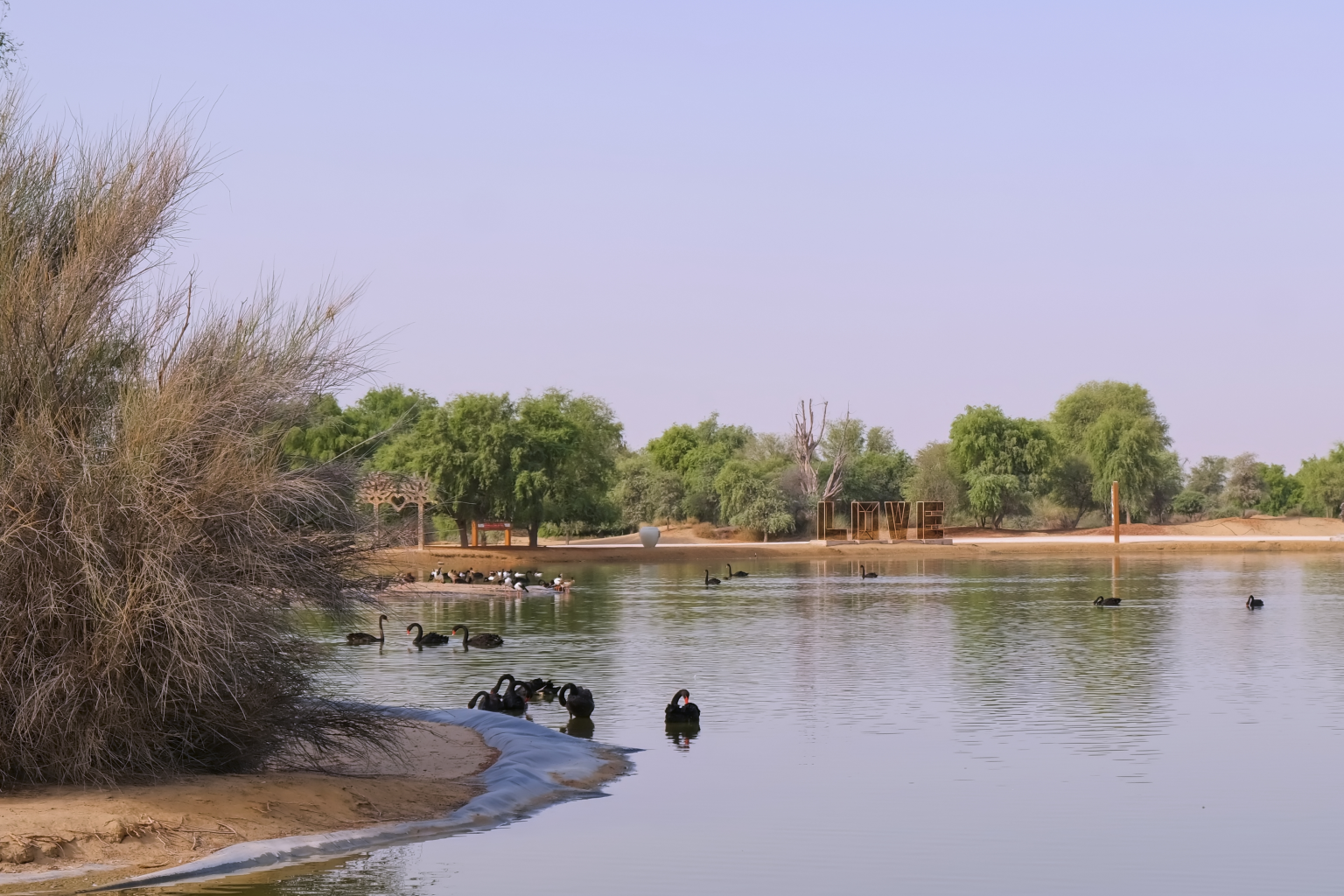
Just 40 minutes from Downtown Dubai, the Al Marmoom Desert Conservation Reserve provides access to a protected desert landscape away from the city’s dense urban development. The reserve includes sand dunes, desert plains, artificial lakes, wildlife habitats, and areas dedicated to conservation and outdoor recreation.
- Where Is Al Marmoom Desert Conservation Reserve Located?
- How to Get to Al Marmoom from Downtown Dubai
- Guided Tours and Eco Experiences in Al Marmoom
- Best Time to Visit Al Marmoom Desert Reserve
- Best Things to Do in Al Marmoom Desert Conservation Reserve
- Explore Al Qudra Lakes
- Visit the Love Lakes
- Experience an Eco Desert Safari
- Cycle the Al Qudra Track
- Observe Desert Wildlife
- Discover Bedouin Heritage
- Stargazing Near Dubai
- Two-Day Al Marmoom Desert Itinerary
- Where to Stay Near Al Marmoom
- Sustainability and Cultural Vision
- Practical Travel Tips
- Hidden Spots Inside Al Marmoom
- Exploring Dubai’s Protected Desert
Covering more than 10 percent of Dubai’s total land area, Al Marmoom is one of the emirate’s largest protected natural areas. Its combination of desert ecosystems, lakes, wildlife, cycling routes, and cultural experiences makes it a popular destination for travelers who want to explore Dubai beyond its urban attractions.
Where Is Al Marmoom Desert Conservation Reserve Located?
Al Marmoom is located in the southern part of Dubai, around the Al Qudra Lakes, Seih Al Salam Desert, and the wider Al Marmoom area.
The reserve covers approximately 40,000 hectares of desert landscapes and protected habitats. Despite its size, several of its main attractions are accessible by road from central Dubai in less than an hour, depending on traffic and the exact destination.
The area around Al Qudra has become particularly popular for cycling, wildlife observation, photography, camping, and outdoor recreation.
How to Get to Al Marmoom from Downtown Dubai
From Downtown Dubai, travelers can generally reach the Al Marmoom area via major roads including Sheikh Mohammed bin Zayed Road (E311) and Al Qudra Road (D63).
Depending on the destination, follow directions toward:
- Al Qudra Lakes
- Love Lakes
- Al Qudra Cycling Track
- Seih Al Salam
The main attractions are accessible by road, while remote dune areas are better approached with a suitable 4×4 vehicle.
Visitors should check current access rules and restrictions before traveling because conditions can vary between different areas of the reserve.
Guided Tours and Eco Experiences in Al Marmoom
Several operators offer experiences focused on the desert environment and Emirati culture. Depending on the tour, activities may include:
- Guided wildlife observation
- Birdwatching
- Desert photography
- Camel trekking
- Low-impact desert safaris
- Falconry demonstrations
- Traditional Emirati meals
Visitors can also use bicycles, fat bikes, or e-bikes on appropriate routes, providing an alternative to motorized desert activities.
Best Time to Visit Al Marmoom Desert Reserve
Al Marmoom can be visited throughout the year, but the cooler months are generally more suitable for outdoor activities.
- October to April: Around 20–30°C during many daytime periods, making conditions favorable for cycling, walking, camping, and wildlife observation.
- May to September: Temperatures can reach 35–45°C or higher, so activities are best scheduled around sunrise or sunset.
- Winter nights: Temperatures can fall to around 10–15°C, particularly in open desert areas.
Early morning and late afternoon are usually the most comfortable periods for outdoor activities and wildlife observation.
Best Things to Do in Al Marmoom Desert Conservation Reserve
Explore Al Qudra Lakes
Al Qudra Lakes are a network of man-made lakes that have become important recreational and wildlife areas within the desert.
Depending on the season, visitors may see birds such as flamingos, herons, ducks, and birds of prey. The lakes are also popular for walking, photography, picnics, and sunrise visits.
Visit the Love Lakes
The Love Lakes are two heart-shaped artificial lakes near the Al Qudra area. Palm trees, landscaping, and decorative features surround the water, making the site particularly popular for photography.
Sunset is one of the busiest periods, so visitors looking for a quieter experience may prefer early morning.
Experience an Eco Desert Safari
Desert excursions in Al Marmoom can combine wildlife observation with Emirati cultural experiences.
Depending on the operator, a safari may include:
- Gentle 4×4 drives
- Camel rides
- Falconry demonstrations
- Traditional meals
- Bedouin-style camp experiences
- Desert photography
Choose operators that follow local conservation requirements and avoid disturbing wildlife.
Cycle the Al Qudra Track
The Al Qudra Cycling Track is one of Dubai’s best-known long-distance cycling routes and extends for approximately 86 kilometers.
The route crosses open desert and provides wide views of the surrounding landscape. Early morning is the preferred time for cycling during much of the year, particularly when temperatures are lower.
Observe Desert Wildlife
Al Marmoom supports a variety of desert wildlife, including:
- Arabian oryx
- Sand gazelles
- Desert foxes
- Hares
- Numerous bird species
More than 200 bird species have been recorded in the wider Al Marmoom and Al Qudra area.
Wildlife is generally easier to observe around water sources and during the cooler hours of the day. Keep a safe distance and never feed animals.
Discover Bedouin Heritage
Cultural experiences around Al Marmoom can introduce visitors to aspects of traditional Emirati desert life.
Activities may include:
- Arabic coffee preparation
- Traditional Emirati cuisine
- Camel riding
- Falconry
- Music and storytelling
- Demonstrations of traditional crafts
These experiences provide context for the historical relationship between Emirati communities and the desert environment.
Stargazing Near Dubai
The desert areas around Al Marmoom offer darker skies than central Dubai, making them suitable for basic stargazing and organized astronomy experiences.
For the best conditions, move away from major roads and artificial lighting and check the weather and moon phase before planning a night-sky outing.
Two-Day Al Marmoom Desert Itinerary
Day 1: Lakes and Culture
- Morning walk or cycling around Al Qudra Lakes
- Afternoon visit to Love Lakes
- Sunset desert photography
- Evening Bedouin-style dinner and stargazing
Day 2: Wildlife and Desert Activities
- Early morning birdwatching
- Camel ride or guided desert excursion
- Midday break during the hottest hours
- Afternoon cycling or a scenic drive through the desert
- Return to Dubai in the evening
Where to Stay Near Al Marmoom
Luxury Desert Resorts
- Bab Al Shams Desert Resort, a desert resort near the Al Marmoom area with traditional Arabian-inspired architecture
- Solis by Tomorrowland, a luxury glamping concept offering accommodation in a desert setting
Camping
Camping is popular around the Al Qudra area, but visitors should use only locations where camping is currently permitted and follow local regulations.
Independent campers should bring their own:
- Tent and sleeping equipment
- Drinking water
- Food
- Lighting
- Waste bags
- Navigation equipment
Organized desert camps are another option for visitors who prefer accommodation and meals to be arranged in advance.
Sustainability and Cultural Vision
Conservation is a central purpose of the Al Marmoom Desert Conservation Reserve. The protected area includes desert habitats, wildlife zones, and restoration initiatives designed to support native ecosystems.
The reserve’s open landscape also allows wildlife to move across large areas without the extensive fencing found in some other protected environments.
Cultural programs and desert experiences contribute to the preservation and presentation of Emirati traditions, including Bedouin crafts, food, falconry, and storytelling.
Visitors can support these efforts by following marked routes, keeping noise low, avoiding wildlife disturbance, and taking all waste with them.
Practical Travel Tips
Before visiting Al Marmoom, keep these points in mind:
- Best season: November to March for the most comfortable outdoor conditions.
- Access: Main attractions can generally be reached by standard vehicle, while remote dunes may require a 4×4.
- Water: Carry sufficient drinking water, especially when cycling or traveling away from developed areas.
- Sun protection: Bring sunscreen, sunglasses, and appropriate clothing.
- Wildlife: Keep a safe distance and never feed animals.
- Camping: Use only permitted camping areas.
- Drones: Check current UAE and Dubai regulations and obtain any required permissions before flying a drone.
- Navigation: Download offline maps when exploring areas with limited mobile coverage.
Hidden Spots Inside Al Marmoom
Travelers who want to move beyond the best-known attractions can explore several less-busy areas, depending on current access conditions:
- Viewpoints around the Love Lakes and surrounding dunes
- Camel farms near the Al Qudra area
- Solar Park Road, where desert landscapes meet large-scale solar infrastructure
- Smaller lakes and remote desert areas away from the main recreational sites
These locations are best explored with respect for private property, wildlife habitats, and any restricted areas.
Exploring Dubai’s Protected Desert
The Al Marmoom Desert Conservation Reserve offers a different side of Dubai, combining protected desert habitats with lakes, wildlife, cycling routes, cultural activities, and accessible outdoor recreation.
Its proximity to Downtown Dubai makes it possible to experience open desert landscapes without a long journey from the city. For visitors interested in nature, photography, wildlife, cycling, camping, or Emirati heritage, Al Marmoom provides a practical way to explore Dubai’s desert environment while keeping conservation at the center of the experience.