
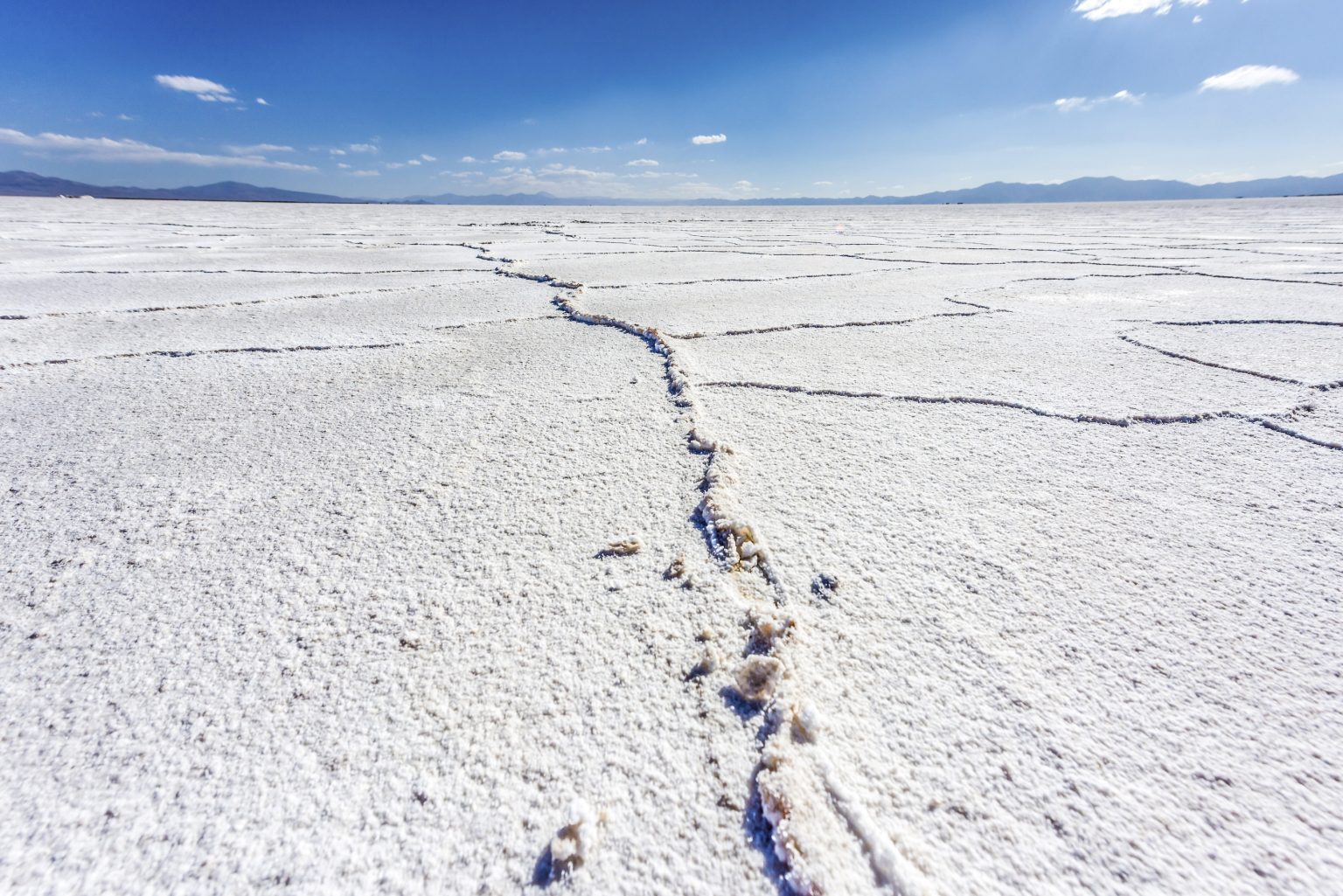
The Salinas Grandes are one of Argentina’s most impressive high-altitude salt landscapes. Located in the Andes at more than 3,400 meters above sea level, the salt flat stretches across the provinces of Jujuy and Salta, covering a vast white basin surrounded by dry mountain terrain.
- Where Are Salinas Grandes?
- A Landscape Made by Salt and Evaporation
- Weather and the Best Time to Visit Salinas Grandes
- How to Get There from Purmamarca
- The Experience of Visiting the Salt Flats
- The Best Things to Do and See in Salinas Grandes
- Walk Across the Salt Flats
- Photograph the Salt and Reflections
- See Traditional Salt Work
- Drive the Cuesta de Lipán
- Explore the Pueblos of the Altiplano
- Suggested 2-Day Itinerary
- Where to Stay
- The People and Their Culture
- Ecology and Sustainability
- Helpful Travel Tips
- Hidden Treasures Near Salinas Grandes
- A High-Altitude Salt Landscape of Jujuy and Salta
Unlike a conventional sandy desert, Salinas Grandes is a salt desert, formed through the evaporation of ancient water bodies and the accumulation of mineral-rich deposits over long periods. Its bright surface, geometric salt formations, surrounding mountains, and high-altitude setting make it one of northern Argentina’s most distinctive landscapes.
The area is also important to local communities and has become increasingly associated with the region’s lithium resources, creating an ongoing discussion about tourism, mining, water, and environmental protection.
Where Are Salinas Grandes?
Salinas Grandes are located in northwestern Argentina, mainly across Jujuy and Salta provinces, within the broader high-altitude landscapes of the Puna.
The salt flat lies at approximately 3,400–3,450 meters above sea level and covers an area of roughly 12,000 square kilometers, although the extent of exposed salt varies according to seasonal conditions.
Key geographic details include:
- Location: approximately 23°S, 66°W
- Elevation: around 3,400–3,450 meters
- Provinces: Jujuy and Salta
- Nearest major tourism base: Purmamarca
- Main access: National Route 52 via the Cuesta de Lipán
The surrounding landscape includes high plateaus, dry valleys, colorful mountains, and small Andean settlements.
A Landscape Made by Salt and Evaporation
The formation of Salinas Grandes is linked to ancient water bodies and the geological development of the Andes. As water accumulated in closed basins and later evaporated under increasingly arid conditions, minerals and salts were left behind.
The exposed surface is mainly composed of salt and other evaporite minerals. Cracks and polygonal patterns develop as the surface dries, creating the geometric formations visible across many parts of the salt flat.
The region also contains lithium-rich brines, which have attracted increasing interest from the mining industry. Lithium is an important component in many modern batteries, but its extraction in high-altitude salt flats has raised concerns about water use, local ecosystems, and the long-term effects on surrounding communities.
Weather and the Best Time to Visit Salinas Grandes
Salinas Grandes has a high-altitude climate with strong sunlight, low humidity, and significant temperature differences between day and night.
The best season depends on the type of landscape you want to see.
Dry Season
April to October generally offers drier conditions and more stable access.
During this period:
- The salt crust is more likely to be firm.
- Walking conditions are generally better.
- Skies are often clear.
- Visibility across the surrounding mountains can be excellent.
- Photography benefits from strong contrasts between the white salt and blue sky.
Wet Season
The wetter period generally falls during the Southern Hemisphere summer, especially December to March, although rainfall varies from year to year.
When shallow water covers sections of the salt flat, reflections can create a mirror-like surface. The effect depends entirely on recent rainfall, so it cannot be guaranteed on a particular visit.
How to Get There from Purmamarca
Purmamarca is one of the most popular bases for visiting Salinas Grandes.
- Distance: approximately 70 kilometers
- Driving time: around 1.5 to 2 hours, depending on road and weather conditions
- Route: National Route 52 over the Cuesta de Lipán
The road climbs rapidly from the Quebrada de Humahuaca toward the high plateau. The Cuesta de Lipán reaches an elevation of roughly 4,170 meters, providing views across the surrounding mountain landscape.
From Salta
From Salta city, the journey is considerably longer and can take around 3.5 to 4 hours or more, depending on the route and stops.
Many travelers visit Salinas Grandes as part of a wider itinerary through the Puna and Quebrada de Humahuaca.
The Experience of Visiting the Salt Flats
The first impression of Salinas Grandes comes from its scale. The white salt surface extends across a broad high-altitude basin, while mountains rise around its edges.
Visitors can see several distinctive features:
- Polygonal patterns in the salt crust
- Large white mineral surfaces
- Mountain ranges surrounding the basin
- Shallow water reflections after rainfall
- Salt extraction areas
- Small salt pools and traditional working sites
Because of the high elevation, visitors should take time to adjust to the altitude, particularly if arriving from much lower elevations.
Local guides can also explain the geological formation of the salt flat and traditional methods of salt extraction.
The Best Things to Do and See in Salinas Grandes
Walk Across the Salt Flats
Walking across Salinas Grandes is one of the main activities. Local guides can help visitors identify suitable areas and explain how the salt crust forms.
Some parts of the salt flat are used for traditional salt extraction. Local workers cut and collect blocks or sections of salt from the surface, depending on the area and season.
Visitors should remain on established routes and follow local instructions, particularly where extraction activities are taking place.
Photograph the Salt and Reflections
Photography is one of the main reasons travelers visit Salinas Grandes.
During dry conditions, the white salt creates strong contrasts with the blue sky and surrounding mountains. After rainfall, shallow water can produce large reflective surfaces.
Useful photography conditions include:
- Early morning for softer light
- Late afternoon for longer shadows
- Clear days for strong mountain contrasts
- Wet conditions for reflection photography
A polarizing filter can help manage glare, although it should be used carefully when photographing reflective surfaces.
See Traditional Salt Work
Local communities have long extracted salt from the flats. In some areas, visitors can see traditional extraction methods and purchase locally produced salt products or handicrafts.
Buying directly from local artisans and producers can help support communities involved in tourism and traditional salt work.
Drive the Cuesta de Lipán
The journey from Purmamarca is an important part of the trip. National Route 52 climbs through the Cuesta de Lipán, crossing a dramatic transition from the lower valleys into the high Puna.
The route offers viewpoints across mountain slopes and broad Andean valleys before reaching the salt flats.
Explore the Pueblos of the Altiplano
The communities around Salinas Grandes provide an opportunity to experience the culture and architecture of the high Andes.
Purmamarca is particularly well known for its adobe buildings, artisan markets, and Cerro de los Siete Colores, or Hill of Seven Colors.
Other nearby settlements provide additional insight into high-altitude agriculture, pastoralism, crafts, and local traditions.
Suggested 2-Day Itinerary
Day 1: Purmamarca to Salinas Grandes
- Morning departure from Purmamarca
- Drive through the Cuesta de Lipán
- Stop at high-altitude viewpoints
- Arrive at Salinas Grandes
- Explore the salt formations with a local guide
- Learn about traditional salt extraction
- Return to Purmamarca
- Visit Cerro de los Siete Colores around sunset
Day 2: Puna Culture and Mountain Landscapes
- Explore Purmamarca and local artisan workshops
- Continue toward other Andean settlements if time allows
- Visit scenic viewpoints across the Puna
- Return to Purmamarca or continue toward Salta
A longer itinerary is recommended for travelers who want to explore destinations such as Susques, Hornocal, or the wider Puna region without rushing.
Where to Stay
Purmamarca is the most convenient base for many travelers visiting Salinas Grandes.
Accommodation includes:
- Small hotels and inns
- Traditional guesthouses
- Boutique accommodations
- Family-run lodging
- Mountain and desert-style retreats
Travelers continuing deeper into the Puna can also stay in Susques and other small settlements, although accommodation options are more limited.
The People and Their Culture
The areas surrounding Salinas Grandes are home to Indigenous communities, including Kolla and Atacameño communities, with long-standing cultural and economic connections to the high-altitude landscape.
Salt extraction remains an important traditional activity in some areas, while agriculture, livestock, crafts, and tourism also contribute to local livelihoods.
Pachamama, or Mother Earth, holds an important place in Andean cultural traditions. Ceremonies and offerings vary between communities and should be approached respectfully.
Visitors can support local communities by choosing locally operated tours, purchasing crafts directly from artisans, and following local guidance at culturally important places.
Ecology and Sustainability
Salinas Grandes is both a tourist destination and a working natural resource landscape. The increasing interest in lithium extraction has raised questions about water resources, ecosystems, and the rights and concerns of communities living around the salt flats.
Responsible tourism can reduce some of the pressures caused by growing visitor numbers.
Visitors should:
- Stay on designated routes where required.
- Avoid driving across fragile or restricted areas.
- Do not remove salt, rocks, plants, or other natural material.
- Choose local guides and community-based tourism services when possible.
- Avoid littering.
- Respect sacred and culturally important locations.
- Follow restrictions around mining and operational areas.
Helpful Travel Tips
High altitude is one of the most important factors to consider when visiting Salinas Grandes.
- Best for dry salt landscapes: April to October
- Best chance of reflections: December to March after rainfall
- Altitude: Approximately 3,400–3,450 meters
- Acclimatization: Spend time at altitude before undertaking strenuous activities.
- Sun protection: Bring a hat, sunscreen, and sunglasses.
- Clothing: Carry layers because temperatures can change quickly.
- Water: Stay well hydrated, especially during the first days at altitude.
- Photography: A polarizing filter can help control glare.
- Road conditions: Check weather and road conditions before traveling through the high passes.
- Cash: Carry cash for small purchases because services and ATMs are limited in remote areas.
Hidden Treasures Near Salinas Grandes
The salt flats can be combined with several attractions across Jujuy and the surrounding Puna.
- Cerro de los Siete Colores: The colorful mountain overlooking Purmamarca.
- Laguna de los Pozuelos: A high-altitude wetland known for flamingos and other birdlife.
- Hornocal: A dramatic multicolored mountain range near Humahuaca.
- Susques: A small high-altitude settlement with traditional architecture and a historic church.
- Paso de Jama: A high Andean route connecting Argentina with Chile.
These destinations require additional driving, so they are better suited to longer itineraries.
A High-Altitude Salt Landscape of Jujuy and Salta
Salinas Grandes is more than a large white surface. Its landscape reflects the geological history of the Andes, while traditional salt extraction connects the salt flat to the communities that have worked in this environment for generations.
The experience also changes with the season. During the dry months, the salt crust reveals its polygonal patterns and broad white surfaces. After rainfall, shallow water can transform sections of the flat into reflective pools beneath the surrounding mountains.
Combined with the Cuesta de Lipán, Purmamarca, the Puna landscape, and nearby Andean communities, Salinas Grandes offers a destination where geology, high-altitude scenery, traditional livelihoods, and contemporary environmental questions all meet in one of northern Argentina’s most distinctive desert landscapes.