
From the southern plains of Bahrain, Jebel Dukhan rises above the surrounding desert landscape. It is not a large mountain by regional standards, but it is the highest natural point in Bahrain and one of the island’s best-known inland landmarks.
- Where Is Jebel Dukhan Located?
- Best Time to Visit Jebel Dukhan
- How to Reach Jebel Dukhan from Manama
- Top Things to Do at Jebel Dukhan
- 1. Hike to Bahrain’s Highest Point
- 2. Visit the First Oil Well and Oil Museum
- 3. Explore Rock Layers and Small Caves
- 4. Visit the Tree of Life
- 5. Desert Camping and Stargazing
- 6. Scenic Desert Drives
- 2-Day Jebel Dukhan Itinerary
- Where to Stay Near Jebel Dukhan
- Bedouin Heritage and Desert Life
- Practical Travel Tips
- Hidden Gems Around Jebel Dukhan
- A Landmark at the Center of Bahrain’s Desert
Jebel Dukhan brings together geology, history, and Bahrain’s desert heritage. Visitors come to explore its summit, nearby geological formations, historic oil sites, and the surrounding Sakhir landscape.
The hill also provides broad views across southern Bahrain, particularly in the cooler months when visibility is often better.
Where Is Jebel Dukhan Located?
Jebel Dukhan, meaning “Mountain of Smoke,” is located in central-southern Bahrain, approximately 45 kilometers southwest of Manama.
It stretches for nearly 10 kilometers and reaches an elevation of 134 meters (440 feet), making it the highest natural point in the country.
The name refers to the dusty haze and humidity that can sometimes gather around the hill, creating the appearance of smoke.
Nearby Landmarks
- Sakhir Desert, one of Bahrain’s main desert areas
- Tree of Life, a well-known desert landmark
- Al Areen Wildlife Park, home to native and regional species
- First Oil Well and Oil Museum, marking an important stage in Bahrain’s modern history
Jebel Dukhan is located within an area where desert landscapes, geological features, and important historical sites are found close together.
Best Time to Visit Jebel Dukhan
The experience of Jebel Dukhan changes with the seasons, but the cooler months are generally the most comfortable for outdoor activities.
Seasonal temperatures:
- November to March: 20–27°C, ideal for hiking, camping, and photography
- April to May: 30–36°C, warm but more manageable during early mornings
- June to September: Extreme heat, with midday visits best avoided
- October: Mild temperatures and good conditions for photography
Winter and early spring usually offer more comfortable temperatures and clearer conditions for exploring the area.
How to Reach Jebel Dukhan from Manama
- Distance: about 45 km
- Driving time: 45–50 minutes
Route:
Manama → Zallaq Highway → Sakhir → Jebel Dukhan Road
The drive passes through open desert plains, camel farms, and oil fields. An SUV or 4×4 is recommended if you plan to explore unpaved tracks around the hill.
Top Things to Do at Jebel Dukhan
1. Hike to Bahrain’s Highest Point
The climb to the summit is relatively short and accessible, making it suitable for visitors looking for a simple desert hike.
From the top, wide views extend across southern Bahrain, including oil fields, desert plains, and the distant Gulf horizon.
The main attraction is the open view across the surrounding landscape rather than the elevation itself.
2. Visit the First Oil Well and Oil Museum
At the base of Jebel Dukhan lies Bahrain’s First Oil Well, drilled in 1932 and recognized as the first oil well in the Arabian Gulf.
The nearby Oil Museum explains the history of Bahrain’s oil industry and its role in the country’s transition from a traditional pearl-diving economy to a modern economy.
3. Explore Rock Layers and Small Caves
Jebel Dukhan’s exposed limestone reveals geological features such as:
- Coral remnants
- Fossilized marine layers
- Small caves and wind-shaped cracks
These formations provide evidence of Bahrain’s marine geological history. The exposed rock also makes the area interesting for geology enthusiasts and photographers.
4. Visit the Tree of Life
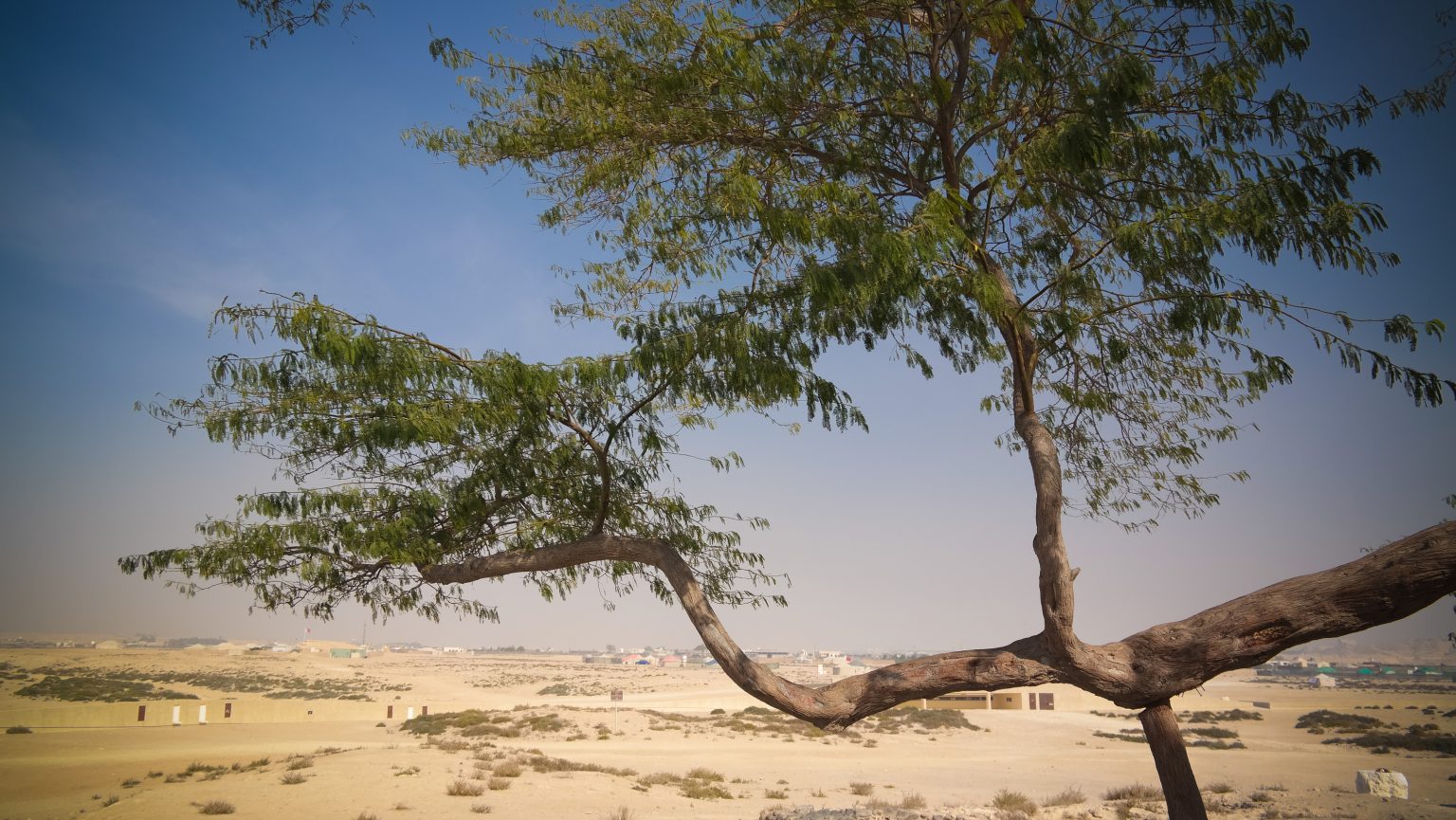
Just a short drive away stands the famous Tree of Life (Shajarat Al Hayat).
This 400-year-old Prosopis tree grows in the open desert and has become one of Bahrain’s best-known natural landmarks. Its ability to survive in such an arid environment has contributed to the many stories and theories surrounding the tree.
5. Desert Camping and Stargazing
The open land near Jebel Dukhan is suitable for:
- Winter camping
- Stargazing sessions
- Sunrise and sunset photography
The limited development around parts of the area can provide good conditions for enjoying the desert at night, particularly during the cooler season.
6. Scenic Desert Drives
Roads around Jebel Dukhan pass through:
- Sunlit valleys
- Oil installations
- Golden gravel plains
Early morning and late afternoon are particularly suitable for photography, when the lower angle of the sun changes the appearance of the desert surface.
2-Day Jebel Dukhan Itinerary
Day 1: History and Desert Landscape
Morning: Drive from Manama, visit the Oil Museum and First Oil Well
Afternoon: Hike Jebel Dukhan and explore the surrounding rock formations
Evening: Camp near the base and enjoy stargazing
Day 2: Nature and Sakhir
Morning: Visit the Tree of Life and nearby desert areas
Afternoon: Explore Sakhir Desert or relax at Al Areen Resort
Evening: Return to Manama
Where to Stay Near Jebel Dukhan
Luxury Hotels
- Al Areen Palace & Spa, a desert retreat
- Sofitel Bahrain Zallaq, beachfront accommodation
Camping
Sakhir and the areas around Dukhan offer options for desert camping. If camping independently, bring:
- Tents and food
- Warm clothing for the night
- Trash bags to leave no waste behind
Bedouin Heritage and Desert Life
For generations, Bedouin communities in Bahrain have developed practical knowledge of desert travel and seasonal conditions. Traditions associated with camel herding, falconry, poetry, and storytelling remain part of Bahrain’s cultural heritage.
Jebel Dukhan is also connected to this wider desert landscape, where traditional activities and modern development now exist alongside one another.
Practical Travel Tips
- Use an SUV or 4×4 for unpaved tracks
- Avoid visiting during the hottest part of the day
- Wear sturdy footwear
- Carry 3–4 liters of water per person
- Download offline maps before heading into remote areas
- Stay clear of oil installations and restricted areas
Hidden Gems Around Jebel Dukhan
- Tree of Life, Bahrain’s well-known desert landmark
- Fossil valleys near the foothills
- Camel farms across Sakhir
- Desert sunrise viewpoints for photography
A Landmark at the Center of Bahrain’s Desert
Jebel Dukhan may be modest in height, but its location makes it an important landmark in Bahrain. The hill brings together geological formations, desert scenery, the history of the country’s oil industry, and several nearby attractions.
A visit can easily be combined with the First Oil Well, Tree of Life, Sakhir Desert, and Al Areen, making the area a practical destination for exploring several sides of Bahrain beyond the main urban centers.
From the summit, visitors can look across the open landscape of southern Bahrain and see how closely the island’s natural environment, industrial history, and cultural heritage are connected.