
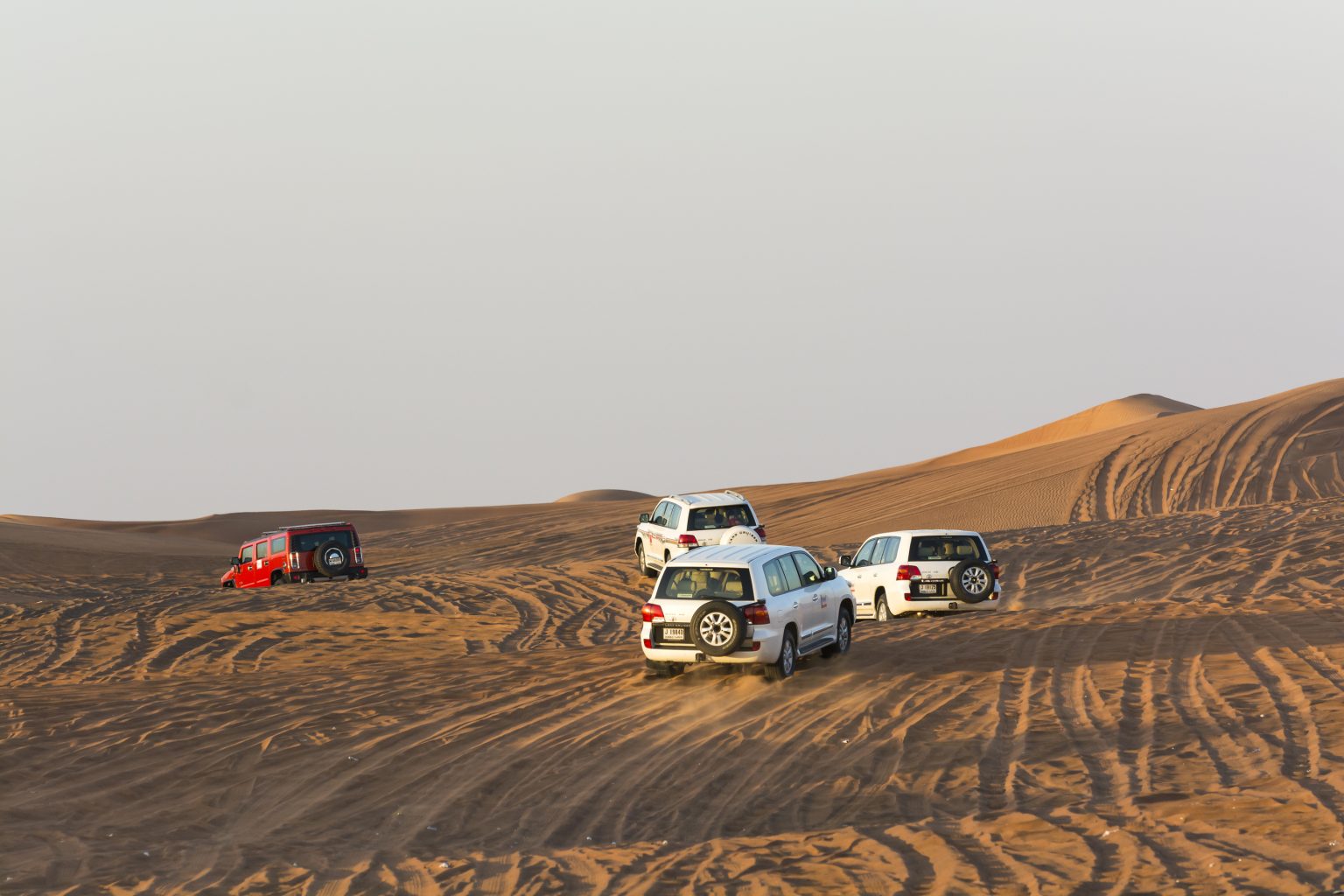
The UAE desert safari combines off-road adventure with opportunities to discover the country’s landscapes, wildlife and cultural heritage. From the red dunes outside Dubai to the vast sand seas of Liwa and the archaeological sites around Mleiha, each destination offers a different way to explore the desert.
- Why the UAE Is Popular for Off-Road Desert Safaris
- The Best Places in the UAE for a 4×4 Desert Safari
- Dubai Desert Conservation Reserve (DDCR)
- Al Marmoom Desert, Dubai
- Liwa Desert and the Rub al Khali, Abu Dhabi
- Mleiha Desert, Sharjah
- Al Ain and the Eastern Desert
- What to Expect on a UAE Desert Safari
- What to Bring for a Desert Safari
- Best Time of Year for a Desert Safari in the UAE
- Desert Safety Tips for Self-Drive Adventures
- Recommended Desert Safari Companies and Experiences in the UAE
- Photography Tips for the UAE Desert
- A Two-Day Desert Safari Itinerary: Dubai and Liwa
- Explore the UAE Desert Responsibly
- Experience the UAE Desert Beyond the Dunes
Travelers can choose guided dune drives, wildlife-focused excursions, sandboarding, camel rides, overnight camps and stargazing experiences. Some tours emphasize comfort and hospitality, while others focus on outdoor exploration and challenging terrain. Choosing the right experience depends on your interests, the season and how much time you want to spend away from the city.
This guide covers the main destinations for a 4×4 desert safari in the UAE, what to expect on a tour, practical safety advice and ways to explore these fragile environments responsibly.
Why the UAE Is Popular for Off-Road Desert Safaris
The United Arab Emirates contains several distinctive desert environments, including the dunes around Dubai, the extensive sand landscapes of Abu Dhabi’s Al Dhafra region and the rocky terrain of Sharjah’s central region. The country’s desert experiences range from short excursions suitable for first-time visitors to longer trips requiring specialist vehicles and experienced guides.
One reason desert safaris in the UAE are popular is the range of activities available. A guided drive can be combined with wildlife observation, cultural demonstrations, photography or an overnight stay, depending on the location and operator.
Common options include:
- Morning desert safaris for cooler temperatures and softer light.
- Sunset dune drives with stops for photographs.
- Evening camp experiences with dinner and cultural activities.
- Private 4×4 tours for families or travelers seeking a more flexible itinerary.
- Overnight desert stays for a night away from city lights.
- Specialist off-road expeditions for experienced drivers in remote areas.
Not every activity is offered at every destination. Check the itinerary carefully and choose a licensed operator with appropriate vehicles, trained drivers and clear safety procedures.
The Best Places in the UAE for a 4×4 Desert Safari
Dubai Desert Conservation Reserve (DDCR)
The Dubai Desert Conservation Reserve is a protected area known for its native wildlife and conservation programs. Its desert habitat supports Arabian oryx, gazelles, foxes and numerous other species.
Access is controlled, and visitors should book experiences through authorized operators rather than assuming they can drive independently through the reserve. Wildlife-focused safaris can include guided drives, nature interpretation and cultural activities, depending on the package.
Companies such as Platinum Heritage offer heritage-oriented experiences in Dubai’s desert, while Arabian Adventures provides a range of safari options. Confirm the exact location and whether a particular tour enters the reserve, since not every Dubai desert safari visits the DDCR.
This destination suits travelers who want wildlife observation and conservation-focused tourism alongside a comfortable guided experience.
Al Marmoom Desert, Dubai
The Al Marmoom Desert Conservation Reserve is a large protected landscape in Dubai that includes desert habitats, lakes and important bird areas. It is particularly known for wildlife, birdwatching and outdoor recreation around the Al Qudra area.
Visitors can explore designated public areas, observe birds from authorized viewpoints and arrange selected experiences with local operators. However, the reserve should not be treated as unrestricted off-road terrain. Driving, camping and other activities must follow the rules applicable to the specific location.
Depending on the experience booked, visitors may enjoy:
- Birdwatching around designated lakes and observation areas.
- Nature walks and photography.
- Guided cultural experiences.
- Sunset visits to approved locations.
- Stargazing from suitable areas away from strong artificial lighting.
Al Marmoom is a good option for travelers interested in a quieter desert outing, especially those who prefer wildlife and landscape photography to an extended dune-bashing session.
Liwa Desert and the Rub al Khali, Abu Dhabi
The Liwa Desert lies in Abu Dhabi’s Al Dhafra region, near the northern edge of the Rub al Khali, also known as the Empty Quarter. This immense sand desert extends across several countries on the Arabian Peninsula and contains some of the region’s most impressive dunes.
Liwa is known for its sweeping sand ridges and Tel Moreeb, commonly called Moreeb Dune. The dune rises more than 300 meters and is associated with major motorsport events, including the Moreeb Hill Climb during the Liwa International Festival. Visitors can arrange guided desert drives and other activities through local operators.
Because the dunes can be steep and the sand conditions demanding, remote Liwa excursions require suitable vehicles, experience and careful planning. Travelers without specialist off-road skills should book a professional driver rather than attempt challenging routes themselves.
Accommodation ranges from desert resorts to other established lodging options around the region. Qasr Al Sarab Desert Resort is a well-known luxury property in the wider Liwa desert landscape, but it is not a substitute for planning the route and activities separately.
Liwa is especially appealing to photographers and adventure travelers seeking large-scale dunes and a more remote desert setting.
Mleiha Desert, Sharjah
The Mleiha region combines desert scenery, geology and archaeological heritage. Located in Sharjah’s Central Region, it is known for ancient burial sites, fossil-rich rock formations and evidence of human settlement spanning thousands of years.
The Mleiha Archaeological Centre offers information and guided experiences that help visitors understand the area’s history. Depending on current arrangements, activities may include desert safaris, hiking, dune bashing, quad biking, camping experiences and astronomy programs.
Highlights include:
- Mleiha Archaeological Centre, for exhibits and interpretation of the region’s past.
- Fossil Rock, known for geological formations and marine fossils.
- Guided desert excursions with local specialists.
- Selected camping and stargazing experiences.
Activities, access and routes vary, so confirm availability with the center or operator before travelling. Mleiha is particularly suitable for visitors who want to combine desert adventure with archaeology and natural history.
Al Ain and the Eastern Desert
Al Ain offers access to a different side of the UAE’s desert landscapes, with dry plains, dunes, mountain scenery and nearby oases. The area around Jebel Hafeet provides a striking backdrop, although mountain excursions and dune safaris are separate activities.
Visitors can arrange guided drives and outdoor experiences in suitable desert areas around Al Ain. The terrain and difficulty depend on the exact route, so it is best to ask operators which locations are included rather than assuming all tours visit the same dunes.
Possible activities include:
- Guided 4×4 drives in authorized desert areas.
- Photography around the dunes and surrounding landscapes.
- Visits to cultural and heritage sites in the Al Ain area.
- Overnight stays at established desert camps or accommodation, where available.
Al Ain is a useful choice for travelers exploring Abu Dhabi’s inland region who want to combine desert scenery with the city’s oases and heritage attractions.
What to Expect on a UAE Desert Safari
A typical UAE desert safari begins with a transfer from a hotel or agreed meeting point. Guests travel in a suitable vehicle to the designated desert area, where the driver explains the route and safety requirements.
For tours that include dune bashing, the driver navigates rolling dunes and sandy slopes according to the terrain and conditions. The duration varies by package, and some wildlife or heritage safaris deliberately use gentler driving to minimize disturbance.
A standard experience may include:
- Hotel pickup and drop-off, if included in the booking.
- Guided desert driving with a trained driver.
- Photo stops at designated viewpoints.
- Sandboarding or camel rides, where offered.
- Cultural activities, which may include falconry demonstrations or henna.
- Dinner at a licensed desert camp, depending on the package.
- Stargazing or overnight accommodation, on selected tours.
Evening camps may serve Emirati dishes alongside other regional or international food. Menus vary, so do not assume every barbecue is exclusively Emirati cuisine. Performances, shisha and other activities are also package-dependent.
Optional extras can include quad biking, private vehicles and hot-air balloon flights. These are separate activities that may operate from different locations and should be booked with appropriately licensed providers.
What to Bring for a Desert Safari
Conditions can change considerably between daytime, sunset and early morning. Pack for sun exposure, sand and cooler temperatures after dark.
Recommended essentials include:
- Light, breathable clothing for daytime warmth.
- A hat, sunglasses and sunscreen.
- Closed shoes or sturdy sandals suitable for walking on sand, depending on the planned activities.
- A reusable water bottle and sufficient drinking water.
- A light jacket or warmer layer for winter evenings.
- A phone or camera protected from fine sand.
- A power bank for long excursions.
- Any personal medication you may need.
For a longer trip into remote dunes, ask the operator about additional requirements. Specialized equipment for independent off-road driving is different from what a passenger needs on a commercial safari.
Best Time of Year for a Desert Safari in the UAE
The cooler months, generally from November to March, are the most comfortable period for many outdoor desert activities. Daytime temperatures are often more manageable, although conditions vary by emirate, elevation, wind and date.
November to March
This is the main season for walking, dune drives, camping and evening activities. Nights can be cool, particularly in remote areas, so bring an extra layer for overnight stays.
April and May
Temperatures rise as summer approaches. Early-morning excursions may be more comfortable than midday activities, and travelers should check the operator’s schedule before booking.
June to September
Summer heat can be intense, particularly during the middle of the day. Some operators continue to run tours, but activity times, available routes and safety procedures may change with conditions. Avoid prolonged outdoor exertion during extreme heat and follow the guide’s instructions.
There is no single temperature range that applies throughout the country. Check the forecast for your destination and confirm that the planned activities are suitable for the conditions.
Desert Safety Tips for Self-Drive Adventures
Driving over dunes is different from driving on paved roads. Sand can conceal steep drops, soft patches and sharp changes in terrain, while wind can alter the surface and reduce visibility.
For most visitors, a guided safari is the safer choice. If you plan an independent 4×4 desert adventure, use an established route and seek advice from experienced local off-roaders before entering remote terrain.
Important precautions include:
- Travel with another suitable vehicle rather than entering remote dunes alone.
- Carry enough drinking water, food, fuel and emergency supplies for delays.
- Use a properly equipped 4×4 and ensure the driver has relevant sand-driving experience.
- Carry suitable recovery equipment and know how to use it safely.
- Check weather, route conditions and local access restrictions before departure.
- Share your itinerary and expected return time with someone who is not travelling with you.
- Avoid driving on vegetation, sensitive habitats or unapproved tracks.
- Never assume mobile phone coverage or GPS navigation will be reliable everywhere.
Tire pressure should not be set to one universal figure such as 1.5 bar. The appropriate pressure depends on the vehicle, tires, load, terrain and manufacturer guidance. Lowering tire pressure on sand requires experience and a reliable way to reinflate tires before returning to paved roads.
Do not attempt steep dunes or difficult recoveries without suitable skills and equipment. When in doubt, turn back or arrange professional assistance.
Recommended Desert Safari Companies and Experiences in the UAE
Several established providers offer different styles of desert experiences. Before booking, compare the actual itinerary, departure location, inclusions, cancellation terms and safety arrangements.
- Platinum Heritage: Offers heritage-focused desert experiences in Dubai, including wildlife and cultural elements on selected tours.
- Arabian Adventures: Provides a range of Dubai desert safari packages, from group excursions to more customized experiences.
- Mleiha Archaeological Centre: A useful starting point for guided desert activities and heritage visits in Sharjah’s Mleiha region.
- Qasr Al Sarab Desert Resort: Offers a luxury stay in the Liwa desert landscape, with activities that can be arranged separately.
- Emirates Off-Road Club: A community associated with off-road driving. Check its current activities and requirements if you are seeking a specialist self-drive outing rather than a standard tourist safari.
Prices vary according to season, group size, pickup location, duration and the level of service. Instead of relying on a fixed price range, compare current quotes and check whether meals, transfers, equipment and optional activities are included.
Photography Tips for the UAE Desert
The desert’s appearance changes with the angle of the sun. Early morning and late afternoon often provide softer light, longer shadows and more visible dune textures.
For better UAE desert photography, try these techniques:
- Photograph dunes shortly after sunrise or before sunset.
- Include a person, vehicle or tree in the frame to communicate scale.
- Use side lighting to emphasize ripples and dune ridges.
- Protect camera equipment from blowing sand and dust.
- Carry spare batteries, as remote outings may offer few opportunities to recharge.
- Use a polarizing filter carefully to manage glare and deepen the sky when conditions suit it.
Aerial photography and drone use may be subject to local permissions and restrictions. Check the rules for the specific area before flying, particularly near protected sites, wildlife habitats or other restricted locations.
A Two-Day Desert Safari Itinerary: Dubai and Liwa
Dubai and Liwa offer very different desert experiences. A two-day trip can introduce both, but it involves a substantial road journey between regions. The schedule below is best suited to travelers who are comfortable with an early start and a transfer between destinations.
Day 1: Dubai Desert Experience
Begin with a pre-booked desert safari from Dubai. Choose a guided experience that matches your interests, such as wildlife observation, heritage interpretation or dune bashing.
Depending on the package, you may visit a designated desert area, enjoy a photo stop, take part in selected cultural activities or have dinner at a camp. If conservation is a priority, confirm whether the tour actually enters the Dubai Desert Conservation Reserve.
Spend the night in Dubai or at accommodation included in your chosen tour.
Day 2: Journey to Liwa
Leave early for Abu Dhabi’s Al Dhafra region, allowing ample time for the road journey and breaks. Book a Liwa excursion in advance rather than attempting to explore remote dunes without local guidance.
Depending on the operator and available time, the day may include views of Tel Moreeb, a guided 4×4 outing or a visit to selected areas around Liwa. Moreeb Dune is also associated with seasonal motorsport events, so check the calendar if you want to attend one.
Qasr Al Sarab can be a base for a luxury desert stay, but its location and the activities you book should be considered when planning the route. Returning to Dubai on the same day makes the schedule considerably more demanding, so an overnight stay in the Liwa area is preferable if your itinerary allows.
This route combines two contrasting landscapes, but it is not a continuous off-road journey from Dubai to Liwa. Most of the intercity transfer is by road, while desert driving takes place on a separate, planned excursion.
Explore the UAE Desert Responsibly
Desert ecosystems are fragile, even when the landscape appears empty. Vehicle tracks can damage vegetation and disturb wildlife, while litter and unauthorized camping can affect places that take a long time to recover.
Responsible desert tourism in the UAE means respecting protected areas, local communities and the rules that apply to each site.
- Use licensed operators and authorized camps.
- Follow the guide’s instructions and remain on permitted routes.
- Do not chase, feed or approach wildlife.
- Take all rubbish with you.
- Avoid disturbing plants, fossils, archaeological remains or cultural sites.
- Ask permission before photographing people.
- Choose activities that match your experience and fitness.
- Respect local customs and follow the rules of the area you visit.
Cultural activities offered at tourist camps are introductions to selected traditions, not complete representations of Emirati or Bedouin life. Practices and experiences vary between communities, families and regions.
Experience the UAE Desert Beyond the Dunes
A 4×4 desert safari in the UAE can be an energetic ride across the sand, a wildlife-focused excursion or a slower journey through landscapes shaped by geology and history. Dubai offers convenient guided tours, Liwa brings travelers close to immense dunes, Al Marmoom provides opportunities for nature observation, and Mleiha combines outdoor adventure with archaeological discovery.
Choose the destination that fits your interests, prepare for the conditions and book activities suited to the terrain. With thoughtful planning and respect for the environment, the UAE’s deserts reveal far more than dramatic scenery: they offer a deeper understanding of the country’s landscapes, heritage and outdoor life.