
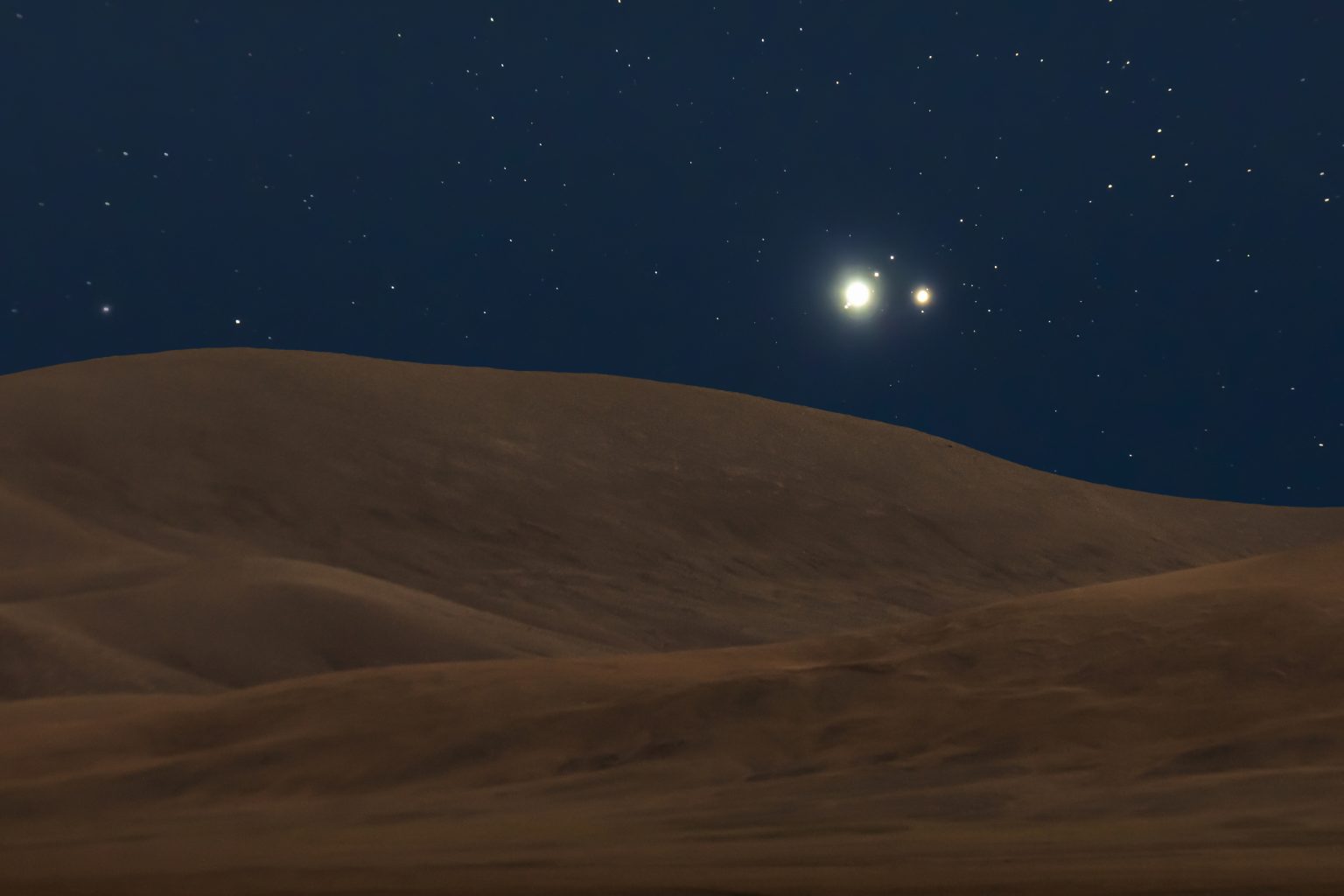
Chile is one of the world’s most rewarding destinations for astronomy, combining exceptionally dark skies in the north with striking mountain landscapes and remote observing locations. From the dry expanses of the Atacama Desert to the professional observatories of northern Chile, the country offers remarkable opportunities to explore the night sky.
- Why Chile Is a Top Destination for Stargazing
- The Best Places for Stargazing in Chile
- 1. San Pedro de Atacama
- 2. The Atacama Desert
- 3. Paranal Observatory
- 4. ALMA Observatory
- 5. Elqui Valley
- 6. Northern Chile’s Dark-Sky Landscapes
- When Is the Best Time to Stargaze in Chile?
- April to October: A Popular Period in the North
- June to September: Milky Way Viewing
- November to March: Summer Conditions
- Plan Around the Moon
- What Can You See in Chile’s Night Sky?
- What to Bring for Stargazing in Chile
- Combine Stargazing With Other Chilean Experiences
- A Sample Two-Day Stargazing Itinerary
- Responsible Stargazing and Dark-Sky Protection
- Experience Chile’s Night Sky With the Right Plan
Stargazing in Chile brings together natural scenery, scientific discovery and guided astronomy experiences. Visitors can observe the Milky Way, identify southern constellations and, when conditions allow, view planets and distant celestial objects through telescopes. This Chile stargazing guide explores the best destinations, seasonal conditions, observatory visits and practical tips for planning a memorable night beneath the stars.
Why Chile Is a Top Destination for Stargazing
Northern Chile has become an international center for astronomy because of its dry climate, high-altitude observing sites and relatively low light pollution outside populated areas. These conditions help astronomers study distant objects and give visitors excellent opportunities to experience a dark night sky.
Several factors make Chile particularly appealing for stargazing:
- Dry desert conditions: Much of the Atacama region receives very little rainfall, although cloud cover and humidity can still vary.
- High-altitude locations: Some observing sites sit above 2,000 meters, offering favorable conditions for astronomy but requiring attention to altitude-related health risks.
- Dark skies: Remote areas away from towns provide better visibility of faint stars and the Milky Way.
- Professional observatories: Northern Chile hosts major international astronomy facilities, including Paranal and ALMA.
- Southern-sky discoveries: Visitors can explore constellations and celestial objects that are difficult or impossible to see from many northern locations.
Clear skies are never guaranteed. Weather, atmospheric conditions, artificial light and the phase of the Moon all influence what can be seen on a particular night.
The Best Places for Stargazing in Chile
1. San Pedro de Atacama
San Pedro de Atacama is one of Chile’s most convenient bases for travelers interested in astronomy. Located in the north of the country, the town offers accommodation, restaurants and guided excursions into the surrounding desert.
Many local operators organize astronomy tours at observing sites outside town, where artificial light is reduced. Depending on the provider, an excursion may include telescope viewing, explanations of southern constellations and opportunities to photograph the night sky.
Highlights include:
- Guided observations of stars, planets and selected deep-sky objects.
- Introductions to the Milky Way and the southern celestial hemisphere.
- Night-sky photography with help from experienced guides.
- Desert scenery that can be combined with daytime excursions.
The visibility of particular objects depends on the date, Moon phase and weather. Choose a tour that explains its cancellation policy and provides suitable equipment for the conditions.
Best for: First-time stargazers, couples, families and travelers seeking an organized astronomy experience.
2. The Atacama Desert
The Atacama Desert is internationally recognized for its exceptionally dry environment and outstanding astronomical research sites. Its landscapes include salt flats, volcanic peaks, dunes and broad open horizons.
Travelers can combine daytime exploration with guided night-sky sessions near San Pedro de Atacama or other locations where access is permitted.
Popular experiences include:
- Observing the Milky Way from a dark-sky location.
- Photographing stars above desert mountains and salt formations.
- Learning to identify southern constellations.
- Joining guided telescope sessions with local astronomy operators.
Not every scenic location is open for nighttime visits. Check local regulations before entering protected areas after dark, and avoid driving unfamiliar desert tracks at night.
Best for: Travelers who want to combine astronomy with desert landscapes and outdoor exploration.
3. Paranal Observatory
The European Southern Observatory’s Paranal Observatory is home to the Very Large Telescope, one of the world’s leading optical and infrared astronomy facilities. It stands on Cerro Paranal in northern Chile, in an area selected for its favorable observing conditions.
Public visits are available on designated dates, subject to advance registration, availability and observatory rules. These visits introduce guests to the facility and its scientific work; they are not equivalent to a commercial nighttime stargazing session.
Before planning a visit:
- Register through the official European Southern Observatory website.
- Confirm the visit date and meeting arrangements.
- Check current access and safety requirements.
- Allow enough time for the journey to and from the observatory.
Best for: Astronomy enthusiasts, science-focused travelers and visitors interested in professional observatory facilities.
4. ALMA Observatory
The Atacama Large Millimeter/submillimeter Array (ALMA) is a major international astronomy facility that uses an array of antennas to study the universe at millimeter and submillimeter wavelengths. Its research includes star formation, molecular clouds and distant galaxies.
ALMA differs from an optical observatory: its instruments are designed to detect wavelengths invisible to the human eye rather than simply magnify visible stars.
The facility operates at the Operations Support Facility and at the much higher Array Operations Site on the Chajnantor Plateau. Public access to the high-altitude antenna site is restricted, and visitor arrangements can change. Check ALMA’s official visitor information before including a visit in your itinerary.
Best for: Travelers interested in astronomy, scientific research and the technology behind modern observations of the universe.
5. Elqui Valley
The Elqui Valley, in the Coquimbo Region, is another well-known destination for astronomy in Chile. Its mountain scenery, dry climate and established astronomy-tourism offerings make it an attractive alternative to the Atacama.
Visitors can find guided observing experiences, observatories open to the public on scheduled visits and rural accommodation away from stronger sources of artificial light.
Possible activities include:
- Joining a guided telescope session.
- Learning about constellations and planetary movements.
- Photographing the night sky from a dark rural location.
- Combining astronomy with visits to local villages and scenic mountain roads.
Conditions vary across the valley, so check the location and schedule of a tour rather than assuming that every accommodation offers direct access to an observatory.
Best for: Travelers who want astronomy combined with rural scenery and a slower-paced regional itinerary.
6. Northern Chile’s Dark-Sky Landscapes
Beyond the best-known destinations, parts of northern Chile offer remote landscapes where the night sky can be impressive when local conditions are favorable. The experience depends on distance from artificial light, road access, weather and permission to enter the chosen location.
When planning an independent stargazing stop:
- Choose an authorized and accessible site.
- Check the forecast and Moon phase.
- Avoid stopping in unsafe roadside locations.
- Carry warm clothing, water and reliable navigation.
- Do not enter protected or private land without permission.
Remote locations may offer darker skies, but they also have fewer services and can be difficult to reach after dark. A guided excursion is often the safer choice for unfamiliar terrain.
When Is the Best Time to Stargaze in Chile?
Chile offers astronomy opportunities throughout the year, but the best dates depend on the region, weather and celestial objects you want to observe.
April to October: A Popular Period in the North
Many visitors choose the cooler, drier months for trips to northern Chile. Clear conditions are common in parts of the Atacama, although no month guarantees cloud-free skies.
Potential advantages include:
- Favorable conditions for many guided astronomy sessions.
- Good opportunities for desert photography.
- Visibility of the Milky Way’s bright central region during much of the middle of the year.
Bring warm layers, especially if you plan to spend several hours outdoors after sunset.
June to September: Milky Way Viewing
During the southern winter, the bright central region of the Milky Way is well placed for evening observation during much of the season. This period can be particularly attractive for travelers hoping to photograph the galaxy.
However, cold nights are common, and high-altitude locations may be significantly colder than nearby towns. Choose an observing site that matches your comfort and altitude tolerance.
November to March: Summer Conditions
Summer can bring warmer evenings, but parts of the northern Andes experience seasonal cloud and precipitation patterns during the Altiplanic summer, particularly in some highland areas.
For the best chance of a successful session:
- Check the local forecast before booking.
- Keep your schedule flexible.
- Confirm whether a tour can be rescheduled if the sky is cloudy.
- Avoid assuming that warmer conditions mean better visibility.
Plan Around the Moon
Moonlight can have a major effect on stargazing.
- New moon: Generally offers darker skies for observing faint stars and the Milky Way.
- Full moon: Makes the Moon itself a compelling target, but its brightness can reduce the visibility of faint objects.
- Partial moon phases: Can work well if the Moon sets before the main observing session.
For a Milky Way-focused trip, choose dates with little moonlight during the hours you plan to observe.
What Can You See in Chile’s Night Sky?
Chile’s southern skies reveal a range of objects that vary with the season and time of night. Even without a telescope, a dark location can offer an impressive view.
The Milky Way
Under dark skies, the Milky Way appears as a luminous band stretching across the heavens. Its bright central region is especially striking during the appropriate months, while darker dust lanes become visible away from artificial light.
Southern Constellations
Several constellations are particularly useful for exploring the southern sky:
- Southern Cross (Crux): A distinctive constellation often used to help identify the southern celestial region.
- Centaurus: Contains the bright stars Alpha Centauri and Beta Centauri.
- Scorpius: A recognizable constellation visible during the season when the Milky Way’s central region is prominent.
- Sagittarius: Lies in the direction of the galaxy’s bright central region.
A local guide can explain how these constellations move across the sky during the night.
Planets, Star Clusters and Nebulae
Depending on the date, planets such as Jupiter, Saturn and Mars may be visible to the naked eye or through a telescope. Star clusters and nebulae can also be observed when they are above the horizon and conditions are suitable.
Meteor showers occur at particular times of the year, but the number of meteors visible varies with the shower, Moon phase, cloud cover and observing location.
What to Bring for Stargazing in Chile
Desert nights can become cold even after a warm afternoon. Preparing for several hours outdoors makes the experience more comfortable.
Essential Items
- Warm clothing: Bring an insulated jacket, long trousers and additional layers.
- Closed footwear: Useful on dusty or uneven ground.
- Water: Stay hydrated, especially after daytime excursions at altitude.
- Red-light headlamp: Use low-intensity red light to help preserve night vision.
- Hat and gloves: Particularly useful during winter.
- Personal medication: Carry any medication you may need during the outing.
Optional Photography Equipment
- A camera with manual exposure controls.
- A sturdy tripod.
- Spare batteries and charging equipment.
- A wide-angle lens for photographing the Milky Way.
- A dust-resistant bag for electronic equipment.
Professional equipment is not essential. A guided tour can provide telescopes and explanations, while the unaided eye can reveal many stars and constellations under a sufficiently dark sky.
Allow at least 20 to 30 minutes for your eyes to adapt to darkness, and avoid looking at bright phone screens during the observing session.
Combine Stargazing With Other Chilean Experiences
Astronomy can be one part of a wider journey through Chile’s varied landscapes. Depending on the region, visitors can combine night-sky tours with desert scenery, mountain excursions and cultural experiences.
Consider adding:
- Valle de la Luna: Explore the distinctive geological formations near San Pedro de Atacama during permitted visiting hours.
- Atacama salt flats and lagoons: Discover the region’s mineral landscapes and highland scenery.
- Elqui Valley villages: Enjoy rural landscapes and regional culture alongside astronomy tours.
- Desert photography: Capture changing light across dunes, mountains and volcanic terrain.
- Local cultural experiences: Learn about regional history and living traditions through respectful, locally organized activities.
Avoid scheduling strenuous high-altitude excursions immediately before a late-night astronomy tour. Allow time to rest, particularly if you are still acclimatizing.
A Sample Two-Day Stargazing Itinerary
This itinerary uses San Pedro de Atacama as a base and combines desert scenery with a guided astronomy experience.
Day 1: Desert Landscapes and a Night-Sky Tour
Spend the afternoon visiting Valle de la Luna during its authorized opening hours. Explore the viewpoints, photograph the rock formations and return to San Pedro with enough time to rest and eat.
In the evening, join a guided astronomy tour at an authorized observing site outside town. Choose a date that suits your preferred targets and the Moon phase, and bring warm clothing for the session.
Day 2: Salt Flats and Astronomy
Start the day with a guided visit to a salt-flat or lagoon destination, confirming access and local conditions in advance. Return to town for lunch and a rest.
In the afternoon, consider an astronomy-related activity or a visit to another local attraction. If you want to tour Paranal, plan a separate journey based on its official reservation schedule. Do not assume that public access to ALMA is available without checking current arrangements.
If the weather is favorable, a second night of stargazing can provide another opportunity to observe objects that were not visible on the first evening.
Responsible Stargazing and Dark-Sky Protection
Dark skies are an important natural resource for astronomy, wildlife and the visitor experience. Protecting them requires care both at observing sites and while traveling through the desert.
Follow these guidelines:
- Use low-intensity lighting: Avoid bright white lights that disturb other observers.
- Stay on authorized roads and trails: Do not drive off-road at night across fragile desert surfaces.
- Respect site rules: Follow park hours, access restrictions and observatory instructions.
- Protect wildlife: Keep a safe distance and avoid shining lights directly at animals.
- Carry out all waste: Leave no packaging, batteries or food scraps behind.
- Respect local communities: Ask permission before photographing people and use locally organized cultural experiences.
- Plan for safe transport: Arrange your return journey before the astronomy session rather than driving unfamiliar routes while tired.
Experience Chile’s Night Sky With the Right Plan
From the Atacama Desert to the Elqui Valley, Chile offers remarkable opportunities to explore the southern sky. San Pedro de Atacama is a convenient base for guided astronomy tours, while Paranal provides insight into professional optical astronomy through scheduled visits. ALMA offers a different perspective on scientific research, although public access is restricted and must be confirmed.
Choose dates around the Moon, check the weather and prepare for cold nights. With realistic expectations and responsible planning, stargazing in Chile can become a memorable part of a journey through the country’s deserts, mountains and rural landscapes.