
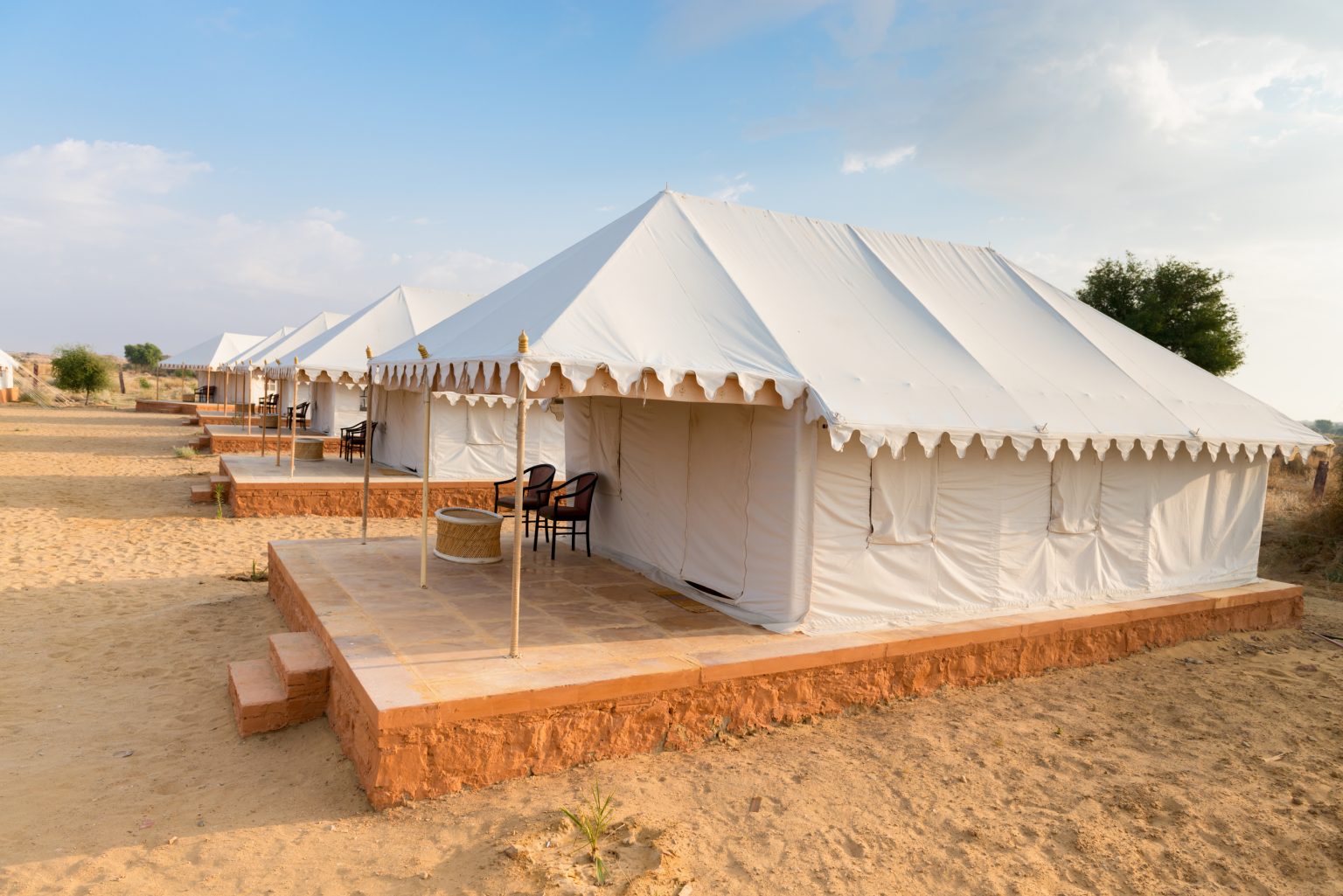
Rajasthan’s desert landscapes offer a mix of open dunes, historic settlements and living regional traditions. Camping in the Thar Desert of Rajasthan gives travellers a chance to explore the countryside around Jaisalmer, experience local music and cuisine, and spend an evening beneath the desert sky. From a luxury desert camp near Jaisalmer to a quieter stay around Khuri village, desert camping in India offers different ways to discover the Thar, depending on your preferred comfort level, activities and travel style.
- Why Choose Rajasthan for Desert Camping?
- The Best Places for Desert Camping in Rajasthan
- Sam Sand Dunes near Jaisalmer
- Khuri Village for a Quieter Desert Stay
- Bikaner and Raisar for a Different Desert Base
- Osian near Jodhpur
- Types of Desert Camps in Rajasthan
- What to Expect at a Rajasthan Desert Camp
- Best Time for Desert Camping in Rajasthan
- What to Pack for Desert Camping in Rajasthan
- Culture and Daily Life in the Thar Desert
- Responsible Desert Camping
- A Simple Two-Day Desert Camping Itinerary from Jaisalmer
- Let the Thar Shape Your Desert Stay
Why Choose Rajasthan for Desert Camping?
The Thar Desert offers a distinctive combination of landscapes, heritage and outdoor activities. Around Jaisalmer, visitors can explore sand dunes, historic forts and villages, while organised camps provide accommodation and excursions into the surrounding countryside.
Desert camping here is not necessarily an isolated wilderness experience. Many camps are established tourism properties with prepared tents, dining facilities and scheduled entertainment. Others offer simpler accommodation or arrange activities with local guides and camel handlers.
Travellers choose Rajasthan for several reasons:
- Sunset views and stargazing: Open desert landscapes can provide beautiful evening views, although visibility depends on weather, dust and light pollution.
- Folk music and dance: Some camps organise performances by regional musicians and dancers as part of their evening programmes.
- Camel rides and jeep safaris: Guided excursions offer different ways to explore the dunes and nearby desert tracks.
- Historic attractions: Jaisalmer and Jodhpur provide opportunities to combine a desert stay with forts, temples and historic architecture.
- A range of accommodation: Options include furnished luxury tents, simpler camps and rural homestays.
The best choice depends on whether you want an activity-filled evening near the main dunes, a quieter village setting or a more private stay with additional comforts.
The Best Places for Desert Camping in Rajasthan
Sam Sand Dunes near Jaisalmer
Sam Sand Dunes are among Rajasthan’s best-known desert tourism areas. Located roughly 40 kilometres west of Jaisalmer, the area attracts visitors looking for sunset views, camel rides and overnight stays in organised desert camps.
The atmosphere can become busy, particularly during the main tourist season and around sunset, when many visitors arrive for excursions. This makes Sam a practical option for first-time visitors who want several activities and accommodation choices in one area.
Depending on the camp and package, activities may include:
- Camel rides across permitted dune routes.
- Jeep safaris on designated desert tracks.
- Sunset viewing and short walks.
- Evening folk music and dance performances.
- Rajasthani meals served at the camp.
- Overnight stays in furnished tents.
Kalbeliya dance and other regional performances may feature in some programmes, but the artists and entertainment offered vary by operator.
For travellers seeking a high-comfort stay, The Serai, Jaisalmer is a luxury desert retreat associated with the Jaisalmer region. It is a different style of accommodation from the larger, activity-focused camps around Sam. Compare its location, facilities and available experiences with your itinerary before booking.
Sam is particularly suitable for first-time visitors and families who want organised activities and a convenient range of services. If peace and solitude are your priority, consider Khuri or a camp farther from the busiest routes.
Khuri Village for a Quieter Desert Stay
Khuri, southwest of Jaisalmer, is known for its village setting and surrounding sand dunes. It offers an alternative to the busier atmosphere of Sam, although the level of quiet depends on the season, accommodation and number of visitors.
Accommodation options include furnished tents and village-style stays. Some operators arrange camel rides, local meals and evening cultural performances, while others focus on a simpler overnight experience.
A stay around Khuri can include:
- A guided camel ride at sunset.
- A walk through the village, where visitors can observe local architecture and daily life respectfully.
- Traditional Rajasthani food, depending on the accommodation.
- Sunrise views over the surrounding landscape.
- Stargazing away from brighter urban areas, when conditions allow.
Khuri is a good option for couples, independent travellers and nature lovers who prefer a village-based experience. However, do not assume that every property is community-run or that every stay includes home-cooked meals. Check the accommodation details before booking, and ask how activities are organised.
Bikaner and Raisar for a Different Desert Base
Bikaner offers a different perspective on Rajasthan’s desert heritage. The city is known for its historic architecture, including Junagarh Fort, and for its long association with camel breeding and desert life.
Travellers can explore the city’s heritage attractions before arranging an excursion or overnight stay in the surrounding countryside. Raisar and other rural areas near Bikaner have accommodation options that can provide access to open landscapes without requiring a trip to Jaisalmer.
Possible additions to a Bikaner itinerary include:
- Junagarh Fort: Explore the city’s historic architecture and royal collections.
- National Research Centre on Camel: Check current visitor access and activities before including it in your plans.
- Rural excursions: Ask local operators about available countryside visits and desert activities.
- Photography: Capture architectural details, rural scenery and the changing light across open landscapes.
Camping and activities vary by property, so confirm whether a specific stay includes camel-related experiences, guided excursions or overnight camping. Bikaner is best suited to travellers who want to combine heritage sightseeing with a desert-region stay rather than focus exclusively on large sand dunes.
Osian near Jodhpur
Osian is a historic town north of Jodhpur, known for its Hindu and Jain temples and its surrounding arid landscape. It offers a convenient option for travellers who want to add a short desert experience to a Jodhpur itinerary.
Some camps and resorts in the area organise overnight tent stays, camel rides, jeep safaris and evening cultural programmes. Others offer shorter excursions without an overnight stay.
Activities may include:
- Camel rides around suitable routes near the dunes.
- Jeep excursions with local operators.
- Visits to historic temples, subject to opening hours and local rules.
- Regional meals and cultural performances at participating camps.
- Overnight accommodation in furnished tents or other lodging.
Osian is particularly useful for travellers seeking a short desert experience near Jodhpur without making the longer journey to Jaisalmer. Confirm the location of the camp and the transport arrangements, since properties and activity areas can be separated from the town centre.
Types of Desert Camps in Rajasthan
Desert accommodation varies considerably in comfort, facilities and environmental impact. The label used by a property does not always tell you exactly what is included, so check the room description and package details before paying.
Luxury Tent Camps
Luxury camps are designed for travellers who want an outdoor setting with hotel-style comforts. Depending on the property, facilities may include:
- Furnished tents with beds and seating areas.
- Private bathrooms and hot-water facilities.
- Restaurant service or meals included in a package.
- Organised camel rides and jeep excursions.
- Evening entertainment and assistance with transport.
Some luxury properties offer more privacy and space than the larger camps around Sam. Rates and inclusions vary by season, so compare the full package rather than relying on the accommodation category alone.
Heritage-Inspired Camps
These camps use regional design elements, traditional textiles or local food to create a connection with Rajasthani heritage. Some arrange folk music and dance performances, while others focus more on the accommodation and dining experience.
Ask whether performances are included, how long they last and whether the programme changes throughout the season.
Eco-Conscious Camps
Some properties promote practices such as solar power, water conservation, waste reduction or locally sourced food. These features are not guaranteed simply because a camp describes itself as an eco-camp.
Travellers who care about sustainability can ask about:
- Water use and wastewater management.
- Electricity sources and backup generators.
- Waste collection and disposal.
- Employment and purchasing from local communities.
- Vehicle routes and measures to limit damage to dunes.
Simple Camps and Village Stays
Basic camps and rural homestays can offer a more straightforward experience, with fewer facilities and closer contact with the surrounding settlement. Standards vary, so check bathroom arrangements, bedding, meals, heating and transport before arrival.
This option may suit travellers who value a simple stay more than hotel-style services.
What to Expect at a Rajasthan Desert Camp
Many organised camps follow a similar schedule, although activities and timings vary by location and package.
Afternoon: Guests arrive, settle into their accommodation and may have time for tea or a short rest before an excursion.
Late afternoon: A camel ride, jeep safari or walk may be arranged to coincide with the softer light around sunset. Follow the operator’s instructions and stay on authorised routes.
Evening: Some camps serve dinner alongside folk music or dance performances. Others provide a quieter dining experience without organised entertainment.
Night: Stargazing may be possible when skies are clear and artificial lighting is limited. Desert temperatures can fall sharply after sunset, particularly in winter.
Morning: An early walk or sunrise excursion can offer cooler conditions and a different view of the landscape before returning for breakfast.
Not every camp offers all these activities, and a package may charge separately for some excursions. Check the itinerary and inclusions before booking.
Best Time for Desert Camping in Rajasthan
The main season for desert camping in Rajasthan generally runs from October to March, when outdoor activities are more manageable than during the hottest months. Rajasthan Tourism also recommends this period for camping and desert excursions.
Conditions still vary considerably between day and night. Winter afternoons can be pleasant, while nights in December and January may become very cold, with temperatures in some parts of the state falling close to or below freezing.
Seasonal Guide
- October and November: Often suitable for outdoor activities as temperatures become more comfortable, though conditions vary from year to year.
- December to February: Popular months for camping, camel rides and evening programmes. Bring warm layers for cold nights.
- March: Can be a good time for desert excursions, but daytime temperatures gradually rise.
- April to June: Heat can become intense, especially in the middle of the day. Check forecasts carefully and avoid strenuous activities during the hottest hours.
- July to September: The monsoon season can bring humidity and rainfall. Conditions vary, and not every camp or activity operates on the same schedule.
For many travellers, November through February is a practical period to consider. Book ahead during busy dates and festivals, and confirm that the camp is operating before travelling.
What to Pack for Desert Camping in Rajasthan
Pack according to the season, the type of camp and the activities you have booked.
Essential items include:
- Lightweight daytime clothing: Breathable fabrics help in warm conditions.
- Warm layers: Bring a jacket, long trousers and extra layers for cold winter evenings.
- Sun protection: Pack sunglasses, a hat and sunscreen.
- Comfortable footwear: Closed shoes are useful for walking over uneven ground, while sandals may be convenient around the camp.
- Reusable water bottle: Carry drinking water and refill where safe facilities are available.
- Personal toiletries and medication: Facilities differ between camps, so bring what you need.
- Flashlight or headlamp: Useful when walking around camp after dark.
- Phone charger or power bank: Charging access can vary at simpler properties.
A camera tripod or binoculars may be useful for photography and observing the landscape. Bring a tent and sleeping bag only if you are arranging independent camping and have confirmed that camping is permitted at your chosen location.
Culture and Daily Life in the Thar Desert
The Thar is home to diverse communities whose livelihoods and traditions have developed in response to the region’s climate, agriculture, trade and history. Music, crafts, textiles, food and local celebrations are important parts of Rajasthan’s cultural life, but practices differ from one community and place to another.
At some camps, local musicians perform regional songs and dancers present styles such as Kalbeliya. These performances can introduce visitors to aspects of Rajasthani artistic traditions, although a camp programme is only one part of the region’s wider cultural heritage.
Visitors can make their stay more meaningful by:
- Buying crafts directly from local artisans where possible.
- Asking permission before photographing performers or residents.
- Learning about the music and dance styles presented.
- Respecting religious sites, village customs and requests from local hosts.
- Choosing experiences that explain how local communities participate in tourism.
A desert stay is an opportunity to appreciate both the landscape and the people who live in the region, without assuming that one performance or meal represents all of Rajasthan.
Responsible Desert Camping
The Thar’s dry environment can be vulnerable to waste, disturbance and poorly managed vehicle activity. Small choices by visitors and operators can help reduce the impact of tourism.
- Reduce waste: Carry reusable items where practical and use designated waste facilities.
- Respect wildlife: Do not feed animals or approach them for photographs.
- Stay on permitted routes: Avoid driving or walking across restricted areas and fragile vegetation.
- Use water carefully: Water is a valuable resource in arid regions.
- Respect local communities: Follow photography rules and ask before entering private spaces.
- Choose operators carefully: Ask about safety procedures, animal welfare, waste management and local employment.
- Keep noise under control: Follow camp rules and respect other guests and nearby residents.
If you book a camel ride, check that the animals appear well cared for and that the operator follows appropriate handling practices.
A Simple Two-Day Desert Camping Itinerary from Jaisalmer
This itinerary focuses on Sam Sand Dunes and works best when you have arranged transport and an overnight camp in advance.
Day 1: Jaisalmer to Sam Sand Dunes
Leave Jaisalmer with enough time to reach your camp and settle in before the afternoon activities. If your schedule allows, explore the city’s historic attractions before departure or plan a separate visit to Jaisalmer Fort.
At the camp:
- Check in and confirm the timing of included activities.
- Take a camel ride or join an authorised jeep excursion if available.
- Watch the sunset from a permitted viewing area.
- Enjoy dinner and any cultural programme included in your booking.
- Spend the evening outdoors if weather and conditions allow.
Day 2: Sunrise and Return to Jaisalmer
Start early if you want to see the dunes in the morning light. Take a short walk in an authorised area, have breakfast and prepare for departure.
Return to Jaisalmer later in the morning, allowing time for traffic and any transport arrangements. If you prefer a quieter stay, consider Khuri instead, but choose one area for the overnight experience rather than trying to visit several distant desert regions in two days.
Let the Thar Shape Your Desert Stay
Desert camping in Rajasthan brings together outdoor exploration, regional food, cultural performances and the distinctive landscapes of the Thar. The experience can be lively around Sam Sand Dunes, quieter near Khuri or combined with historic architecture around Bikaner and Osian.
Choose your location according to the kind of trip you want, check exactly what your camp includes and prepare for changing temperatures after sunset. With thoughtful planning and respect for the environment and local communities, a night in Rajasthan’s desert can become a memorable part of a wider journey through the region.