
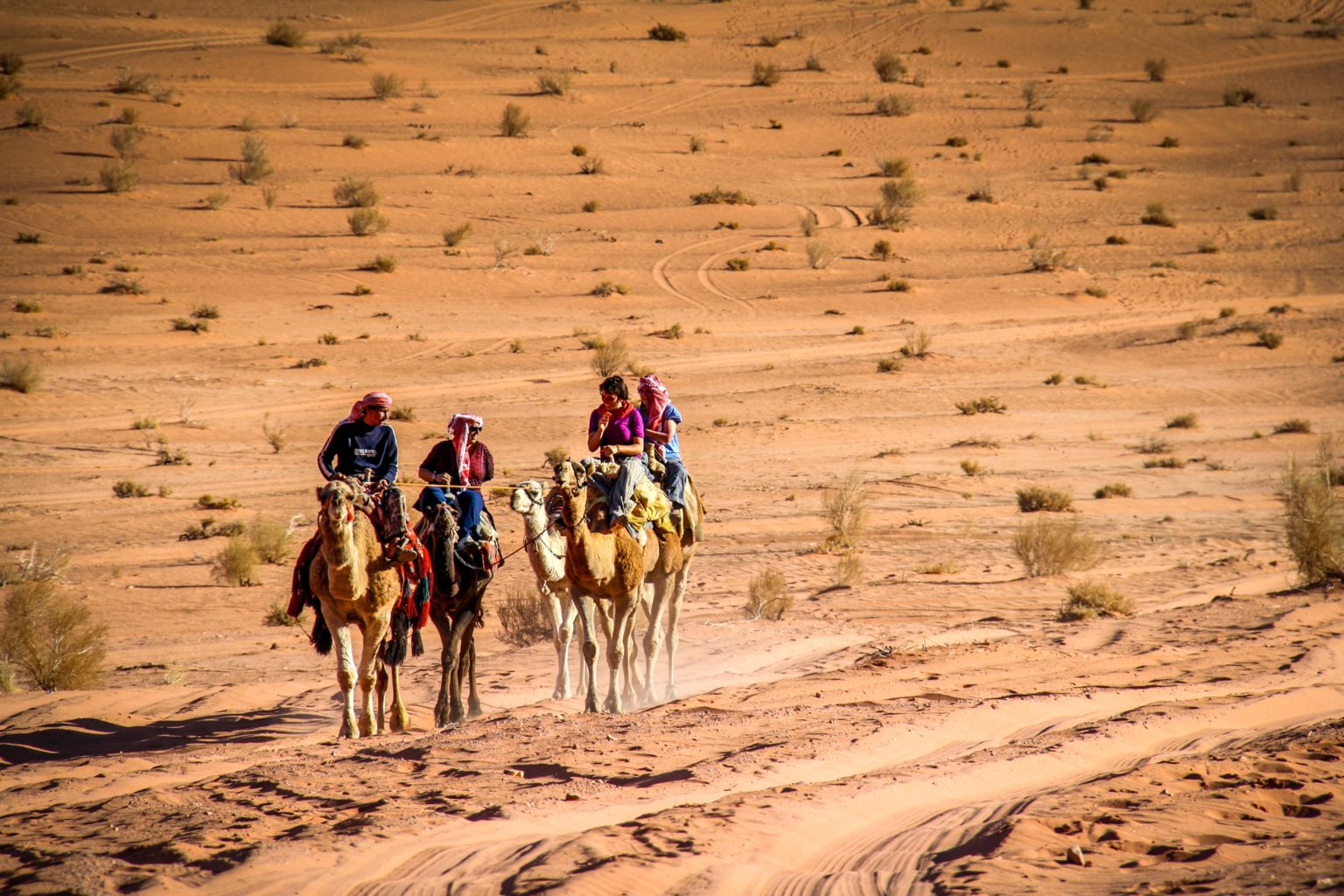
The sand beneath your feet retains the warmth of the day as the desert evening grows quieter. Against the backdrop of towering sandstone formations, a camel moves at an unhurried pace, offering a different way to experience the landscape.
- Wadi Rum, Jordan’s Red Desert Landscape
- Why Choose Camel Trekking in Wadi Rum?
- Camel Trekking Routes to Explore in Wadi Rum
- Lawrence’s Spring and the Surrounding Valleys
- Khazali Canyon and Nearby Rock Formations
- Burdah Rock Bridge and the Eastern Desert
- The Wider Desert Valleys
- Camel Trek Options and Duration
- What to Expect During a Camel Trek
- What to Bring for Camel Trekking in Wadi Rum
- Best Time for Camel Trekking in Wadi Rum
- Bedouin Heritage and Local Hospitality
- Responsible Camel Trekking and Desert Travel
- A Sample Two-Day Camel Trek in Wadi Rum
- Experience Wadi Rum at the Desert’s Pace
This is Wadi Rum, Jordan’s famous Red Desert, where dramatic rock formations, wide sandy valleys and centuries of desert heritage shape the journey. This guide explores camel trekking in Wadi Rum, including routes to discuss with local guides, trek durations, seasonal conditions and ways to travel responsibly.
Wadi Rum, Jordan’s Red Desert Landscape
Located in southern Jordan, east of Aqaba, Wadi Rum Protected Area is known for its red sands, towering sandstone mountains and narrow canyons. Recognized as a UNESCO World Heritage Site, the area combines natural scenery with evidence of human activity spanning thousands of years. It is also widely known as the Valley of the Moon.
What defines Wadi Rum?
- Expansive sandy valleys surrounded by sandstone cliffs and rock formations.
- Narrow canyons, natural arches and distinctive desert terrain.
- Hot summer days and cooler nights, particularly outside the summer season.
- Landscapes featured in films such as Lawrence of Arabia and The Martian.
Beyond its international reputation, Wadi Rum remains home to Bedouin communities whose knowledge of the terrain, hospitality and traditions are an important part of the visitor experience.
Why Choose Camel Trekking in Wadi Rum?
Camels have long played an important role in travel and livelihoods across arid parts of the Middle East. In Wadi Rum, a guided camel ride offers a slower way to appreciate the landscape than travelling by 4×4.
Reasons to consider a Wadi Rum camel trek include:
- A slower pace: Moving gradually through the desert gives you time to notice the changing colors of the sand and rock.
- Scenic exploration: Depending on the itinerary, a trek may cross sandy valleys and pass distinctive rock formations.
- Local knowledge: Bedouin guides can explain the landscape, local history and practical skills associated with desert travel.
- A quieter experience: Camel trekking can offer a different atmosphere from motorized desert excursions, although the level of solitude depends on the route and visitor numbers.
A camel ride is not a substitute for every type of desert excursion. Some distant landmarks and steep rock formations are better reached on foot or by vehicle. Your operator can recommend a route that matches your interests, available time and riding experience.
Camel Trekking Routes to Explore in Wadi Rum
The routes below describe landmarks and areas visitors may wish to include in a desert itinerary. Not every location is connected by a standard camel-trekking route, so confirm the actual route, duration and access arrangements with a local operator before booking.
Lawrence’s Spring and the Surrounding Valleys
Lawrence’s Spring, associated with T. E. Lawrence, is a familiar landmark in the Wadi Rum area. Its setting among rocky slopes and desert terrain makes it a possible point of interest on a guided visit.
Highlights may include:
- Views across the surrounding desert landscape.
- Opportunities to learn about the area’s history and local place names.
- Photography stops in the sandy valleys.
- A short camel ride arranged around the visitor’s schedule.
This area may suit first-time visitors looking for a relatively short experience. Ask whether the camel ride actually reaches the spring or whether the itinerary combines riding with a separate walk or vehicle transfer.
Khazali Canyon and Nearby Rock Formations
Khazali Canyon is known for its narrow passage and rock inscriptions, including ancient carvings. It is a worthwhile stop for travelers interested in the historical and archaeological features of Wadi Rum.
Possible highlights include:
- Viewing accessible inscriptions and carvings.
- Learning about the area’s long history of human presence.
- Exploring nearby rock formations with a local guide.
- Combining a camel ride with walking stops where permitted.
The canyon itself is explored on foot rather than by riding a camel through its narrow passage. Check the planned route with your guide, particularly if you want to spend time examining the inscriptions.
Burdah Rock Bridge and the Eastern Desert
Burdah Rock Bridge is one of Wadi Rum’s best-known natural arches. It stands high among the sandstone formations and is particularly popular with hikers and climbers.
A visit to the surrounding area may offer:
- Views of dramatic sandstone mountains.
- Opportunities for landscape photography.
- A chance to appreciate the scale of Wadi Rum’s rock formations.
- A combination of desert travel and a guided walk, depending on the itinerary.
Reaching the bridge itself generally involves a hike and scrambling over rocky terrain. A camel trek should not be presented as a direct ride to the top of the arch. If Burdah is a priority, ask whether your operator can arrange an appropriate transfer and guided hike separately.
The Wider Desert Valleys
Travelers seeking a quieter outing can ask local guides about routes through less-visited parts of the protected area. The best option depends on current access conditions, the location of the camp and the duration of the trek.
A less-crowded itinerary may include:
- Open valleys away from the busiest visitor stops.
- Desert scenery suited to photography.
- Breaks for refreshments and explanations from the guide.
- Time to observe the changing light across the sandstone formations.
Wildlife sightings are possible but never guaranteed. Routes and access may also change, so do not assume that a particular valley or landmark is available for camel trekking on every visit.
Camel Trek Options and Duration
The length of a camel trekking experience in Wadi Rum depends on the operator, route, weather and the needs of the group. Common formats include:
- Short camel rides: Suitable for visitors who want a brief introduction to riding and the desert landscape.
- Half-day treks: Allow more time for scenery, photography and stops at selected locations.
- Full-day experiences: May combine several desert stops, rest breaks and a meal, depending on the itinerary.
- Multi-day journeys: Can include longer periods on camelback, overnight stays and time to explore the protected area.
Multi-day camel treks require more planning than short rides. Confirm that the operator specifically offers a multi-day camel journey rather than a 4×4 tour with a short camel ride added. Ask about overnight arrangements, food, drinking water, luggage transport, emergency support and the daily riding distance.
What to Expect During a Camel Trek
A guided camel ride generally follows a steady pace, with stops determined by the route and duration. The experience can be rewarding, but comfort depends on the saddle, the length of the ride and how well the itinerary accommodates breaks.
You may experience:
- A gradual journey across sandy or rocky desert terrain.
- Stops for rest, refreshments and photography.
- Views of sandstone mountains and open valleys.
- A traditional meal or tea break when included in the booking.
- An overnight stay at a desert camp on some longer itineraries.
Some camps arrange meals inspired by local Bedouin cooking, including zarb, a dish traditionally prepared in an underground oven. Availability and preparation methods vary between camps.
Overnight visitors may also have an opportunity to enjoy the night sky, weather permitting. Cloud cover, moonlight and visibility all affect stargazing conditions.
What to Bring for Camel Trekking in Wadi Rum
Packing thoughtfully helps make a desert camel ride more comfortable, especially when the sun is strong or the route lasts several hours.
Essential Items
- Lightweight, breathable clothing that covers the skin.
- A scarf or keffiyeh to help protect your head and face from sun and blowing sand.
- Drinking water in a reusable bottle.
- Sunscreen, sunglasses and a sun hat.
- Comfortable closed shoes suitable for walking over sand and uneven ground.
- A small bag to protect your phone or camera from dust.
- Any personal medication you may need during the outing.
Useful Extras
- A small cushion, if permitted and appropriate for the saddle.
- A flashlight or headlamp for evening activities.
- A power bank for your phone.
- A warm layer for cool evenings and winter visits.
A local guide may be able to demonstrate how a traditional keffiyeh is worn. Styles and customs vary, so treat the demonstration as an opportunity to learn rather than assuming there is only one correct way to wear it.
Best Time for Camel Trekking in Wadi Rum
The most comfortable season for camel trekking in Jordan is generally spring or autumn, when daytime temperatures are often more manageable than during the hottest part of summer. Conditions can still vary considerably, and desert temperatures may change quickly between day and night.
- Spring: Often brings pleasant conditions for outdoor activities, with occasional wildflowers after sufficient rainfall.
- Summer: Can be extremely hot. Short rides are best arranged for cooler hours, and operators may adjust or cancel activities when conditions are unsafe.
- Autumn: Often offers comfortable weather for exploring the desert, although temperatures vary from day to day.
- Winter: Can provide clear views and quieter periods, but nights may be very cold and rain or strong winds can affect plans.
For many visitors, spring and autumn are good starting points when choosing travel dates. Check the forecast before departure and ask your operator about the planned riding hours, shade and rest stops.
Bedouin Heritage and Local Hospitality
The cultural dimension of camel trekking in Wadi Rum comes partly from the local guides and hosts who help visitors understand the landscape. Bedouin communities have varied histories and customs, and experiences differ between families and tourism operators.
Depending on the tour, visitors may have opportunities to:
- Share Bedouin tea and learn about local hospitality.
- Hear stories about the landscape, travel and life in the desert.
- Try dishes associated with regional cooking.
- Learn about traditional desert skills and the uses of camels.
- Spend an evening at a camp with local music or other cultural activities.
Tea may be prepared with different herbs or spices, depending on the host. Music, food and evening gatherings are not guaranteed parts of every tour, so ask what is included when booking.
Approach cultural encounters with curiosity and respect. Ask before photographing people, follow your host’s guidance and remember that a modern Bedouin community is a living society, not simply a tourist attraction.
Responsible Camel Trekking and Desert Travel
Choosing a responsible operator helps protect both the animals and the fragile environment of Wadi Rum Protected Area.
Before booking, consider the following:
- Check camel welfare: Look for animals that appear healthy and are handled calmly. Ask about workloads, access to water, rest periods and veterinary care.
- Choose an appropriate ride: Tell the operator about your experience, mobility needs and any concerns about mounting or riding.
- Respect the landscape: Stay on authorized routes and follow guidance around archaeological sites and protected areas.
- Reduce waste: Carry reusable water containers where practical and take all rubbish back with you.
- Respect local residents: Ask permission before taking photographs and follow local guidance at camps and settlements.
- Prepare for changing conditions: Follow your guide’s instructions if heat, wind or other conditions require a route change.
Do not ride an animal that appears injured, exhausted or poorly treated. A good experience should account for the camel’s welfare as well as the visitor’s comfort.
A Sample Two-Day Camel Trek in Wadi Rum
A two-day itinerary can provide a useful starting point for planning, but the actual route must be agreed with a local operator. The schedule below is illustrative rather than a guaranteed route or standard package.
Day One: Village, Sandstone Landscapes and Sunset
- Meet your guide in or near Wadi Rum Village and review the route, riding arrangements and safety guidance.
- Begin the planned camel ride through suitable valleys and sandy terrain.
- Visit selected landmarks, potentially including the area around Lawrence’s Spring or Khazali Canyon, if these stops are part of the confirmed itinerary.
- Take breaks for water, refreshments and photography.
- Watch the changing colors of the sandstone near sunset from an authorized viewpoint.
- Have dinner and stay overnight at a booked desert camp if included in the package.
Day Two: Morning Views and Return
- Enjoy the early morning atmosphere and breakfast or tea at the camp.
- Continue with a shorter camel ride through the agreed route.
- If Burdah Rock Bridge is on your wish list, arrange a separate transfer and guided hike where available rather than assuming the camel route reaches the arch.
- Return to the agreed meeting point or village according to the operator’s schedule.
Before confirming a two-day trek, ask how many hours will be spent riding each day, whether overnight accommodation is included and how luggage and supplies will be transported.
Experience Wadi Rum at the Desert’s Pace
Camel trekking in Wadi Rum offers a distinctive way to explore Jordan’s sandstone valleys and learn about the area’s living desert heritage. Whether you choose a short ride or a longer guided journey, the experience is best when the route suits your abilities, the conditions and the welfare of the animals.
Plan around the season, confirm the details with a reputable local operator and leave enough time to appreciate the landscape beyond the main stops. Wadi Rum’s appeal lies not only in its red dunes and towering rock formations, but also in the people, history and desert environment that give this remarkable place its character.