
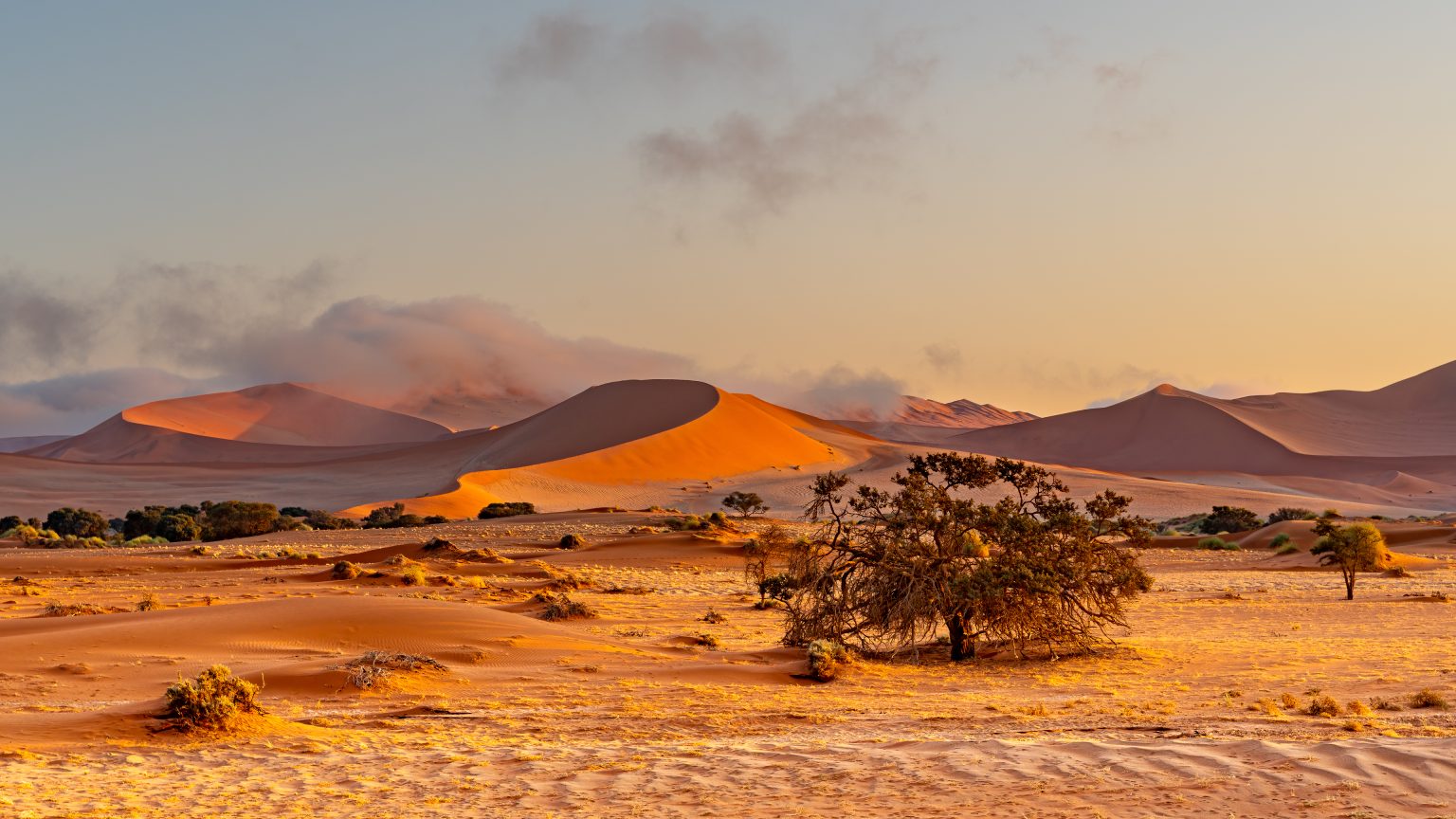
Sossusvlei in Namibia is known for its towering red dunes, pale clay pans, and striking contrasts between sand, sky, and ancient trees. At sunrise, the changing light brings out the dunes’ orange and golden tones, while late afternoon often reveals deeper shades of red. Wind gradually reshapes the sand, giving the landscape a constantly changing appearance.
- Where Is Sossusvlei Located?
- The Dunes: Giants Sculpted by Time
- How to Get to Sossusvlei
- Best Time to Visit Sossusvlei
- What to Bring With You
- Wildlife of Sossusvlei
- Photography Tips for Sossusvlei
- Where to Stay Near Sossusvlei
- Sustainable Travel Tips
- A Two-Day Sossusvlei Itinerary
- Experience the Scale of Sossusvlei
From the white clay floor of Deadvlei to the high slopes of Big Daddy Dune, this remarkable corner of the Namib Desert offers memorable hiking and photography opportunities. This guide explains how to reach the area, which dunes and viewpoints to explore, when to visit, and how to plan a safe and rewarding trip.
Where Is Sossusvlei Located?
Sossusvlei lies within Namib-Naukluft National Park in southwestern Namibia, in the Namib Desert, widely recognized as one of the world’s oldest deserts.
The name Sossusvlei is associated with the region’s dry river system and salt and clay pans. The Tsauchab River flows through the surrounding landscape during occasional periods of sufficient rainfall, but its water rarely reaches the main pan. When water does collect in the low-lying areas, it creates temporary pools and reflections beneath the dunes.
Sossusvlei is approximately 24°44′ south latitude and 15°17′ east longitude. The nearest settlement and main access point is Sesriem, where visitors enter the national park.
The distance depends on which point you are visiting. Sesriem is roughly 60 km from the Sossusvlei and Deadvlei parking area by road, so allow time for the drive and the final walk across the sand. The dunes and pans are spread across a large area, and visiting more than one location usually requires several hours.
The Dunes: Giants Sculpted by Time
The Sossusvlei dunes are famous for their height, sweeping ridgelines, and reddish colors. Iron-rich minerals in the sand oxidize over time, contributing to the characteristic tones. The exact color changes with the angle of the sun, the weather, and the amount of shadow across each slope.
Some dunes in the area rise more than 300 meters above the surrounding terrain. Their steep sides and soft sand make climbing physically demanding, particularly during hot weather.
Five Dunes and Landscapes You Should Not Miss
Dune 45
Dune 45 is one of Namibia’s best-known dunes and a popular stop along the main road from Sesriem toward Sossusvlei. Its accessible location makes it a practical choice for visitors who want to climb a dune without committing to the longer ascent of Big Daddy.
The climb involves walking uphill through loose sand, so allow enough time and carry water. Early morning is popular for photography because the low sun creates long shadows and highlights the dune’s ridges.
Tip: Check the park’s opening arrangements before planning a sunrise visit. Visitors staying outside the main gate may not be able to reach the dunes before sunrise.
Big Daddy Dune
Big Daddy is among the tallest dunes in the Sossusvlei area, with commonly reported heights varying according to how the measurement is taken. Its summit overlooks Deadvlei, making it one of the most recognizable features of the landscape.
The climb is strenuous. Soft sand, steep sections, and exposure to the sun can make the ascent challenging, and the time required depends on your fitness and conditions. Allow considerably more time than you would for a short dune walk.
Some visitors descend the sandy slope toward Deadvlei, but the route can be steep. Choose a safe line, follow park guidance, and avoid climbing when heat or fatigue makes the descent unsafe.
Tip: Start early, bring enough water, and turn back if conditions become too demanding.
Big Mama Dune
Big Mama stands near Big Daddy on the opposite side of the Deadvlei area. It is another impressive dune, with broad slopes and elevated views across the surrounding pans.
It can be a good alternative for travelers seeking a different perspective on the landscape. However, visitor numbers and the level of solitude vary, so it should not be assumed to be empty.
Advice: Allow time to appreciate the changing patterns of light and shadow rather than focusing only on reaching the summit.
Deadvlei
Deadvlei is a white clay pan surrounded by high dunes and dotted with the dark remains of camel thorn trees. The trees are generally estimated to have died around 600 to 700 years ago. The exceptionally dry conditions have slowed their decomposition, leaving the trunks standing against the pale ground.
The contrast between the black trees, white clay, and orange-red dunes makes Deadvlei photography one of the highlights of a visit to Namibia.
Reaching the pan involves walking from the parking area across sandy terrain. The walk may feel more difficult in hot weather, so bring water and wear suitable footwear.
Tip: Visit early in the morning when possible. The softer light can help reveal the texture of the clay and the shapes of the trees. Stay on permitted routes and never climb on or damage the tree remains.
Elim Dune
Elim Dune is located relatively close to the Sesriem entrance and is often visited by travelers exploring the area around the gate. Its slopes and surrounding plains provide opportunities for landscape photography, particularly when the low sun casts long shadows.
Access and the best viewing point depend on current park rules and road conditions. Confirm the route locally before setting out, especially if you plan to visit late in the day.
Suggestion: Elim Dune can be a useful addition to a short visit, but leave enough time to return before the gate closes.
How to Get to Sossusvlei
Most visitors reach Sossusvlei by road from Windhoek, Swakopmund, Walvis Bay, or nearby lodges. Distances and travel times depend on the route, road conditions, and stops along the way.
From Windhoek
The drive from Windhoek to Sesriem is approximately 350 to 360 km, and often takes around five to six hours, depending on the route and conditions. Travelers commonly pass through or near Rehoboth before continuing toward the desert.
Much of the journey is on gravel roads. A suitable vehicle, careful driving, and checking current road conditions are important. A 4×4 may be useful for some routes and conditions, but the drive to Sesriem does not automatically require one.
From Swakopmund or Walvis Bay
Travelers approaching from the coast commonly drive through Solitaire before continuing to Sesriem. Allow around four to five hours or more, depending on the starting point, road conditions, and stops.
Solitaire is a useful place to pause, but fuel and services can be limited along remote stretches. Check fuel availability and your vehicle’s range before departure.
Park Access and the Final Stretch
The main public entrance is at Sesriem Gate. Gate opening arrangements affect how early visitors can reach the dunes, so confirm current times and entry procedures with Namibia Wildlife Resorts or the park authorities before your trip.
From Sesriem, the paved road extends for roughly 60 km toward the Sossusvlei area. The final section beyond the main 2WD parking area consists of deep sand and generally requires a suitable 4×4 vehicle and experience driving on sand.
Visitors without an appropriate vehicle can usually use an authorized shuttle or guided transfer when available. Check operating times, fees, and return arrangements in advance, as services can change.
If seeing the dunes at sunrise is a priority, consider staying at accommodation inside the park gate. This can provide earlier access than staying outside the entrance, although actual departure times still follow park rules.
Best Time to Visit Sossusvlei
Sossusvlei can be visited throughout the year, but the season affects temperatures, road conditions, and the type of landscape you may see. Namibia is in the Southern Hemisphere, so its seasons are opposite to those in Europe and North America.
May to September: The Dry Winter Season
These months generally bring cooler mornings, relatively dry weather, and comfortable conditions for walking when temperatures are moderate. Nights and early mornings can be cold, especially in the middle of winter.
The dry season is popular for Sossusvlei hiking and photography, so accommodation near Sesriem can book up well in advance.
October to November: Warmer Weather
Temperatures rise during spring, and exposed dunes can become very hot around midday. Early starts are important for longer walks and climbs.
This period can still offer excellent photography conditions, but visitors should plan around the heat and carry adequate water.
December to April: Summer and the Possibility of Rain
Summer can bring high daytime temperatures and occasional thunderstorms. Rainfall varies from year to year, and the pans do not fill regularly. When water collects in the low-lying areas, reflections can create unusual photographic opportunities, but these conditions are not guaranteed.
Rain may also affect gravel roads and access to remote areas. Check local conditions before traveling, particularly after storms.
When should you visit?
June to August are popular months for cooler daytime conditions, while April, May, September, and October may also suit travelers seeking a balance between temperatures and outdoor activities. The best time depends on your tolerance for heat, preferred activities, and accommodation availability.
What to Bring With You
Good preparation makes a major difference in a hot, exposed landscape where shade and services are limited.
Essential Items
- Sun protection: Bring high-SPF sunscreen, a wide-brimmed hat, and sunglasses.
- Water: Carry enough water for the planned walk and the return journey. Two to three liters per person may be a starting point for a short outing in mild conditions, but longer climbs and hot weather require more. Follow local advice and never rely on a minimal supply for a strenuous hike.
- Food and snacks: Bring snacks or breakfast if you plan to enter the park early.
- Suitable footwear: Closed shoes can protect your feet from hot sand and rough ground, although sand may still enter them.
- Light layers: Use breathable clothing during the day and pack a warm layer for cool mornings.
- A scarf or buff: Useful for wind and blowing sand.
- A charged phone and power bank: Keep your phone charged, but do not assume mobile coverage will be reliable everywhere.
Optional Equipment
- Camera and lenses: A wide-angle lens can capture the scale of the dunes, while a telephoto lens can isolate ridgelines and distant details.
- Tripod: Useful for low-light photography and night skies.
- Hiking poles: Some walkers find them helpful on loose sand, although they are not essential.
- Binoculars: Useful for observing distant wildlife without approaching it.
Avoid carrying unnecessary equipment on long dune climbs. Keep your hands free where possible, and prioritize water, sun protection, and safe footwear over photographic accessories.
Wildlife of Sossusvlei
Although the environment is dry, the wider Namib Desert supports wildlife adapted to limited water and high temperatures. Animals are more likely to be seen at certain times of day, and sightings are never guaranteed.
Species you may encounter in the wider area include:
- Oryx, or gemsbok: Well adapted to arid environments and one of Namibia’s best-known antelope species.
- Springbok: Sometimes seen across open plains and sparsely vegetated areas.
- Ostriches: May be encountered in suitable open habitats.
- Bat-eared foxes: These small mammals are more often active during cooler periods and may be difficult to spot.
- Desert-adapted reptiles and insects: Lizards, geckos, beetles, and other invertebrates occupy a variety of desert habitats.
Wildlife is distributed unevenly across the landscape, and the dunes themselves are only part of the wider ecosystem. Observe animals from a distance, never feed them, and avoid disturbing burrows or other signs of wildlife.
Photography Tips for Sossusvlei
The dunes look different throughout the day as sunlight changes their colors, shadows, and textures. Early morning and late afternoon are often the most rewarding times for landscape photography.
For better Sossusvlei photography, try these techniques:
- Shoot during low-angle light: Sunrise and late afternoon often produce long shadows that emphasize the curves of the dunes.
- Use the dune ridges as leading lines: Position the ridgelines to guide the viewer’s eye through the frame.
- Include a person for scale: A distant figure can help communicate the size of a dune, provided you have permission if photographing another visitor prominently.
- Look for contrasting colors: The white clay, dark tree trunks, and red sand at Deadvlei create strong natural contrasts.
- Try different focal lengths: Wide-angle lenses capture the broader scene, while longer lenses can compress distant dune layers.
- Protect your equipment: Fine sand can damage camera mechanisms. Change lenses in sheltered conditions and keep equipment in a suitable bag when not in use.
- Check exposure: Bright sand can cause a camera to underexpose a scene. Review the histogram and adjust exposure compensation when necessary.
A shutter speed of around 1/250 second, an aperture near f/8, and a low ISO can be a useful starting point for a handheld landscape shot in bright daylight. These are not fixed settings: adjust them to the available light, lens, subject, and whether you are using a tripod.
For night photography, check the moon phase and weather forecast. Clear skies and limited artificial light can provide good conditions, but clouds and dust may reduce visibility.
Bonus tip: Photograph footprints and shifting sand patterns before wind or other visitors change them. Follow marked routes and avoid creating unnecessary tracks in sensitive areas.
Where to Stay Near Sossusvlei
Accommodation ranges from campsites to luxury lodges. Location matters because the main dunes are a substantial drive from Sesriem, and gate access can determine how early you reach them.
Options to consider include:
Sesriem Campsite: Located inside the park gate, it offers campers an advantage when planning an early visit to the dunes. Facilities and availability should be confirmed before booking.
Sossus Dune Lodge: Situated within Namib-Naukluft National Park, this lodge allows guests to stay inside the park and benefit from its access arrangements.
Desert Camp: Located a short drive outside Sesriem Gate, this self-catering option provides a base for exploring the region.
Desert Quiver Camp: Another nearby option, with self-catering accommodation close to the park entrance.
Kulala Desert Lodge and Little Kulala: These private reserve properties offer lodge-based desert experiences and access arrangements that differ from the public park entrance. Confirm which access route, excursions, and facilities are included in your booking.
Choose accommodation according to your budget, preferred comfort level, and plans for sunrise photography or dune climbing. Book well ahead for the popular dry-season months, and check whether meals, transfers, park fees, and guided activities are included.
Sustainable Travel Tips
Sossusvlei’s fragile desert environment can be affected by careless driving, litter, and disturbance to wildlife. Responsible visitors help protect the landscape and preserve the experience for future travelers.
- Stay on authorized roads and paths: Driving or walking in sensitive areas can damage the environment.
- Take all rubbish with you: Do not leave food packaging, tissues, or other waste behind.
- Respect Deadvlei’s trees: Never climb on, break, or carve into the ancient tree remains.
- Keep a respectful distance from wildlife: Do not feed animals or interfere with their behavior.
- Conserve water: Water is a valuable resource in this dry region, so use it thoughtfully.
- Support responsible local businesses: Consider reputable local guides and accommodation providers that explain their environmental practices.
- Follow park rules: Respect signs, closures, and guidance from park staff.
The aim is to enjoy the landscape without leaving unnecessary traces behind.
A Two-Day Sossusvlei Itinerary
This sample itinerary allows time for the major sights without trying to fit every dune into one day. Adjust it according to your arrival time, accommodation location, fitness, and current park access arrangements.
Day 1: Arrive at Sesriem and Explore Nearby Dunes
- Arrive at Sesriem: Check in to your accommodation, confirm park entry times, and prepare water and supplies for the following morning.
- Visit Elim Dune: If time and access arrangements allow, explore the area near the entrance and photograph the landscape in late-afternoon light.
- Enjoy sunset: Choose an authorized viewpoint and return to your accommodation before the relevant gate closes.
- Prepare for the morning: Pack your camera, water, snacks, and clothing so you can leave early.
Day 2: Dune 45, Sossusvlei and Deadvlei
- Enter the park: Set off according to the gate arrangements that apply to your accommodation.
- Visit Dune 45: Stop for photographs or a climb if temperatures and timing permit.
- Continue toward Sossusvlei: Allow time for the drive and the transfer or walk through the sandy final section.
- Explore Deadvlei: Walk across the sand to the clay pan, observe the tree remains, and photograph the contrasting landscape.
- Consider Big Daddy: Attempt the climb only if you have enough time, water, suitable conditions, and the fitness for a strenuous ascent.
- Return to Sesriem: Allow sufficient time to get back to your vehicle and exit the park within the required hours.
Sesriem Canyon may be a separate stop if your schedule allows, but it is not necessary to rush through the dunes to fit it in. If you want to climb Big Daddy and explore Deadvlei in depth, consider staying an additional night.
Experience the Scale of Sossusvlei
Sossusvlei combines towering dunes, pale clay pans, and ancient tree remains in a landscape that changes dramatically with the light. Its appeal lies not only in its famous viewpoints, but also in the details: the patterns left by wind, the contrast of colors at Deadvlei, and the broad views from the higher dunes.
Plan around the heat, confirm access arrangements, and allow enough time to explore without rushing. With thoughtful preparation and respect for the protected environment, a visit to Sossusvlei and the Namib Desert can become one of the most memorable parts of a journey through Namibia.