
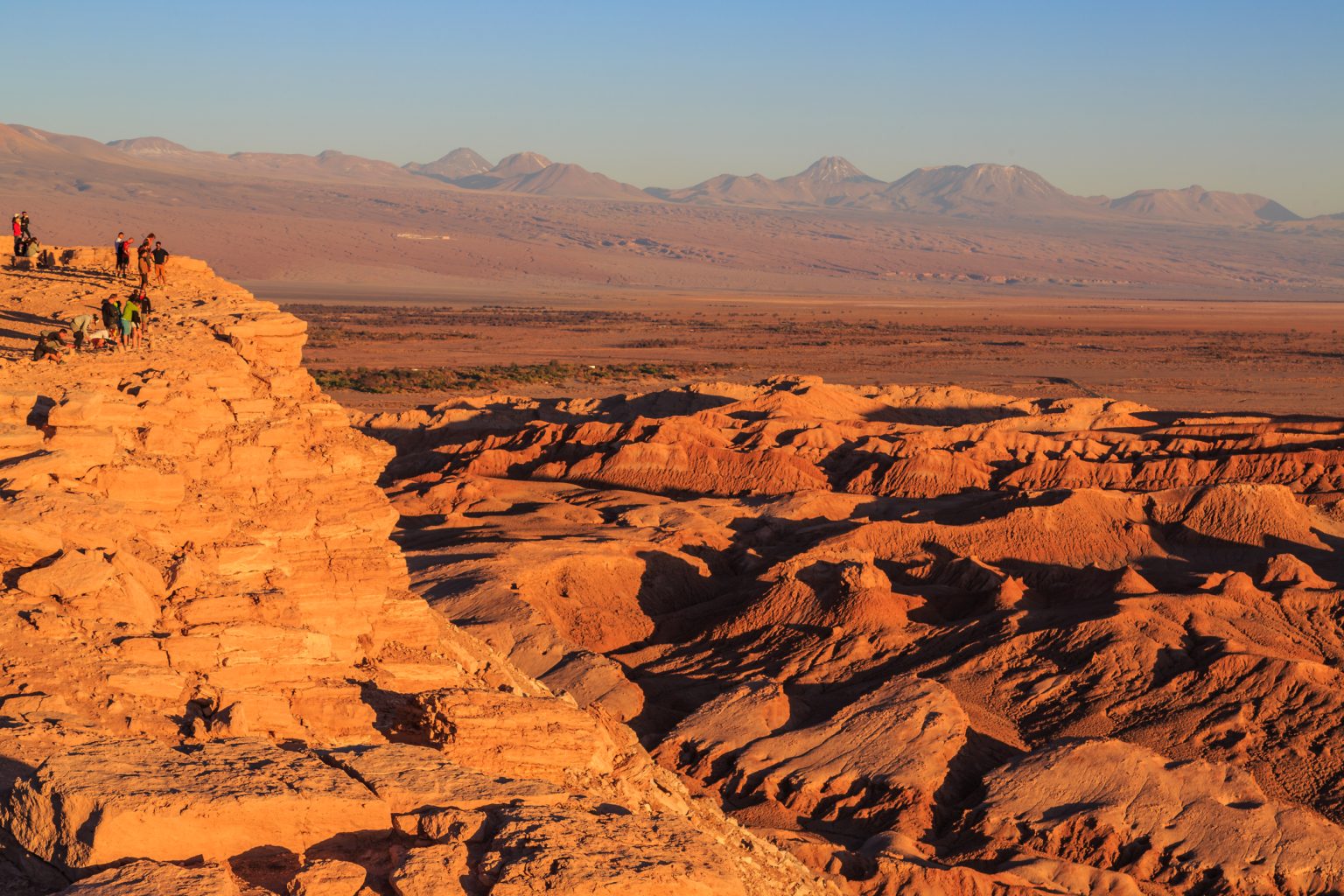
In the Atacama Desert of northern Chile, Valle de la Luna, or Moon Valley, is a striking landscape of salt formations, dunes, eroded rock, and barren valleys. Located close to San Pedro de Atacama, it is one of the most accessible places to experience the geological character of the Atacama.
- Where Is Valle de la Luna Located
- A Landscape Shaped by Time and Minerals
- Best Time to Visit Valle de la Luna
- How to Get to Valle de la Luna from San Pedro de Atacama
- Top Things to See and Do in Valle de la Luna
- Duna Mayor
- The Amphitheater
- Las Tres Marías
- Salt Caves and Mineral Formations
- Piedra del Coyote and Mirador de Kari
- 2-Day Valle de la Luna Itinerary
- Where to Stay in San Pedro de Atacama
- Helpful Travel Tips
- The Geological Character of Moon Valley
The valley has been shaped over millions of years by wind erosion, mineral deposits, tectonic activity, and occasional water flow. Its combination of pale salt surfaces, red and ochre rock formations, and steep dunes creates a landscape that changes noticeably with the position of the sun.
Valle de la Luna is best known for its unusual geology, dramatic sunset views, and proximity to San Pedro de Atacama, making it an easy addition to a wider Atacama itinerary.
Where Is Valle de la Luna Located
Valle de la Luna is located in the Cordillera de la Sal, or Salt Mountain Range, in northern Chile, approximately 13 kilometers west of San Pedro de Atacama.
Geographic coordinates: approximately 23°S, 68°W
Elevation: around 2,400 meters (7,900 feet) above sea level
The valley forms part of the Los Flamencos National Reserve, a protected area that includes several important landscapes around the Atacama Desert.
Its surroundings contain salt formations, eroded ridges, dunes, clay deposits, and dry valleys, while the nearby Andes provide a dramatic mountain backdrop.
A Landscape Shaped by Time and Minerals
The geology of Valle de la Luna developed through long periods of sediment deposition, tectonic movement, mineral accumulation, and erosion.
Wind has played an important role in shaping exposed surfaces, while occasional water movement has contributed to the erosion of softer materials. The result is a landscape containing:
- Clay and sedimentary hills
- Salt deposits
- Jagged rock ridges
- Dunes
- Caverns and narrow formations
- Mineral-rich surfaces
The high level of aridity helps preserve these formations because rainfall is extremely limited.
The area’s unusual appearance has also attracted scientific interest. The Atacama’s extreme dryness and barren terrain have made parts of the desert useful for testing instruments and studying environments relevant to planetary exploration.
Best Time to Visit Valle de la Luna
The valley looks different depending on the time of day because the low-angle sunlight emphasizes the relief and colors of the rock formations.
Early Morning
Morning offers cooler temperatures, softer light, and fewer visitors at some viewpoints.
Late Afternoon and Sunset
Late afternoon is the most popular period. The low sun creates stronger contrasts across the dunes, salt formations, and surrounding mountains, with colors ranging from pale yellow and orange to red and purple.
Night
The valley itself has restricted visiting hours and is not normally a nighttime destination. However, San Pedro de Atacama and nearby areas offer excellent opportunities for astronomical observation because of the region’s exceptionally dry climate and low light pollution.
The most comfortable travel period is generally April to October, although Valle de la Luna can be visited throughout much of the year with appropriate preparation.
How to Get to Valle de la Luna from San Pedro de Atacama
Distance: approximately 13 kilometers
The valley can be reached by:
- Car
- Bicycle
- Guided tour
Cycling from San Pedro de Atacama is popular among active travelers, although visitors should be prepared for strong sun, dry conditions, and limited shade.
Guided tours are particularly common around sunset and can include transportation, information about the geology, and stops at several viewpoints.
Access, entry fees, and visiting hours are regulated within the protected area. Travelers should check the current rules before visiting, as access conditions can change.
Top Things to See and Do in Valle de la Luna
Duna Mayor
Duna Mayor is one of the most recognizable features of the valley. The large dune provides elevated views across surrounding sand formations, salt-covered surfaces, and the mountains beyond.
The viewpoint becomes particularly attractive in the late afternoon, when the changing angle of the sun emphasizes the contours of the landscape.
The Amphitheater
The Amphitheater is a large geological formation surrounded by steep rock walls and layered sediment.
Its curved structure and changing colors make it one of the most popular photography locations in the valley.
Las Tres Marías
Las Tres Marías consists of distinctive rock formations that have been shaped by erosion over long periods.
The formations are among the valley’s most recognizable landmarks and demonstrate how wind and weathering can gradually alter exposed rock in an extremely dry environment.
Salt Caves and Mineral Formations
The valley contains areas where salt and other minerals have accumulated within the surrounding geological formations.
Some sections reveal crystalline textures and irregular surfaces that provide a clear view of the mineral-rich character of the Cordillera de la Sal.
Visitors should follow designated routes and avoid climbing fragile formations.
Piedra del Coyote and Mirador de Kari
The Piedra del Coyote, also known as Mirador de Kari, is one of the best-known viewpoints in the area.
From the viewpoint, visitors can see broad sections of the Cordillera de la Sal, surrounding dunes, and distant Andean peaks. Sunset is the busiest period, so arriving early is advisable.
2-Day Valle de la Luna Itinerary
Valle de la Luna itself can be explored in several hours, so a two-day itinerary works best when combined with other attractions around San Pedro de Atacama.
Day 1: Valle de la Luna
- Morning visit to Las Tres Marías and selected geological formations.
- Afternoon exploration of the salt formations and Amphitheater.
- Late afternoon visit to Duna Mayor.
- Sunset at Piedra del Coyote or another designated viewpoint.
- Return to San Pedro de Atacama for the night.
Day 2: Cordillera de la Sal and San Pedro
- Morning exploration of another section of the Cordillera de la Sal.
- Cycling or guided excursion through nearby desert landscapes.
- Afternoon return to San Pedro de Atacama.
- Evening astronomical experience or stargazing tour.
A longer stay is recommended for travelers who also want to visit the Atacama’s salt flats, high-altitude lagoons, geysers, and other major attractions.
Where to Stay in San Pedro de Atacama
Most visitors stay in San Pedro de Atacama, which offers the widest range of accommodation and tour services.
Luxury
Awasi Atacama offers private excursions and high-end accommodation designed around desert exploration.
Explora Atacama provides guided outdoor experiences and access to a wide range of landscapes around San Pedro.
Mid-Range
Hotel Cumbres San Pedro offers comfortable accommodation with desert and Andean surroundings.
Terrantai Lodge provides a smaller-scale option with traditional architectural elements.
Budget and Boutique
Casa Solcor offers a quieter setting with garden areas.
Local hostels and guesthouses around San Pedro provide more affordable accommodation for independent travelers.
Staying in San Pedro makes it easy to combine Valle de la Luna with other Atacama attractions without changing accommodation.
Helpful Travel Tips
- Best season: April to October generally offers comfortable daytime conditions and clear skies.
- Altitude: San Pedro and the surrounding attractions are at high elevation, so take time to acclimatize, especially if arriving from sea level.
- Hydration: Drink plenty of water because the air is extremely dry.
- Sun protection: Use sunscreen, sunglasses, and a hat.
- Clothing: Light layers work well during the day, while warmer clothing is useful after sunset.
- Photography: Late afternoon provides strong shadows and rich colors.
- Footwear: Wear comfortable shoes suitable for uneven rocky surfaces.
- Protected area: Stay on designated paths and follow local access regulations.
- Bicycle trips: Carry enough water and allow extra time because of the dry climate and exposure to the sun.
The Geological Character of Moon Valley
Valle de la Luna stands out because of the concentration of geological features found within a small area. Salt deposits, dunes, sedimentary formations, eroded ridges, and the surrounding Cordillera de la Sal create a landscape that changes considerably with light and weathering.
Its proximity to San Pedro de Atacama also makes it one of the easiest places to explore the geological side of the Atacama Desert without undertaking a long journey into the interior.
For travelers, the main attraction is not simply the valley’s unusual appearance, but the opportunity to see how aridity, minerals, tectonic forces, wind, and erosion have shaped one of northern Chile’s most distinctive desert landscapes.