
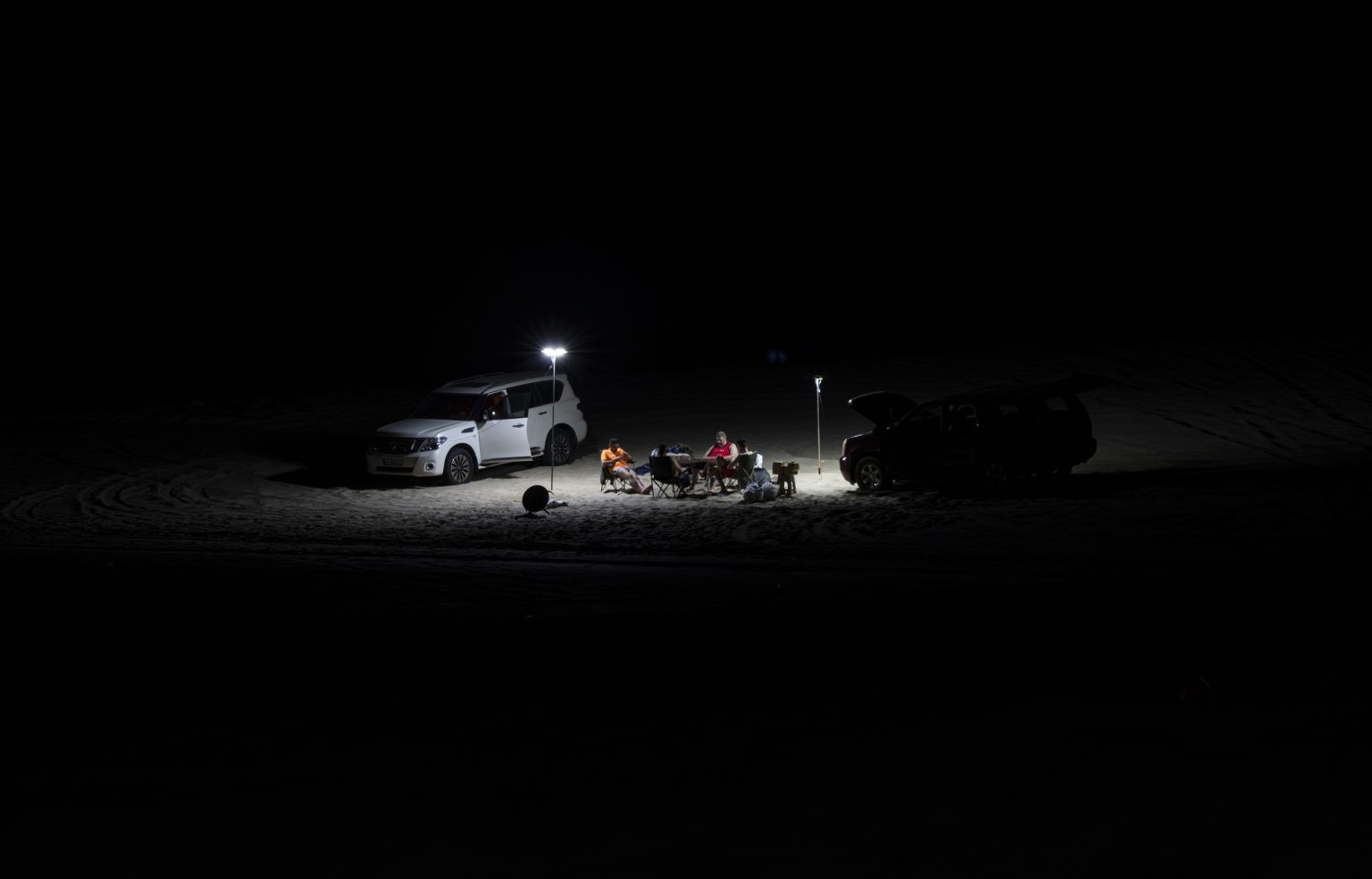
Qatar’s desert offers a striking contrast between rolling sand dunes, rocky plains and the blue waters of the Gulf. An overnight desert camp in Qatar gives travellers time to explore these landscapes after the heat of the day, enjoy a meal outdoors and watch the stars when conditions are clear. From the dunes of Khor Al Adaid and the Inland Sea to the rocky scenery around Zekreet, desert camping in Qatar ranges from organised luxury stays to simpler outdoor experiences, depending on the location, season and available facilities.
- What Makes Camping in Qatar’s Desert Special?
- Best Places for Desert Camping in Qatar
- Khor Al Adaid and the Inland Sea
- Sealine Desert near Mesaieed
- Al Kharrara Desert Area
- Zekreet and Ras Abrouq
- Types of Desert Camping in Qatar
- What to Expect During an Overnight Desert Stay
- What to Pack for Desert Camping
- Bedouin Heritage, Arabic Coffee and Desert Hospitality
- Best Time for Overnight Desert Camping in Qatar
- Camping Responsibly in the Qatari Desert
- A Sample Overnight Desert Camping Itinerary
- Why an Overnight Desert Camp in Qatar Is Worth Experiencing
What Makes Camping in Qatar’s Desert Special?
Qatar’s desert is not made up entirely of sand dunes. Much of the country features a rocky desert landscape known as hamada, while the south-east has sweeping dunes that meet the waters of Khor Al Adaid, commonly called the Inland Sea.
This variety gives visitors several ways to experience the outdoors, whether they prefer a guided safari, an overnight camp or a coastal desert landscape.
Reasons to consider a desert stay include:
- Dunes beside the sea: Khor Al Adaid is known for its unusual combination of large sand dunes and a tidal inlet connected to the Gulf.
- Easy access from Doha by road and off-road routes: Several desert destinations can be reached on a day trip, although some require specialist 4×4 driving.
- Different accommodation styles: Licensed tourist camps range from basic day-use facilities to premium overnight accommodation.
- Outdoor activities: Depending on the destination and operator, visitors may arrange dune driving, camel rides, sandboarding or guided nature excursions.
- Night-sky views: Away from urban lighting, clear nights can offer excellent conditions for stargazing.
Camping arrangements differ from one area to another. A commercial overnight camp, a seasonal public camping site and an independent camping trip are not interchangeable, so check the applicable rules and facilities before choosing where to stay.
Best Places for Desert Camping in Qatar
Khor Al Adaid and the Inland Sea
Khor Al Adaid, in south-eastern Qatar, is the country’s best-known landscape where large dunes descend towards a tidal inlet. The combination of sand, water and open horizons makes it a popular destination for desert safaris and overnight experiences.
There is no paved road directly to the Inland Sea shoreline. Access generally requires a suitable 4×4 vehicle and an experienced off-road driver, or a guided desert excursion. Travellers unfamiliar with dune driving should book a reputable operator rather than attempt the route independently.
Activities may include:
- Dune driving: Guided 4×4 excursions across suitable sandy routes.
- Sunset viewing: Watch the changing light across the dunes and water.
- Sandboarding: Available through some operators, subject to local conditions.
- Camping: Stay at an authorised site or book an organised camp with confirmed facilities.
- Nature observation: Look for desert-adapted wildlife without approaching or disturbing it.
Khor Al Adaid is a protected natural reserve and appears on UNESCO’s Tentative List for World Heritage consideration. It should not be described as an already inscribed UNESCO World Heritage Site.
Camping is also subject to local regulations, seasonal arrangements and any restrictions in protected areas. Confirm current permissions before planning an independent overnight stay.
Sealine Desert near Mesaieed
Sealine, south of Doha near Mesaieed, is one of Qatar’s main starting points for organised desert safaris. Its location makes it convenient for visitors who want to experience the dunes without travelling far into remote terrain.
The area has established tourism facilities and operators offering different types of desert excursions. Depending on the package, visitors may arrange an overnight camp or combine a shorter activity with a stay elsewhere.
Possible experiences include:
- Guided dune driving in a 4×4.
- Camel rides through designated areas.
- Sandboarding where offered.
- Sunset stops and outdoor dining.
- Overnight stays at licensed tourist camps.
Sealine suits travellers who want a convenient introduction to Qatar’s desert. However, not every operator provides the same level of accommodation or service. Confirm whether your booking includes a private bathroom, meals, transport, activities and overnight accommodation.
For safety, use experienced drivers for dune excursions and follow instructions about where passengers can safely leave the vehicle.
Al Kharrara Desert Area
The Al Kharrara area offers an alternative for travellers interested in Qatar’s open desert landscapes and quieter outdoor settings. The scenery includes sandy areas and rocky terrain typical of parts of the country’s interior.
Facilities and access arrangements are not necessarily the same as those around Sealine. Before planning an overnight visit, check whether camping is permitted at the exact location and whether any seasonal restrictions apply.
If access and conditions allow, a visit may include:
- Exploring the landscape with a suitable vehicle or guide.
- Landscape photography during the cooler hours of the day.
- Watching the sunset from a permitted location.
- Stargazing when skies are clear.
- A guided excursion that introduces visitors to the region’s natural environment.
Al Kharrara may appeal to travellers seeking a less commercial setting, but do not assume that all areas are open for camping or that basic services are available nearby. Arrange transport, water and emergency provisions in advance.
Zekreet and Ras Abrouq
On Qatar’s western coast, the Zekreet and Ras Abrouq area is known for unusual limestone formations, open desert terrain and coastal scenery. Its landscape differs from the tall dunes of Khor Al Adaid, offering a combination of rocky ground and shoreline views.
The area is roughly 90 kilometres from central Doha, depending on the destination and route. Visitors can reach the main area by road, but a 4×4 may be more comfortable for some routes and access points.
Highlights include:
- Limestone formations: Weathering has created distinctive cliffs, pillars and mushroom-shaped rocks.
- Coastal views: The shoreline offers a different perspective on Qatar’s arid landscape.
- Photography: Contrasts between pale rock, sand and sea are especially noticeable in changing light.
- Camping opportunities: Some coastal locations are promoted for overnight camping, but visitors should verify the exact site’s current rules and facilities.
- Nearby cultural attractions: The wider region includes the East-West/West-East sculpture installation by Richard Serra.
Zekreet is worth considering for travellers who prefer rocky landscapes and coastal scenery over extensive sand dunes. Respect protected areas, avoid driving over fragile terrain and follow any local access restrictions.
Types of Desert Camping in Qatar
Camping options range from licensed commercial facilities to permitted seasonal campsites. The most suitable choice depends on how much comfort you want and how independently you plan to travel.
Luxury Overnight Camps
Premium camps offer a more comfortable way to experience the desert without organising every detail yourself. Facilities vary by property, but may include:
- Furnished tents or other dedicated accommodation.
- Beds and private bathrooms.
- Meals and drinks.
- Transport from a designated pickup point.
- Guided desert activities.
- Outdoor seating and views of the surrounding landscape.
Check the accommodation category and booking details carefully. Qatar Tourism classifies licensed tourist camps according to their facilities and services, including separate categories for day stays and overnight accommodation.
Traditional-Style Camps
Some operators offer camps designed around elements associated with regional desert hospitality, such as floor seating, shared meals, Arabic coffee and dates. The precise experience varies by operator.
A traditional-style camp is a tourism experience, not necessarily a representation of every Bedouin family’s lifestyle. Ask what is included in the programme and whether cultural activities are part of the booking.
Seasonal Camping Sites
Qatar has a seasonal winter camping tradition known locally as Al Enna. Residents and visitors may encounter designated camping areas during the official season, but permissions, site availability and rules can change.
Before choosing a seasonal site:
- Check the latest announcements from the Ministry of Environment and Climate Change.
- Confirm whether registration or a permit is required.
- Review fire, waste and vehicle rules.
- Find out whether toilets, water or other facilities are provided.
- Avoid assuming that an empty patch of desert is automatically available for camping.
Independent Camping
Independent camping requires more planning and is suitable only where access and overnight stays are permitted. Travellers must arrange their own equipment, water, food, lighting and transport, while following the rules for the particular location.
For a first visit to Qatar’s dunes, a guided excursion or licensed overnight camp is usually the more straightforward option.
What to Expect During an Overnight Desert Stay
An organised overnight experience often follows a schedule built around the cooler hours of the day. The exact programme depends on the camp and whether you choose a private package or a shared excursion.
A typical stay may include:
- Afternoon pickup: Travel from Doha or another agreed meeting point.
- Desert excursion: Join a guided 4×4 drive or another activity included in the booking.
- Arrival at camp: Settle into your accommodation and enjoy refreshments if provided.
- Dinner: Eat at the camp or enjoy a meal included in your package.
- Evening outdoors: Relax in the seating area or look at the night sky when conditions allow.
- Overnight stay: Sleep in the accommodation specified in your reservation.
- Morning views: Watch sunrise if the location and schedule permit.
- Breakfast and return: Have breakfast if included, then travel back according to the agreed itinerary.
Not every camp offers dune bashing, sandboarding, camel rides or cultural entertainment. Confirm the activities, timings and any additional charges before booking.
What to Pack for Desert Camping
Your packing list depends on the season, accommodation type and activities. A luxury camp may provide bedding and toiletries, while independent camping requires a more comprehensive set of equipment.
Essential Items
- Lightweight clothing: Breathable clothing is useful during warm daytime conditions.
- Warm layers: Desert evenings can be cool during winter, particularly when the wind picks up.
- Closed shoes: Useful for walking over uneven ground and around camp.
- Sun protection: Pack a hat, sunglasses and sunscreen.
- Drinking water: Carry enough for the journey and planned activities, especially if travelling away from established facilities.
- Phone and power bank: Keep your phone charged and save booking details before departure.
- Personal medication: Bring any supplies you need, as remote areas have limited access to shops and medical facilities.
- Flashlight or headlamp: Helpful around camp after dark.
Optional Items
- Camera or tripod: Useful for landscape and night photography.
- Binoculars: Helpful for observing wildlife from a suitable distance.
- Reusable bottle: Convenient where safe refill facilities are available.
- Personal toiletries: Check what your camp supplies before packing.
If you plan to camp independently, also consider a suitable tent, sleeping equipment, cooking gear and emergency supplies. Do not assume that these facilities are available at an undeveloped camping location.
Bedouin Heritage, Arabic Coffee and Desert Hospitality
Desert hospitality is an important part of Qatar’s cultural heritage. Depending on the host and experience, visitors may be offered Arabic coffee, known as gahwa or qahwa, often accompanied by dates.
An organised camp may also provide regional food, conversation or a cultural presentation. These activities can introduce travellers to aspects of local hospitality, but traditions differ between families, communities and occasions.
Visitors can make the experience more respectful by:
- Accepting refreshments according to their preference and comfort.
- Asking before photographing hosts or other guests.
- Following the camp’s guidance about seating, dress and shared spaces.
- Showing interest in local explanations without assuming every custom is universal.
- Choosing experiences that clearly explain who hosts the activity and what it includes.
Do not assume that every camp serves zarb, a cooking method associated with several regional traditions, or that live music and storytelling are included. Ask the operator for a precise description of the evening programme.
Best Time for Overnight Desert Camping in Qatar
The cooler months are generally the most comfortable time for outdoor activities in Qatar. Visit Qatar highlights November to February as a particularly pleasant period, while the broader desert season can extend across additional months depending on weather and activity.
November to February
These months are popular for desert excursions and overnight stays because daytime temperatures are generally milder. Nights can still feel chilly, so bring a warm layer.
March to April
Conditions may remain suitable for outdoor trips, although daytime temperatures gradually rise. Check the forecast and plan strenuous activities around the cooler parts of the day.
May to September
Summer brings intense heat, and coastal areas can also be humid. Extended outdoor activity and independent camping require careful consideration during this period. Many visitors prefer to avoid overnight desert trips in the hottest months.
October
Temperatures generally begin to ease as the weather transitions towards winter. Check the forecast and the official camping season dates before planning an independent campsite stay.
For many visitors, November through February is a practical period to consider. Weather conditions vary from day to day, so carry water, protect yourself from the sun and follow local guidance even in winter.
Camping Responsibly in the Qatari Desert
Qatar’s desert and coastal environments include protected landscapes and wildlife habitats. Responsible camping helps preserve them for future visitors and local communities.
- Use permitted locations: Check whether overnight camping is allowed at your chosen site.
- Stay on established routes: Avoid driving across fragile ground or entering restricted areas.
- Take waste with you: Use designated disposal facilities and leave the site clean.
- Respect wildlife: Keep a safe distance and do not feed or chase animals.
- Manage fires carefully: Use fires only where allowed and follow current restrictions.
- Limit noise and lighting: Avoid disturbing nearby campers and wildlife.
- Conserve water: Bring adequate supplies and avoid contaminating natural areas.
- Choose responsible operators: Check safety arrangements and whether the company follows local regulations.
The fact that a location is remote does not mean it is unregulated. Follow current instructions from the relevant authorities and the people responsible for the site.
A Sample Overnight Desert Camping Itinerary
This itinerary assumes a pre-booked guided trip from Doha to the Sealine and Khor Al Adaid area. Actual timings depend on the operator, weather and road conditions.
Day 1: From Doha to the Inland Sea
Leave Doha at the agreed pickup time and travel towards Mesaieed and Sealine. Join a guided 4×4 excursion towards Khor Al Adaid, allowing time for the off-road route and stops where permitted.
At the destination:
- Enjoy the view where the dunes meet the water.
- Take photographs from safe, permitted areas.
- Arrive at your booked camp before the evening programme begins.
- Have dinner and relax outdoors if these activities are included.
- Stargaze when the sky is clear and the campsite’s lighting allows.
Day 2: Sunrise and Return to Doha
Wake early if the camp schedule and conditions allow you to see the morning light across the dunes. Have breakfast if included and enjoy a short walk or other pre-arranged activity.
Return to Doha using the operator’s agreed transport arrangements. If a camel ride or sandboarding session is part of your package, confirm its timing in advance rather than assuming it is included.
Travellers who prefer rocky coastal scenery can plan a separate trip to Zekreet instead of combining both destinations into one rushed overnight itinerary.
Why an Overnight Desert Camp in Qatar Is Worth Experiencing
An overnight desert stay offers a different perspective on Qatar, beyond the city skyline and busy coastal districts. The dunes of Khor Al Adaid, the activity-focused camps around Sealine and the limestone landscape of Zekreet each provide a distinct outdoor experience.
The best trip is one that matches your expectations with the right location, accommodation and level of preparation. Confirm permits and facilities, choose experienced operators for off-road travel, and respect the desert’s natural and cultural heritage. With those details in place, a night beneath Qatar’s open sky can become a memorable part of your journey.