
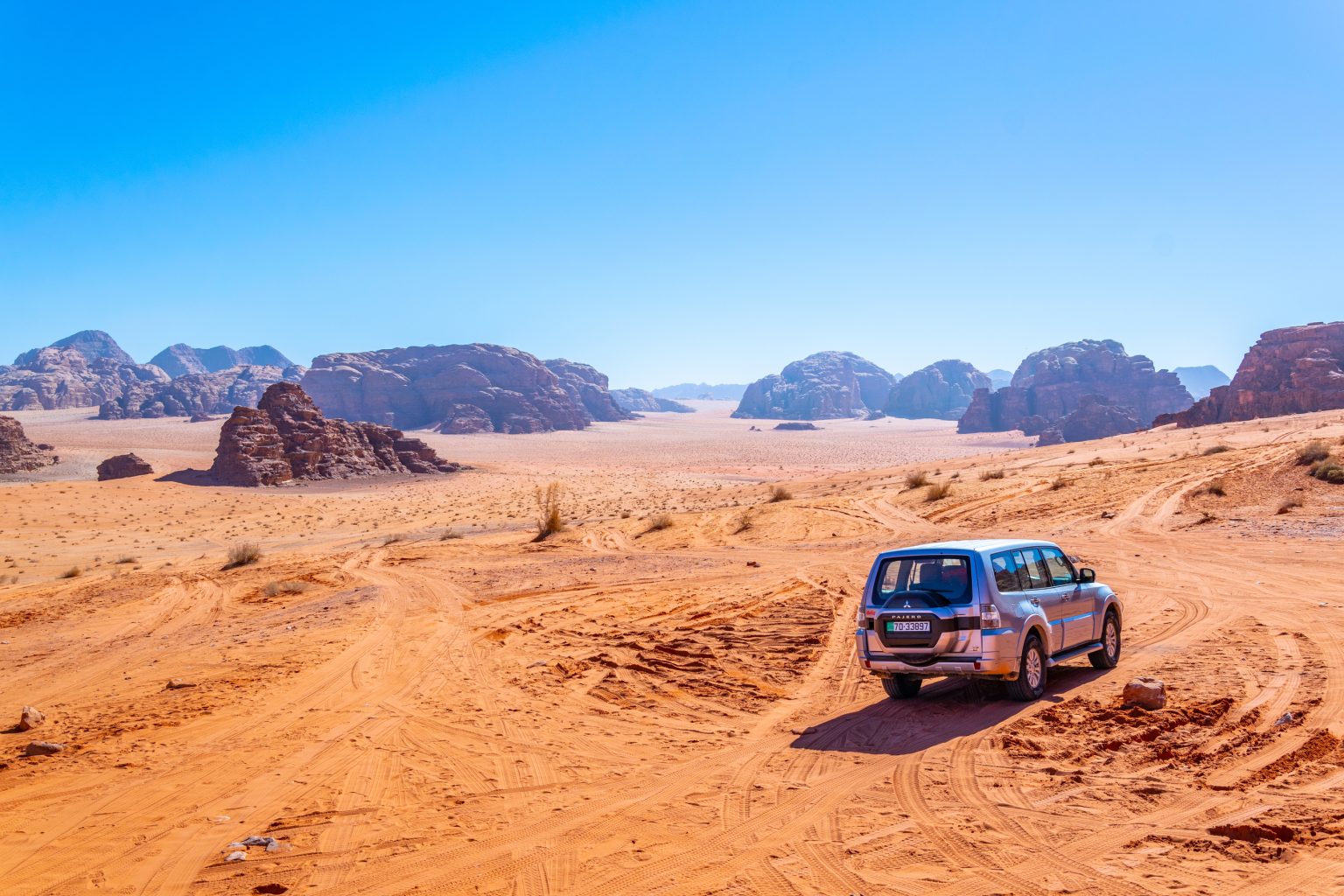
Leaving Petra behind, the road heads south through Jordan’s rugged landscape toward the red sandstone mountains of Wadi Rum. The journey from the Nabataean city to the desert reserve combines historic sites, open valleys, and dramatic mountain scenery. A 4×4 trip from Petra to Wadi Rum can include scenic stops along the way, followed by an off-road excursion with a local driver inside the desert.
- Planning the Route from Petra to Wadi Rum
- Why Choose a 4×4 Desert Adventure in Jordan?
- What the Desert Drive Feels Like
- Must-See Highlights in and Around Wadi Rum
- Little Petra: Nabataean Heritage
- Shobak Castle: A Crusader Fortress
- Wadi Rum Protected Area: Sandstone Mountains and Desert Valleys
- What to Bring for a 4×4 Desert Drive
- Best Time for a 4×4 Trip from Petra to Wadi Rum
- March to May: Spring Exploration
- June to August: Hot Summer Conditions
- September to November: Autumn Travel
- December to February: Cool Days and Cold Nights
- Tour Options and Guided 4×4 Experiences
- Add More to Your Wadi Rum Experience
- Desert Driving Ethics and Safety
- A Practical Two-Day Petra and Wadi Rum Itinerary
- Make the Journey from Petra to Wadi Rum Count
The road transfer and the desert adventure are two different parts of the experience. The drive between Petra and Wadi Rum usually takes around 1.5 to 2 hours without extended stops, while exploring the protected area requires additional time. With a carefully planned itinerary, travelers can combine Jordan desert adventure tours, cultural encounters, and striking landscapes without rushing between destinations.
Planning the Route from Petra to Wadi Rum
Petra lies near Wadi Musa in southern Jordan, while Wadi Rum is farther southeast. The road journey generally covers around 100 to 120 kilometers, depending on the exact starting point and destination. Travel time varies with traffic, road conditions, and stops along the way.
Although the trip is often marketed as a 4×4 desert drive, the transfer itself usually follows paved roads. The more demanding off-road driving takes place inside Wadi Rum Protected Area, where visitors commonly explore with local Bedouin drivers.
Along the way, travelers can choose between a direct transfer and a longer sightseeing itinerary.
Possible Stops Before Reaching Wadi Rum
- Little Petra (Siq al-Barid): A Nabataean archaeological site near Petra, known for its narrow passageways and rock-cut features. It is best visited before leaving the Petra area.
- Shobak Castle: A Crusader fortress north of Petra. Visiting it adds historical interest but requires a detour and additional time.
- Scenic viewpoints along the Desert Highway: Suitable places to pause may offer views of the rocky hills and open terrain of southern Jordan.
- Wadi Rum Visitor Centre: A useful arrival point for arranging entry and continuing into the protected area with an authorized local driver.
Not every stop fits naturally into a direct journey. If you want to visit both Little Petra and Shobak Castle, allow extra time rather than treating them as quick roadside stops.
Why Choose a 4×4 Desert Adventure in Jordan?
Jordan’s southern desert is known for sandstone mountains, narrow canyons, natural arches, and broad sandy valleys. A guided 4×4 excursion makes it possible to reach selected areas of Wadi Rum that are not accessible by an ordinary car.
The main advantages include:
- Access to remote scenery: Local drivers know established routes through the desert and can select suitable stops according to conditions.
- Geological variety: Explore sandstone cliffs, rocky plains, dunes, and narrow passages.
- Local knowledge: Bedouin guides can explain the landscape, regional history, and their communities’ connections to the area.
- Flexible itineraries: Tours range from short scenic drives to longer excursions with sunset stops and overnight camping.
A good trip balances driving time with opportunities to walk, take photographs, and learn about the region. It should not depend on speed or unnecessary driving across fragile terrain.
What the Desert Drive Feels Like
Inside Wadi Rum, the landscape changes between open sandy stretches and towering sandstone formations. The scale of the mountains becomes clearer as the vehicle moves through valleys and around rocky outcrops.
Depending on the route, a guided Wadi Rum 4×4 tour may include:
- Sandstone cliffs and rock formations: Observe the colors and shapes created by erosion over long periods.
- Desert valleys and sandy plains: Travel through open landscapes framed by rugged mountains.
- Natural arches and canyons: Visit selected geological features where access and conditions allow.
- Tea breaks with local hosts: Some tours include refreshments and opportunities to learn about local hospitality.
- Sunset viewpoints: Watch the sandstone change color as the sun approaches the horizon.
The exact experience depends on the tour operator, weather, and duration of the excursion. Not every route includes every landmark, and some locations require additional walking.
Must-See Highlights in and Around Wadi Rum
Little Petra: Nabataean Heritage
Little Petra, also known as Siq al-Barid, is a smaller Nabataean archaeological site close to Petra. Its narrow sandstone passageways and carved facades provide a quieter complement to the main archaeological complex.
Highlights include:
- Rock-cut structures and carved architectural details.
- Narrow passages that reveal different views of the sandstone.
- Short walks through an archaeological landscape.
- Opportunities to learn about Nabataean settlement and trade.
Little Petra is most convenient as a separate stop near Petra before continuing south. It should not be described as a remote off-road attraction on the direct route to Wadi Rum.
Shobak Castle: A Crusader Fortress
Shobak Castle, historically known as Montreal, stands on a hill north of Petra. Built during the Crusader period, it offers views over the surrounding landscape and insight into the region’s medieval history.
Visitors can explore surviving walls and sections of the fortress, although access to particular areas may vary.
Allow extra time for the detour if you want to include Shobak in a Petra-to-Wadi-Rum itinerary. For travelers mainly interested in desert scenery, a direct transfer may leave more time for the Wadi Rum excursion.
Wadi Rum Protected Area: Sandstone Mountains and Desert Valleys
Wadi Rum is a UNESCO World Heritage Site recognized for its natural landscapes and evidence of long human occupation. Its sandstone formations, narrow gorges, inscriptions, and archaeological remains reflect a relationship between people and the desert extending over thousands of years.
A local 4×4 excursion may include landmarks such as:
- Lawrence’s Spring: A well-known stop associated with local history and desert travel.
- Khazali Canyon: A narrow canyon containing rock inscriptions and other traces of human activity.
- The Seven Pillars of Wisdom: A distinctive rock formation near the visitor area, named after the title of T. E. Lawrence’s book.
- Selected dunes and viewpoints: Locations vary by route and can offer expansive views of the surrounding mountains.
These attractions lie within the wider Wadi Rum area, and not all can be covered on a short tour. Choose a route based on your available time rather than expecting every landmark to fit into a single excursion.
What to Bring for a 4×4 Desert Drive
Preparation depends on the season, tour length, and whether you are planning only a vehicle excursion or an overnight stay.
Essential Items
- Light, breathable clothing: Suitable for warm daytime conditions.
- A warm layer: Desert evenings can be cold, especially during winter.
- Sunglasses and sunscreen: Useful for protection against strong sunlight.
- Drinking water: Carry enough for the duration of the trip, with extra supplies for delays and walking.
- Snacks: Helpful on longer itineraries or when meal stops are not included.
- A scarf or head covering: Can help protect against wind and blowing sand.
- A charged phone and power bank: Useful for navigation, photographs, and communication.
- Comfortable walking shoes: Recommended for uneven ground and short hikes.
Binoculars and a camera can be useful for distant rock formations and landscape photography. Keep electronic equipment protected from dust and sand.
If your trip includes camping, confirm what bedding, meals, lighting, and other equipment the camp provides before packing.
Best Time for a 4×4 Trip from Petra to Wadi Rum
Jordan’s southern desert can be visited throughout the year, but seasonal conditions affect comfort and the type of preparation required. Temperatures also vary between daytime and nighttime, so broad regional averages should not replace a local forecast.
March to May: Spring Exploration
Spring is often a comfortable period for road travel, walking, and desert excursions. Daytime temperatures can rise quickly, so carry water and sun protection.
Wildflowers may appear in some areas after suitable rainfall, but their presence varies from year to year.
June to August: Hot Summer Conditions
Summer can bring intense heat, especially in exposed areas with little shade. Early-morning and late-afternoon activities may be more comfortable than midday excursions.
Choose a reputable operator, follow guidance about heat exposure, and avoid strenuous walks during the hottest part of the day.
September to November: Autumn Travel
Autumn can offer pleasant conditions for exploring Petra and Wadi Rum, although temperatures vary and early autumn may remain hot.
This period can work well for combining archaeological visits with desert driving and an overnight camp.
December to February: Cool Days and Cold Nights
Winter brings cooler daytime temperatures and potentially cold nights. Wind and rain can affect travel, while higher or exposed areas may feel particularly chilly.
Bring warm layers and check local weather and road conditions before departure.
Spring and autumn are often practical choices for a combined trip, but the best dates depend on the forecast, your itinerary, and your tolerance for heat or cold.
Tour Options and Guided 4×4 Experiences
The best tour depends on whether you need transportation between Petra and Wadi Rum, a guided excursion inside the protected area, or both.
Common options include:
- Private road transfer: Travel directly from Petra or Wadi Musa to Wadi Rum, then arrange a separate desert tour.
- Transfer with sightseeing stops: Add places such as Little Petra or Shobak Castle, allowing additional time for visits.
- Short Wadi Rum jeep tour: Explore selected formations and viewpoints over a few hours.
- Full-day desert excursion: Spend longer exploring the reserve, with walking stops and time for photographs.
- Overnight desert experience: Combine a 4×4 tour with a camp stay, dinner, and morning views.
- Custom multi-day itinerary: Include additional walking routes or nearby destinations with a qualified local operator.
Vehicles used for desert excursions often include models such as the Toyota Land Cruiser and Nissan Patrol, but the specific vehicle and equipment depend on the provider.
Before booking, confirm the pickup and drop-off points, total driving time, entry fees, included meals, and whether the quoted price covers the road transfer as well as the 4×4 excursion.
Add More to Your Wadi Rum Experience
A desert trip can include more than driving. Depending on the operator and season, visitors may be able to add activities that offer a closer look at the landscape and local heritage.
- Camel rides: Some camps and operators offer short rides, often around sunrise or sunset.
- Overnight desert camping: Stay at an authorized camp and experience the landscape after dark.
- Walking and hiking: Explore selected trails or geological features with suitable guidance.
- Bedouin food experiences: Sample regional dishes and learn about local hospitality through participating hosts.
- Stargazing: On clear nights, the desert can provide excellent opportunities to observe the night sky away from city lights.
Hot-air balloon flights should not be treated as a standard Wadi Rum activity. If this experience is important to your trip, verify current availability and the exact departure location before making plans.
Desert Driving Ethics and Safety
Wadi Rum’s landscape is protected for its natural and cultural significance. Responsible travel helps limit damage to fragile terrain and preserves archaeological features.
Follow these practices:
- Use authorized local drivers for off-road excursions within the protected area.
- Stay on permitted routes and avoid unnecessary vehicle tracks across fragile ground.
- Carry out all rubbish and follow the camp’s waste-management arrangements.
- Respect local communities, wildlife, and traditions.
- Avoid touching or marking rock inscriptions and other archaeological features.
- Follow weather and safety advice from your guide, especially during strong winds or sudden weather changes.
- Choose responsible local operators who respect the protected area and provide clear safety instructions.
If you plan to drive independently, confirm the rules, route suitability, vehicle requirements, and recovery arrangements in advance. Remote desert travel should not be attempted without the necessary experience and preparation.
A Practical Two-Day Petra and Wadi Rum Itinerary
A two-day itinerary allows time for Petra, the road transfer, and a guided excursion in Wadi Rum without treating the journey as one continuous off-road drive.
Day 1: Explore Petra and Travel South
Spend the morning exploring Petra’s main archaeological trail, allowing time for the Siq, the Treasury, and other areas suited to your interests and fitness.
If you want to visit Little Petra, plan it as an additional stop and allow time for the visit. Shobak Castle can also be included, but it requires a detour and may make the day too rushed if you want to spend substantial time inside Petra.
Travel to Wadi Rum later in the day, arrange your camp or accommodation, and enjoy sunset if your arrival time permits.
Day 2: Explore Wadi Rum by 4×4
Begin with a guided Wadi Rum desert safari. Depending on your chosen route, stops may include Lawrence’s Spring, Khazali Canyon, rock formations, dunes, and selected viewpoints.
Allow time for short walks, photographs, and refreshments where included. After the excursion, continue to Aqaba or return to your next destination according to your travel plans.
For travelers who want a slower pace, an additional night in Wadi Rum provides more time for walking, stargazing, and exploring the protected area.
Make the Journey from Petra to Wadi Rum Count
The trip from Petra to Wadi Rum connects two of Jordan’s most distinctive destinations: a major Nabataean archaeological site and a protected desert landscape of sandstone mountains, canyons, and open valleys.
The road transfer is relatively short, but the experience becomes more rewarding when you allow time for the places along the way and arrange a separate 4×4 tour in Wadi Rum. Choose stops that fit your schedule, travel with experienced local guides, and respect the area’s natural and cultural heritage.
With thoughtful planning, the journey offers a balanced mix of history, desert scenery, and local hospitality, leaving you with a deeper appreciation of southern Jordan.