
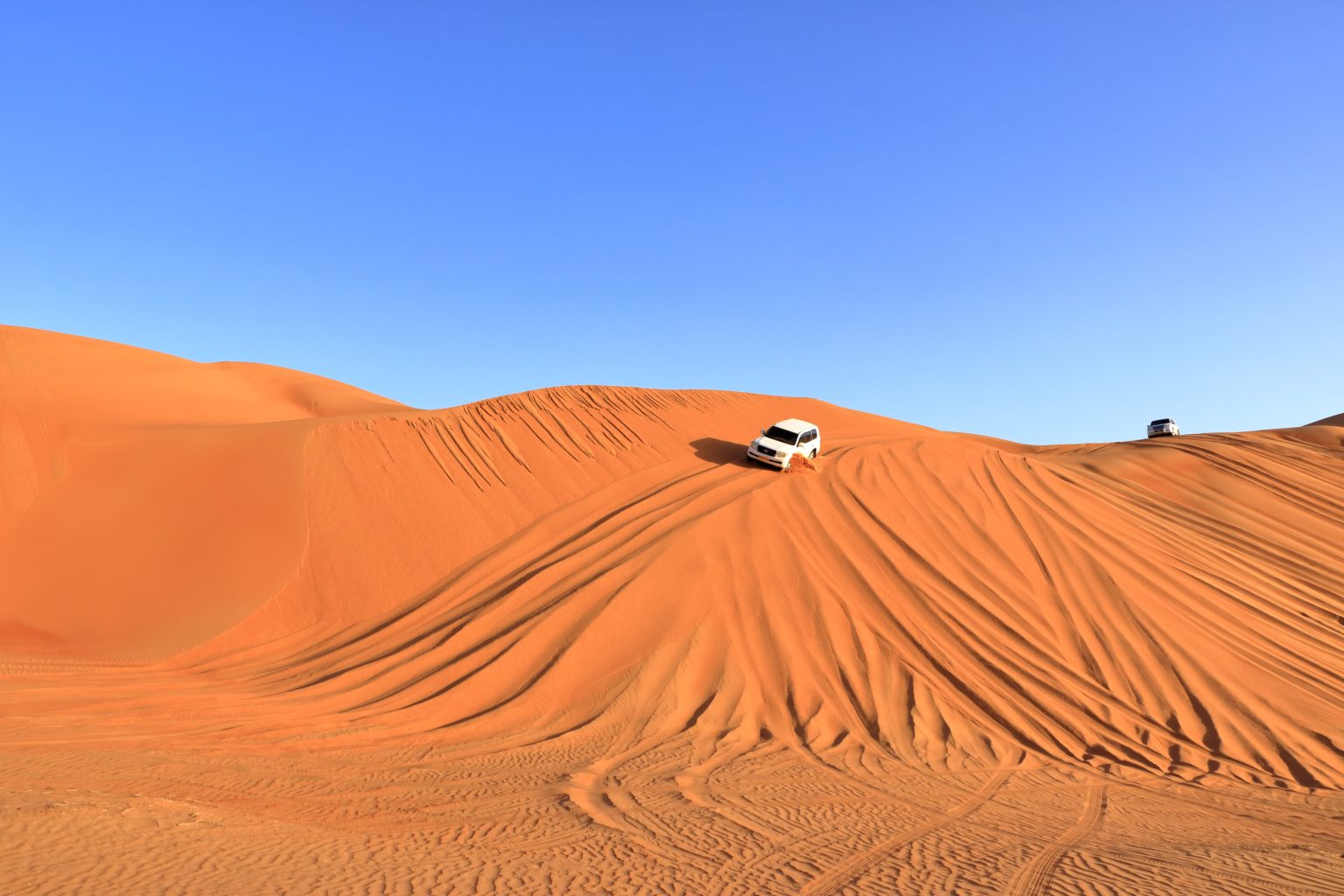
The dunes of eastern Oman shift between shades of gold, orange, and red as the sun moves across the sky. Beyond the main roads, sandy tracks lead into a landscape of rolling dunes, scattered desert vegetation, and remote camps where visitors can experience the desert after sunset.
- What Makes Wahiba Sands Unique
- Experiences to Enjoy in Wahiba Sands
- 4×4 Desert Safari Adventures
- Camel Trekking with Local Guides
- Sandboarding on the Dunes
- Stargazing in Wahiba Sands
- Local Hospitality and Desert Culture
- Desert Camps and Lodges in Wahiba Sands
- How to Reach Wahiba Sands
- What to Pack for Your Desert Trip
- Best Time to Visit Wahiba Sands
- Responsible Travel in Wahiba Sands
- A Simple Two-Day Wahiba Sands Itinerary
- Discover the Landscapes of Sharqiya Sands
Known locally as Sharqiya Sands, Wahiba Sands is one of Oman’s best-known desert destinations. Travelers come here for 4×4 desert safaris, camel rides, sandboarding, and nights beneath the stars, as well as opportunities to learn about the traditions of communities connected to this environment.
This guide covers the main experiences, places to stay, travel arrangements, and practical advice for planning a responsible visit to Wahiba Sands in Oman.
What Makes Wahiba Sands Unique
Located in eastern Oman, Wahiba Sands forms part of the Sharqiya Sands region. Its dune fields extend across a broad area, creating a landscape that changes with the wind, sunlight, and movement of sand.
The region combines accessible tourism infrastructure with areas that feel remote, particularly once visitors leave the settlements near the desert’s edge.
Key facts to know:
- Location: Eastern Oman, with access routes commonly running through the Bidiyah area.
- Distance from Muscat: Approximately 200 to 250 km by road, depending on the route and destination.
- Landscape: Long sand ridges, rolling dunes, and patches of desert vegetation.
- Climate: Hot summers, milder winter days, and potentially cold nights during the cooler months.
- Wildlife: Desert-adapted species inhabit the wider region, although sightings depend on location and conditions.
- Local culture: Communities in and around the desert have varied traditions connected to pastoral life, travel, trade, and the surrounding environment.
What makes Sharqiya Sands appealing is the combination of desert scenery and relatively straightforward access from eastern Oman. However, reaching a camp may involve driving on soft sand, so visitors should confirm transport arrangements before departure.
Experiences to Enjoy in Wahiba Sands
4×4 Desert Safari Adventures
A guided 4×4 excursion is one of the main ways to explore the dunes. Experienced drivers navigate suitable sandy routes, stop at viewpoints, and help visitors understand the terrain.
Depending on the tour, activities may include:
- Guided drives across selected dune areas.
- Stops for photography and sunset views.
- Sandboarding on suitable slopes.
- Visits to desert camps or nearby settlements.
- Half-day or full-day excursions, sometimes combined with an overnight stay.
Good to know: Driving on dunes requires specific skills and appropriate equipment. Choose an experienced operator rather than attempting to cross deep sand in an ordinary rental vehicle. If you are driving independently, check your rental agreement, vehicle suitability, local conditions, and recovery arrangements first.
A guided safari is often the most practical choice for first-time visitors who want to experience the dunes without managing the technical aspects of desert driving.
Camel Trekking with Local Guides
Camel rides offer a slower way to experience the desert landscape. Depending on the provider, trips may last a short time around sunset or form part of a longer excursion.
Possible experiences include:
- Short rides across accessible dunes.
- Sunset excursions with views over the surrounding sand.
- Opportunities to learn about camel care and the animal’s role in desert livelihoods.
- Longer outings arranged by local guides and camps.
Camel-related traditions vary among communities, so not every excursion offers the same cultural experience. Ask your guide about the route, duration, animal welfare practices, and what is included.
Choose a provider that handles animals responsibly, avoids overloading them, and allows suitable rest and care.
Best for: Visitors interested in a slower-paced desert activity and travelers who want to explore the dunes without a long hike.
Sandboarding on the Dunes
Sandboarding adds an active element to a visit to Sharqiya Sands. Riders descend suitable sandy slopes on a board, usually after climbing the dune on foot.
Depending on the camp or tour, you may find:
- Boards supplied by the operator.
- Basic instruction for beginners.
- Short descents on accessible dunes.
- Sandboarding combined with a guided 4×4 safari.
Not every dune is suitable for riding. The slope, sand condition, obstacles, and surrounding terrain all affect safety.
Wear closed footwear where appropriate, follow the operator’s instructions, and avoid steep or rocky slopes. Children should be supervised, and protective equipment should be used when recommended.
Stargazing in Wahiba Sands
After sunset, the desert can provide rewarding opportunities to observe the night sky. Camps away from strong artificial lighting may offer views of stars and constellations, with the Milky Way visible under suitable seasonal and weather conditions.
Ways to enjoy the night sky include:
- Observing stars from a camp’s outdoor seating area.
- Identifying constellations with a mobile astronomy app.
- Photographing the stars above the dunes.
- Joining a guided astronomy session if the camp offers one.
Sky visibility depends on cloud cover, dust, moonlight, and the amount of artificial lighting nearby. A telescope or astronomy guide is not included at every camp, so confirm availability before booking if it is important to your trip.
Bring warm layers for winter evenings and use a dim red light when possible to preserve night vision.
Local Hospitality and Desert Culture
Communities in and around Sharqiya Sands have diverse histories and traditions. Some families have longstanding connections to pastoral livelihoods and desert travel, while others combine local heritage with contemporary work and tourism.
Visitors may encounter cultural experiences such as:
- Omani kahwa and dates: Coffee and dates commonly offered as part of hospitality.
- Traditional food: Regional dishes served at camps or during arranged visits.
- Music and storytelling: Activities that may be organized by hosts or tour providers.
- Local knowledge: Discussions about camel care, desert travel, seasonal conditions, and life in the region.
The activities available depend on the host and the type of visit. Not every camp represents a Bedouin household, and a staged cultural show should not be treated as a complete picture of local life.
When visiting a family or community, ask before taking photographs, follow the host’s guidance, and respect requests about clothing, privacy, and restricted areas.
Desert Camps and Lodges in Wahiba Sands
Sharqiya Sands offers a range of accommodation, from simpler desert camps to properties with private facilities and more extensive services. The best option depends on your budget, preferred comfort level, and the activities you want to arrange.
Options to investigate include:
- Desert Nights Camp: An established desert accommodation option for travelers seeking comfortable facilities and organized activities.
- 1000 Nights Camp: A desert stay that has offered a range of accommodation and visitor experiences.
- Camps around Bidiyah: Several properties near the desert’s edge provide access to dune excursions and overnight stays.
- Other local desert camps: Options vary in location, facilities, and the activities available on site.
Before booking, confirm:
- Whether transport from the main road or Bidiyah is included.
- Whether the camp can arrange a 4×4 safari, camel ride, or sandboarding.
- Whether meals and drinks are included in the price.
- What facilities are available in the room or tent.
- Whether stargazing equipment or a guided astronomy session is offered.
- The cancellation policy and any seasonal restrictions.
Do not assume that all camps provide the same experiences. A camp may arrange an activity through an outside operator, charge separately for it, or not offer it at all.
How to Reach Wahiba Sands
Most visitors travel to Sharqiya Sands by road from Muscat or other destinations in eastern Oman. The route and travel time depend on the specific camp and the condition of the roads.
From Muscat
- Allow approximately three to four hours for the road journey to the general desert area, depending on traffic, stops, and your destination.
- Routes commonly pass through the eastern Oman road network toward Bidiyah and nearby settlements.
- Confirm the camp’s exact meeting point and the final approach before departure.
- Arrange a transfer if the accommodation requires driving through soft sand.
A 4×4 is useful for many dune excursions, but it is not necessarily required for every part of the journey. Some camps can collect guests from an agreed meeting point near the desert edge.
From Sur
- Travel inland toward the Bidiyah area using the main road network.
- Allow extra time for stops and the final transfer to your camp.
- Confirm the route with your accommodation provider before setting out.
Travel tip: If you have limited experience driving on sand, arrange a guided transfer from Bidiyah rather than attempting to reach the camp independently. Mobile coverage and roadside assistance may be limited in remote areas.
What to Pack for Your Desert Trip
Packing for Sharqiya Sands means preparing for strong daytime sunshine, blowing sand, and cooler temperatures after sunset.
Essentials
- Lightweight clothing that covers and protects the skin.
- A warm jacket or extra layers for the evening.
- Sunglasses, a hat, and a scarf to protect against sun and blowing sand.
- Sunscreen with high SPF.
- Reusable water bottles and sufficient drinking water.
- Comfortable closed shoes for walking on sand.
- Personal medication and basic first-aid supplies.
- A phone charger or power bank.
Useful Extras
- A camera and tripod for landscape or night-sky photography.
- Binoculars for observing the wider landscape and wildlife from a suitable distance.
- A headlamp with a red-light mode.
- A dust-resistant bag for electronic equipment.
- A small daypack for excursions.
Neutral-colored clothing can complement the dune landscape in photographs, but comfort and sun protection are more important than color choice.
If you are joining a guided safari, ask whether the operator provides water, recovery equipment, and any specialist gear required for the planned activities.
Best Time to Visit Wahiba Sands
The most comfortable time for many visitors is the cooler part of the year, although conditions vary from day to day.
October to March
This period generally offers more comfortable conditions for outdoor activities than the hottest summer months.
- Daytime temperatures are often more suitable for walking and dune excursions.
- Nights can become cold, especially during winter.
- Camping and sunset activities are popular, so advance reservations may be helpful.
April and May
Temperatures rise as summer approaches.
- Plan demanding outdoor activities for the cooler parts of the day.
- Carry sufficient water and use sun protection.
- Check the forecast before booking a long excursion.
June to September
Summer can bring intense heat, particularly during the middle of the day.
- Avoid strenuous activities during dangerous heat.
- Follow local guidance about suitable excursion times.
- Confirm that your accommodation and transport arrangements are appropriate for summer conditions.
Best overall period: November to February is a useful starting point for travelers seeking milder daytime weather and cooler evenings. However, the best dates depend on the forecast and the activities planned.
Responsible Travel in Wahiba Sands
The dunes and surrounding desert habitats are sensitive to disturbance. Visitors can help protect them by following local rules and choosing activities carefully.
- Stay on authorized tracks: Avoid creating new vehicle routes across fragile terrain.
- Take all waste away: Do not leave plastic, food scraps, or other rubbish behind.
- Respect wildlife: Observe animals from a safe distance and never feed or chase them.
- Support local businesses: Choose reputable local guides, camps, and activity providers.
- Respect local customs: Ask before photographing residents and follow guidance at community visits.
- Reduce unnecessary noise and lighting: Be considerate of other visitors and nocturnal wildlife.
- Use water responsibly: Water is a valuable resource in arid environments.
Responsible travel also means choosing operators that maintain their vehicles, treat animals appropriately, and explain safety procedures clearly.
A Simple Two-Day Wahiba Sands Itinerary
This itinerary combines a road journey, a guided desert excursion, and an overnight stay. Adjust the schedule according to your starting point and the activities available at your chosen camp.
Day 1: Travel from Muscat to Sharqiya Sands
Leave Muscat with enough time for the drive and any planned stops along the way. Continue toward Bidiyah and meet your camp or guide at the agreed location.
In the afternoon:
- Transfer into the dunes with an experienced 4×4 driver.
- Stop at suitable viewpoints for photographs.
- Try sandboarding if the operator offers it and conditions are safe.
- Watch the sunset from an appropriate location.
After sunset, return to camp for dinner and, if skies are clear, spend some time stargazing. Confirm in advance whether meals and activities are included in your booking.
Day 2: Camel Ride and Return Journey
Begin the day with breakfast and an optional short camel ride or guided walk, depending on the arrangements available.
You could also:
- Learn about the local landscape and desert travel from your guide.
- Visit a nearby settlement through a respectful, arranged experience.
- Enjoy the morning light across the dunes.
- Return to the main road with your arranged transfer.
Allow sufficient time for the return drive to Muscat or your next destination. Avoid scheduling too many activities if the journey is long or temperatures are high.
Discover the Landscapes of Sharqiya Sands
Wahiba Sands offers a combination of dune scenery, outdoor activities, desert accommodation, and opportunities to learn about life in eastern Oman. Visitors can choose between active excursions, quieter evenings outdoors, and stays focused on comfort and local experiences.
Plan your route carefully, confirm what your camp actually offers, and prepare for both heat and cold after sunset. Most importantly, choose responsible operators and respect the communities and environments that make the region distinctive.
With thoughtful preparation, a visit to Wahiba Sands can become a rewarding part of an Omani journey, offering time to explore the dunes, learn about the region, and experience the desert at a pace that suits you.