
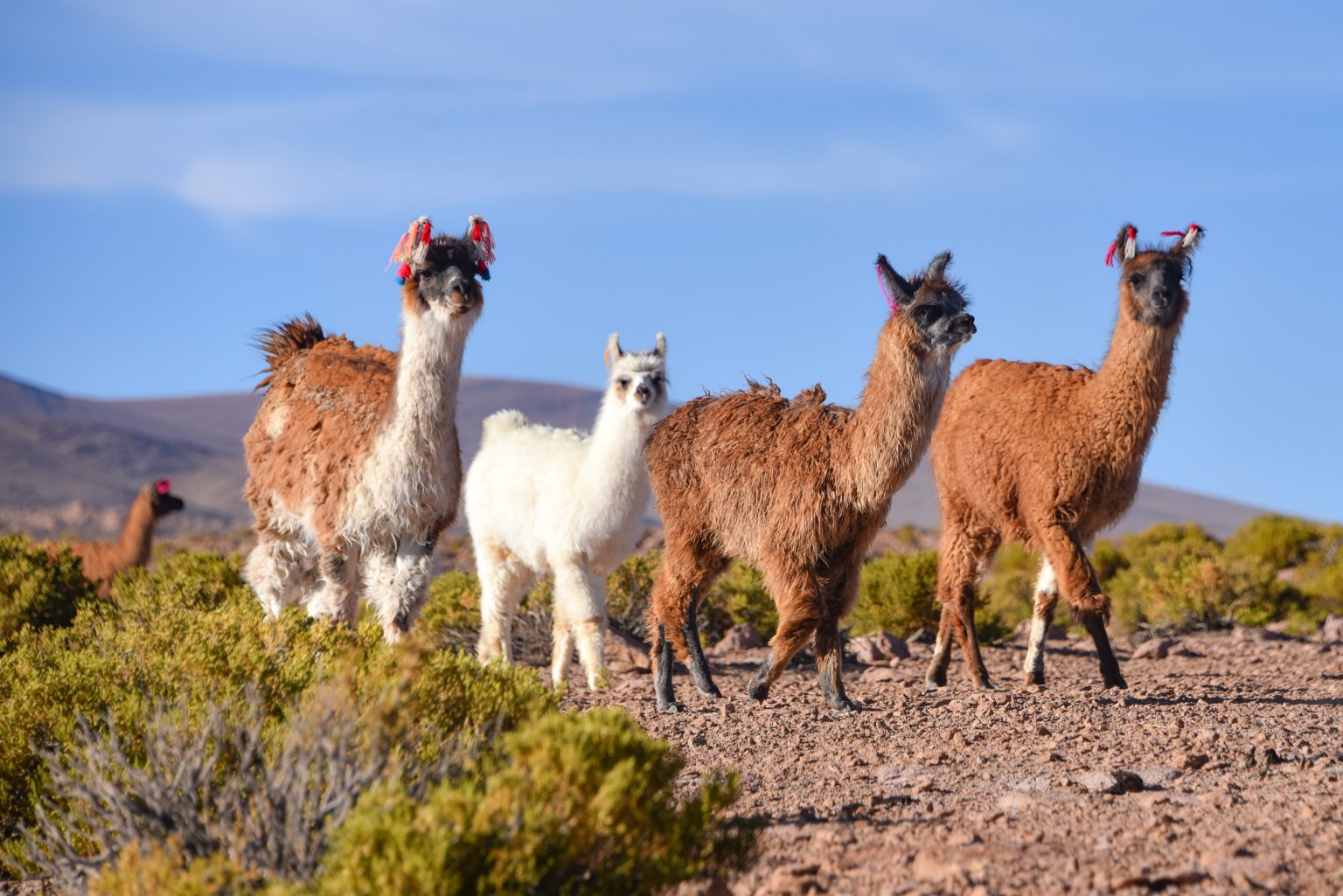
Bolivia is home to some of South America’s most distinctive high-altitude desert landscapes. The Bolivian Altiplano combines vast salt flats, volcanic deserts, mineral-rich lagoons, and rugged mountain plains, with some of its most spectacular scenery protected within the Eduardo Avaroa National Reserve.
- The Main Desert Areas in Bolivia
- Salar de Uyuni: The World’s Largest Salt Flat
- The Siloli Desert and Árbol de Piedra
- Eduardo Avaroa National Reserve
- The Altiplano: Bolivia’s High Andean Plateau
- Animals That Live in Bolivia’s Desert
- Vicuñas, Guanacos, Foxes, and Other Mammals
- Flamingos, Condors, and High-Altitude Birds
- Reptiles and Insects
- Bolivia’s Desert Plants and High-Altitude Vegetation
- Best Places to See Wildlife and Nature in Bolivia’s Desert
- Salar de Uyuni
- Laguna Colorada
- Laguna Verde
- Eduardo Avaroa National Reserve
- Valle de las Rocas and the Dalí Desert
- Siloli Desert
- Things to Do in Bolivia’s Desert
- 4×4 Trips Through Salt Flats and Volcanic Landscapes
- Wildlife Watching
- Desert Photography
- Stargazing on the Salt Flats
- Hiking Around Lagoons and Mountains
- What the Weather Is Like and When to Go
- How to Stay Safe in the Bolivian Desert
- A High-Altitude Desert of Salt, Volcanoes, and Wildlife
Despite the harsh conditions, the Bolivia desert supports a surprising variety of wildlife. Vicuñas graze on high plateaus, flamingos feed in mineral-rich lagoons, foxes move across volcanic valleys, and hardy plants survive cold nights, intense sunlight, strong winds, and limited rainfall. Together, these landscapes and species make Bolivian desert wildlife a major attraction for adventurous travelers.
The Main Desert Areas in Bolivia
Salar de Uyuni: The World’s Largest Salt Flat
The Salar de Uyuni is Bolivia’s largest salt flat and covers more than 10,000 square kilometers. Its vast white surface was formed from the remains of ancient lakes and is covered by a thick salt crust.
During the rainy season, a thin layer of water can cover parts of the salt flat, creating a mirror effect that reflects the sky and surrounding landscape.
Beyond the main salt surface, the Salar contains isolated islands covered with giant cacti and other vegetation. These areas provide important habitats for birds and other wildlife.
The Siloli Desert and Árbol de Piedra
The Siloli Desert lies in southwestern Bolivia near the Chilean border. It is known for its high-altitude volcanic landscape and unusual rock formations shaped by wind erosion.
Key features include:
- Volcanic rock formations
- Red and brown desert plains
- Strong winds and extreme temperature changes
- Árbol de Piedra, or Stone Tree
- Wide open landscapes surrounded by volcanoes
The combination of altitude, volcanic geology, and unusual rock formations gives Siloli a distinctive appearance.
Eduardo Avaroa National Reserve
The Eduardo Avaroa National Reserve protects some of Bolivia’s most dramatic high-altitude landscapes.
The reserve includes:
- Red, green, and mineral-rich lagoons
- Hot springs and geothermal areas
- Volcanic mountains
- High-altitude wetlands
- Salt flats
- Desert valleys
Its lagoons are particularly important for flamingos, while the surrounding plains provide habitat for vicuñas, foxes, and other Andean wildlife.
The Altiplano: Bolivia’s High Andean Plateau
Much of Bolivia’s Altiplano lies above 3,500 meters and contains extensive dry and semi-arid landscapes.
The region includes:
- Salt flats
- Volcanic plains
- Rocky plateaus
- Sand dunes
- High-altitude wetlands
- Sparse grasslands
The Altiplano extends across Bolivia and connects geographically with the highlands of Peru, Chile, and Argentina, including areas near the Atacama Desert.
Animals That Live in Bolivia’s Desert
The high-altitude deserts of Bolivia support animals adapted to cold temperatures, intense solar radiation, low oxygen levels, and limited water.
Vicuñas, Guanacos, Foxes, and Other Mammals
Important mammals of the Bolivian highlands include:
- Vicuñas, wild relatives of llamas and alpacas that are well adapted to high elevations.
- Guanacos, larger wild camelids found in parts of the high Andes.
- Andean foxes, also known as culpeos, which range across open plateaus and mountain valleys.
- Viscachas, rabbit-like rodents that are often active during cooler parts of the day.
- Pumas, which inhabit remote mountain and highland areas.
- Andean cats, one of the rarest small wild cats in the Andes.
Vicuñas are particularly well adapted to the Altiplano. Their dense coats protect them from cold temperatures, while their feeding habits allow them to survive on sparse highland vegetation.
Flamingos, Condors, and High-Altitude Birds
Bolivia’s mineral-rich lagoons are among the best places to observe Andean flamingos.
The three flamingo species associated with Bolivia’s highland wetlands are:
- James’s flamingo
- Andean flamingo
- Chilean flamingo
Important feeding areas include:
- Laguna Colorada
- Laguna Hedionda
- Laguna Verde
Other birds found across Bolivia’s highlands include:
- Andean condors
- Puna ibis
- Giant coots
- Peregrine falcons
- Puna tinamous
- Andean hummingbirds
The availability of water strongly influences bird activity, particularly around lagoons, wetlands, and geothermal springs.
Reptiles and Insects
Although Bolivia’s high-altitude deserts are much colder than many lowland deserts, reptiles and insects still survive in suitable habitats.
Species and groups include:
- Liolaemus lizards
- Andean geckos
- Small highland snakes
- Beetles
- Desert ants
- Other cold-tolerant insects
Lower and warmer desert areas support a greater variety of reptiles. Insects also play an important role in the food chain, providing food for birds, lizards, and small mammals.
Bolivia’s Desert Plants and High-Altitude Vegetation
Vegetation changes considerably with elevation, soil conditions, wind, and rainfall.
Plants That Survive at High Elevations
The Siloli Desert and Altiplano support several plants adapted to cold and dry conditions.
- Yareta is a slow-growing, cushion-forming plant found at high elevations.
- High-altitude tussock grasses provide food for vicuñas and other herbivores.
- Tola shrubs are common across dry Andean plateaus and provide shelter for small animals.
- Small cacti can survive intense sunlight, cold temperatures, and limited moisture.
Yareta is particularly well adapted to the harsh highland climate. Its compact growth form helps protect it from cold temperatures and strong winds.
Plants That Tolerate Salty Soils
Around the Salar de Uyuni and other salt flats, vegetation is limited but specialized species can survive in saline soils.
These include:
- Salt-tolerant grasses
- Small shrubs adapted to mineral-rich soils
- Other hardy plants around the edges of salt flats and wetlands
When Rain Brings New Growth
Seasonal rainfall can produce short periods of increased plant growth across parts of the Altiplano. Grasses and wildflowers may appear where sufficient moisture reaches the soil, providing additional food for grazing animals.
Best Places to See Wildlife and Nature in Bolivia’s Desert
Salar de Uyuni
The Salar de Uyuni is famous for its enormous salt surface, cactus-covered islands, and surrounding highland landscapes. Wildlife can be seen around the edges and nearby areas, including vicuñas and various bird species.
Laguna Colorada
Laguna Colorada is one of Bolivia’s best-known high-altitude lagoons. Its reddish color comes from mineral deposits and microscopic organisms, and large numbers of flamingos can gather in the surrounding wetlands.
Laguna Verde
Located near the Licancabur Volcano, Laguna Verde is known for its green color, created by mineral-rich water and changing light conditions.
Eduardo Avaroa National Reserve
The reserve combines lagoons, geysers, volcanoes, salt flats, and high-altitude wetlands. Vicuñas, flamingos, foxes, and other wildlife can be encountered across different areas.
Valle de las Rocas and the Dalí Desert
The Dalí Desert is known for isolated rock formations surrounded by broad high-altitude plains. The landscape was given its name because some of the formations resemble shapes associated with surrealist artwork.
Siloli Desert
Siloli is particularly well known for its wind-shaped volcanic formations, including Árbol de Piedra. Viscachas, foxes, and vicuñas may be seen across the surrounding terrain.
Together, these destinations showcase the geological and ecological diversity of Bolivia’s high-altitude deserts.
Things to Do in Bolivia’s Desert
4×4 Trips Through Salt Flats and Volcanic Landscapes
A multi-day 4×4 journey is one of the most practical ways to explore the Uyuni region and Eduardo Avaroa National Reserve. Routes can combine salt flats, lagoons, volcanoes, geysers, and remote desert landscapes.
Wildlife Watching
Wildlife viewing can include:
- Vicuñas
- Flamingos
- Andean foxes
- Viscachas
- High-altitude birds
Patience is important because animals are widely distributed across the open terrain.
Desert Photography
Bolivia’s high-altitude landscapes offer a wide range of colors and textures, from the white salt of Uyuni to the red of Laguna Colorada and the green tones of Laguna Verde.
Sunrise and sunset are particularly useful for photography because changing light emphasizes the textures of salt, rock, sand, and mountains.
Stargazing on the Salt Flats
The remote location and high elevation of the Uyuni region can provide excellent conditions for stargazing when skies are clear. Away from populated areas, artificial light is limited and the night sky can be exceptionally visible.
Hiking Around Lagoons and Mountains
Short walks around selected lagoons, volcanic formations, and highland valleys allow visitors to observe vegetation, animal tracks, and geological features at a slower pace.
What the Weather Is Like and When to Go
The dry season from May to October generally brings clearer skies and more stable road conditions across much of the Bolivian highlands.
From roughly January to March, rainfall can cover parts of the Salar de Uyuni with a thin layer of water. When conditions are right, this produces the famous mirror effect.
Weather at high elevations can change quickly. Visitors should expect:
- Strong sunlight during the day
- Cold temperatures after sunset
- Strong winds
- Freezing conditions in some areas at night
- Rapid changes in weather
The mirror effect on the Salar is not guaranteed. It depends on recent rainfall, water depth, and local conditions.
How to Stay Safe in the Bolivian Desert
The biggest challenge for many visitors is the combination of high altitude, remote terrain, strong sunlight, and rapidly changing temperatures.
- Allow time to acclimatize to elevations of around 3,500 to 5,000 meters.
- Drink enough water throughout the day.
- Use high-SPF sunscreen and wear sunglasses and a hat.
- Bring warm layers for nighttime and early-morning conditions.
- Travel with an experienced 4×4 operator in remote areas.
- Carry emergency supplies and suitable navigation equipment.
- Follow local instructions around lagoons, geysers, and other sensitive areas.
- Keep a safe distance from wildlife.
- Do not disturb flamingos or other birds around breeding and feeding areas.
Altitude sickness can affect visitors even when they are physically fit. Taking time to acclimatize before traveling to the highest areas can make the experience safer and more comfortable.
A High-Altitude Desert of Salt, Volcanoes, and Wildlife
Bolivia’s desert landscapes are shaped by altitude, volcanic activity, salt, wind, and seasonal water. The white expanse of the Salar de Uyuni, the mineral lagoons of Eduardo Avaroa, the volcanic formations of Siloli, and the wide plains of the Altiplano each offer a different view of the high Andes.
Wildlife has adapted to these demanding conditions, with vicuñas grazing on highland grasses, flamingos feeding in mineral-rich lagoons, foxes crossing open valleys, and smaller species living among rocks and shrubs.
For travelers, the region offers a combination of salt flats, volcanic deserts, high-altitude wildlife, lagoons, and exceptionally clear night skies. Exploring these landscapes by 4×4, observing wildlife, hiking around lagoons, or watching the stars reveals the remarkable variety of Bolivia’s desert environment.