
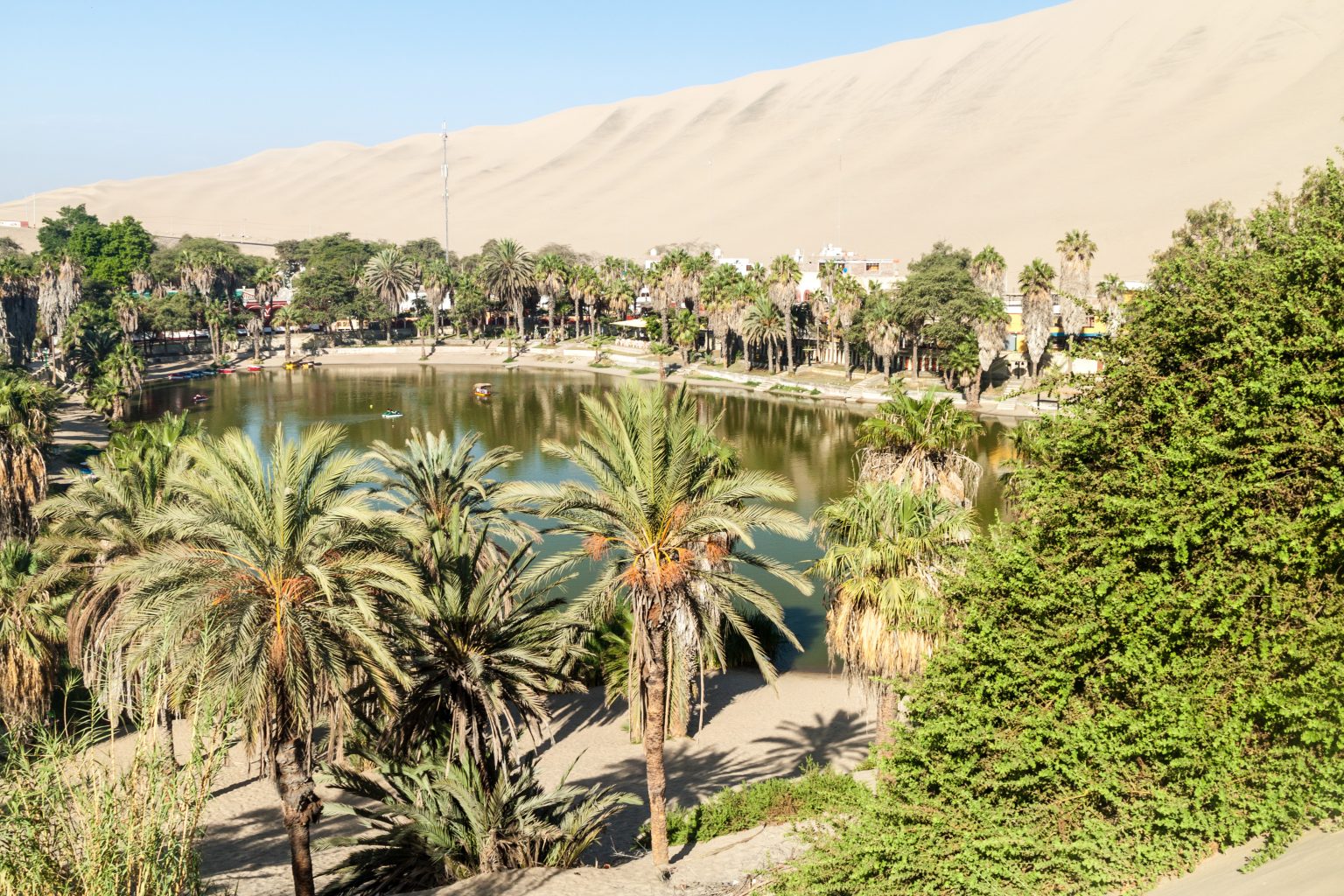
Peru’s desert stretches along much of the country’s Pacific coast, creating a landscape very different from the Amazon rainforest and the Andes. The Peru desert includes rolling dunes, dry valleys, rocky plateaus, coastal cliffs, seasonal wetlands, and isolated oases. Much of this environment is influenced by the cold Humboldt Current, which helps create Peru’s exceptionally dry coastal climate.
- The Main Desert Areas in Peru
- The Sechura Desert: Peru’s Northern Coastal Desert
- Nazca and Palpa: Desert Landscapes and Ancient Geoglyphs
- Paracas: Where the Desert Meets the Pacific
- The Ica Desert and Huacachina Oasis
- Animals of Peru’s Desert
- Birds of Peru’s Desert and Coast
- Birds Along the Coast
- Birds of the Inland Desert
- Birds Around Nazca and Palpa
- Reptiles, Snakes, and Invertebrates
- Desert Plants of Peru
- The Best Places to Experience Peru’s Desert Nature
- Paracas National Reserve
- Ballestas Islands
- Sechura Desert and Its Wetlands
- Nazca and Palpa
- Huacachina and the Ica Desert
- Pampa Galeras
- Things to Do in Peru’s Desert
- Sandboarding and Dune Adventures in Ica
- Boat Tours Around Paracas
- Stargazing in the Desert
- Hiking in Desert Valleys
- Photography Along the Coast and Dunes
- Weather and the Best Time to Visit
- Safety Tips for Exploring Peru’s Desert
- Where the Desert Meets the Pacific
Despite the arid conditions, the Peruvian desert supports a surprising range of wildlife. Foxes move across sandy terrain, sea lions gather along rocky shores, flamingos visit wetlands, and seabirds thrive where the desert meets the Pacific. Ancient geoglyphs, archaeological sites, and historic oases add another dimension to these landscapes.
The Main Desert Areas in Peru
Peru’s coastal desert is not a single uniform environment. Its landscapes change from northern dry plains to coastal cliffs, dune fields, oases, and highland desert areas.
The Sechura Desert: Peru’s Northern Coastal Desert
The Sechura Desert extends across northern Peru and includes broad sandy plains, dry riverbeds, dunes, salt flats, and coastal wetlands.
Some of its main landscapes include:
- Sandy and gravel plains
- Dry river valleys
- Wind-shaped dunes
- Salt flats
- Seasonal wetlands and coastal water sources
Although the region is extremely dry, seasonal water and wetlands can support birds, small mammals, and other wildlife.
Nazca and Palpa: Desert Landscapes and Ancient Geoglyphs
The deserts around Nazca and Palpa are known for their ancient geoglyphs, including the famous Nazca Lines. The surrounding landscape consists of extremely dry plains, rocky slopes, hills, and valleys.
The region’s arid climate has helped preserve many of these archaeological features for centuries. The combination of desert geology and ancient human history makes Nazca one of Peru’s most distinctive desert destinations.
Paracas: Where the Desert Meets the Pacific
The Paracas Peninsula south of Lima combines desert terrain with cliffs, beaches, rocky shores, and marine habitats. The Paracas National Reserve protects both desert and coastal ecosystems.
The landscape includes:
- Red and sandy beaches
- Rocky coastal formations
- Cliffs overlooking the Pacific
- Dry hills and desert plateaus
- Marine habitats around the peninsula
This meeting of desert and ocean makes Paracas one of the country’s most important areas for wildlife observation.
The Ica Desert and Huacachina Oasis
The Ica Desert is dominated by large sand dunes, with Huacachina forming a small oasis surrounded by desert. The area is particularly popular for dune buggies, sandboarding, photography, and desert excursions.
The dunes around Ica are among the most impressive in Peru, although claims about them being the tallest in South America should be treated cautiously because dune measurements vary by location and method.
Animals of Peru’s Desert
Peru’s coastal desert supports a wide range of species, particularly where dunes meet wetlands, rocky areas, river valleys, and the Pacific coast.
Mammals: From Desert Foxes to Marine Wildlife
The Sechura fox, also known as the Sechuran fox, is one of the mammals most closely associated with Peru’s northern drylands. It is mainly nocturnal and feeds on a variety of small animals and plant material.
Other mammals found in Peru’s dry regions and coastal environments include:
- Vizcachas, rabbit-like rodents that live mainly in rocky habitats.
- Guanacos, wild camelids associated with dry Andean and highland environments.
- Vicuñas, found mainly in high-altitude areas rather than the coastal desert.
- Andean deer, which inhabit suitable mountain and highland habitats.
- South American sea lions, particularly around rocky islands and coastal areas.
- Marine otters, which can occur along rocky Pacific shores.
The species present varies considerably between Peru’s coastal desert, highland drylands, and marine environments.
Marine Mammals Around Paracas
The Paracas National Reserve and nearby coastal islands provide habitat for several marine species.
Visitors may encounter:
- South American sea lions
- Marine otters in suitable rocky habitats
- Dolphins
- Other marine mammals depending on location and season
The nearby Ballestas Islands are particularly well known for their concentration of seabirds and marine wildlife.
Birds of Peru’s Desert and Coast
Peru is exceptionally rich in birdlife, and its desert coast is no exception. The combination of ocean, wetlands, rocky cliffs, oases, and dry plains creates habitats for both resident and migratory species.
Birds Along the Coast
Around Sechura and Paracas, visitors may see:
- Peruvian pelicans
- Guanays and other cormorants
- Blue-footed boobies
- Inca terns
- Gulls and other coastal birds
- Flamingos in suitable wetlands and shallow coastal areas
The Inca tern is particularly recognizable for its distinctive appearance and is associated with the Pacific coast of South America.
Birds of the Inland Desert
Dry valleys and highland desert areas support a different selection of species, including:
- Andean condors in suitable mountainous regions.
- Hawks and other birds of prey.
- Finches, sparrows, and doves in semi-arid and cultivated areas.
- Other species adapted to dry valleys and rocky terrain.
Andean condors are primarily associated with mountainous habitats rather than the low coastal desert, so sightings depend heavily on location.
Birds Around Nazca and Palpa
Small oases, agricultural areas, and nearby valleys provide habitat for smaller birds such as hummingbirds, tanagers, and other species associated with vegetation.
These green pockets stand out strongly against the surrounding arid landscape.
Reptiles, Snakes, and Invertebrates
Peru’s dry regions support a variety of reptiles and smaller desert animals.
Visitors may encounter:
- Iguanas in suitable warm and dry habitats.
- Lizards and whiptails across sandy and rocky terrain.
- Small snakes, although most are difficult to spot.
- Desert beetles and ants.
- Other insects that become more active after seasonal rainfall.
Rain can temporarily increase insect activity, providing additional food for birds and reptiles.
Desert Plants of Peru
Vegetation is limited across much of Peru’s coastal desert, but several plant species have developed effective ways to survive with very little rainfall.
Plants of the Coastal Desert
The Humboldt Current contributes to frequent coastal fog, particularly during the cooler months. Some plants can use moisture from this fog to survive.
Important examples include:
- Tillandsias, which can absorb moisture from the air and fog.
- Salt-tolerant shrubs in suitable coastal habitats.
- Huarango trees, which are important native trees in Peru’s dry coastal valleys.
- Small flowering plants that can appear when moisture becomes available.
Huarango trees are particularly valuable because their roots help stabilize soil and provide habitat and shade.
Plants of Inland Desert Areas
Farther inland, vegetation varies with altitude and local conditions. Dry valleys and higher desert areas can support:
- Hardy grasses and shrubs
- Drought-resistant plants
- Columnar cacti
- Other native plants adapted to dry soils and limited rainfall
The transition from coastal desert to Andean terrain creates major changes in vegetation over relatively short distances.
Vegetation Around Oases
Huacachina and other oasis environments support palms, trees, cultivated plants, and other vegetation that would not survive in the surrounding desert without access to water.
These green areas provide food, shade, and shelter for birds, insects, and small animals.
The Best Places to Experience Peru’s Desert Nature
Paracas National Reserve
Paracas is one of Peru’s best destinations for experiencing both desert and marine environments. Visitors can see sea lions, seabirds, penguins, dolphins, and coastal landscapes within the reserve and nearby waters.
Ballestas Islands
The Ballestas Islands are located off the coast near Paracas and are famous for their marine wildlife and large seabird colonies. They are sometimes called the “Galápagos of Peru,” although the comparison is mainly a tourism nickname rather than a scientific classification.
Sechura Desert and Its Wetlands
Seasonal wetlands and coastal water sources in the Sechura region can attract flamingos and other birds. Wildlife activity depends heavily on water availability and seasonal conditions.
Nazca and Palpa
The Nazca and Palpa landscapes combine desert scenery with ancient geoglyphs and archaeological sites. Visitors can explore the region from designated viewpoints or through organized flights over the geoglyphs.
Huacachina and the Ica Desert
Huacachina provides easy access to the surrounding dunes, making it a popular base for desert excursions, photography, sandboarding, and dune-buggy trips.
Pampa Galeras
Pampa Galeras Barbara D’Achille National Reserve lies in the highlands of the Ayacucho region rather than the Ica coastal desert. It is an important protected area for vicuñas and is best considered part of Peru’s high-altitude dryland environments.
Things to Do in Peru’s Desert
Sandboarding and Dune Adventures in Ica
The dunes around Huacachina are ideal for sandboarding and dune-buggy excursions. Travelers can explore the sandy landscape while enjoying wide views across the Ica Desert.
Boat Tours Around Paracas
Boat trips around Paracas and the Ballestas Islands provide opportunities to observe sea lions, seabirds, Humboldt penguins, and other marine wildlife.
Stargazing in the Desert
Remote desert areas can offer dark skies and excellent conditions for photography and stargazing, particularly away from larger towns and artificial light.
Hiking in Desert Valleys
Guided hikes around Paracas, Nazca, Palpa, and suitable dry valleys can reveal desert plants, wildlife tracks, geological formations, and archaeological sites.
Photography Along the Coast and Dunes
Paracas offers striking contrasts between desert cliffs, beaches, and the Pacific Ocean, while the Ica dunes provide changing patterns of light and shadow throughout the day.
Weather and the Best Time to Visit
The climate of Peru’s desert coast is strongly influenced by the Humboldt Current. Coastal areas are generally mild compared with many other deserts, although temperatures and cloud cover vary considerably by season and location.
- December to April: Often warmer and sunnier along the coast, making this a popular period for beach and outdoor activities.
- May to November: Cooler and often more overcast along the coast, with frequent coastal fog in some areas.
- Inland desert areas: Generally warmer and drier, with conditions varying according to altitude and season.
Visitors should check the weather for their specific destination because conditions in Paracas, Ica, Nazca, and the highlands can be very different.
Safety Tips for Exploring Peru’s Desert
Desert travel requires preparation, particularly when visiting remote areas.
- Carry sufficient water, especially when hiking or traveling away from towns.
- Use sunscreen, sunglasses, and protective clothing.
- Hire experienced local guides for remote desert routes.
- Avoid climbing unstable dunes, cliffs, or rocky slopes.
- Take care around coastal cliffs and slippery or unstable rocks.
- Do not approach wild animals or disturb nesting birds.
- Carry appropriate navigation and communication equipment when traveling into remote areas.
- For boat trips around Paracas and the Ballestas Islands, use authorized and established operators.
Where the Desert Meets the Pacific
Peru’s desert is shaped by an unusual combination of sand, ocean, fog, mountains, and history. The dry plains of Sechura, the ancient geoglyphs of Nazca and Palpa, the marine habitats of Paracas, and the dunes surrounding Huacachina each reveal a different side of the country’s arid landscape.
Wildlife adds another dimension, from foxes and vizcachas to sea lions, penguins, flamingos, and coastal birds. Oases and seasonal wetlands provide small but important areas of vegetation and water within the desert.
For travelers interested in Peru desert wildlife, coastal scenery, ancient cultures, and outdoor adventure, these landscapes offer an experience that goes well beyond the image of a simple sand desert. Here, the Pacific coast and the desert exist side by side, creating one of South America’s most distinctive dryland environments.