
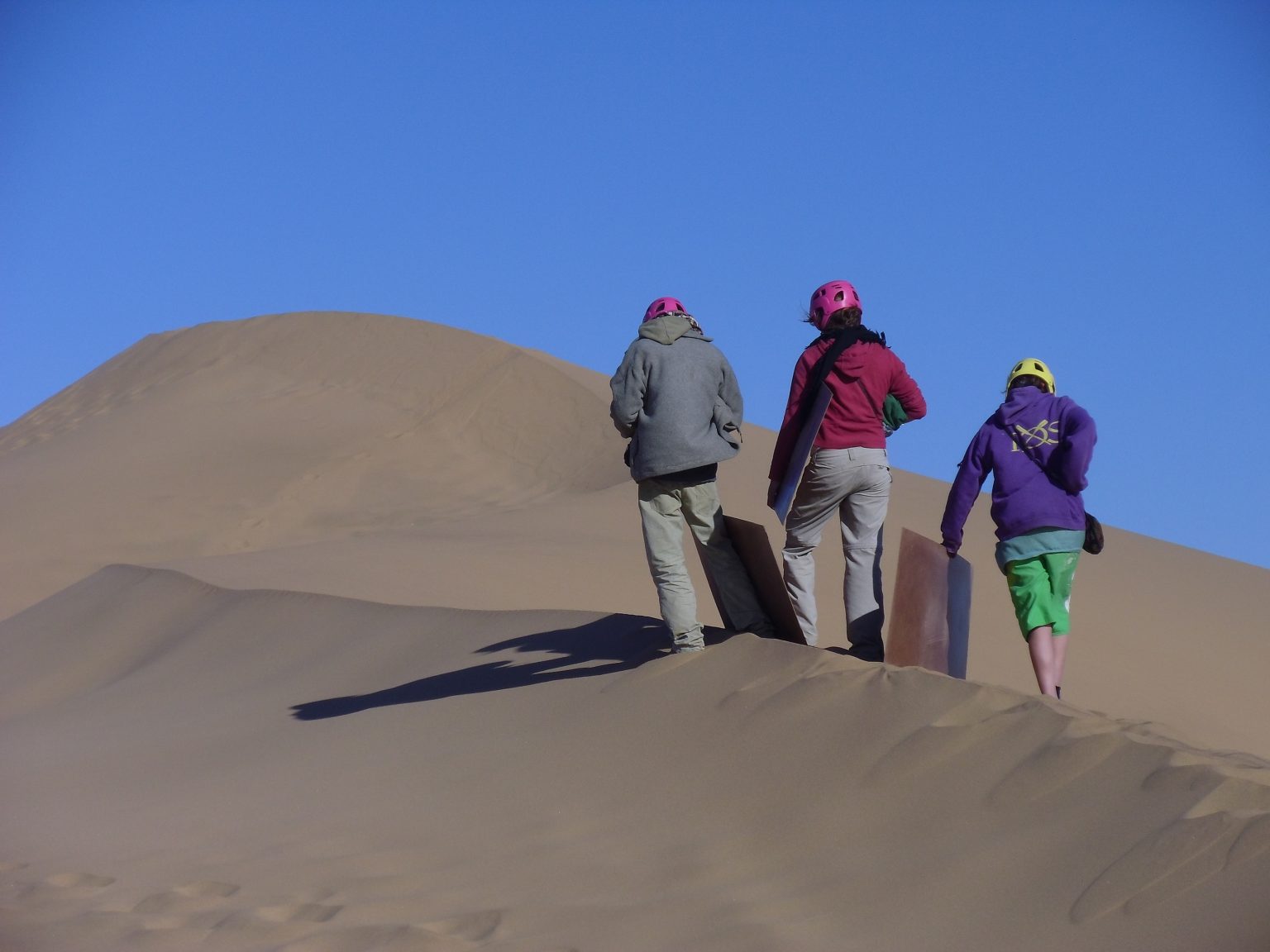
The Namib Desert offers an exciting setting for sandboarding, with sweeping dunes and open sandy slopes along Namibia’s Atlantic coast. Near Swakopmund and Walvis Bay, guided excursions give visitors the chance to slide down the dunes while enjoying views of one of Africa’s most distinctive desert landscapes.
- Why Namibia Is a Great Destination for Sandboarding
- Best Places for Sandboarding in Namibia
- Swakopmund Dunes: The Main Sandboarding Hub
- Dune 7 near Walvis Bay
- Sossusvlei and the Namib-Naukluft National Park
- Sandwich Harbour: Where Dunes Meet the Atlantic
- Types of Sandboarding in Namibia
- What to Bring for Sandboarding
- Best Time of Year for Sandboarding in Namibia
- Sandboarding Safety Tips
- Responsible Sandboarding in Namibia
- Other Adventures to Combine with Sandboarding
- Sandboarding Tours and Prices in Namibia
- A Two-Day Sandboarding Itinerary from Swakopmund
- Make the Most of Namibia’s Coastal Dunes
For travelers seeking sandboarding in Namibia, the coastal region is the most practical place to begin. Local operators provide boards, instruction, and guided sessions for different experience levels, making the activity accessible to first-time riders as well as those looking for faster descents.
This Namibia desert adventure combines outdoor activity with striking scenery, offering a different way to experience the Namib without venturing deep into remote terrain.
Why Namibia Is a Great Destination for Sandboarding
Namibia’s coastal dune belt provides a distinctive environment for sandboarding. The combination of extensive sandy slopes, accessible adventure operators, and views of the Atlantic makes the area around Swakopmund particularly popular.
What makes the experience appealing?
- Large coastal dunes: Explore sandy slopes shaped by wind and influenced by the nearby Atlantic Ocean.
- Options for different skill levels: Beginners can start on gentler runs before progressing to steeper slopes when conditions and instruction allow.
- Two riding styles: Choose between standing on a board and lying down on a specially designed board.
- Coastal scenery: Combine desert views with the cool air and changing weather of Namibia’s Atlantic coastline.
- Organized excursions: Local operators typically provide equipment, instruction, and transport to suitable dunes.
The Namib is widely recognized as one of the world’s oldest deserts. However, the age of the desert and the age of its individual dunes are not the same. Its landscape has developed over geological time, while wind continues to reshape the sand.
Sandboarding offers an active way to experience this environment, but it is important to use established activity areas and follow local guidance.
Best Places for Sandboarding in Namibia
Swakopmund Dunes: The Main Sandboarding Hub
Swakopmund is one of Namibia’s principal adventure tourism centers. Located between the Atlantic Ocean and the Namib Desert, the town provides convenient access to coastal dunes used for organized sandboarding excursions.
What to expect:
- Guided sessions with equipment provided by the operator.
- Beginner-friendly practice runs before attempting longer descents.
- Stand-up and lie-down sandboarding options, depending on the provider.
- Opportunities to combine the activity with quad biking or other coastal excursions.
Swakopmund is a practical choice for families, groups, and first-time sandboarders. Most visitors can arrange a half-day experience without committing to a longer desert expedition.
Coastal weather can change quickly, and fog or wind may affect visibility and comfort. Bring a light jacket even when the weather inland is warm, and confirm the departure arrangements before setting out.
Dune 7 near Walvis Bay
Dune 7, near Walvis Bay, is a well-known coastal landmark and a popular destination for visitors interested in Namibia’s dunes. Its height and sweeping slopes make it impressive to see, although climbing the dune is physically demanding because loose sand gives way underfoot.
Visitors can enjoy:
- Panoramic views of the surrounding dune landscape.
- Photography in the early morning or late afternoon.
- A challenging walk up the sandy slope.
- Sandboarding or other organized activities where current operators offer them.
Dune 7 should not automatically be treated as a dedicated sandboarding location for every visitor. Activity availability, access arrangements, and fees can change, so check with the site operator before planning a session there.
For travelers whose main priority is sandboarding rather than dune climbing, booking a specialist excursion from Swakopmund may be the simpler option.
Sossusvlei and the Namib-Naukluft National Park
Sossusvlei is famous for its towering dunes, deep orange sand, and striking desert scenery. Nearby landmarks include Dune 45, Big Daddy, and Deadvlei, where old camelthorn trees stand against a pale clay pan and surrounding dunes.
The area is especially rewarding for:
- Sunrise photography and changing dune colors.
- Guided walks and dune climbs on permitted routes.
- Exploring Deadvlei and the surrounding desert landscape.
- Learning about the region’s geology and desert environment.
However, Sossusvlei should not be presented as a standard sandboarding destination. Access and recreational activities are governed by park rules, and sandboarding is not a generally established activity on its iconic dunes. Visitors should confirm any proposed activity with authorized operators and park authorities.
Sossusvlei is best planned as a separate desert sightseeing excursion rather than an assumed stop on a coastal sandboarding tour. It requires additional travel from Swakopmund and is usually worth allowing more time to explore.
Sandwich Harbour: Where Dunes Meet the Atlantic
Sandwich Harbour, south of Walvis Bay, is known for its dramatic coastal scenery, where extensive dunes meet the Atlantic Ocean. The area is particularly popular for guided 4×4 excursions and photography.
Possible experiences include:
- Guided drives through permitted coastal dune areas.
- Views of the ocean, sand formations, and coastal wetlands.
- Wildlife observation when conditions allow.
- Photography during suitable light and weather conditions.
Sandwich Harbour is not a standard sandboarding stop. Its terrain, environmental sensitivity, and access arrangements make it important to follow the operator’s instructions and remain within authorized areas.
If sandboarding is your main objective, choose a dedicated session near Swakopmund or another location where the activity is explicitly offered.
Types of Sandboarding in Namibia
Sandboarding generally comes in two main forms. Availability depends on the operator and the dunes being used.
Stand-Up Sandboarding
Stand-up sandboarding involves riding a board with a stance similar to snowboarding. The rider controls balance, direction, and speed while descending the slope.
It may suit travelers who enjoy board sports or want to develop their technique.
Key points:
- Previous snowboarding or surfing experience can help, although it is not always necessary.
- Beginners should start on a suitable training slope.
- Proper instruction is important because sand behaves differently from snow.
- Board type, bindings, and protective equipment vary by operator.
Lie-Down Sandboarding
In lie-down sandboarding, the rider lies on a purpose-built board and slides down the dune, usually headfirst. It is often the more accessible option for beginners because it requires less standing balance.
What to know:
- Most operators provide an introduction before the first run.
- Speed depends on the slope, sand conditions, board, and rider.
- Closed shoes may be required, particularly when the feet are used to help slow the board.
- Follow the operator’s instructions on body position, stopping, and safe separation between riders.
Some coastal runs can produce high speeds, but published maximum speeds should not be treated as a promise of what every rider will experience. Choose a run that matches your comfort level and follow the guide’s advice.
What to Bring for Sandboarding
A guided session usually includes the main equipment, but personal items can make the experience more comfortable.
Essentials
- Comfortable clothing suitable for movement.
- Closed shoes, especially for lie-down boarding.
- Sunglasses or other suitable eye protection.
- Sunscreen and lip balm.
- Drinking water appropriate for the duration and weather.
- A light jacket or windbreaker for cool coastal conditions.
- A small bag for personal belongings.
Optional Items
- An action camera, if permitted by the operator.
- A phone or camera for photographs.
- A power bank for longer excursions.
- Snacks for a half-day outing.
Avoid carrying loose objects that could fall from your pockets during a descent. Secure cameras and other equipment properly, and ask the guide before using devices while riding.
Board wax, boards, and other technical equipment are generally best left to the operator unless you are arranging an independent session where such equipment is specifically required.
Best Time of Year for Sandboarding in Namibia
Sandboarding is offered around Swakopmund and Walvis Bay throughout much of the year, but coastal conditions can affect comfort and scheduling.
- April to September: These months generally fall within Namibia’s cooler, drier season. They can be comfortable for outdoor activities, although coastal fog and wind remain possible.
- October to November: Conditions vary as temperatures rise inland. Coastal sessions may still be pleasant, depending on the day.
- December to March: Inland areas can become hot, while the coast may remain cooler. Wind, fog, and changing weather can affect individual excursions.
Morning sessions are often a sensible choice because the sand may be cooler and winds can be more manageable, but conditions vary daily. Late-afternoon sessions may also be available.
For the best experience, check the forecast for the coast rather than relying only on temperatures reported for inland destinations such as Sossusvlei.
Sandboarding Safety Tips
Sandboarding is an adventure activity, and falls or collisions are possible. Good instruction and sensible decisions help reduce the risks.
Before and during your session:
- Choose an experienced operator: Check what instruction, equipment, and safety arrangements are included.
- Start with an easy run: Learn how to position yourself, steer where applicable, and stop before attempting steeper slopes.
- Check the landing area: Follow the guide’s instructions about obstacles, other riders, and where to stop.
- Wear appropriate clothing and footwear: Use the equipment recommended for your chosen riding style.
- Avoid unsuitable weather: Strong winds, poor visibility, or other unfavorable conditions may require a delay or cancellation.
- Keep your distance from other riders: Wait until the previous rider has cleared the run before starting.
- Follow local restrictions: Use designated activity areas and do not enter restricted dunes or protected locations.
Do not attempt a descent simply because another rider has completed it. Your skill, the slope, and the current sand conditions all matter.
Responsible Sandboarding in Namibia
Namibia’s dunes are part of a fragile desert environment. Coastal areas may contain specialized plants, small animals, and habitats that are easily disturbed by uncontrolled recreation.
Help protect the landscape by following a few simple practices:
- Stay within approved sandboarding areas and established access routes.
- Avoid driving or walking through vegetated areas unless the route is authorized.
- Take all rubbish back with you.
- Keep noise and unnecessary disturbance to a minimum.
- Follow instructions from guides and park officials.
- Choose operators who respect environmental rules and local access requirements.
Avoid applying unapproved substances to the sand or equipment at the site. Ask the operator which products are appropriate for the boards and local conditions.
Responsible tourism allows visitors to enjoy the dunes while reducing avoidable damage to the landscape.
Other Adventures to Combine with Sandboarding
Swakopmund and Walvis Bay offer several activities that can complement a sandboarding session.
- Quad biking: Explore approved dune routes with a guided excursion.
- 4×4 coastal tours: Visit selected dune landscapes and viewpoints with an experienced driver.
- Walvis Bay lagoon: Look for coastal birds and other wildlife from designated viewing areas.
- Sandwich Harbour excursions: Discover the meeting point of dunes and ocean on an authorized tour.
- Swakopmund sightseeing: Explore the town’s architecture, cafés, museums, and coastal atmosphere.
- Sossusvlei and Deadvlei: Plan a separate trip to see the famous dunes and clay pan farther inland.
Wildlife sightings depend on season and conditions, while activities such as quad biking and coastal 4×4 driving are subject to local rules. Book each excursion with an operator familiar with the area.
Camel rides and hot-air balloon flights should not be assumed to be standard add-ons to a Swakopmund sandboarding tour. If these experiences interest you, confirm their location, availability, and travel requirements separately.
Sandboarding Tours and Prices in Namibia
Prices depend on the operator, riding style, duration, transport, and equipment included. Coastal sandboarding is generally easier to arrange than a private excursion to a remote location.
When comparing tours, check:
- Whether the package includes stand-up boarding, lie-down boarding, or both.
- The total duration, including transfers and instruction.
- Whether boards, safety equipment, and water are provided.
- Pickup arrangements and any additional transport charges.
- Whether park or site entry fees are included.
- The cancellation policy if wind or weather affects the activity.
Some providers offer sandboarding on its own, while others combine it with quad biking or other activities. These packages can differ significantly in price, so compare what is included rather than choosing solely by the advertised rate.
Confirm the current price directly with the operator before booking. Prices listed in older travel guides may no longer reflect local costs, and quotations may be given in Namibian dollars or another currency.
A Two-Day Sandboarding Itinerary from Swakopmund
This sample plan combines a coastal sandboarding session with time to explore the surrounding area. It can be adjusted to suit your arrival time, weather, and preferred activities.
Day 1: Sandboarding near Swakopmund
Arrive in Swakopmund and check in to your accommodation. If your schedule allows, book a morning sandboarding session with a local operator.
During the excursion:
- Receive a safety briefing and learn the basics.
- Start with an appropriate training slope.
- Try additional runs if the guide confirms that conditions are suitable.
- Take a break for water and photographs.
In the afternoon, explore Swakopmund’s town center, visit a museum, or relax along the coast. The town’s cafés and restaurants provide convenient places to eat after an active morning.
Day 2: Walvis Bay and the Coastal Dunes
Travel to Walvis Bay for a relaxed morning exploring the coastal area. If sandboarding is available through a suitable operator and your preferred location, arrange a second session in advance. Otherwise, consider visiting Dune 7 for its views and dune scenery.
Depending on your interests and departure time, you could also:
- Visit the Walvis Bay lagoon for birdwatching.
- Book a guided 4×4 excursion to Sandwich Harbour.
- Return to Swakopmund for lunch before departure.
Do not try to fit every activity into one day. Coastal tours can take several hours, and travel time, weather, and access restrictions may affect the schedule.
Make the Most of Namibia’s Coastal Dunes
Sandboarding in Namibia is an engaging way to experience the dunes around Swakopmund and Walvis Bay, combining physical activity with wide desert views and the influence of the Atlantic coast. A guided session offers a practical introduction for beginners while giving more experienced riders the chance to explore suitable slopes.
Choose the right riding style, confirm the location and current arrangements, and prepare for changing coastal weather. If you want to explore Sossusvlei or Sandwich Harbour as well, plan those visits around their separate access rules and travel requirements.
The best desert adventure is one that leaves you with memorable descents, a deeper appreciation of Namibia’s landscape, and respect for the environment that makes the experience possible.