
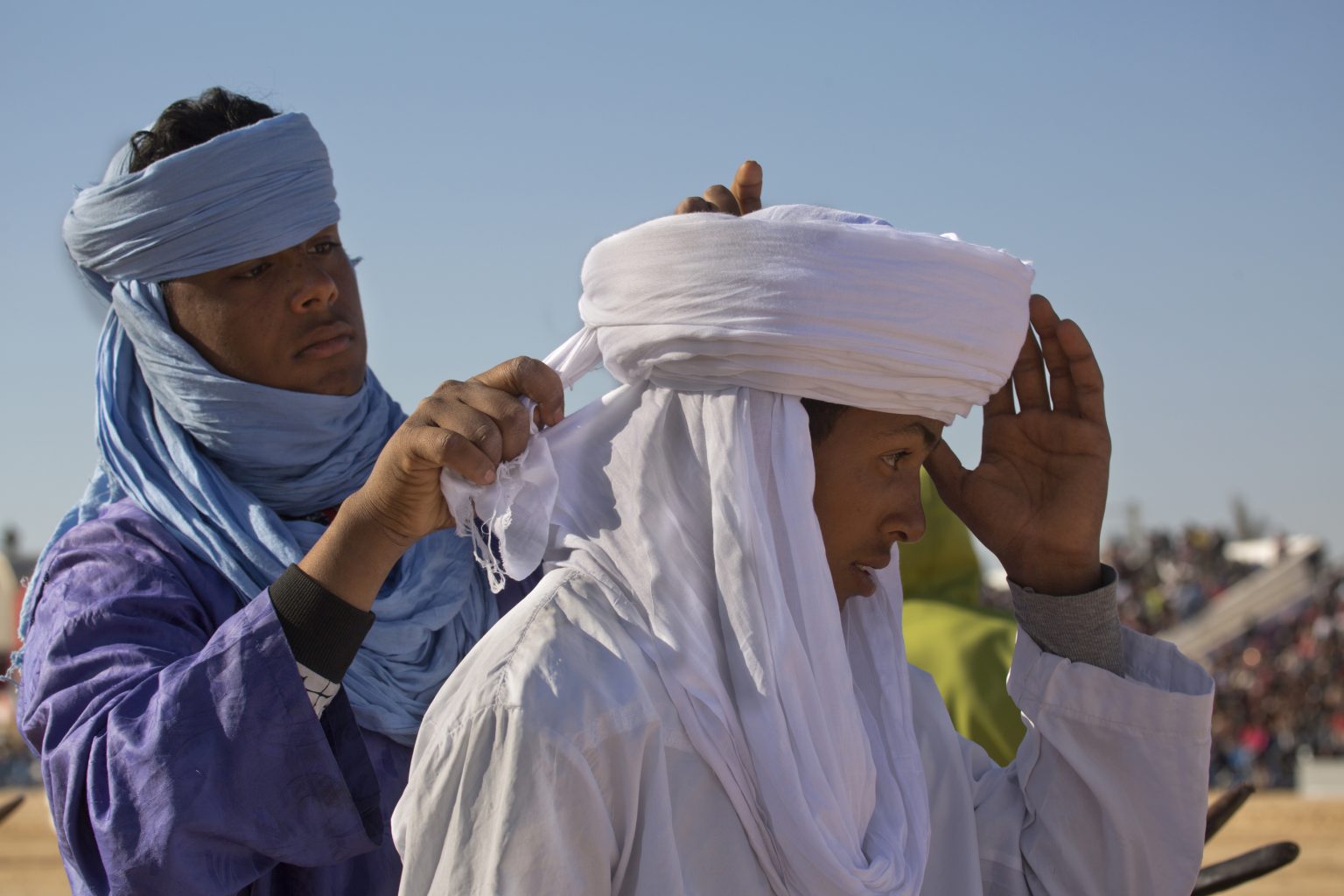
Traditional clothing in southern Tunisia reflects the region’s climate, cultural heritage, and way of life. From Douz and Tozeur to Tataouine and Matmata, Tunisian desert clothing includes garments designed for hot days, cool nights, and protection from sun and wind. These traditions also reflect the influences of Amazigh clothing in Tunisia and Bedouin dress, with differences in fabrics, colors, accessories, and techniques from one community to another. Today, traditional Tunisian desert dress remains an important part of local identity, family celebrations, and cultural festivals.
- How the Desert Influences Traditional Clothing
- The Heritage of Amazigh Communities
- Bedouin Clothing in Southern Tunisia
- The Colors of Traditional Desert Clothing
- Traditional Textile Skills and Craftsmanship
- Materials Used in Traditional Clothing
- Weaving and Dyeing Techniques
- Embroidery and Geometric Patterns
- The Burnous in Tunisian Dress
- Women’s Beauty Traditions and Personal Care
- Clothing for Celebrations and Ceremonies
- Weddings and Marriage Traditions
- Religious Festivals and Seasonal Events
- Clothing During Times of Mourning
- Regional Differences in Southern Tunisia
- The Cultural Meaning of Colors and Decorative Motifs
- Traditional Clothing in the 21st Century
- Bringing Heritage into Contemporary Fashion
- Supporting Traditional Crafts Through Tourism
- Younger Generations and Cultural Identity
- Why Traditional Desert Clothing Matters
- Traditional Dress as a Living Part of Tunisian Heritage
How the Desert Influences Traditional Clothing
Clothing Designed for the Climate
In southern Tunisia, clothing needs to provide protection from intense sunlight, blowing sand, and changing temperatures. Loose-fitting garments allow air to circulate, while additional layers help keep the body warm during cold desert nights and winter weather.
The choice of fabric also matters. Lightweight cotton is suitable for warm conditions, while wool is useful during colder periods. Head coverings provide additional protection from direct sunlight and dust.
Modesty and Practicality
Traditional clothing in southern Tunisia reflects local customs, religious values, and practical needs. Long robes, dresses, head coverings, and flowing outer garments can provide comfort and coverage while allowing freedom of movement.
Although some styles are shared across the region, clothing varies according to community, occasion, personal preference, and family tradition.
The Heritage of Amazigh Communities
Clothing and Cultural Identity
Amazigh communities in southern Tunisia, including those associated with Matmata, Chenini, and Douiret, have distinctive textile and clothing traditions. Their garments and accessories reflect local craftsmanship, available materials, and styles passed down through generations.
Men’s everyday clothing often emphasizes comfort and practicality, while women’s traditional dress can include decorative fabrics, jewelry, and carefully arranged head coverings. The exact styles differ between communities, and not every garment or design is shared throughout southern Tunisia.
Women’s Dress and the Melhfa
The melhfa is a long piece of fabric used as a wrap in parts of North Africa. Its appearance, method of wearing, and cultural associations vary by region and community. In southern Tunisia, traditional women’s dress may combine long garments with wraps, scarves, decorative belts, and silver accessories.
Colors can include black, white, blue, red, and other shades, depending on the fabric and local style. Their significance is not universal: a color may reflect personal taste, the occasion, local convention, or the availability of materials rather than a fixed message about someone’s emotions or identity.
In some communities, women’s garments feature embroidered or woven geometric designs. These patterns contribute to the visual character of the clothing and may reflect local artistic traditions.
The Role of Traditional Jewelry
Silver jewelry is an important feature of traditional dress in several Amazigh communities. Women may wear earrings, bracelets, necklaces, and fibulae, which are decorative fasteners historically used to secure garments.
Some pieces also incorporate coral, amber, or other materials. Jewelry can communicate family heritage, regional identity, social traditions, and personal taste. Certain pieces have also been associated with protective beliefs, although their meanings vary between communities and families.
Motifs such as the hand-shaped khamsa appear in different North African decorative traditions. Their interpretation depends on the object, its context, and the beliefs of the people who use it.
Bedouin Clothing in Southern Tunisia
Traditional Clothing for Men
Men’s clothing in southern Tunisia has developed around the needs of life in arid environments. Long robes, loose garments, head coverings, and protective outer layers are useful for everyday activities and travel.
The jebba is a traditional Tunisian garment worn on various occasions. Its style and form can differ according to the region and the formality of the event.
The burnous, a long cloak with a hood, is another well-known garment in Tunisia and the wider Maghreb. Traditionally made from wool or other suitable fabrics, it provides warmth and protection from wind and cold. Lighter versions may be more comfortable in milder conditions.
Burnouses come in different colors and styles. Some are associated with formal occasions, ceremonies, or respected social roles, while others are worn for practical purposes. Their significance depends on local customs and the context in which they are used.
Women’s Head Coverings and Long Dresses
Traditional women’s clothing in southern Tunisia may include long dresses, loose sleeves, shawls, and head coverings. The materials and arrangements vary across communities and between everyday wear and special occasions.
Some outfits use a large piece of fabric to cover the head and upper body, while others incorporate colorful wraps, embroidered details, or decorative accessories. These garments can reflect modesty, cultural tradition, personal preference, and practical protection from the climate.
For weddings and festivals, women may choose more elaborate clothing with brighter colors, decorative stitching, and silver or gold-colored accessories. These details distinguish festive outfits from everyday garments without implying that there is one standard style for all women in the region.
The Colors of Traditional Desert Clothing
The colors found in traditional clothing across southern Tunisia reflect regional styles, available fabrics, personal preferences, and the purpose of a garment.
- White and beige: Common choices for garments designed for warm weather and for some formal or ceremonial outfits.
- Brown and black: Used in a range of everyday garments, woolen clothing, wraps, and outer layers.
- Red and orange: May appear in decorative fabrics, embroidery, scarves, and festive clothing.
- Blue: Found in some regional garments and wraps, with its use varying according to local tradition and individual taste.
Colors can carry cultural associations, but their meanings are not fixed across all communities. The same shade may have different significance depending on the garment, occasion, and wearer.
Traditional Textile Skills and Craftsmanship
Materials Used in Traditional Clothing
The materials used in southern Tunisian clothing depend on the garment, climate, and local craft traditions.
Common materials include:
- Wool: Used in cloaks, blankets, and other textiles that provide warmth.
- Cotton: Suitable for lightweight garments and everyday clothing.
- Silk and decorative threads: Used in some finer garments and ceremonial pieces.
- Leather: Traditionally used for certain belts, footwear, and practical accessories.
The properties of these materials influence how garments feel, how they drape, and how well they perform in different weather conditions.
Weaving and Dyeing Techniques
Weaving is an important textile tradition in several communities in southern Tunisia. Traditional looms and hand techniques are used to produce fabrics, blankets, and other woven items, with methods varying by region and workshop.
Natural dyes have historically been obtained from plant and mineral sources. The colors produced depend on the ingredients and the dyeing process. Saffron, for example, can produce yellow or golden tones, while other natural materials may create different shades.
It would be inaccurate to assign one dye or color to every community, since traditional practices vary and modern textile production also uses commercially prepared dyes.
Embroidery and Geometric Patterns
Embroidery and woven patterns add detail to traditional garments and textiles. Designs may include diamonds, triangles, squares, stars, and other geometric forms.
These patterns can identify a local style or reflect a craft tradition. In some contexts, motifs are associated with ideas such as protection, fertility, or good fortune, but their meanings differ and should not be treated as universal symbols.
Textile skills are often transmitted within families and through local workshops, helping preserve techniques while allowing designs to evolve.
The Burnous in Tunisian Dress
The burnous is one of the most recognizable traditional garments in Tunisia and other parts of the Maghreb. Its long, hooded form makes it suitable for cool weather and provides protection against wind.
Although often associated with men, the burnous is part of a broader regional clothing tradition whose forms and uses have changed over time. It can be worn in rural areas, towns, and cities, especially during formal occasions and cultural events.
White, cream, brown, and darker shades are all found in different styles. The choice of color depends on local practice, the fabric, the occasion, and personal preference rather than a single rule about everyday or ceremonial use.
Today, the burnous remains a recognizable feature of Tunisian heritage and is sometimes incorporated into contemporary fashion.
Women’s Beauty Traditions and Personal Care
Henna Celebrations
Henna has an important place in many Tunisian celebrations, particularly weddings and other family events. During a henna gathering, women may apply designs to the hands and feet using patterns of lines, dots, flowers, and geometric shapes.
The occasion often includes music, singing, food, and time spent with relatives and friends. Henna designs and ceremonies vary by region and family, and they can form an important part of the preparations for marriage.
Oils, Fragrances, and Personal Care
Oils and fragrances have long been used in personal-care traditions across North Africa. Depending on local practice, products may include olive oil, aromatic oils, and perfumes made with floral, woody, or musky notes.
Some traditional accessories include small containers for fragrance, while contemporary products range from locally prepared blends to commercially produced perfumes.
These practices are part of a wider culture of personal care and hospitality, although specific ingredients and methods differ from household to household.
Clothing for Celebrations and Ceremonies
Weddings and Marriage Traditions
Weddings in southern Tunisia can feature distinctive garments, jewelry, embroidery, and family traditions. Brides may wear richly decorated outfits, while relatives contribute accessories and help prepare the clothing for the celebration.
Gold-colored threads, silver jewelry, colorful fabrics, and henna may all feature in wedding customs, depending on the community and family. Some celebrations include a henna evening during which female relatives gather with the bride, sing traditional songs, and participate in the preparations.
There is no single wedding outfit for the entire Tunisian desert region. Styles differ between towns, villages, and families.
Religious Festivals and Seasonal Events
During Ramadan and religious holidays, people may choose clean, formal, or traditional garments for prayer, family gatherings, and visits. White clothing is worn by some people, but it is not a universal requirement or a rule followed by every community.
Cultural festivals, including events in Douz, provide opportunities to see traditional garments, accessories, music, and crafts. Participants may wear clothing associated with local heritage, while artisans and designers sometimes present contemporary interpretations of traditional styles.
Clothing During Times of Mourning
Clothing customs during mourning vary across Tunisia. Some families choose subdued colors and simpler garments, while others follow different local or religious practices.
Jewelry and decorative accessories may be reduced during periods of mourning, depending on family custom. These choices are personal and cultural practices rather than universal rules for all desert communities.
Regional Differences in Southern Tunisia
Traditional clothing is not identical across southern Tunisia. Each area has its own history, textile practices, and ways of adapting garments to daily life.
Douz is closely associated with Saharan culture and festivals where traditional clothing, camel-related heritage, and local crafts are visible.
Tozeur and Nefta have long histories as oasis towns. Their clothing traditions reflect local life, regional trade, and the wider cultural influences of southern Tunisia.
Tataouine, Chenini, and Douiret are associated with Amazigh heritage and distinctive local architecture, crafts, and family traditions. Traditional dress and silver jewelry can form part of this cultural identity, although styles vary between communities.
Matmata is known for its distinctive troglodyte architecture and Amazigh cultural heritage. Clothing worn in the area reflects local traditions as well as the practical requirements of life in a dry, sometimes cold environment.
These differences demonstrate how clothing traditions develop in response to local history, climate, materials, and cultural exchange.
The Cultural Meaning of Colors and Decorative Motifs
Symbols, Patterns, and Their Interpretations
Traditional clothing and textiles can carry meanings that extend beyond appearance. However, these interpretations vary, and a motif may have more than one meaning depending on the community or the person using it.
Some commonly discussed associations include:
- Red: Sometimes associated with vitality, celebration, or protection.
- Blue: In some traditions, associated with protective beliefs.
- White: Often connected with cleanliness or formal and religious occasions.
- Silver jewelry: Valued for its craftsmanship, beauty, and cultural associations.
- Geometric motifs: May reflect regional design traditions and, in some cases, beliefs about protection or good fortune.
These associations should be understood as examples of cultural interpretation, not as a universal code that can be applied to every Tunisian garment.
Traditional Clothing in the 21st Century
Bringing Heritage into Contemporary Fashion
Tunisian designers and craftspeople continue to reinterpret traditional clothing for modern audiences. Contemporary collections may incorporate the shapes of the burnous, melhfa-inspired fabrics, regional embroidery, or traditional decorative motifs into new garments.
These designs can appear in local fashion shows, cultural events, and international collections. The results range from garments that closely follow traditional techniques to modern pieces that use only selected elements of older styles.
The relationship between tradition and contemporary fashion helps keep regional designs visible while giving craftspeople opportunities to develop new products.
Supporting Traditional Crafts Through Tourism
Visitors to southern Tunisia can learn about traditional textiles through local artisans, workshops, cultural associations, and craft markets. In areas such as Douz and the villages around Tataouine, some craftspeople demonstrate weaving, embroidery, or other traditional techniques.
Purchasing directly from local makers, where possible, can help support their work and preserve specialized skills. Travelers should also ask permission before photographing artisans or their work, particularly during private activities.
Younger Generations and Cultural Identity
Traditional clothing remains relevant to many young Tunisians, especially during weddings, festivals, family celebrations, and other cultural occasions.
Some choose to wear garments closely connected to their regional heritage, while others combine traditional details with contemporary fashion. Both approaches allow clothing traditions to continue changing while remaining part of cultural identity.
Why Traditional Desert Clothing Matters
Traditional clothing in southern Tunisia brings together practical design, craftsmanship, cultural identity, and personal expression.
Its importance can be seen in several areas:
- Adaptation to the climate: Loose garments, head coverings, and layered clothing help people manage heat, sunlight, wind, and cold nights.
- Cultural heritage: Garments and accessories preserve techniques and styles passed between generations.
- Craftsmanship: Weaving, embroidery, jewelry-making, and textile finishing support specialized skills.
- Community identity: Particular garments may be associated with a region, family tradition, celebration, or social occasion.
- Contemporary creativity: Designers and artisans continue to reinterpret traditional elements for modern use.
These traditions show how clothing can respond to everyday needs while carrying cultural meaning across generations.
Traditional Dress as a Living Part of Tunisian Heritage
The traditional clothing of southern Tunisia reflects the region’s climate, history, and cultural diversity. Amazigh textile traditions, Bedouin-inspired garments, silver jewelry, woven fabrics, and ceremonial dress all contribute to the region’s distinctive appearance.
From the burnous and jebba to locally made wraps, embroidered garments, and decorative accessories, each tradition has its own history and variations. Their continued use at family celebrations, cultural festivals, and contemporary fashion events helps keep these skills visible.
For travelers, learning about traditional clothing offers a useful way to understand the people and communities of southern Tunisia. Beyond the garments themselves, it reveals the craftsmanship, regional differences, and family traditions that continue to shape the area’s cultural life.