
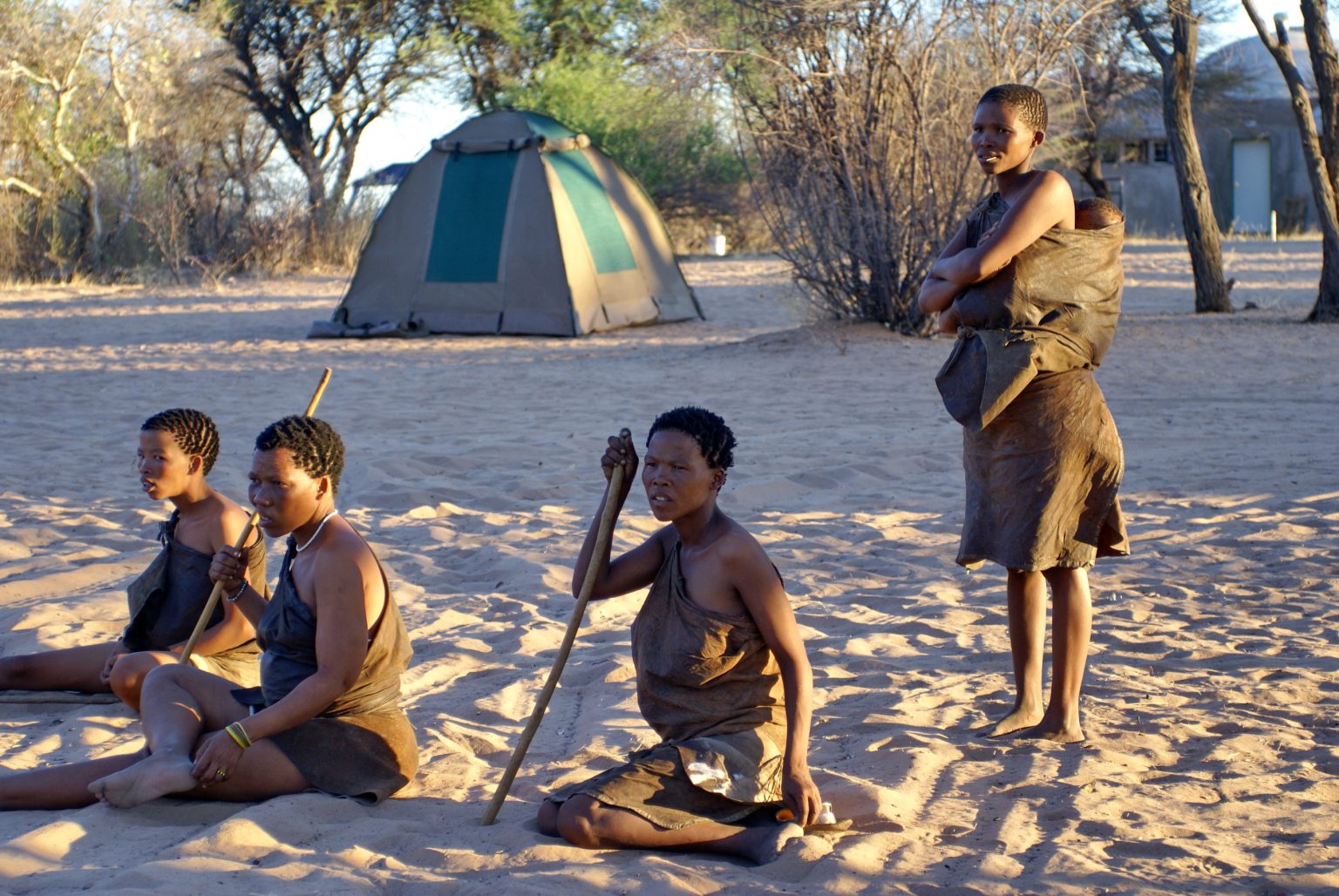
Traditional clothing in Botswana reflects the country’s diverse communities, local materials, and changing social customs. Traditional clothing in Botswana includes distinct forms of dress associated with San, Tswana, and Herero communities, although styles vary by region, family, and occasion. From San traditional clothing made with natural materials to colourful Tswana fabrics and distinctive Herero dresses, clothing offers insight into Kalahari cultural heritage and how traditions continue to evolve.
- The Kalahari Environment and Traditional Dress
- The San: Clothing Made from Natural Materials
- Practical Clothing and Everyday Life
- Leatherwork and the Use of Animal Hides
- Ostrich Eggshell Beads and Personal Decoration
- The Tswana: Traditional Fabrics and Contemporary Style
- From Earlier Materials to Modern Clothing
- Leteisi and Printed Fabrics
- Clothing for Ceremonies and Special Occasions
- Herero Clothing and Cultural Identity
- Materials Used in Traditional Clothing and Accessories
- How Traditional Garments and Accessories Are Made
- Beadwork, Jewellery, and Personal Decoration
- Clothing for Ceremonies and Important Events
- Traditional Clothing in Contemporary Botswana
- Designers and Modern Fashion
- Women, Craft Skills, and Cultural Transmission
- Cultural Tourism and Local Crafts
- Clothing, Identity, and Cultural Change
- A Connection to Family and Community
- Respect and Appropriate Dress
- Preserving Traditions While Styles Change
- Exploring Botswana’s Traditional Clothing
The Kalahari Environment and Traditional Dress
Climate and Clothing Needs
The Kalahari Desert covers much of Botswana and extends into neighbouring countries. Its climate varies by location and season, with hot summer days and cold winter nights. Some areas experience substantial temperature changes between day and night.
Clothing choices have been influenced by local conditions, available materials, livelihoods, and contact with other communities. Historically, people used materials available to them, while contemporary clothing often includes manufactured fabrics and commercially produced garments.
Traditional and modern clothing serve different purposes, including protection from the weather, everyday comfort, cultural expression, and participation in ceremonies.
Colours and Patterns
Traditional clothing across Botswana includes a range of colours, prints, materials, and decorative details. Their appearance depends on the cultural tradition, the occasion, and the materials used.
It is important not to assign universal meanings to colours. A particular shade or pattern may have a specific significance in one context but no equivalent meaning in another. Clothing can communicate identity and personal taste without every design representing a fixed cultural symbol.
The San: Clothing Made from Natural Materials
Practical Clothing and Everyday Life
The San are Indigenous peoples of southern Africa, comprising several communities with distinct languages and cultural traditions. Their clothing practices have varied historically according to location, climate, available resources, and contact with neighbouring populations.
In some San communities, traditional clothing included garments made from animal hides. The amount of clothing worn could depend on age, activity, weather, and local custom. These historical practices should not be treated as descriptions of how all San people dress today.
Contemporary San communities wear a wide range of clothing, including modern manufactured garments, while some traditional materials and craft practices continue to be used for cultural purposes and handicrafts.
Leatherwork and the Use of Animal Hides
Animal hides were used by some San communities to make clothing and other practical items. Preparing hides required knowledge of available materials and techniques for making the leather suitable for use.
Depending on the community and the period, hide products could include:
- Garments and coverings.
- Belts and carrying items.
- Bags and other practical objects.
- Decorative pieces used with clothing or personal accessories.
The methods and materials used varied. It would be inaccurate to assume that every San community followed the same tanning process or decorated its clothing in the same way.
Ostrich Eggshell Beads and Personal Decoration
Ostrich eggshell beads are an important part of the archaeological record of southern Africa and have also been used in traditional beadwork by some San communities. Making small beads from eggshell requires careful shaping, drilling, and finishing.
Beadwork may be used in necklaces and other ornaments. The materials, designs, and social meanings differ by community and context. A particular necklace should not automatically be interpreted as a sign of age, status, marriage, or family membership without evidence about the tradition concerned.
Natural pigments have also been used for body decoration in some cultural settings. Their use and significance vary, and they should not be presented as a universal feature of San dress.
The Tswana: Traditional Fabrics and Contemporary Style
From Earlier Materials to Modern Clothing
The Tswana are a major cultural and linguistic group in Botswana. Their clothing traditions have changed through trade, urbanization, religious influences, and access to manufactured fabrics.
Earlier forms of dress included materials obtained locally, while contemporary traditional clothing often incorporates cotton and other commercially produced textiles. Modern garments may combine established styles with individual choices in colour, cut, and decoration.
Tswana traditional clothing is therefore not a single fixed outfit. What people wear depends on their family traditions, region, age, personal preferences, and the occasion.
Leteisi and Printed Fabrics
Printed fabrics are used in a variety of garments and wraps in Botswana. In Tswana cultural settings, leteisi is associated with traditional dress and may be used to make skirts, dresses, head coverings, and other garments.
The same fabric can be styled in different ways, depending on the wearer and the purpose. Some garments are designed for everyday use, while others are made for weddings, cultural celebrations, religious events, or formal gatherings.
Patterns and colours can reflect personal taste and current fashion. Their meanings should not be assumed to follow a universal system of triangles, circles, lines, or other shapes.
Clothing for Ceremonies and Special Occasions
Traditional and formal clothing is often chosen carefully for important social occasions. Weddings, cultural celebrations, and religious events may feature coordinated fabrics, carefully selected garments, and decorative accessories.
The clothing worn by men and women varies between families and occasions. Blankets, wraps, dresses, shirts, and accessories may be used, but no single outfit represents every Tswana ceremony.
Tswana ceremonial dress reflects both cultural continuity and changing fashion. Many people combine traditional fabrics with modern tailoring, allowing garments to reflect personal style as well as cultural connections.
Herero Clothing and Cultural Identity
Victorian-Inspired Dresses
Herero communities have a distinct cultural history in southern Africa, including in Namibia and Botswana. Herero women’s clothing is widely recognized for its long, full dresses influenced by European styles introduced during the nineteenth century.
These garments developed into a distinctive form of cultural dress. Their use today can express identity, historical memory, and community belonging.
Herero traditional clothing should not be described simply as a practical response to desert heat. The dresses are often layered and substantial, and their significance is closely connected to history and cultural expression.
The Otjikaiva Headdress
The otjikaiva is a distinctive Herero women’s headdress shaped to resemble cattle horns. Cattle hold important economic and cultural significance in many Herero communities, and the headdress is widely associated with Herero women’s traditional dress.
The exact ways clothing is worn and understood can vary between individuals and occasions. Although the horn shape is commonly associated with cattle, it is best to avoid assigning additional symbolic meanings without reliable evidence.
Clothing, History, and Adaptation
Herero dress illustrates how clothing can change through historical contact while becoming an important marker of cultural identity. European influences contributed to the development of the Victorian-inspired style, but Herero communities made the clothing their own.
Today, garments may be worn at cultural celebrations, weddings, commemorations, and other public events. Their use reflects a continuing tradition rather than a style frozen in the nineteenth century.
Materials Used in Traditional Clothing and Accessories
The materials used for clothing in Botswana have changed over time. Earlier garments often relied on locally available resources, while contemporary clothing includes manufactured textiles, commercial accessories, and traditional craft materials.
Materials associated with different clothing and craft traditions include:
- Animal hides and leather: Used historically for certain garments, coverings, and practical items in some communities.
- Plant fibres: Used in selected craft traditions for weaving, tying, and making practical objects.
- Cotton and printed fabrics: Common in contemporary garments and traditional styles.
- Ostrich eggshell beads: Used in beadwork and ornaments in some southern African traditions.
- Seeds, bone, and other natural materials: Used in certain forms of jewellery and craftwork, depending on local practice.
- Metal beads and manufactured accessories: Incorporated into many contemporary forms of personal decoration.
Not every material is used by all San, Tswana, or Herero communities. Materials and techniques differ according to the garment, the maker, and the cultural context.
How Traditional Garments and Accessories Are Made
Leather Preparation and Craftwork
Working with hides requires practical skills, including preparing the material and shaping it for its intended use. The techniques used depend on the type of hide, the available tools, and the traditions of the craftsperson.
Leatherwork may be combined with stitching, ties, beads, or other decorative elements. The resulting objects can have practical uses as well as cultural or commercial value.
Sewing, Weaving, and Textile Work
Modern traditional clothing often involves cutting and sewing manufactured fabrics into garments. Tailors and designers may use established styles while adjusting the fit, length, sleeves, patterns, and accessories.
Craft skills are maintained through formal training, family teaching, workshops, and individual practice. The people who make clothing vary across communities, so garment production should not be presented as work done exclusively by women.
Natural Dyes and Colour Choices
Natural pigments and dyes have been used in various craft traditions, but the methods differ according to the material and cultural context. Contemporary clothing also uses commercially produced dyes and printed fabrics.
There is no reliable universal colour code for Botswana’s desert communities in which each colour has one fixed meaning. For example, red does not automatically represent courage or purity, and blue-green does not necessarily represent peace or family history.
When describing the meaning of a specific colour or pattern, it is better to identify the community and context in which that interpretation is documented.
Beadwork, Jewellery, and Personal Decoration
Making and Wearing Beads
Beadwork forms part of several cultural traditions in southern Africa. Beads may be used in necklaces, bracelets, decorative items, and parts of clothing.
In some contexts, beadwork can express personal taste, cultural affiliation, or participation in a particular tradition. Its meaning depends on the design and the people who use it.
It is not accurate to assume that a specific bead colour always communicates an emotion or that every necklace indicates a wedding or a particular stage of life.
Materials Used in Jewellery
Jewellery and decorative objects may incorporate different materials, depending on the community and the period.
Examples include:
- Ostrich eggshell: Used to produce small beads in some southern African traditions.
- Bone: Used in selected forms of ornament and craftwork.
- Seeds: Incorporated into certain decorative objects.
- Metal: Used for beads, rings, and other accessories.
- Leather and fibres: Used for ties, cords, and parts of handmade items.
Some pieces are passed between family members, while others are made for personal use, cultural events, or sale. Their histories and meanings vary, and should not be assumed from appearance alone.
Clothing for Ceremonies and Important Events
Clothing can take on particular importance during major life events and community gatherings. The garments selected depend on the cultural group, family preferences, religious traditions, and the nature of the occasion.
Birth and Childhood
Clothing for infants and children varies according to family circumstances and local customs. Modern garments are common, while particular families may also follow traditions connected with welcoming a child or marking important family events.
There is no single set of clothing rules for newborns or a universal ceremony in which every child receives handmade garments.
Coming of Age
Practices associated with growing up differ across Botswana’s communities. Some families and cultural groups mark transitions through ceremonies, instruction, or gatherings, while others emphasize different forms of recognition.
Clothing may form part of an event, but it should not be claimed that all teenagers receive new garments or are required to make their own first item of clothing. These details need to be tied to a specific, documented tradition.
Weddings and Family Celebrations
Traditional wedding clothing in Botswana varies by cultural group and family. Tswana weddings may feature printed fabrics and coordinated garments, while Herero celebrations may include distinctive dresses and headdresses. San families and communities also have varied contemporary clothing practices.
Music, food, dancing, and formal gatherings may accompany weddings, but clothing and ceremony differ across communities. Descriptions should avoid combining different traditions into one generalized wedding scene.
Funerals and Mourning
Clothing worn during funerals and periods of mourning depends on family, religious, and community customs. Some people wear dark or subdued colours, while other practices may follow different expectations.
It would be inaccurate to state that every community in Botswana uses black clothing, minimal makeup, or the same type of wrap when mourning. Families may also provide practical support to people who have experienced a loss, but this should not be presented as a universal clothing-related custom.
Traditional Clothing in Contemporary Botswana
Designers and Modern Fashion
Designers in Botswana draw on a range of influences, including traditional fabrics, local craft practices, contemporary tailoring, and international fashion. Printed textiles and culturally distinctive garments may appear in modern collections and public events.
Gaborone and Maun are among the country’s urban centres where visitors may find clothing shops, designers, and craft products. The availability of particular garments varies, so travellers should check current local options before planning a shopping visit.
Modern Botswana fashion can combine cultural references with new materials and designs. This process does not mean that every garment carries a traditional meaning, nor does it imply that contemporary styles replace older forms of dress.
Women, Craft Skills, and Cultural Transmission
Women contribute to many forms of textile work, clothing production, beadwork, and craft activity across Botswana. Men also participate in different craft and clothing-related occupations, depending on the community and the type of work.
Skills can be passed on through family teaching, training programmes, workshops, and commercial practice. Supporting makers and designers helps sustain craft knowledge while creating opportunities for people to earn income.
Cultural Tourism and Local Crafts
Visitors may encounter traditional clothing and craftwork through community-led tourism, cultural centres, markets, and local businesses. In places such as Ghanzi and D’Kar, some initiatives are connected with San communities and cultural projects.
Tourism can create opportunities for local craftspeople, but its benefits depend on how projects are organized and who receives the income. Visitors should look for community-led experiences, ask permission before photographing people, and respect any restrictions on observing cultural activities.
When buying clothing or handicrafts, travellers can ask who made the item, what materials were used, and whether the purchase directly supports the maker or community.
Clothing, Identity, and Cultural Change
A Connection to Family and Community
Traditional clothing can express cultural affiliation, family connections, and participation in important events. The significance of a garment depends on its design, history, and use rather than on appearance alone.
A garment may be worn for a wedding, a public celebration, or everyday activities. The same fabric or style can have different meanings for different people.
Respect and Appropriate Dress
Visitors should follow local guidance when attending cultural events or visiting community spaces. Appropriate clothing depends on the location and occasion, and hosts or event organizers can explain any particular expectations.
Respectful behaviour also means recognizing that traditional dress belongs to living communities. People should not be expected to wear cultural clothing for photographs or demonstrations simply because visitors are interested in it.
Preserving Traditions While Styles Change
Clothing traditions in Botswana continue to evolve. Some people maintain established forms of dress, while others adapt traditional fabrics and designs to modern preferences.
This variation is part of contemporary cultural life. A community’s identity does not depend on every member wearing the same garments, and traditional clothing can remain meaningful even as materials, styles, and everyday habits change.
Exploring Botswana’s Traditional Clothing
The clothing traditions of Botswana reflect the country’s cultural diversity. San communities have histories of using locally available materials and maintaining distinct craft practices; Tswana clothing includes printed fabrics and garments associated with different social occasions; and Herero women’s dress is known for its Victorian-inspired form and horn-shaped headdress.
Understanding traditional dress in Botswana means recognizing the differences between these traditions rather than treating them as one style. Clothing can provide insight into history, craftsmanship, social life, and cultural change, but its meanings depend on the people who make and wear it.
For visitors, learning from local makers and community-led cultural initiatives offers a more useful perspective than relying on generalized descriptions of desert clothing. Botswana’s traditional garments continue to be worn, adapted, and made by people whose cultural identities extend well beyond what they wear.