
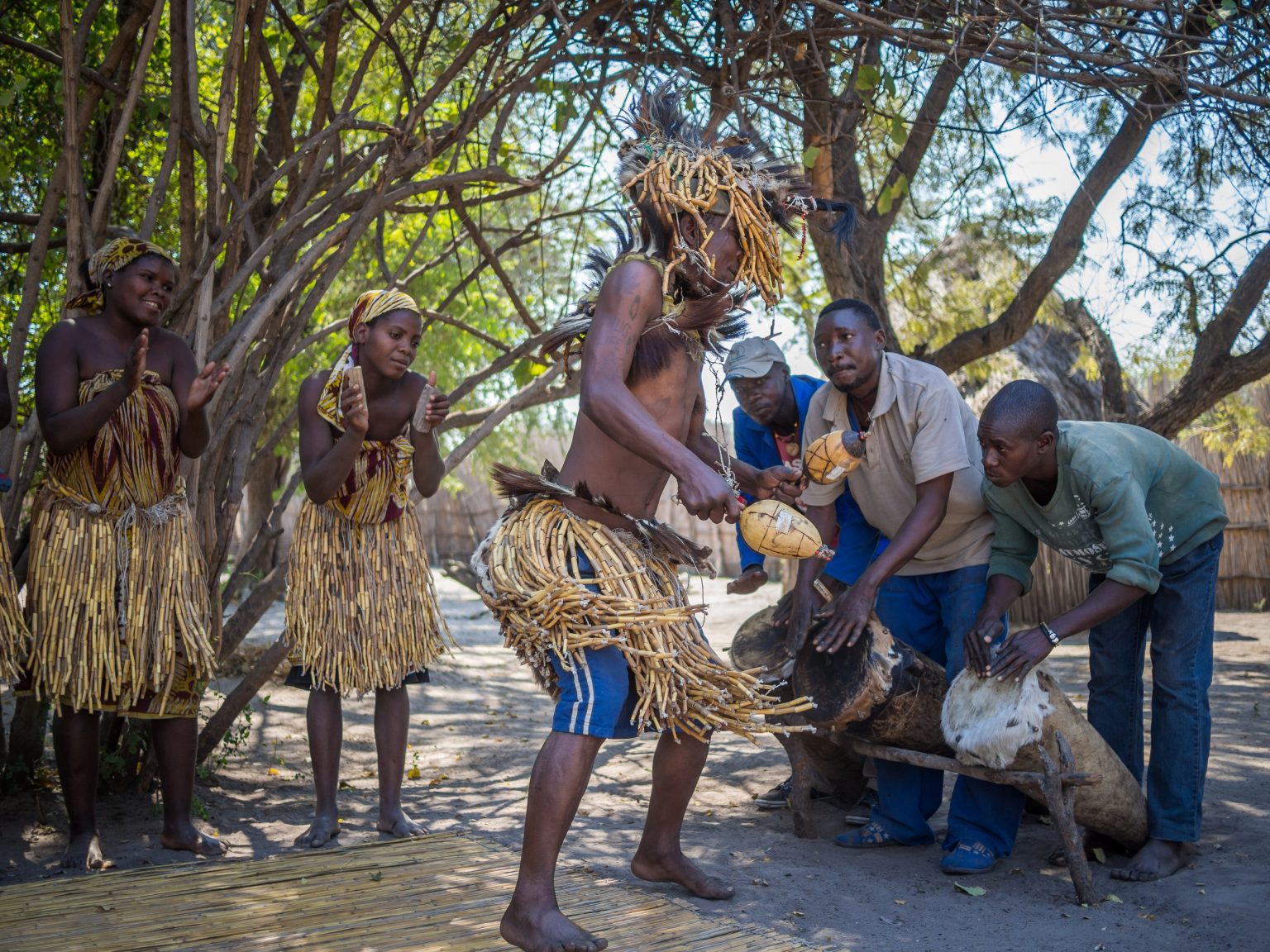
The desert regions of Namibia are home to communities with distinct musical traditions shaped by their histories, languages, and daily lives. Music of Namibia’s desert communities includes songs, rhythmic movement, and forms of group performance that vary between cultural groups. Exploring Namibian traditional music offers insight into the practices of the San, Himba, and Herero communities, while San music and dance provide one of the best-known examples of how music can bring people together during social and ceremonial gatherings.
- Origins of Music in Namibia’s Desert Regions
- San Music: Rhythm, Dance, and Community
- Himba Songs and Musical Traditions
- Herero Music and Cultural Identity
- Instruments Used in Namibian Traditional Music
- The Role of Music in Community Life
- Music Across the Namib and Kalahari Regions
- Themes Found in Traditional Songs
- Group Singing and Dance
- Cultural Festivals and Public Performances
- Music in Himba and Herero Ceremonies
- Contemporary Changes in Namibian Music
- Preserving Namibia’s Musical Heritage
- Learning About Namibian Desert Music Respectfully
- Keeping Namibia’s Musical Traditions Alive
Origins of Music in Namibia’s Desert Regions
Music has long played a role in community life across Namibia’s drylands. Songs can accompany work, celebrations, storytelling, social gatherings, and ceremonies. Their forms differ according to local customs, language, and the occasion.
There is no single musical tradition shared by every desert community. The San, Himba, and Herero peoples have distinct cultural histories, and their musical practices should be understood within their individual contexts rather than treated as one uniform style.
Oral traditions are important in many communities. Songs can help pass on knowledge, preserve memories, express relationships, and maintain connections between generations. The instruments and vocal styles used vary, with some performances relying mainly on voices, handclapping, and movement.
San Music: Rhythm, Dance, and Community
The San peoples of southern Africa include several communities with different languages and cultural practices. In Namibia, San communities have diverse musical traditions that may feature singing, rhythmic movement, clapping, and dancing.
San music and dance can be part of social gatherings and healing ceremonies in some communities. However, practices differ between groups, and not every San community performs the same dances or assigns them the same meanings.
Singing and Group Performance
Group singing is an important feature of many San musical traditions. Participants may repeat short phrases, respond to a lead singer, or build layered rhythms through overlapping voices and handclaps.
Depending on the community and occasion, performances may include:
- Call-and-response singing, in which a lead voice is answered by other participants.
- Rhythmic handclapping that supports the pace of a song.
- Repeated vocal patterns that help participants coordinate movement.
- Dancing that accompanies particular social or ceremonial events.
These elements create a shared performance in which participation can be as important as the individual voice.
Music and Healing Ceremonies
Some San communities have ceremonial practices in which singing and dancing are associated with healing. In certain traditions, participants sing for extended periods while dancers move in repeated patterns. The specific purpose and meaning of these ceremonies depend on the community.
These practices should not be generalized to all San groups. Their significance is connected to particular cultural beliefs, knowledge systems, and local traditions.
Himba Songs and Musical Traditions
The Himba are a pastoral people living mainly in northwestern Namibia, particularly in the Kunene Region. Their cultural life is closely connected to livestock, family relationships, ancestral traditions, and community gatherings.
Himba music includes vocal performance and songs associated with different aspects of social life. Singing can accompany gatherings, celebrations, and ceremonies, although the repertoire and performance styles vary by occasion and community.
Singing, Memory, and Social Life
Songs can help maintain relationships and communicate shared experiences. Vocal performance may involve solo singing, group responses, or repeated phrases. Rhythm can be created through voices, clapping, and movement, depending on the performance.
Music is part of a broader cultural environment that includes oral knowledge, customary practices, and intergenerational learning. It is important not to assume that every song has a fixed meaning or that all Himba communities use music in the same way.
Music During Gatherings and Ceremonies
Community gatherings provide opportunities for singing and dancing, including events connected with family and social relationships. Particular performances may reflect local customs and the nature of the occasion.
Descriptions of Himba ceremonial music should be specific and carefully sourced. Ceremonies associated with other Namibian groups, including some Owambo communities, should not automatically be presented as Himba traditions.
Herero Music and Cultural Identity
The Herero people have a distinct cultural history in Namibia, with communities found in several parts of the country. Their musical traditions include singing, dance, and forms of performance connected with social gatherings and cultural events.
Herero traditional music contributes to cultural expression and the transmission of shared histories. Vocal performance and group participation can be important, but musical practices differ between communities and occasions.
Songs, Dance, and Community Events
Songs and dances may feature at celebrations, commemorations, and other gatherings. Performances can bring together people of different generations and provide opportunities to maintain cultural connections.
Music also exists alongside other forms of cultural expression, including dress, oral history, and community customs. These elements should not be treated as interchangeable across Namibia’s ethnic groups, since each has its own history and meanings.
Instruments Used in Namibian Traditional Music
The instruments used in Namibia’s desert regions vary between communities. Some performances rely primarily on singing and clapping, while others may include stringed instruments or other forms of accompaniment.
Depending on the local tradition, musical elements can include:
- The musical bow: Bow instruments are found in several southern African musical traditions, including some associated with San communities. Their use varies by group.
- Handclapping: Clapping provides rhythm and helps coordinate group singing and dancing.
- Vocals: Solo singing, repeated phrases, and group responses can form the main musical structure.
- Percussive movement: Footwork and other body movements can contribute to the rhythm of a performance.
- Other local instruments: The presence and role of instruments depend on the community and the particular musical tradition.
Not every instrument listed here is used by all San, Himba, or Herero communities. Specific claims about an instrument should be linked to the group and region where it is documented.
The Role of Music in Community Life
Music can serve several social and cultural purposes across Namibia’s desert regions. Its role depends on the community, the occasion, and the tradition being practised.
Common functions include:
- Cultural transmission: Songs can help preserve language, stories, and shared knowledge.
- Social connection: Group singing and dancing create opportunities for participation and interaction.
- Ceremonial expression: Particular songs may be associated with specific rites or community events.
- Celebration: Music can accompany gatherings and important occasions.
- Historical memory: Oral performance may preserve accounts of experiences, relationships, and community history.
These functions are not universal rules. A song used for one purpose in a particular community may have a different role elsewhere.
Music Across the Namib and Kalahari Regions
Namibia contains several different dryland environments, including the Namib Desert and areas associated with the Kalahari. These landscapes are home to communities with varied languages, livelihoods, and cultural practices.
The Namib Desert stretches along Namibia’s Atlantic coast, while the wider Kalahari region extends across parts of several southern African countries. The communities living in and around these areas do not share one single musical identity.
San communities live in different parts of southern Africa, including areas of Namibia and the Kalahari region. Himba communities are particularly associated with northwestern Namibia, while Herero communities have a broader presence across the country.
Geography can influence travel, settlement, and contact between communities, but it does not by itself determine musical style. The differences between local traditions are best understood through their histories, languages, and cultural settings.
Themes Found in Traditional Songs
The subjects of traditional songs vary considerably. Depending on the community and occasion, songs may refer to relationships, daily activities, animals, the natural environment, community history, or ceremonial beliefs.
Some songs use repetition to make participation easier, while others depend on a lead singer or a more complex vocal arrangement. Movement may be closely linked to rhythm, but the relationship between music and dance differs across traditions.
When discussing Namibian cultural heritage, it is important to avoid assigning a single symbolic meaning to every song, rhythm, or movement. Interpretations may depend on local knowledge and the circumstances in which a performance takes place.
Group Singing and Dance
Group performance is an important feature of many musical traditions in Namibia. Singing, clapping, and movement can involve several participants at once, with different roles emerging during the performance.
Depending on the tradition, a group performance may include:
- A lead singer who begins a phrase.
- Other singers who respond or repeat the phrase.
- Participants who maintain the rhythm through clapping.
- Dancers whose movements follow the musical pattern.
These elements can make music a collective activity rather than a performance intended only for an audience. Nevertheless, the structure of a performance depends on the community and the specific event.
Cultural Festivals and Public Performances
Cultural festivals and public events can provide opportunities to experience music and dance from Namibia’s diverse communities. Such events may feature performances, storytelling, crafts, and other forms of cultural expression.
Visitors should check the location, dates, participating communities, and programme of each event before making travel plans. Festival information can change from year to year, and an event associated with a particular community may take place outside Namibia.
For example, the Kuru Dance Festival is associated with D’Kar in Botswana, rather than Namibia. It should not be described as a Namibian festival simply because it showcases San cultural traditions.
Public performances offer only one perspective on cultural life. They may be adapted for an audience and should not be assumed to represent every aspect of a community’s private, social, or ceremonial practices.
Music in Himba and Herero Ceremonies
Music may accompany particular ceremonies and social occasions among Himba and Herero communities. The forms of singing, dancing, and participation depend on local customs and the nature of the event.
Himba musical practices should be described in relation to Himba cultural contexts, while Herero traditions should be discussed separately. Ceremonies belonging to other Namibian communities should not be assigned to either group without reliable evidence.
For cultural visitors, respectful observation is essential. Some events may be open to visitors, while others are private or governed by community protocols. Permission should be sought before photographing or recording participants, particularly during ceremonies.
Contemporary Changes in Namibian Music
Traditional music continues to exist alongside modern musical styles in Namibia. Musicians may combine local languages, traditional vocal techniques, and contemporary instruments with genres such as pop, gospel, hip-hop, and other forms of popular music.
These developments do not mean that traditional practices have disappeared. Instead, musical expression can change as people move between rural and urban areas, encounter new technologies, and participate in wider cultural networks.
The balance between preservation and innovation differs among musicians and communities. Some focus on maintaining established forms, while others adapt them for new audiences or combine them with contemporary arrangements.
Preserving Namibia’s Musical Heritage
The preservation of traditional music depends on the people and communities who maintain and transmit it. Language, cultural knowledge, and opportunities for younger generations to learn can all influence the continuity of musical practices.
Useful approaches to cultural preservation include:
- Intergenerational learning: Supporting opportunities for younger people to learn songs, rhythms, and their cultural contexts from experienced community members.
- Community-led documentation: Recording performances and oral histories with the informed permission of participants.
- Language preservation: Supporting the languages in which songs and stories are performed.
- Responsible cultural tourism: Working with local communities and respecting their decisions about what can be shared publicly.
- Fair recognition and compensation: Ensuring that performers and knowledge holders are acknowledged and treated fairly when their work is presented or recorded.
Documentation should not replace community control over cultural knowledge. Some songs, stories, and ceremonies may not be intended for public distribution, and these boundaries deserve respect.
Learning About Namibian Desert Music Respectfully
Visitors interested in traditional music in Namibia can learn through reputable cultural centres, community-led tourism initiatives, public performances, and educational programmes. The best opportunities depend on the region and the time of year.
Before attending an event, visitors should confirm whether it is open to the public and ask about local expectations. Photography, video recording, and audio recording should only take place with permission.
It is also useful to learn about the particular community whose music is being presented. Understanding the difference between San, Himba, and Herero traditions helps visitors avoid treating Namibia’s cultural heritage as a single, uniform performance.
Keeping Namibia’s Musical Traditions Alive
The musical traditions of Namibia’s desert regions reflect the diversity of the communities that live there. San, Himba, and Herero music each have distinct histories and cultural contexts, with singing, movement, and group participation playing different roles across communities.
Learning about these traditions requires attention to local knowledge and respect for the people who maintain them. By supporting community-led cultural initiatives and approaching performances with care, visitors can gain a more accurate understanding of Namibia’s traditional music and its place in contemporary life.