
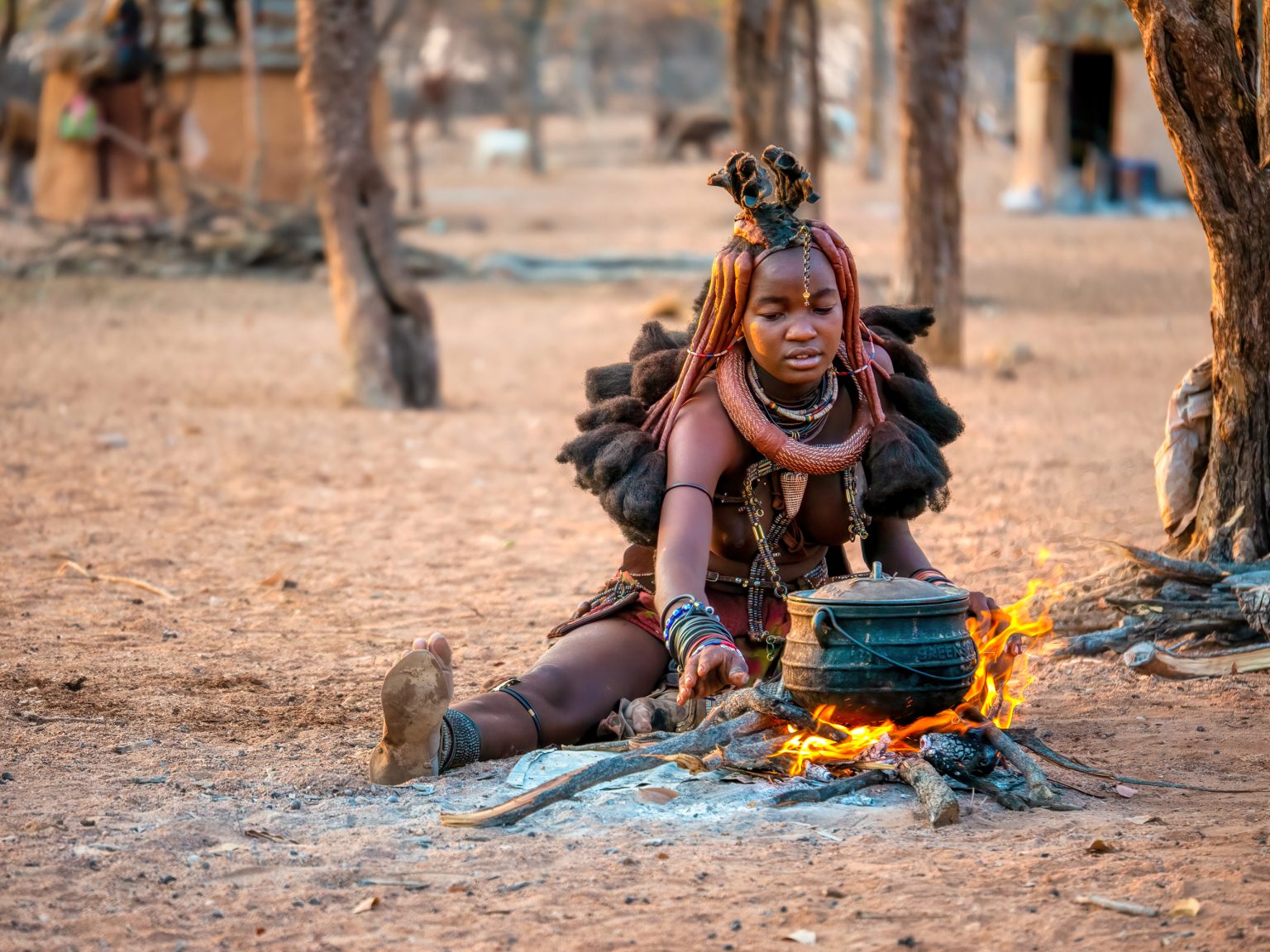
Namibia’s dry regions have diverse food traditions shaped by local resources, pastoralism, gathering, farming, and trade. Namibian desert cuisine includes wild fruits and plants, livestock products, and grain-based dishes, with considerable differences between communities. Exploring traditional food in Namibia reveals how San, Himba, Herero, and other communities use available ingredients, while Kalahari and Namib Desert foods reflect the country’s varied landscapes and cultural heritage.
- The Landscapes That Shape Namibian Food
- San Food Traditions: Hunting, Gathering, and Wild Plants
- Food and Water in Arid Environments
- Himba Food Traditions: Milk, Meat, and Pastoral Life
- Herero Food Traditions and the Importance of Cattle
- Important Ingredients in Namibian Desert Cuisine
- Traditional Cooking Methods
- Food, Ceremonies, and Social Gatherings
- Traditional Drinks and Local Ingredients
- Traditional Ingredients in Modern Namibian Cuisine
- Food Experiences and Responsible Tourism
- Understanding Namibia Through Its Food
The Landscapes That Shape Namibian Food
Climate and Food Resources
Namibia contains several dry environments, including the Namib Desert along the Atlantic coast and the Kalahari region in the east. Their climates and natural resources differ. The Namib is known for its arid conditions and coastal ecosystems, while parts of the Kalahari support grasses, shrubs, wildlife, and seasonal plant foods.
These differences influence local diets. Coastal communities have access to marine foods, while people living inland may rely on livestock, cultivated grains, wild plants, and game where hunting is permitted.
Food traditions also reflect settlement, trade, modern agriculture, and access to shops. There is no single desert diet followed by all Namibian communities.
San Food Traditions: Hunting, Gathering, and Wild Plants
Gathering Wild Foods
San communities have extensive traditional knowledge of local plants, animals, and seasonal conditions. The foods gathered differ according to the region and the plants available.
Depending on the community and location, wild foods may include:
- Wild berries and fruits, collected when they are in season.
- Edible roots and tubers, which can provide food and sometimes moisture.
- Tsamma melons, found in parts of southern Africa, including the Kalahari region.
- Other edible plants identified through local knowledge.
The !nara plant is another notable food resource in Namibia, particularly associated with the coastal Namib and communities such as the Topnaar. Its fruit is not a food that should automatically be attributed to every San community.
Plant identification requires experience. Not every wild fruit, root, or tuber is safe to eat, and traditional knowledge is specific to local environments.
Hunting and Meat Preparation
Hunting has formed part of the subsistence practices of some San communities. Historically, hunting methods and the animals pursued depended on local wildlife, available tools, and community traditions. Contemporary hunting rights and practices are also shaped by wildlife regulations and access to land.
Game meat can include species such as oryx, also known as gemsbok, where legally and locally available. Warthog is another animal found in parts of southern Africa, although its role in particular diets varies.
Traditional methods of preparing meat can include:
- Roasting over an open fire.
- Cooking meat in pots or over embers.
- Drying meat for preservation.
- Preparing meat with locally available ingredients.
Biltong, dried and seasoned meat, is popular in Namibia and southern Africa more broadly, but it should not be treated as exclusive to San cuisine.
Animal materials have historically served several purposes in some communities, including the use of hides for practical items. The specific practices differ, and not every part of an animal is necessarily used in every tradition.
Food Knowledge Passed Between Generations
Knowledge of edible plants, animal behaviour, and seasonal resources can be passed on through observation and practical experience. Older community members may teach younger generations how to identify foods and understand local conditions.
These skills remain important as cultural knowledge, although contemporary San livelihoods vary widely. Many San people today also work in education, tourism, agriculture, wage employment, and other sectors.
Food and Water in Arid Environments
Fruits, Roots, and Seasonal Resources
In very dry environments, certain foods can contribute moisture as well as energy. Some fruits contain substantial water, while roots and tubers may provide both nutrients and moisture depending on the species.
Examples of food resources associated with Namibia’s dry regions include:
- !Nara fruit, associated particularly with the coastal Namib and the Topnaar community.
- Tsamma melons, found in parts of southern Africa, including the Kalahari.
- Edible roots and tubers, depending on local plant species and seasonal availability.
- Wild fruits collected when conditions allow.
The !nara should not be confused with a general Kalahari food or described as equally important to every Namibian desert community.
However, food cannot always replace drinking water. The amount of moisture available from wild plants depends on the species, season, and local conditions. Anyone travelling in remote desert areas still needs to carry adequate drinking water and plan carefully.
Himba Food Traditions: Milk, Meat, and Pastoral Life
Livestock and Everyday Meals
The Himba live mainly in northwestern Namibia, particularly in the Kunene Region. Cattle and goats are important to many Himba households, influencing livelihoods, social relationships, and food traditions.
Himba food traditions are closely connected to pastoralism. Milk and dairy products can be important foods, while meat may be eaten according to household resources and the occasion.
It would be inaccurate to describe rice as one of the three defining traditional Himba foods. Diets vary between families and have changed with access to cultivated foods, shops, and other sources of supplies.
Milk and Omaere
Milk is an important part of food culture among many Himba households. It may be consumed fresh or processed into omaere, a fermented milk product.
Fermentation changes the flavour and texture of milk and can help preserve it for a period, depending on preparation and storage conditions. Traditional dairy preparation is part of a wider pastoral food system in which livestock provide milk and other resources.
The methods used to process milk vary between households. Specific claims about utensils or preparation techniques should be tied to documented local practices rather than assumed to be universal.
Cooking and Meat Preparation
Meat may be cooked over an open fire or prepared using other methods available to the household. The ingredients and cooking methods depend on the occasion, the type of meat, and local preferences.
Food ingredients used in Namibia’s dry regions may include:
- Mahangu, the local name commonly used for pearl millet.
- Beef and goat meat, depending on household resources.
- Milk and fermented dairy products.
- Other cultivated foods obtained through farming or trade.
Mahangu is an important grain in northern Namibia. It should not be described as a wild herb used to thicken every Himba stew. Grain-based foods are more closely associated with farming communities and food traditions in parts of northern Namibia, although access to and use of these foods vary.
Food and Social Occasions
Livestock and dairy products can have economic and social significance within Himba communities. Food may be shared during family gatherings and important events, but its role varies by household and occasion.
Cattle and goats can represent substantial resources, so the decision to slaughter an animal may depend on the purpose of the gathering and the household’s circumstances. It is better to describe these practices in context than to assign a single symbolic meaning to every food.
Herero Food Traditions and the Importance of Cattle
Cattle in Daily and Ceremonial Life
Cattle have significant economic and cultural importance among many Herero communities. They provide milk and represent valuable household resources, and they may play a role in family relationships and ceremonies.
Herero and Himba communities have historical and cultural connections, but their traditions should not be treated as identical. Food practices vary according to household circumstances, region, and contemporary lifestyles.
Meat may be prepared for particular gatherings, celebrations, or family occasions. The frequency and form of these meals depend on the community and the resources available.
Meat and Grain-Based Foods
Namibian meals vary widely, but common ingredients include:
- Beef.
- Goat meat.
- Pearl millet and other grains.
- Maize and maize-based foods.
- Tripe and other meat preparations.
- Vegetables and other ingredients available locally or through markets.
Mahangu porridge is particularly associated with food traditions in northern Namibia, while meat dishes are found across many parts of the country.
Tripe and other meat preparations are eaten in various southern African food traditions. Their presence on a particular menu depends on regional and household preferences rather than a single standardized Herero cuisine.
Food at Ceremonies
Food can form an important part of ceremonies and family gatherings. Meals may accompany speeches, prayers, music, and other activities, depending on the cultural or religious setting.
Specific rules about who prepares, blesses, or serves food vary. Claims that only elders above a certain age perform a particular blessing should not be made without evidence for the community concerned.
Important Ingredients in Namibian Desert Cuisine
Namibia’s food culture brings together wild foods, livestock products, cultivated grains, and ingredients from coastal and urban markets.
Pearl Millet and Mahangu
Pearl millet, commonly called mahangu in Namibia, is an important grain in northern parts of the country. It is used to make porridge and other staple foods.
Mahangu is especially associated with communities in northern Namibia, including Owambo communities. It is not exclusive to desert populations, and its use varies by household and region.
Common uses of pearl millet include:
- Preparing porridge and other staple foods.
- Making traditional grain-based dishes.
- Producing ingredients for some local fermented drinks.
Meat and Biltong
Beef, goat, and game meat all feature in different Namibian food traditions. Their availability depends on location, livelihood, market access, and local customs.
Biltong is a well-known southern African dried-meat product. It is prepared by curing and drying meat, often with salt and seasonings. The exact recipe varies, and biltong is part of a wider regional food culture rather than belonging to one ethnic group.
Nara Fruit
The !nara fruit grows in the coastal Namib environment and is particularly associated with the Topnaar community. The fruit and seeds have traditional food uses, and the plant is adapted to the harsh conditions of its environment.
The fruit and its seeds are notable because:
- They are associated with a specific coastal ecosystem.
- They have traditional food uses among local communities.
- They form part of the region’s wider cultural and environmental heritage.
The !nara should not be presented as a standard ingredient in every Namibian desert community’s diet.
Oryx and Other Game
Oryx, or gemsbok, is a familiar animal of Namibia’s dry regions. Its meat may be used in game dishes where it is legally available.
Game meat is part of Namibia’s wider culinary landscape, but it is not the same thing as a traditional food exclusive to the San or any one community.
Other game species may also be eaten in particular settings, depending on local availability, regulations, and household practices.
Oshikundu and Other Drinks
Oshikundu is a traditional fermented drink associated particularly with Owambo food culture in northern Namibia. It is commonly made using grains such as pearl millet and sorghum, with preparation varying between households.
It should not be described as a universal drink of the San, Himba, Herero, and all desert communities. Namibia’s drinks and food traditions differ substantially by region.
Traditional Cooking Methods
Cooking Over an Open Fire
Open-fire cooking has a place in several Namibian food traditions. Meat may be roasted over a fire, while other foods are prepared in pots or using methods suited to the available equipment.
Cooking methods can include:
- Roasting meat over an open fire.
- Cooking ingredients in pots.
- Preparing food over embers.
- Using suitable traditional or modern cooking equipment according to the setting.
The San, Himba, and Herero do not all use one identical cooking method. Claims that all San people cook by burying food in hot sand, or that every Himba and Herero household uses the same type of hearth, require more specific evidence.
Cooking methods depend on the food, the household, available fuel, and whether the meal is prepared at home, during travel, or for a gathering.
Drying and Preserving Food
Drying can help preserve meat and certain other foods when refrigeration is unavailable. In Namibia, biltong is one familiar example of dried meat.
The drying process and ingredients vary. Not all meat is dried in direct sunlight, and safe preservation depends on suitable preparation and conditions.
Along the Atlantic coast, fish and other seafood are part of local food traditions. Methods of storage and preparation differ from those used for inland livestock and game.
Preparing Food Together
Food preparation may be a shared activity among family members, with responsibilities varying by household and occasion. Cooking can also provide an opportunity to pass on recipes, practical skills, and knowledge about ingredients.
It is inaccurate to claim that women always cook, men only assist, or children always learn through the same activities. Responsibilities vary between families and have changed over time.
Food, Ceremonies, and Social Gatherings
Births, Weddings, and Family Events
Food is often served at important family events, including weddings and other gatherings. The dishes depend on the community, local ingredients, family resources, and religious or cultural customs.
Foods that may be served in particular contexts include:
- Milk and dairy products.
- Porridge and other grain-based dishes.
- Meat prepared for a gathering.
- Other foods chosen by the family or community.
There is no single menu followed at every birth celebration or wedding in Namibia.
Sharing Meals
Sharing food can be an important way to welcome visitors and maintain family and community relationships. The manner of serving a meal depends on local customs and household preferences.
Some gatherings involve shared serving dishes, while others use individual plates. It would be misleading to claim that everyone in Namibia’s desert communities eats from one communal bowl or that eating alone is universally prohibited.
Food at Funerals and Memorial Gatherings
Meals may be provided during funerals and memorial gatherings, allowing family members and visitors to come together. The food served and the ceremonies surrounding it vary according to religious, cultural, and family traditions.
Descriptions of funeral customs should be specific to the community rather than presented as a single desert-wide practice.
Traditional Drinks and Local Ingredients
Fermented Milk and Grain Drinks
Fermented milk products such as omaere are associated with Himba food traditions. Grain-based drinks such as oshikundu are associated particularly with Owambo communities.
These drinks have different ingredients and cultural contexts. They should not be grouped together as if every community in Namibia consumes them in the same way.
Herbal Teas and Plant-Based Drinks
Some plants are used to prepare teas and other drinks in southern Africa. The ingredients vary by region, and the use of a particular plant should be verified before attributing it to a specific desert community.
Rooibos, for example, is strongly associated with South Africa’s fynbos region rather than being a defining traditional drink of Namibia’s desert communities. It may be available in Namibia through trade, but that does not make it a traditional desert beverage there.
Claims that a particular drink is used for meditation or healing should be included only when the relevant cultural practice is documented.
Coffee and Coastal Food Culture
Namibia’s coastal towns, including Swakopmund and Walvis Bay, have food cultures shaped by local seafood, German colonial history, and more recent culinary influences.
Coffee, pastries, restaurants, and other imported food traditions are part of contemporary coastal life. Their presence should not be reduced to a simple story of colonial influence, since modern food culture reflects many different sources and changes over time.
Traditional Ingredients in Modern Namibian Cuisine
Combining Local and Contemporary Foods
Modern Namibian cuisine includes traditional ingredients, regional dishes, game meat, seafood, and international influences. Restaurants in Windhoek and other towns may combine local products with contemporary cooking techniques.
Menus can include:
- Oysters from the Atlantic coast.
- Mahangu-based foods.
- Game dishes such as oryx, where available.
- Contemporary meals combining local ingredients with international techniques.
Availability depends on the restaurant, season, and local supply. These combinations reflect the diversity of Namibia’s food culture rather than one unified desert cuisine.
Renewed Interest in Local Ingredients
Traditional grains, wild fruits, and regional foods can feature in cultural events, local markets, and contemporary cooking. Their use may support food heritage and create opportunities for local producers.
Examples of foods associated with different parts of Namibia and the wider region include:
- Mahangu, used in grain-based dishes in northern Namibia.
- !Nara products, linked to the coastal Namib and local traditions.
- Mopane worms, eaten in parts of southern Africa but not a standard food for every Namibian desert community.
Claims about environmental benefits or health effects should be supported by evidence rather than assumed from the fact that an ingredient is traditional.
Food Experiences and Responsible Tourism
Visitors can explore Namibian food through local restaurants, markets, cultural centres, and community-led tourism initiatives. Experiences vary by region, and not every lodge near Sossusvlei or Etosha offers traditional cooking demonstrations.
When a food experience is available, visitors can ask about:
- The origin of the ingredients.
- How a dish is prepared.
- Which community or region the dish is associated with.
- Whether the experience is organized with local cooks or producers.
- How the activity supports the people involved.
This helps distinguish a community’s everyday food culture from a menu adapted for tourism.
Responsible food tourism should recognize local knowledge and ensure that participating cooks, producers, and communities benefit fairly. Visitors should also respect restrictions on photographing people or observing private family and ceremonial events.
Understanding Namibia Through Its Food
Namibia’s food traditions reflect the differences between the coastal Namib, the Kalahari region, pastoral communities in the northwest, and the agricultural areas of the north. San gathering traditions, Himba dairy practices, Herero livestock culture, and Owambo grain-based foods each have distinct histories and contexts.
Learning about Namibian desert food means understanding these differences rather than combining them into one set of customs. Wild plants, meat, milk, grain, and seafood all have a place in the country’s wider culinary landscape, but their importance varies between communities.
For travellers, exploring local food is an opportunity to learn about Namibia’s geography and cultural diversity. The most useful approach is to ask where a dish comes from, who prepares it, and how it fits into the life of the community that shares it.