
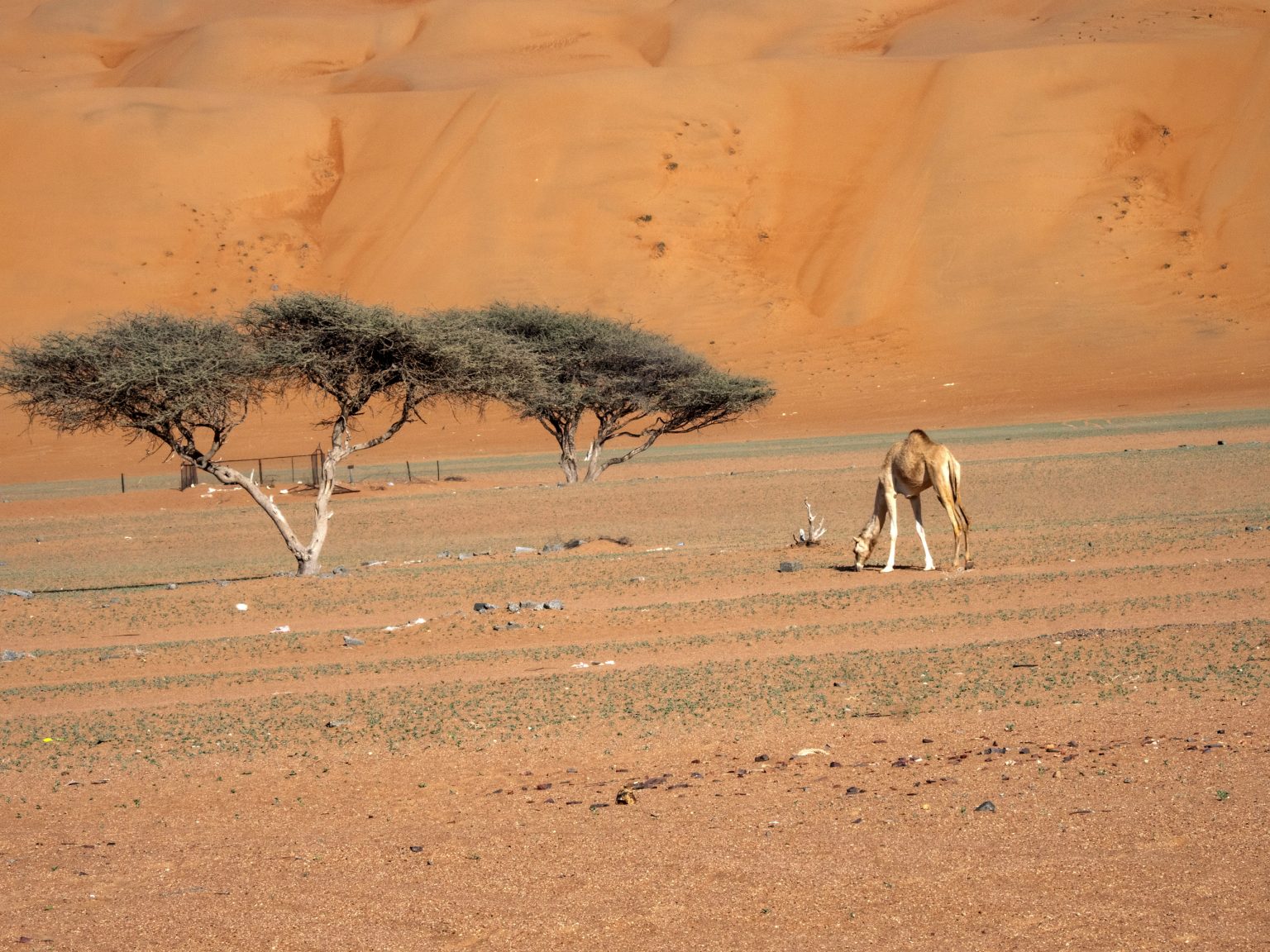
Oman’s deserts cover a wide range of landscapes, from the orange dunes of Wahiba Sands to the vast sands of the Rub al Khali and the rocky plateaus of central Oman. Dry valleys, mountain ranges, gravel plains, and ancient wadis add further variety to the country’s desert environment.
- The Sands and Landscapes of Oman
- Wildlife That Lives in Oman’s Desert
- Desert Plants, Oases, and Traditional Irrigation
- Best Places to See Wildlife and Scenery in Oman’s Desert
- Ways to Experience Oman’s Desert
- Camel Riding in Wahiba Sands
- Desert Camping and Stargazing
- 4×4 Exploration of Remote Valleys
- Wildlife Watching
- Exploring Oases and Traditional Farms
- What the Weather Is Like and When to Go
- How to Stay Safe in Oman’s Desert
- Oman’s Desert Landscapes and Living Heritage
Despite the harsh conditions, the Oman desert supports a diverse range of wildlife and plant life. Arabian oryx, gazelles, foxes, reptiles, desert birds, and hardy shrubs have adapted to limited water and high temperatures, while Omani desert wildlife is closely connected to the country’s traditional Bedouin culture and oasis communities.
The Sands and Landscapes of Oman
Oman’s desert landscapes vary considerably from one region to another.
The Wahiba Sands, also known as the Sharqiya Sands, are among the country’s best-known dune landscapes. The region extends for roughly 180 kilometers and contains large areas of orange and reddish sand. Wind constantly reshapes the dunes, creating long ridges and curved slopes that change with the seasons.
Farther southwest lies Oman’s section of the Rub al Khali, or Empty Quarter. This enormous sand desert contains extensive dune fields and remote terrain with very limited infrastructure. Its scale and isolation make it one of the most demanding desert environments to explore.
Central Oman has a different character. Ancient drainage systems have created wadis, gravel plains, rocky plateaus, and dry valleys. These landscapes are especially important for wildlife because some wadis retain vegetation and underground water even during dry periods.
Oman’s desert regions include:
- Large sand dunes
- Rocky plateaus
- Gravel plains
- Dry wadis
- Seasonal wetlands
- Coastal desert landscapes
- Oasis settlements and palm groves
Oases provide a striking contrast to the surrounding dry terrain. Palm plantations, small farms, springs, and traditional irrigation systems support agriculture and local communities in several parts of Oman.
Wildlife That Lives in Oman’s Desert
Oman’s arid regions support animals that have developed effective ways to cope with heat, scarce water, and limited vegetation.
Arabian Oryx, Gazelles, and Desert Mammals
The Arabian oryx is one of Oman’s most recognizable desert animals. Its white coat and long, straight horns help distinguish it from other antelope species. Once severely threatened in the wild, the Arabian oryx has benefited from conservation programs and protected areas.
Other herbivores found in Oman’s dry landscapes include:
- Arabian gazelles
- Goitered gazelles in suitable areas
- Wild and domestic camels
- Other small desert-adapted herbivores
Camels remain closely connected to Omani desert culture. For centuries, they have been important for transportation, trade, food, and livelihoods in arid regions.
Predators are more difficult to encounter, but Oman is home to species such as:
- Arabian wolves
- Caracals
- Red foxes
- Rüppell’s foxes in suitable desert habitats
These animals are generally elusive and often active during cooler periods or at night.
Birds of the Omani Desert
Oman’s deserts, wadis, mountains, and coastal areas support a wide variety of resident and migratory birds.
Common desert and open-country species include:
- Sand partridges
- Larks
- Wheatears
- Warblers
- Bulbuls
- Palm doves
- Bee-eaters
Birds of prey are also an important part of Oman’s wildlife. Eagles, hawks, kites, buzzards, and owls hunt across open landscapes and rocky valleys.
Falconry has a long cultural history in Oman and remains an important part of the country’s traditional heritage.
During migration seasons, wetlands and coastal areas can attract flamingos, herons, and other waterbirds.
Reptiles and Desert Insects
The warm climate provides suitable conditions for numerous reptiles and insects.
Visitors may encounter:
- Geckos
- Agamas
- Skinks
- Monitor lizards
- Desert snakes
- Horned vipers
- Ants
- Beetles
- Scorpions
Many snakes and smaller reptiles are most active during cooler periods and spend much of the hottest part of the day under rocks or beneath the sand.
Insects are an important part of the desert food chain. Ants, beetles, spiders, and other small creatures provide food for birds, reptiles, and mammals while also contributing to pollination and decomposition.
Desert Plants, Oases, and Traditional Irrigation
Vegetation in Oman’s deserts varies according to rainfall, soil, elevation, and access to groundwater. Plants have developed adaptations that allow them to survive long dry periods.
Common desert vegetation includes:
- Ghaf trees
- Acacia species
- Saltbush
- Wormwood and other drought-tolerant shrubs
- Hardy desert grasses
- Seasonal flowering plants
The desert rose, or Adenium obesum, grows naturally in parts of Oman, particularly in rocky environments. Its thickened trunk and water-storing tissues help it survive dry conditions, while its flowers add seasonal color.
Oman’s oases are especially important for agriculture and local communities. Date palms are among the most valuable crops, providing food, shade, and habitat for birds and insects. Other fruit trees and crops are often cultivated beneath the palm canopy.
Traditional falaj irrigation systems have played an important role in distributing groundwater and spring water to farms and settlements. These systems remain an important part of Oman’s agricultural heritage.
After seasonal rainfall, grasses and wildflowers can appear in some desert and wadi environments, creating short-lived changes in the landscape.
Best Places to See Wildlife and Scenery in Oman’s Desert
Wahiba Sands
Wahiba Sands is one of Oman’s most accessible desert destinations. Visitors can experience large dunes, camel rides, 4×4 excursions, desert camps, and sunset photography.
Rub al Khali
Oman’s section of the Rub al Khali offers a much more remote desert experience. The huge dune fields and limited infrastructure make this region suitable mainly for well-prepared expeditions or guided trips.
Jiddat al Harasis
The Jiddat al Harasis is a vast stony plateau in central Oman. Its open terrain and dry valleys provide habitat for desert wildlife, including Arabian oryx in protected areas and other arid-adapted species.
Wadis and Wetlands of Eastern Oman
Some wadis and seasonal wetland areas in eastern Oman provide important habitats for plants and birds. These environments are especially interesting after rainfall or during periods of bird migration.
Dhofar’s Desert Edge
The Dhofar region changes significantly during the Khareef season from June to September. Seasonal rainfall brings greener vegetation to the mountains and desert margins, creating temporary habitats for plants and wildlife.
Together, these areas demonstrate how varied Oman’s arid landscapes can be, from vast sand dunes and rocky plateaus to seasonal green areas and coastal environments.
Ways to Experience Oman’s Desert
Camel Riding in Wahiba Sands
Camel rides provide a traditional way to experience the dunes of Wahiba Sands. Guided trips can also introduce visitors to aspects of Bedouin heritage and traditional desert life.
Desert Camping and Stargazing
Camping among the dunes allows visitors to experience the desert after sunset. Away from major settlements, clear nights can offer excellent conditions for observing stars and the Milky Way.
4×4 Exploration of Remote Valleys
Four-wheel-drive excursions can reach remote wadis, rocky valleys, springs, and areas where wildlife activity can be observed. Local guides are particularly useful in regions with difficult terrain and limited services.
Wildlife Watching
Protected areas and selected desert regions offer opportunities to search for Arabian oryx, gazelles, foxes, and desert birds. Wildlife sightings are never guaranteed, so patience and responsible observation are important.
Exploring Oases and Traditional Farms
Oasis visits provide an opportunity to see date plantations, traditional farms, and falaj irrigation systems. These landscapes also show how Omani communities have adapted agriculture to an arid environment.
What the Weather Is Like and When to Go
October to April is generally the most comfortable period for exploring Oman’s desert regions. Daytime temperatures are usually more manageable, making activities such as dune driving, hiking, and camel riding easier.
Summer can be extremely hot, particularly in the Rub al Khali and inland desert areas. During this period, early morning and late afternoon are better times for outdoor activities.
Winter nights can become surprisingly cold in the desert, especially when camping, so warm clothing is useful.
Dhofar follows a different seasonal pattern. From June to September, the Khareef season brings moisture and cloud cover to the region, turning parts of the landscape green and changing conditions along the desert margins.
How to Stay Safe in Oman’s Desert
Remote desert travel requires careful preparation, especially outside established tourist areas.
- Carry more water than you expect to need.
- Use sunscreen, protective clothing, and a hat.
- Travel with an experienced guide in remote areas.
- Use a suitable 4×4 vehicle when driving on difficult desert terrain.
- Carry navigation and emergency equipment.
- Avoid walking during the hottest part of the day.
- Wear closed footwear when walking through rocky or sandy areas.
- Do not approach, feed, or disturb wildlife.
- Do not handle unfamiliar plants, reptiles, or insects.
- Check weather and road conditions before setting out.
- Inform someone of your route when traveling far from populated areas.
Sand, heat, and remote terrain can make even short-looking distances difficult. Extra fuel, water, communication equipment, and basic recovery supplies are particularly important for longer desert journeys.
Oman’s Desert Landscapes and Living Heritage
Oman’s deserts are defined by their variety. Wahiba Sands offers sweeping orange dunes, the Rub al Khali brings vast remote sand fields, and the Jiddat al Harasis provides broad stony plains and wildlife habitat. Wadis and oases add another dimension, supporting vegetation, agriculture, and traditional settlements.
Wildlife is equally diverse, from Arabian oryx and gazelles to foxes, birds, reptiles, and insects adapted to extreme conditions. At the same time, camels, falconry, oasis farming, and falaj irrigation remain closely connected to Oman’s desert heritage.
Exploring these landscapes offers more than a dune experience. Visitors can combine wildlife watching, camel rides, desert camping, 4×4 excursions, stargazing, and visits to traditional oases to understand how nature and human life have developed together across Oman’s arid regions.