
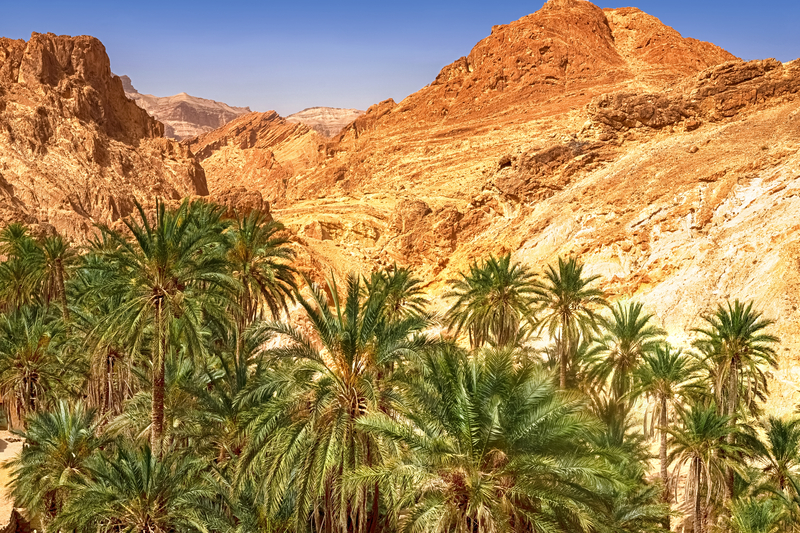
In southern Tunisia, the Sahara stretches across a diverse landscape of sand dunes, rocky plateaus, salt lakes, palm oases, and historic settlements. From the oasis towns of Tozeur and Nefta to the dunes around Douz and Ksar Ghilane, and farther south toward Tataouine, the region offers much more than open sand.
- The Main Desert Landscapes of Tunisia
- Douz and the Grand Erg Oriental
- Ksar Ghilane
- The Grand Erg Oriental
- Chott el Jerid
- The Desert Around Tataouine
- Wildlife of the Tunisian Sahara
- Oasis Life and Agriculture in Southern Tunisia
- Best Places for Desert Nature and Wildlife
- Things to Do in the Tunisian Desert
- When Is the Best Time to Visit the Tunisian Desert?
- How to Stay Safe in the Tunisian Desert
- A Different Side of the Tunisian Sahara
The Tunisian Sahara supports a variety of wildlife adapted to heat and limited water, while oasis agriculture creates pockets of vegetation around towns and settlements. Historic ksour, Berber villages, caravan routes, and traditional desert communities add an important cultural dimension to the landscape.
For travelers, southern Tunisia combines desert wildlife, oasis life, salt flats, geological formations, and Saharan heritage in a relatively compact region.
The Main Desert Landscapes of Tunisia
Southern Tunisia contains several distinct desert environments, each offering a different experience.
Douz and the Grand Erg Oriental
The area around Douz is widely known as the “Gateway to the Sahara.” South of the town, the landscape gradually becomes dominated by sandy terrain connected to the Grand Erg Oriental, one of the major dune systems of the Sahara.
Visitors can explore the dunes by:
- Camel
- 4×4
- Quad bike
- Sandboard
The dunes are particularly attractive around sunrise and sunset, when changing light emphasizes their ridges and slopes.
Ksar Ghilane
South of Douz, Ksar Ghilane combines a palm oasis with a natural hot spring surrounded by the dunes of the Grand Erg Oriental.
The oasis provides water and vegetation in an otherwise arid environment, while the surrounding desert is used for camel trekking, 4×4 excursions, and camping.
The Grand Erg Oriental
The Grand Erg Oriental extends across large areas of southern Algeria and Tunisia. Its dunes vary considerably in size and shape and are continually modified by wind.
The Tunisian section provides opportunities for travelers to experience large-scale sand landscapes without traveling deep into the Algerian Sahara.
Chott el Jerid
Chott el Jerid is a vast salt depression in southwestern Tunisia, located between the regions of Tozeur and Kebili.
The surface contains extensive salt deposits and can change considerably according to seasonal moisture and evaporation. Under certain conditions, shallow water and mineral surfaces create strong reflections and mirage effects.
The Desert Around Tataouine
Farther southeast, the landscape around Tataouine becomes more rocky and mountainous. Dry hills, valleys, plateaus, and eroded formations replace many of the large sandy areas found around Douz.
The region is also known for historic ksour and Berber settlements, where architecture developed in response to the area’s dry climate and terrain.
Wildlife of the Tunisian Sahara
Although the Tunisian desert receives little rainfall, it supports a range of mammals, birds, reptiles, and insects. Many species are most active during the cooler parts of the day.
Mammals of the Desert
The dromedary camel remains one of the most recognizable animals of southern Tunisia. Camels have historically been important for transportation and pastoral life and continue to play a role in desert tourism.
Other desert mammals include:
- Fennec foxes, adapted to sandy environments and mainly active at night.
- Jerboas, small nocturnal rodents known for their powerful hind legs.
- Dorcas gazelles, which survive in suitable remote desert habitats.
- Desert hares, adapted to dry conditions.
- Hedgehogs, which generally become active after dark.
Many of these animals are difficult to see because they avoid the intense daytime heat and spend much of the day sheltering in burrows or shaded areas.
Birds Around Salt Lakes and Oases
Southern Tunisia lies along important bird migration routes between Europe and Africa. Wetlands and seasonal water bodies can become important resting and feeding areas.
Depending on the season and water conditions, visitors may see:
- Flamingos
- Storks
- Herons
- Ducks
- Sandgrouse
- Larks
- Shrikes
- Doves
- Warblers
- Falcons and other birds of prey
The area around Chott el Jerid, as well as palm groves around Tozeur and Nefta, can attract different bird species throughout the year.
Reptiles and Desert Insects
The warm climate supports numerous reptiles, including lizards, geckos, agamas, and desert snakes.
Insects are also an important part of the desert ecosystem. Beetles, ants, spiders, and locusts contribute to nutrient cycling and form part of the food chain for reptiles, birds, and small mammals.
Tracks in the sand can sometimes reveal the presence of nocturnal animals even when the animals themselves remain hidden.
Oasis Life and Agriculture in Southern Tunisia
Water determines where permanent settlement is possible in the Tunisian Sahara. Towns such as Tozeur, Nefta, Douz, and Ksar Ghilane developed around available groundwater and irrigation systems.
The traditional oasis is often organized into several vegetation levels:
- Date palms form the upper layer and provide shade.
- Fruit trees such as figs and pomegranates grow beneath the palms.
- Lower crops can include vegetables, cereals, alfalfa, and other plants suited to local conditions.
Around the oases, travelers may also encounter olive trees, henna, tamarisk, and other drought-tolerant vegetation.
Date palms are particularly important to the economy and landscape of southern Tunisia, with varieties such as Deglet Nour widely associated with the region.
After seasonal rainfall, some desert areas can briefly develop grasses and flowering plants, creating temporary feeding opportunities for insects and other wildlife.
Best Places for Desert Nature and Wildlife
Southern Tunisia offers several destinations where travelers can combine desert scenery with wildlife observation and cultural exploration.
Douz
The dunes south of Douz provide opportunities for camel trekking and 4×4 excursions. Travelers may also explore the surrounding desert tracks and seasonal wetlands.
Ksar Ghilane
The combination of hot spring, palm oasis, and surrounding dunes makes Ksar Ghilane one of the region’s most distinctive desert destinations.
Tataouine and the Surrounding Hills
The Tataouine region offers a different type of desert landscape, with rocky terrain, dry valleys, historic Berber settlements, and traditional ksour.
Chott el Jerid
The salt depression is particularly interesting for landscape photography and birdwatching when seasonal water is present.
Tozeur and Nefta
The palm oases around these towns provide a strong contrast with the surrounding desert and offer opportunities to observe oasis agriculture and birdlife.
Things to Do in the Tunisian Desert
Camel Trekking
Camel excursions from Douz and Ksar Ghilane provide a traditional way to explore sandy landscapes.
Short rides are suitable for travelers with limited time, while overnight treks allow visitors to spend more time in the desert and experience a camp after sunset.
Desert Camping
Desert camps around Douz and Ksar Ghilane commonly offer:
- Traditional meals
- Mint tea
- Local music
- Camel excursions
- Stargazing
Remote camps can also provide opportunities to observe nocturnal wildlife and animal tracks around the dunes.
Explore Date Plantations and Oases
Walking through the oases of Tozeur, Nefta, and Douz shows how irrigation and traditional agriculture support communities in an arid environment.
Visitors can see date palms, fruit trees, agricultural plots, and traditional water-management systems.
Visit Salt Lakes and Rocky Deserts
Exploring Chott el Jerid provides a completely different experience from the sandy dunes. The southern landscapes around Tataouine offer rocky hills, dry valleys, and historic settlements.
Combining these environments gives travelers a more complete picture of Tunisia’s desert geography.
When Is the Best Time to Visit the Tunisian Desert?
The most comfortable period for traveling through southern Tunisia is generally October to April.
During these months:
- Daytime temperatures are more suitable for outdoor activities.
- Nights can be cool, particularly in December and January.
- Wildlife is more likely to be active during the cooler parts of the day.
- Camping conditions are generally more comfortable.
Spring can occasionally bring sandstorms, although conditions vary from year to year.
Travelers visiting during winter should bring warm clothing for desert nights, while those visiting during the warmer months should plan outdoor activities for early morning and late afternoon.
How to Stay Safe in the Tunisian Desert
Desert travel requires preparation, particularly away from major towns and established tourist routes.
- Use experienced local guides for remote areas and dune excursions.
- Carry sufficient drinking water, especially during long drives or outdoor activities.
- Protect yourself from the sun with sunscreen, sunglasses, and a hat.
- Wear suitable footwear for sand, rocks, and uneven terrain.
- Carry a scarf or light covering to protect against sun and blowing sand.
- Avoid approaching wild animals or disturbing their burrows and nesting areas.
- Check fuel levels carefully before leaving towns because services are limited in remote areas.
- Follow local access rules in protected areas and around sensitive wetlands.
- Check weather and road conditions before traveling into remote desert zones.
Most desert wildlife avoids human contact. The best approach is to observe animals from a distance and leave their habitat undisturbed.
A Different Side of the Tunisian Sahara
The Tunisian Sahara is far more varied than a landscape of sand dunes alone. Around Douz and Ksar Ghilane, large dune systems create classic Saharan scenery, while Chott el Jerid introduces vast salt landscapes and seasonal wetlands.
Farther south and east, the terrain around Tataouine becomes increasingly rocky and mountainous, with historic ksour and Berber settlements adding another dimension to the landscape. Around Tozeur and Nefta, irrigated palm oases show how communities have adapted agriculture to an extremely dry environment.
This combination of wildlife, oases, salt lakes, rocky deserts, and cultural heritage makes southern Tunisia one of the most diverse desert regions in North Africa. Rather than offering a single type of Sahara experience, it allows travelers to move through several desert environments within the same journey.