
Morocco’s desert is much more than endless sand. The country’s dry regions include golden dunes, rocky plateaus, mountain valleys, seasonal rivers, and green oases. The Morocco desert landscape changes considerably from the dunes of the Sahara to the dry valleys and plateaus of the south.
- What the Deserts of Morocco Look Like
- Animals That Live in the Moroccan Desert
- Birds Across Morocco’s Desert Landscapes
- Reptiles, Snakes, and Desert Invertebrates
- Plants and Oases in Morocco’s Dry Regions
- Where to Experience Morocco’s Desert Nature
- Erg Chebbi and Merzouga
- Erg Chigaga and M’Hamid
- The Draa Valley and Zagora
- Guelmim and the Southern Desert
- Activities That Connect You With Desert Nature
- Camel Excursions Across the Dunes
- Desert Camping and Stargazing
- Birdwatching Around Oases and Wetlands
- Guided Wildlife Walks
- Weather and the Best Time to Visit
- Staying Safe in the Moroccan Desert
- Discovering Morocco Through Its Desert Landscapes
Around Merzouga and Zagora, travelers can experience classic Saharan scenery, while the areas around M’Hamid, the Anti-Atlas, and the southern hammadas reveal a wider range of dry environments. This variety supports plants and animals adapted to heat, limited water, and large temperature changes, making Moroccan desert wildlife an important part of the country’s natural landscape.
What the Deserts of Morocco Look Like
The dunes of southeastern Morocco are the country’s most recognizable desert landscapes, but they represent only part of its dry environment.
The transition toward the Sahara becomes especially clear around Erfoud and Rissani, leading to the large dunes of Erg Chebbi near Merzouga. Farther southwest, beyond M’Hamid El Ghizlane, Erg Chigaga offers another extensive dune landscape with fewer permanent settlements and a more remote setting.
Beyond the major dune fields, the landscape changes considerably:
- Hammada plateaus consist of broad, rocky surfaces with little vegetation.
- Wadis form dry river valleys that may carry water after seasonal rainfall.
- Rocky valleys and foothills occur around the Anti-Atlas and other mountain areas.
- Seasonal water sources and oases support vegetation and wildlife in otherwise dry surroundings.
The result is a desert environment that changes from sand dunes to gravel plains, rocky valleys, mountain landscapes, and cultivated oases within relatively short distances.
Animals That Live in the Moroccan Desert
Morocco’s dry regions support a range of mammals, birds, reptiles, and smaller desert animals. Their distribution varies according to water availability, vegetation, and terrain.
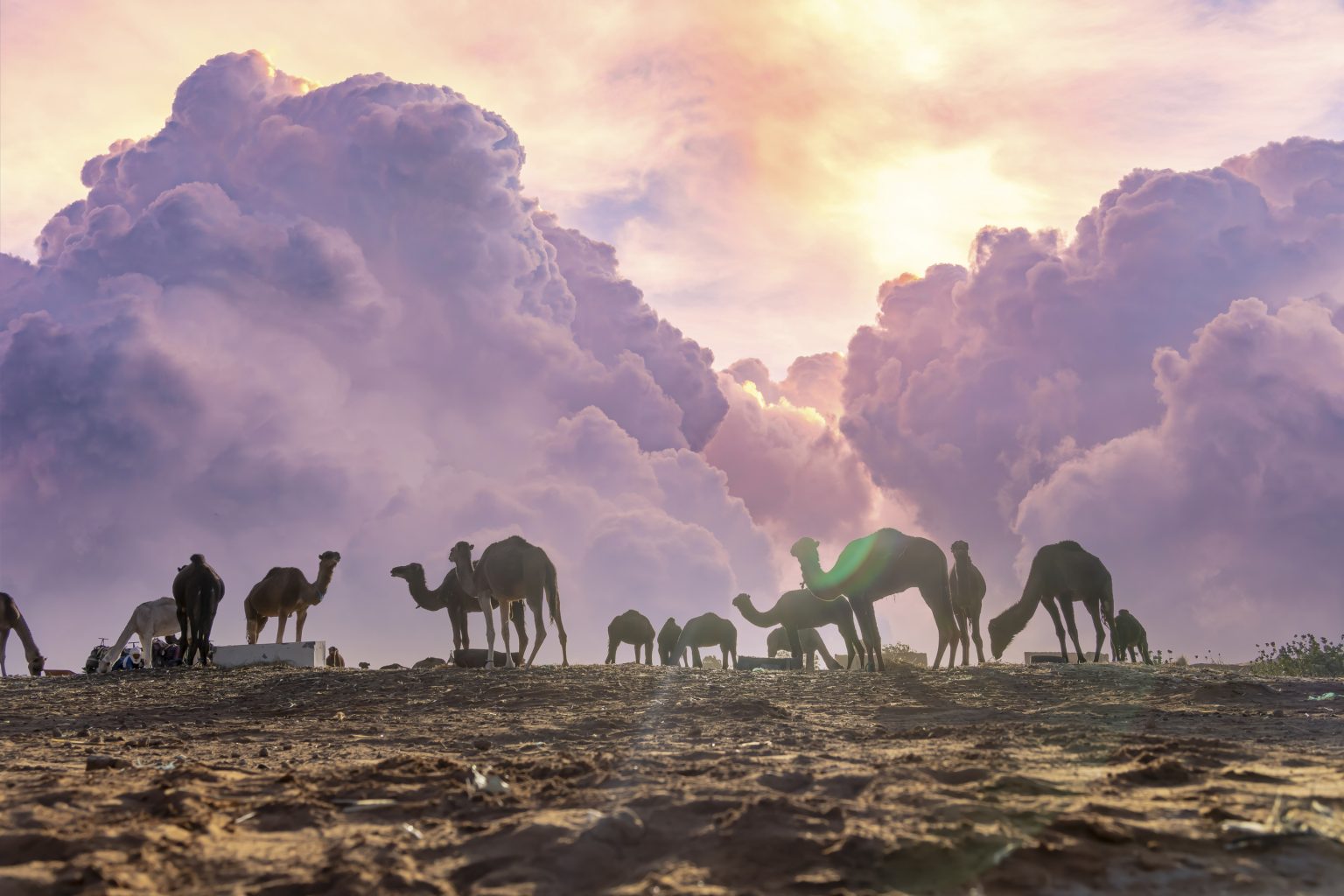
The dromedary camel remains the animal most closely associated with traditional desert travel. For centuries, camels were essential for transportation, trade, and communication across southern Morocco.
Other mammals found in Morocco’s desert and semi-desert environments include:
- Fennec foxes, adapted to sandy environments and mainly active at night.
- Jerboas, small rodents with long hind legs that move by jumping across sandy ground.
- Dorcas gazelles, which can survive in dry environments and are generally more active during cooler parts of the day.
- Rüppell’s foxes, adapted to arid and semi-arid habitats.
- Red foxes, which occur in a wider range of Moroccan environments, including dry regions.
- Barbary sheep, particularly in rocky and mountainous areas.
- Addax and scimitar-horned oryx, historically associated with North African desert environments and now extremely rare in the wild. Conservation and reintroduction programs have been used to support these species.
Wildlife is often difficult to spot because many desert animals are nocturnal or avoid areas with human activity. Tracks, burrows, and other signs can therefore provide better evidence of their presence than direct sightings.
Birds Across Morocco’s Desert Landscapes
Morocco’s southern deserts and wetlands are important for both resident and migratory birds. The country lies along major migration routes between Europe and Africa, allowing many species to pass through during spring and autumn.
Birds that may be encountered in desert and semi-desert areas include:
- Houbara bustards, associated with open arid landscapes.
- Sandgrouse, adapted to dry environments.
- Larks, which are common in open desert and steppe habitats.
- Chats and wheatears, often seen around rocky and sandy areas.
- Storks, ducks, and other migratory birds around seasonal wetlands and water sources.
- Hawks, kites, and eagles, which hunt across open plains and valleys.
Oases and seasonal wetlands can attract particularly large numbers of birds because water and vegetation are limited across the surrounding desert.
Reptiles, Snakes, and Desert Invertebrates
Morocco’s hot and dry environments provide suitable habitats for numerous reptiles and invertebrates.
Visitors may encounter:
- Agamas and other lizards around rocky terrain and dunes.
- Geckos, particularly active during cooler periods.
- Horned vipers and other desert snakes, although sightings are uncommon.
- Scorpions, which generally remain hidden during the hottest part of the day.
- Beetles, ants, grasshoppers, and other insects, which form an important part of the desert food chain.
Early morning is often a good time to notice tracks and small animal activity before rising temperatures and wind erase signs from the sand.
Plants and Oases in Morocco’s Dry Regions
Vegetation is sparse across much of Morocco’s desert, but plants play an essential role in stabilizing soils and supporting wildlife.
Around oases, groundwater and traditional irrigation allow date palms and agricultural crops to grow. The Draa Valley is particularly well known for its long palm groves and agricultural settlements.
Important plants in Morocco’s dry regions include:
- Date palms, which form the basis of many oasis landscapes.
- Tamarisk, which can tolerate dry and saline conditions.
- Artemisia and other hardy shrubs, common across semi-desert and steppe areas.
- Acacia species, which occur in suitable dry valleys and southern regions.
- Argan trees, particularly around the transition between the Anti-Atlas and the more arid southern landscapes.
Oasis vegetation also creates habitat for birds, insects, and small mammals. After seasonal rainfall, grasses and small flowers can appear briefly, especially in areas where enough moisture reaches the soil.
Where to Experience Morocco’s Desert Nature
Morocco offers several destinations where travelers can combine desert scenery with wildlife, oases, and cultural landscapes.
Erg Chebbi and Merzouga
Erg Chebbi is Morocco’s most famous dune field and one of the country’s major desert tourism destinations. Camel excursions, desert camps, and sunrise trips are popular ways to explore the dunes.
The surrounding area also contains rocky plains and seasonal wetlands, which can attract birds and other wildlife.
Erg Chigaga and M’Hamid
Erg Chigaga lies beyond M’Hamid El Ghizlane and offers a more remote dune experience than the highly developed areas around Erg Chebbi.
The route toward the dunes passes through dry landscapes and occasional desert vegetation, while the surrounding area provides opportunities for observing desert tracks and learning about local nomadic and oasis traditions.
The Draa Valley and Zagora
The Draa Valley extends through a long sequence of palm groves, villages, agricultural areas, and dry landscapes. Around Zagora and farther south, the transition between oasis agriculture and the desert becomes particularly clear.
The valley is useful for experiencing both the natural and cultural sides of southern Morocco.
Guelmim and the Southern Desert
South of the Anti-Atlas, around Guelmim and toward the Atlantic coast, dry landscapes combine with mountains, plateaus, and coastal environments.
This wider region can support gazelles, foxes, birds of prey, and other species adapted to semi-arid conditions.
Activities That Connect You With Desert Nature
Camel Excursions Across the Dunes
Camel rides remain one of the most recognizable ways to explore Morocco’s dune landscapes. Around Merzouga and M’Hamid, guided excursions can combine the journey with sunrise or sunset views and visits to desert camps.
Desert Camping and Stargazing
Overnight stays provide a chance to experience the desert after sunset, when temperatures fall and nocturnal animals become more active. Clear conditions can also offer excellent views of the night sky.
Desert camps may include local food, music, and cultural activities, adding a human dimension to the experience.
Birdwatching Around Oases and Wetlands
Oases, seasonal lakes, and palm groves can be productive areas for birdwatching. The Draa Valley and other southern wetlands may attract resident and migratory species depending on the season and water levels.
Guided Wildlife Walks
Local guides can help visitors identify animal tracks, burrows, plants, and other signs of desert wildlife. Guided walks are particularly useful because many species are difficult to spot directly.
Weather and the Best Time to Visit
Morocco’s desert climate varies between regions, but autumn, winter, and spring are generally the most comfortable periods for outdoor activities.
- October to April: Cooler daytime temperatures make this period suitable for hiking, camel excursions, photography, and wildlife observation.
- Winter: Days can be pleasant, but desert nights can become very cold.
- Spring: Temperatures gradually rise, and seasonal vegetation may appear after rainfall.
- Summer: Daytime heat can be intense, so outdoor activities are best planned for early morning or late afternoon.
Dust and sandstorms can occur in open desert areas, particularly during periods of strong winds. Conditions should be checked before traveling into remote areas.
Staying Safe in the Moroccan Desert
The desert requires preparation even when traveling with an organized tour.
- Carry enough water for the planned journey.
- Wear sturdy, closed footwear to protect against hot sand, rocks, and small animals.
- Use sunscreen, sunglasses, and suitable clothing for strong sunlight.
- Travel with an experienced local guide when visiting remote areas.
- Avoid approaching or handling snakes, scorpions, or other wildlife.
- Carry offline maps or GPS when traveling away from towns and established routes.
- Avoid walking alone in remote areas, especially after dark.
- Follow local advice about weather, road conditions, and access to remote desert areas.
Most desert animals avoid people, but keeping a respectful distance is important for both visitors and wildlife.
Discovering Morocco Through Its Desert Landscapes
Morocco’s desert is a diverse environment shaped by dunes, mountains, rocky plateaus, seasonal rivers, and oasis agriculture. Erg Chebbi and Erg Chigaga offer the large sand dunes most travelers associate with the Sahara, while the Draa Valley, Anti-Atlas, and southern hammadas reveal a broader picture of the country’s dry landscapes.
Wildlife can be difficult to see, but gazelles, foxes, desert birds, reptiles, and smaller animals leave signs across the landscape. Oases add another layer, providing water, vegetation, agriculture, and shelter within otherwise arid surroundings.
For travelers, exploring the Moroccan Sahara is therefore not only about crossing sand dunes. It is also an opportunity to experience desert wildlife, oasis life, mountain scenery, traditional routes, and the different environments that make southern Morocco one of North Africa’s most varied dryland regions.