
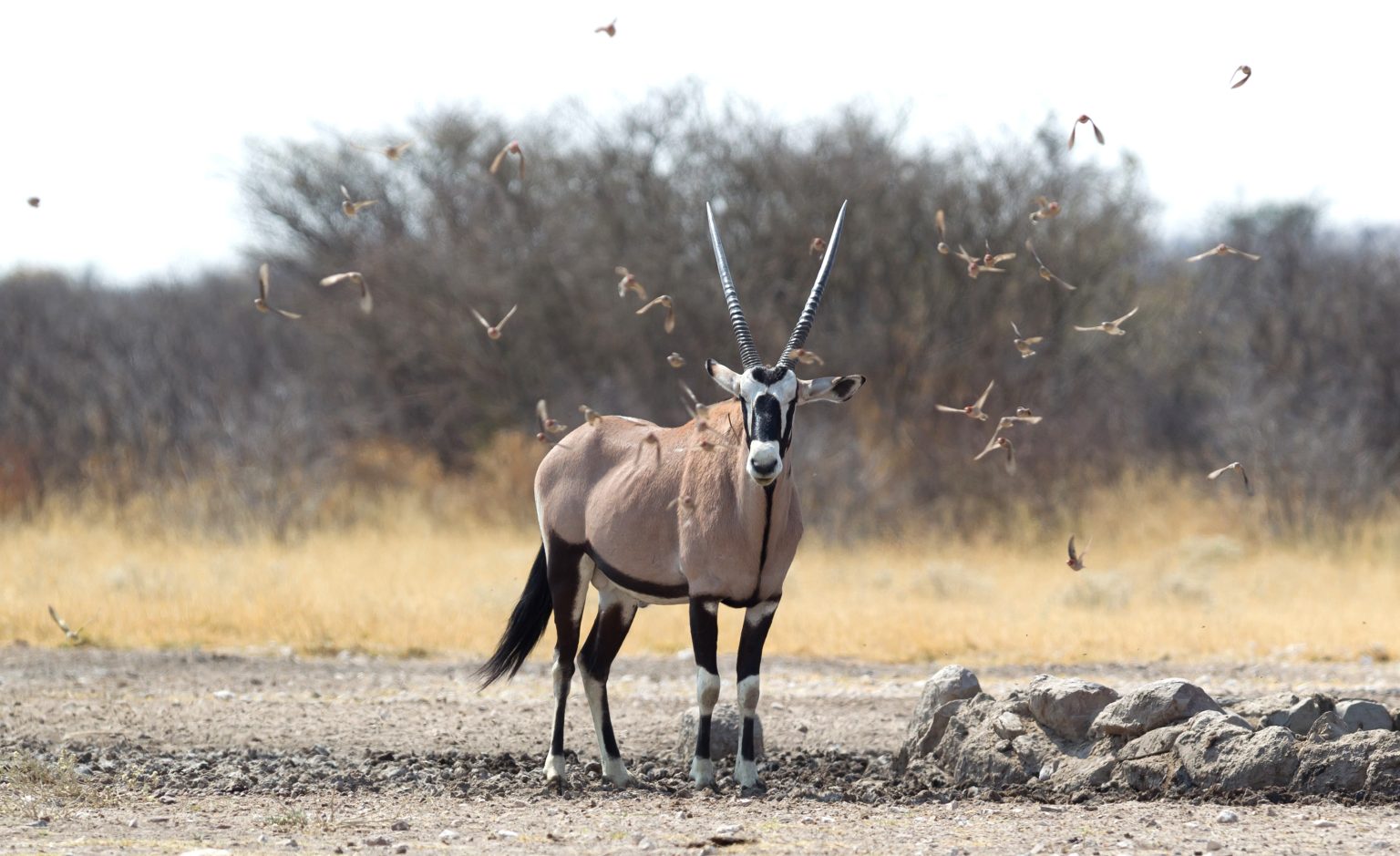
Botswana is one of Africa’s best destinations for wildlife and vast natural landscapes. Much of the country’s dry interior is shaped by the Kalahari Desert, where red sand, grasslands, salt pans, and seasonal wetlands create habitats for a wide range of animals. The Botswana desert is very different from the permanently green landscapes associated with the Okavango Delta and the wetter parts of the Chobe region.
- Botswana’s Desert Scenery
- Botswana’s Wild Animals
- The Birds of Botswana’s Deserts
- Snakes, Reptiles, and Other Small Desert Animals
- Botswana’s Desert Plants
- Botswana’s Best Places to See Wildlife and Nature
- Things to Do in Botswana’s Desert
- Game Drives Across Remote Landscapes
- Watching Meerkats
- Exploring the Makgadikgadi Pans
- Stargazing in the Kalahari
- The Best Time to Visit Botswana’s Desert
- How to Stay Safe in Botswana’s Desert
- A Desert Rich in Wildlife and Open Landscapes
Across these dry environments, visitors can find lions, cheetahs, meerkats, wild dogs, antelopes, and numerous bird species. Ancient travel routes, traditional communities, and archaeological traces also add a cultural dimension to the landscape, making Kalahari wildlife one of the main reasons to explore Botswana’s remote regions.
Botswana’s Desert Scenery
Botswana’s dry landscapes include much more than sand dunes. The Central Kalahari Game Reserve (CKGR) is one of the country’s largest protected areas and covers an extensive landscape of dry river valleys, red sand, open grasslands, and scattered trees such as camelthorn.
During the dry season, the landscape can appear sparse, but it changes considerably after rainfall. Grasses become more abundant, temporary water sources appear, and wildlife becomes more active across the plains.
Farther north, the Makgadikgadi Pans form one of the world’s largest salt-pan systems. During the dry season, large areas can appear as vast white salt flats. After sufficient rainfall, parts of the pans hold shallow water and attract large numbers of animals and birds.
The Nxai Pan National Park is another important dryland destination. It is known for its open plains, wildlife, and the distinctive Baines’ Baobabs, a group of large baobab trees that has become one of the area’s best-known landmarks.
These landscapes show why Botswana’s dry regions are so diverse. Red sand, grasslands, salt pans, seasonal wetlands, and scattered woodland can all occur within the country’s broader Kalahari environment.
Botswana’s Wild Animals
Botswana’s dry landscapes support some of Africa’s most recognizable wildlife. The Kalahari Desert in Botswana provides habitat for large predators as well as numerous grazing and browsing species.
Lions are among the most impressive animals found in the region. They are well adapted to open savanna and semi-arid environments and can cover large distances while searching for prey.
Other major predators include:
- Cheetahs, which use open plains to pursue fast-moving prey.
- Leopards, which are more secretive and often use vegetation or rocky areas for cover.
- African wild dogs, which can travel in coordinated packs across large territories.
- Brown hyenas, which are particularly well adapted to dry environments and are mainly active at night.
Herbivores are equally important to the ecosystem. Depending on the area and season, visitors may encounter:
- Gemsbok (oryx)
- Springbok
- Red hartebeest
- Kudu
- Eland
- Zebra
These animals have different strategies for dealing with heat and limited water. Some obtain much of their moisture from food, while others move between feeding and water areas according to seasonal conditions.
Smaller mammals also play an important role. Meerkats are among the most recognizable species in the Kalahari and often live in social groups, with individuals taking turns watching for predators.
Bat-eared foxes feed heavily on insects and other small invertebrates. Their large ears help them detect prey underground and beneath the surface.
The Birds of Botswana’s Deserts
Botswana is also an excellent destination for birdwatching. The Kalahari and surrounding dry landscapes support a wide variety of resident and migratory species, with more than 250 bird species recorded in parts of the Kalahari region.
Large birds are particularly noticeable across the open plains. These include:
- Ostriches
- Secretary birds
- Kori bustards
Birds of prey are also common in suitable habitats. Tawny eagles, martial eagles, black kites, and other raptors use open areas to search for prey.
The Makgadikgadi Pans become especially important for birds when rainfall creates temporary wetlands. Depending on water conditions, species such as flamingos and pelicans may gather in large numbers.
Smaller desert and savanna birds include sandgrouse, chats, sparrow-larks, and other larks. Early morning is often one of the best periods for birdwatching, when temperatures are cooler and bird activity is high.
Snakes, Reptiles, and Other Small Desert Animals
Botswana’s warm and dry climate supports a variety of reptiles. Visitors may encounter agamas, geckos, and skinks around rocky areas, vegetation, and sandy habitats.
Several snake species are also present, including the puff adder and Cape cobra. These animals generally avoid people, but travelers should never approach, handle, or attempt to identify a snake at close range.
Insects are another essential part of the desert ecosystem. Ants and termites provide food for birds, meerkats, foxes, and other insect-eating animals.
After rainfall, insect activity can increase significantly. This temporary abundance provides an important food source for many species and contributes to the rapid increase in wildlife activity that can follow the rains.
Botswana’s Desert Plants
Although the Kalahari may appear sparsely vegetated during dry periods, its plant life is well adapted to the region’s climate.
The camelthorn tree is one of the most characteristic trees of the Kalahari. Its deep root system helps it survive dry conditions, while its broad canopy provides shade and nesting sites for birds.
Other plants found across Botswana’s dry landscapes include:
- Acacia and other thorn trees
- Drought-tolerant shrubs
- Native grasses
- Salt-tolerant plants around the pans
- Seasonal flowering plants
After significant rainfall, grasses and other vegetation can spread rapidly across areas that were previously dry and brown. Around the salt pans, salt-tolerant plants become particularly important where soil conditions limit other vegetation.
These plants form the foundation of Botswana’s desert ecosystems, providing food and shelter for herbivores, insects, birds, and predators.
Botswana’s Best Places to See Wildlife and Nature
Central Kalahari Game Reserve
The Central Kalahari Game Reserve is one of Botswana’s major destinations for experiencing remote dryland wildlife. Its large open plains provide habitat for lions, cheetahs, gemsbok, springbok, brown hyenas, and many smaller species.
The reserve is particularly suited to travelers looking for a remote safari experience away from more developed tourist areas.
Makgadikgadi Pans
The Makgadikgadi Pans are among Botswana’s most distinctive landscapes. Their appearance changes dramatically with the seasons, from expansive salt flats during dry periods to shallow wetlands after substantial rainfall.
Depending on conditions, visitors may see flamingos, zebras, and other wildlife around the pans.
Nxai Pan National Park
Nxai Pan National Park combines open grasslands, seasonal water sources, wildlife, and the famous Baines’ Baobabs.
The area is particularly interesting after rainfall, when vegetation increases and wildlife activity becomes more noticeable.
Mababe and Khwai
The Mababe and Khwai areas lie in a transition zone between dry woodland, grassland, and wetter habitats associated with the Okavango system. Elephants, lions, leopards, wild dogs, and many bird species can be found here.
These areas demonstrate how Botswana’s dry landscapes can gradually merge into more productive wetland environments.
Things to Do in Botswana’s Desert
Game Drives Across Remote Landscapes
Guided game drives are one of the best ways to explore Botswana’s dry regions. In the Central Kalahari, visitors may encounter lions resting beneath trees, gemsbok crossing open plains, or cheetahs moving through grassland.
Because wildlife is free to move across large territories, sightings are never guaranteed, but this is part of the appeal of traveling through remote wilderness.
Watching Meerkats
Meerkats are one of the Kalahari’s most recognizable small mammals. In areas where habituated groups are visited by guides, travelers can observe their social behavior and daily routines without disturbing them.
Early morning is often a good time to see them emerge from their burrows and begin foraging.
Exploring the Makgadikgadi Pans
Walking or driving through the Makgadikgadi Pans offers a completely different experience from a traditional safari. When conditions are dry, the enormous salt flats create wide open views. After rainfall, the landscape can become a temporary wetland supporting wildlife and birds.
Stargazing in the Kalahari
Remote parts of Botswana’s desert have very little artificial light, creating excellent conditions for stargazing. On clear nights, the Milky Way can be highly visible, making the Kalahari an attractive destination for night-sky photography.
The Best Time to Visit Botswana’s Desert
Botswana’s climate changes significantly between the dry and wet seasons.
The period from May to September is generally cooler and drier and is often considered one of the best times for wildlife viewing. Vegetation is less dense, and animals may be easier to spot around remaining water sources.
The wet season, generally from November to March, brings higher temperatures and rainfall. Temporary pans and waterholes can fill, grasses grow rapidly, and migratory birds return to suitable habitats.
Wildlife movements also change with the seasons. Travelers visiting during the rainy period may see greener landscapes, young animals, migratory birds, and dramatic thunderstorms.
Even during warmer months, temperatures can fall considerably at night, so visitors should be prepared for cooler evenings and early mornings.
How to Stay Safe in Botswana’s Desert
Remote travel in Botswana requires preparation, particularly in areas with limited services.
Travelers should:
- Carry sufficient drinking water for the planned journey.
- Use a qualified guide when visiting remote or unfamiliar areas.
- Keep a safe distance from all wild animals.
- Follow park and reserve regulations.
- Carry suitable 4×4 equipment when driving in remote terrain.
- Check road and weather conditions before departure.
- Avoid leaving vehicles or campsites without understanding the local wildlife risks.
- Protect themselves from strong sun and heat during the day.
Wild animals should never be approached or fed. Even species that appear calm can react unpredictably when they feel threatened.
Remote areas can also have limited mobile coverage, so travelers should not rely entirely on a mobile phone for navigation or emergencies.
A Desert Rich in Wildlife and Open Landscapes
Botswana’s desert is defined by more than its red sand. Its dry landscapes include grasslands, salt pans, seasonal wetlands, thorn trees, and open plains that support a remarkable variety of wildlife.
Lions and cheetahs move across the Kalahari, meerkats emerge from their burrows, flamingos gather around temporary wetlands, and elephants move through the transition zones between dry woodland and the Okavango system.
For travelers interested in wildlife, remote landscapes, and seasonal changes, Botswana offers an unusually diverse desert experience. The Kalahari, Makgadikgadi, Nxai Pan, and surrounding dry regions each reveal a different side of the country’s natural environment.