
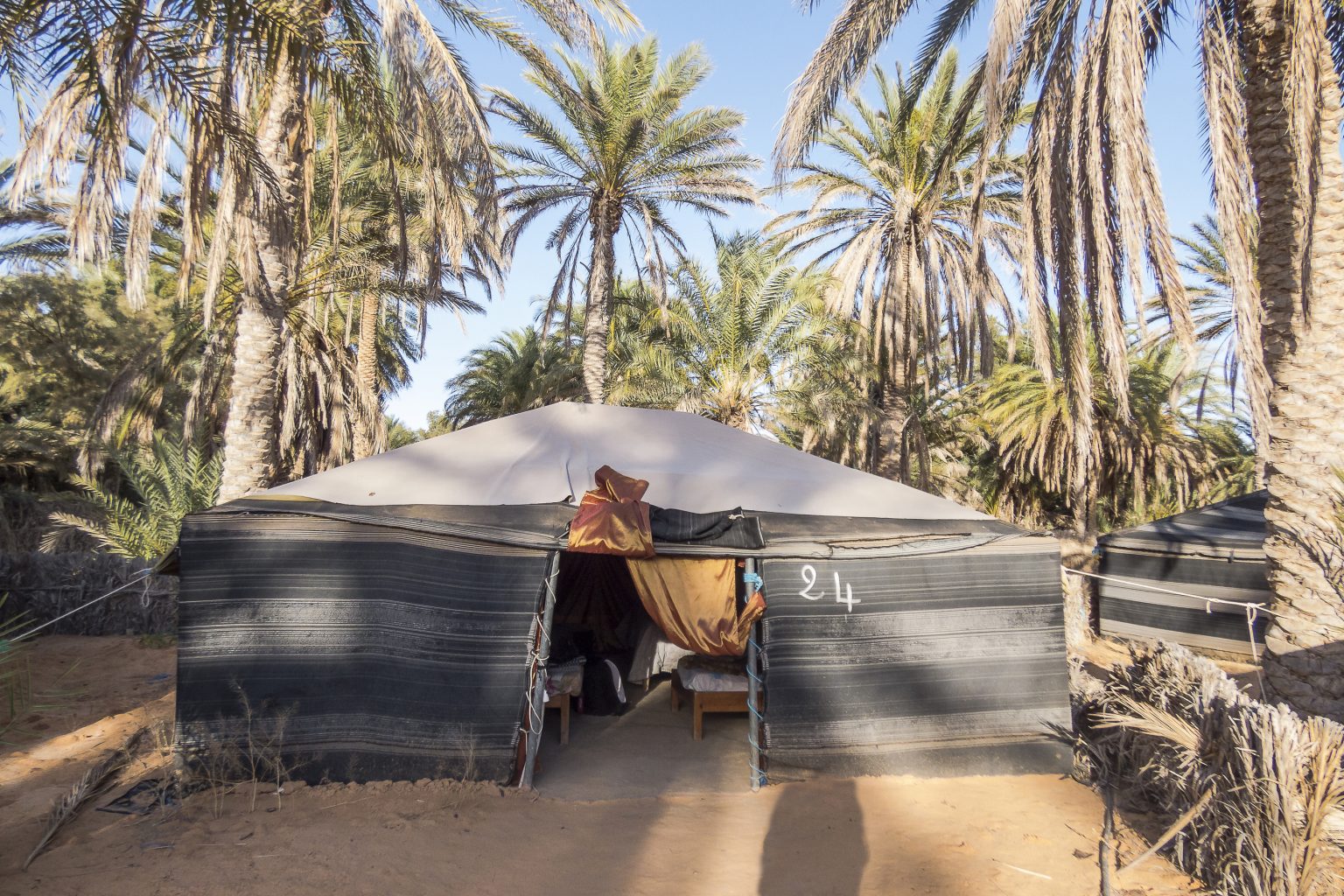
The dunes of the Tunisian Sahara offer a different experience after sunset. As daylight fades, the sand changes color, temperatures begin to fall, and the night sky becomes a highlight of an overnight desert stay.
- Why Camping in the Tunisian Desert Is Special
- Best Desert Camps and Camping Areas in Tunisia
- Ksar Ghilane Oasis
- Zmela Camp South of Ksar Ghilane
- Camp Mars in Tembaïne
- Douz and Its Surrounding Desert
- What to Do While Camping in the Sahara
- What to Bring for Desert Camping
- Best Time to Camp in the Tunisian Sahara
- A Two-Day Desert Camping Experience from Douz to Ksar Ghilane
- Mindful Camping in the Sahara
- Plan Your Tunisian Sahara Camping Trip
Camping in southern Tunisia can mean sleeping in a comfortable tented camp near an oasis, staying at a remote desert camp surrounded by dunes, or joining a guided excursion with a night spent outdoors. Destinations such as Ksar Ghilane, Douz, and Tembaïne offer different ways to experience the Sahara, depending on how far you want to travel and the level of comfort you prefer.
This guide covers the main camping areas, activities, seasonal conditions, and practical advice for planning a Tunisian Sahara camping trip.
Why Camping in the Tunisian Desert Is Special
Southern Tunisia includes part of the Grand Erg Oriental, a vast sand-sea region extending across national borders. Its landscapes range from accessible oases and sandy tracks to remote dune fields that require organized transport and careful preparation.
Reasons to consider an overnight desert stay include:
- Dune landscapes: Explore sandy ridges and open desert scenery, especially around Ksar Ghilane and more remote areas.
- Night-sky viewing: Camps away from bright artificial lighting can offer good stargazing when the sky is clear.
- Different accommodation styles: Choose between permanent tented camps, more basic desert camps, and organized bivouac experiences.
- Outdoor activities: Depending on the location and provider, activities may include camel rides, 4×4 excursions, and walks across the dunes.
- Local hospitality: Meals and arranged cultural experiences can introduce visitors to regional food and aspects of life in southern Tunisia.
Camping conditions vary considerably. A camp near an oasis may have road access and established facilities, while a remote camp can require a long journey across desert tracks. Confirm the exact location and access arrangements before booking.
Best Desert Camps and Camping Areas in Tunisia
Ksar Ghilane Oasis
Ksar Ghilane is an oasis on the eastern edge of the Grand Erg Oriental. It is known for its palm grove, warm natural spring, surrounding dunes, and the nearby Roman fort of Tisavar.
The oasis is one of the more accessible places to experience the Tunisian Sahara, making it a practical option for travelers who want a desert overnight stay without committing to a long expedition into remote dunes.
Highlights include:
- Tented accommodation near the oasis.
- Access to the natural warm spring.
- Camel rides and other activities offered by local operators.
- Opportunities to walk among the nearby dunes.
- Visits to the remains of the Roman fort of Tisavar, subject to access and conditions.
Best for: First-time desert visitors, couples, photographers, and travelers who want a combination of comfort and outdoor activities.
Campement Yadis Ksar Ghilane
Campement Yadis Ksar Ghilane is an established tented accommodation option in the oasis. Published descriptions have listed private bathrooms, air conditioning or heating, and a restaurant, although current room features and services should be confirmed directly.
Before booking, check:
- Which facilities are included in your selected tent category.
- Whether meals are included.
- The availability of excursions and any extra charges.
- Current access arrangements and cancellation terms.
This is an option for travelers who want a more comfortable stay near the oasis rather than a basic bivouac far out in the dunes.
Zmela Camp South of Ksar Ghilane
Campement Zmela is located south of Ksar Ghilane, near the dunes of the Grand Erg Oriental. The camp lists tents, bungalows, and pitches for visitors bringing their own camping equipment. Activities such as camel trekking and 4×4 excursions are available by prior arrangement.
Possible features include:
- Different accommodation options, from tents to bungalows.
- Meals prepared with local ingredients, depending on the booking package.
- Camel rides and guided desert excursions arranged in advance.
- Access to the surrounding dunes and desert scenery.
The approach includes a desert track, so confirm transport with the camp before traveling. Do not assume that a standard rental car can reach the site independently.
Best for: Travelers who want to stay closer to the dunes while having accommodation and activities arranged through one provider.
Camp Mars in Tembaïne
Camp Mars is located in the Tembaïne area of southern Tunisia, not at Ksar Ghilane. It should therefore be treated as a separate destination when planning a desert itinerary.
The camp offers tented accommodation and organized activities. Its remote setting makes it more suitable for travelers who are prepared to arrange transport and allow sufficient time for the journey.
Potential features include:
- Standard and superior tent accommodation.
- Organized excursions and outdoor activities.
- Meals and other services according to the selected package.
- A setting suited to travelers seeking a more remote desert experience.
Before booking, confirm the route, transfer arrangements, meal inclusions, and available activities directly with the camp. Remote access can involve long stretches of desert track, so independent driving should not be attempted without appropriate preparation and authorization.
Best for: Travelers seeking a more remote camp experience and willing to plan around the longer journey.
Douz and Its Surrounding Desert
Douz is a useful base for exploring southern Tunisia. The town offers accommodation, local services, and access to desert excursions, making it a practical starting point for travelers who want to combine a town stay with an overnight camp.
Depending on the provider, visitors may arrange:
- Guided 4×4 excursions into the desert.
- Camel rides and short dune walks.
- Overnight stays at camps outside town.
- Multi-day trips to more remote areas.
The facilities and atmosphere vary between camps near Douz and those farther into the desert. Ask how long the transfer takes, whether the camp is inside the dunes or near the desert edge, and what is included in the price.
Best for: Travelers who want access to local services and a flexible starting point for desert excursions.
What to Do While Camping in the Sahara
The activities available depend on the camp, season, route, and local conditions. Many can be arranged through accommodation providers or licensed local operators.
Camel Trekking
Camel rides offer a slower way to explore suitable dune areas. Options range from short rides to longer excursions arranged by local guides.
Before booking, ask about the duration, route, animal care, and whether the activity is suitable for children or visitors with mobility concerns.
4×4 Desert Adventures
Guided 4×4 trips can reach areas that are difficult to access on foot. Depending on the itinerary, excursions may include dune viewpoints, desert tracks, and remote landscapes.
Choose an experienced operator and confirm whether the price includes transport, a guide, and any required access arrangements.
Sandboarding
Sandboarding may be available on suitable dunes near some camps. The activity depends on the terrain and the provider, so confirm whether boards and instruction are supplied.
Wear appropriate footwear and follow the guide’s safety instructions. Avoid steep or rocky slopes and never assume that every dune is safe for riding.
Stargazing
Remote camps can provide opportunities to observe stars and constellations away from strong artificial lighting. Visibility depends on the weather, dust, and moonlight.
For the best chance of seeing faint stars, consider dates near the New Moon and ask whether your camp has a dark outdoor viewing area.
Local Food and Cultural Experiences
Depending on the host and package, an overnight stay may include traditional Tunisian dishes, tea, music, or a guided visit with local residents.
Cultural traditions vary across southern Tunisia, including among Amazigh communities and other local groups. Ask your host about the experience rather than assuming that every camp follows the same customs.
What to Bring for Desert Camping
Conditions can change between daytime and night, and remote camps may have fewer shops and services than towns.
Essential Items
- Lightweight clothing that protects your skin from the sun.
- A warm jacket and extra layers for cold evenings.
- A hat, sunglasses, and sunscreen.
- A scarf or other protection against blowing sand.
- Comfortable walking shoes.
- A flashlight or headlamp.
- Drinking water and any personal medication.
- A phone charger or power bank.
- Personal toiletries and any items not supplied by the camp.
Useful Extras
- A camera and tripod for night-sky photography.
- Binoculars for observing the landscape and wildlife from a distance.
- A small daypack for excursions.
- A reusable water bottle.
- A downloaded map or offline navigation app.
Check the forecast before departure and pack for the expected overnight low rather than relying on daytime temperatures. Cold desert nights can be uncomfortable without suitable layers, especially during winter.
Best Time to Camp in the Tunisian Sahara
Autumn, winter, and spring are generally more comfortable for desert activities than the hottest summer months. However, temperatures and conditions differ between Douz, Ksar Ghilane, Tembaïne, and other parts of southern Tunisia.
October to November
These months can offer warm days and more manageable conditions for outdoor activities than midsummer. They are a useful period for camel rides, desert walks, and overnight stays, although weather can vary.
December to February
Winter often brings comfortable daytime conditions, but nights can be cold. Bring a proper jacket and confirm the type of bedding and heating, if any, provided by your accommodation.
March to May
Spring can be suitable for desert travel, particularly earlier in the season. Temperatures rise as summer approaches, so plan demanding activities for the cooler parts of the day.
June to September
Summer heat can become severe in southern Tunisia. Long excursions and strenuous activities may be uncomfortable or unsafe during the hottest hours.
If you travel in summer, confirm the operator’s heat precautions, arrange sufficient water, and follow local advice about the timing of activities.
Best overall approach: Choose your dates according to the local forecast and the activities planned. There is no single temperature range that applies to every desert location or every day.
A Two-Day Desert Camping Experience from Douz to Ksar Ghilane
This sample itinerary combines road travel, an overnight stay, and time to explore the oasis. It assumes that transport and accommodation have been arranged in advance.
Day 1: Travel to Ksar Ghilane
Depart Douz with enough time for the road journey and any planned stops. The route and travel time depend on the road chosen and current conditions.
On arrival:
- Check in at your selected camp.
- Explore the oasis and surrounding area.
- Arrange a camel ride or guided excursion if available.
- Watch the sunset from an appropriate viewpoint.
- Enjoy dinner and spend the evening stargazing if conditions are clear.
If you intend to visit a more remote camp beyond the oasis, arrange the transfer in advance rather than attempting to reach it independently.
Day 2: Explore the Oasis and Return
Begin with breakfast and an early walk while temperatures are more comfortable.
Depending on access and your interests, you may:
- Visit the natural warm spring.
- Arrange a short camel ride or guided excursion.
- Explore the area around the oasis.
- Visit the Roman fort of Tisavar if conditions and access allow.
Return to Douz with sufficient time for the journey. A camel trek all the way from Douz to Ksar Ghilane should not be treated as a standard one-day activity; longer camel-supported journeys require a specific itinerary and advance arrangements.
Mindful Camping in the Sahara
The desert environment is fragile, and remote areas may have limited facilities for waste disposal and water supply. Visitors can help reduce their impact by following a few practical principles.
- Take all rubbish away and use designated waste facilities.
- Use fires only where permitted and follow the camp’s instructions.
- Avoid damaging dunes, vegetation, or archaeological sites.
- Respect wildlife and observe animals from a safe distance.
- Choose reputable local guides and accommodation providers.
- Ask before photographing residents or cultural activities.
- Use water responsibly and avoid unnecessary waste.
- Follow access restrictions and current travel guidance for southern Tunisia.
Responsible travel includes respecting the people who live and work in the region, as well as the landscape itself.
Plan Your Tunisian Sahara Camping Trip
The Tunisian Sahara offers several types of overnight experience, from the accessible oasis of Ksar Ghilane to camps farther into the dunes around Tembaïne. Douz is a practical base for arranging excursions, while each camp differs in its facilities, access requirements, and activities.
Before booking, confirm the exact location, transport arrangements, accommodation facilities, and included activities. Check current weather and travel advice, especially if your itinerary includes remote desert tracks.
With sensible preparation and respect for local communities, camping in southern Tunisia can provide a rewarding way to explore the dunes, discover the oasis landscape, and spend a night beneath the desert sky.