
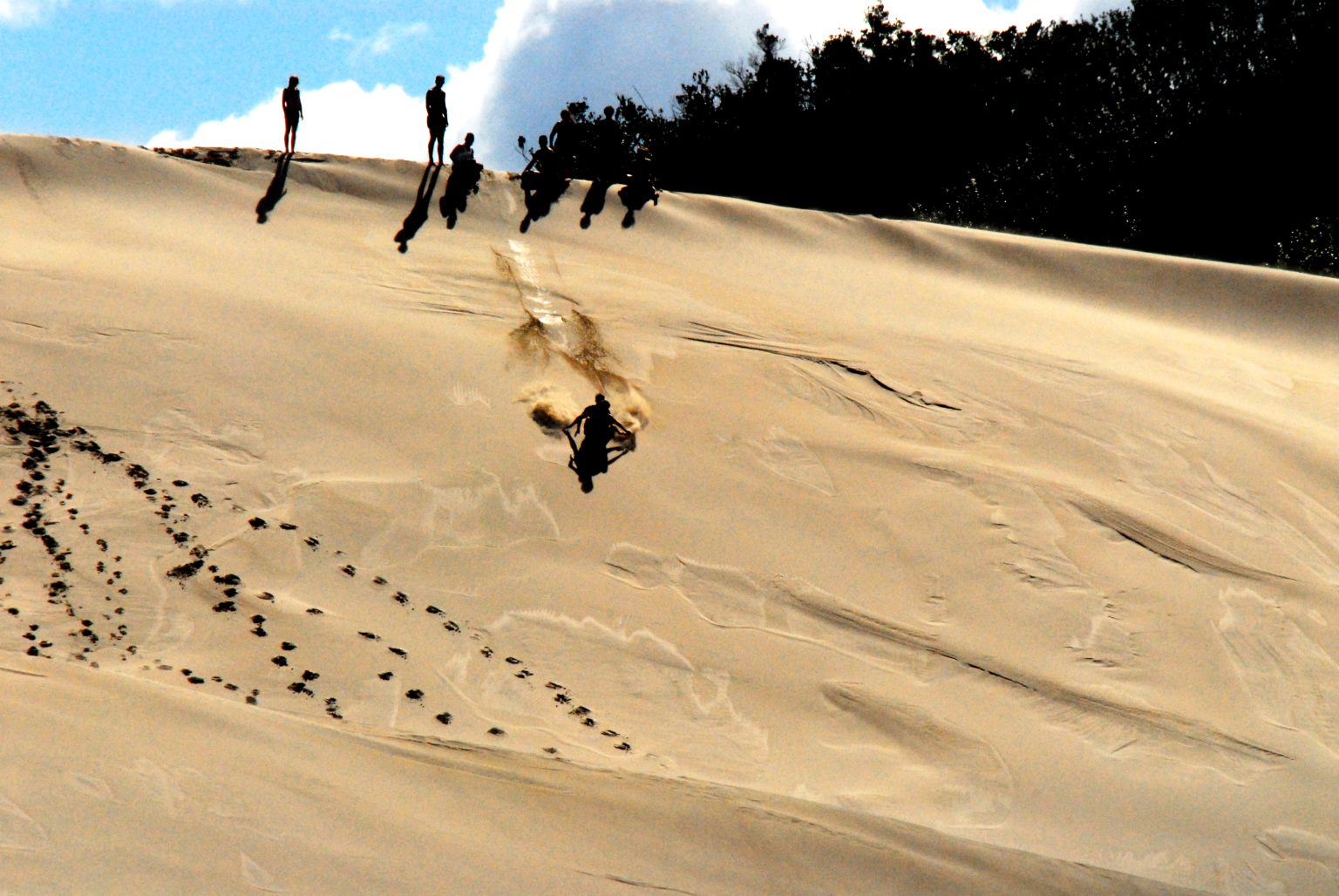
Sandboarding in South Africa offers an active way to explore the country’s coastal dunes and arid landscapes. From the white sands of Atlantis near Cape Town to the extensive dunes along the Sundays River and the quieter landscapes of the Northern Cape, several destinations offer opportunities to slide down natural sand slopes.
- Why Sandboarding in South Africa Is Different
- Best Places to Go Sandboarding in South Africa
- Atlantis Dunes Near Cape Town
- Sundays River and the Alexandria Dune Field
- Witsand Nature Reserve in the Northern Cape
- Silversands at Betty’s Bay
- Northern Cape Dunes and the Kalahari Region
- Types of Sandboarding You Can Try
- What to Bring for Sandboarding
- Best Time to Go Sandboarding in South Africa
- Safety and Environmental Care
- Sandboarding Prices and Tours
- A Two-Day Sandboarding Itinerary
- Option 1: Cape Town and the Western Cape Coast
- Option 2: Sundays River and the Eastern Cape
- Planning a Northern Cape Extension
- Discover South Africa’s Dunes on a Sandboard
The experience combines balance, speed, and outdoor exploration. Beginners can start on manageable slopes, while experienced riders may prefer longer descents where conditions allow. Whether you are planning a short activity near Cape Town or a longer trip through South Africa’s dry interior, choosing the right location is essential for a rewarding sandboarding adventure in South Africa.
This guide covers the main destinations, types of sandboarding, equipment, seasonal conditions, safety advice, and practical planning tips for exploring the country’s dunes.
Why Sandboarding in South Africa Is Different
South Africa’s sandboarding destinations vary considerably. Coastal dunes are shaped by wind and ocean conditions, while inland sandy landscapes have their own terrain, vegetation, and climate. This variety allows travelers to combine sandboarding with coastal sightseeing, wildlife trips, or journeys through the country’s drier regions.
Some locations have established operators that provide boards, introductory lessons, and guided sessions. Others require more advance planning, and access may be restricted by conservation rules or private land arrangements.
The main attractions of sandboarding in South Africa include:
- Coastal scenery: Some dunes offer views of rivers, beaches, or the Atlantic and Indian Ocean coastlines.
- Different riding styles: Depending on the location and equipment, visitors may try standing, sitting, or lying-down descents.
- Options for beginners: Guided sessions can introduce newcomers to the basics on suitable slopes.
- Outdoor exploration: Sandboarding can be combined with sightseeing, river excursions, and other activities.
- Regional variety: Destinations range from dunes near Cape Town to sandy landscapes in the Northern Cape.
Sandboarding does not require a motorized vehicle, but the surrounding environment still needs protection. Coastal dune vegetation, wildlife habitats, and protected water resources can be vulnerable to disturbance. Always use designated riding areas and follow local regulations.
Best Places to Go Sandboarding in South Africa
Atlantis Dunes Near Cape Town
The Atlantis Dunes, within Witzands Aquifer Nature Reserve north of Cape Town, are among South Africa’s best-known sandboarding destinations. Their pale sand and rolling slopes make them a popular setting for organized outdoor activities.
The reserve supports sandboarding alongside other recreational activities, including designated off-road experiences. Its dune environment also contains sensitive vegetation and wildlife, so visitors must follow the reserve’s rules. <Cite refs={[“turn445458search1″,”turn445458search2”]}/>
Sandboarding experiences here may include equipment, instruction, and guided descents. However, the exact package, transport arrangements, and equipment supplied depend on the provider.
Atlantis is a practical option for travelers staying in Cape Town who want to experience the dunes without taking a long road trip.
Before visiting, remember to:
- Check whether your booking includes the required reserve permit.
- Confirm whether transport from Cape Town is included.
- Wear the protective equipment required by the operator.
- Book ahead, as visitor limits and operating rules may affect availability.
- Follow instructions about where sandboarding is permitted.
Morning sessions can be comfortable, but wind, temperature, and operating schedules vary. Check the forecast and your operator’s advice before setting out.
Sundays River and the Alexandria Dune Field
The Alexandria Dune Field, near the Sundays River in the Eastern Cape, offers an alternative to the dunes around Cape Town. The area is associated with extensive coastal sands and organized sandboarding excursions that combine riding with a short boat journey.
Local operators offer guided sessions with equipment and introductory instruction. Depending on the provider, visitors may be able to choose between standing boards and boards designed for sitting or lying down. <Cite refs={[“turn445458search0″,”turn445458search6″,”turn445458search7”]}/>
This destination is particularly useful for travelers exploring the Sundays River Valley or visiting the Addo Elephant National Park area. The town historically known as Port Elizabeth is now officially called Gqeberha.
Activities to consider include:
- Sandboarding or sand sledding: Choose the format offered by the operator and suited to your experience.
- Boat transfers: Some excursions include a short river journey to reach the dunes.
- River cruises: These can provide an alternative for companions who prefer sightseeing to riding.
- Wildlife and nature excursions: The wider region offers other activities that can be arranged separately.
Advance booking is advisable because access to the dunes may depend on boat operations, weather, and the provider’s schedule. Do not assume that every excursion includes food, drinks, or transport from nearby accommodation.
Witsand Nature Reserve in the Northern Cape
Witsand Nature Reserve, in the Northern Cape, is known for its pale dunes and the phenomenon often called the “roaring sands.” Under certain conditions, moving dry sand can produce a low, rumbling sound.
The reserve provides a different setting from the coastal dunes near Cape Town. Visitors interested in sandboarding should confirm current arrangements with the reserve or a local operator, including whether boards are available for hire and which areas are open for riding.
A visit may appeal to travelers exploring the Northern Cape’s dry landscapes, although the journey requires more planning than a short excursion from a major city.
Useful preparations include:
- Confirming reserve access and any applicable fees.
- Checking whether sandboards can be rented on arrival.
- Bringing sufficient water, sun protection, and food for the planned outing.
- Arranging accommodation and transport in advance if staying overnight.
- Checking road conditions before traveling through remote areas.
Witsand is a nature reserve, so visitors should remain within permitted areas and avoid disturbing vegetation or wildlife.
Silversands at Betty’s Bay
The Silversands area at Betty’s Bay, in the Overberg region of the Western Cape, is another coastal location associated with sandboarding. It offers an opportunity to experience sandy slopes within a wider coastal landscape.
Conditions and access can vary, so visitors should check local guidance before planning a session. Do not assume that every dune is open for riding or that equipment hire and lessons are available on site.
The surrounding area can also be explored for its coastal scenery. Stony Point Nature Reserve, known for its African penguin colony, is a separate attraction nearby and can be included in a broader visit where opening times and access arrangements permit.
For a trip to Betty’s Bay, consider:
- Checking local guidance on suitable sandboarding areas.
- Confirming whether you need to bring your own board.
- Avoiding dune vegetation and protected sections.
- Keeping a safe distance from wildlife.
- Allowing time for other coastal attractions without rushing the activity.
Betty’s Bay is best treated as a coastal excursion rather than a guaranteed alternative to a fully equipped commercial sandboarding centre.
Northern Cape Dunes and the Kalahari Region
The Northern Cape contains extensive dry landscapes and several destinations associated with dune activities. Areas around Kakamas and Witsand are mentioned by regional tourism sources as sandboarding destinations, with options for different experience levels. Availability and equipment arrangements vary by location. <Cite refs={[“turn445458search10”]}/>
This region may appeal to travelers who want to combine sandboarding with a longer journey through South Africa’s arid interior. However, it is important to distinguish established activity locations from remote dunes where riding may not be organized or permitted.
When planning an inland trip:
- Identify a confirmed sandboarding location before departure.
- Ask whether a local guide or operator is required.
- Confirm board hire, lessons, and safety equipment.
- Check access restrictions, especially on private or protected land.
- Plan fuel, water, accommodation, and communications for remote travel.
Do not assume that every dune near Askham or within the wider Kalahari region is open to sandboarding. Access and services must be checked for the specific destination.
Types of Sandboarding You Can Try
Sandboarding experiences differ according to the board, slope, and operator. The following formats are commonly associated with dune activities:
- Stand-up sandboarding: Riders stand on a board and use balance and body position to control their descent. It may appeal to people with experience in snowboarding or other board sports, although sand behaves differently from snow.
- Lying-down sandboarding: Riders descend on a board while lying on their stomach. Some operators offer this format as an introduction for beginners.
- Sitting sand sledding: A rider sits on a purpose-designed sled or board and slides down the slope. This is distinct from standing sandboarding and may be offered as a separate activity.
- Beginner instruction: Some operators provide a short lesson on positioning, starting, and stopping before the first descent.
Not every destination offers all these options. Ask the provider which equipment is available and whether the session is suitable for your age, fitness level, and experience.
What to Bring for Sandboarding
Preparation depends on the season, location, and duration of your trip. For a short guided session, the operator may provide the board and protective equipment, but visitors should confirm this before arriving.
Useful items include:
- Lightweight clothing: Wear comfortable clothes that allow free movement and protect your skin from the sun.
- Sun protection: Bring sunscreen, sunglasses, and a hat or scarf.
- Water: Carry enough drinking water for the activity and the journey.
- Suitable footwear: Follow the operator’s advice. Some activities are best done barefoot, while walking across hot or rough terrain may require shoes.
- Snacks: Useful for longer excursions, particularly in remote areas.
- Camera or action camera: Use a secure attachment and protect equipment from sand.
- Extra clothing: A light jacket or spare clothes can be helpful after a coastal session or during cooler weather.
Optional items include a helmet and other protective equipment, depending on the activity. At Atlantis Dunes, follow the reserve’s current safety rules and the operator’s instructions regarding mandatory protective gear.
Do not apply wax or other products to a rented board unless the operator confirms that they are appropriate for the equipment.
Best Time to Go Sandboarding in South Africa
South Africa has varied regional climates, so there is no single season that guarantees ideal sandboarding conditions across the country. Coastal wind, rainfall, temperature, and local operating schedules can all affect a session.
May to September: These months fall within the cooler part of the year in much of South Africa. They can be suitable for outdoor trips, but cold weather, rain, or strong winds may affect coastal activities.
October to November: Spring conditions vary by region. Temperatures may become more comfortable, although coastal wind can still influence the experience.
December to February: Summer can bring hot conditions, particularly inland. Morning sessions may be more comfortable, and sun protection is essential.
March to April: Autumn can offer changing conditions, depending on the destination. Check local forecasts rather than relying on a countrywide seasonal rule.
Before booking, ask the operator about weather-related cancellations and whether the activity can be rescheduled. Strong winds, rain, or unsafe dune conditions may lead to changes.
Safety and Environmental Care
Sandboarding involves falls, uneven surfaces, and the possibility of collisions. Choosing an appropriate slope and following instructions are important for riders of every experience level.
Use these precautions:
- Ride only in designated areas where sandboarding is permitted.
- Follow the guide’s instructions and use the equipment provided correctly.
- Inspect the slope for people, rocks, vegetation, and other obstacles before descending.
- Wait until the previous rider has cleared the run.
- Avoid steep slopes until you understand how to control your descent.
- Stop if strong wind, rain, poor visibility, or heat makes the activity unsafe.
- Drink water regularly and take breaks when needed.
- Keep away from off-road vehicles and their routes.
- Take rubbish with you and avoid disturbing wildlife.
Dunes are not simply piles of sand. Coastal vegetation can help stabilize them, while protected dune systems may support specialized plants and animals. At Atlantis, following reserve rules also helps protect the local environment and groundwater resources. <Cite refs={[“turn445458search2″,”turn445458search9”]}/>
If you are visiting a remote area independently, arrange transport and navigation in advance. Do not assume that a mobile signal, nearby assistance, or equipment rental will be available.
Sandboarding Prices and Tours
The cost of sandboarding in South Africa varies by destination, provider, and package. A short guided session may include equipment and instruction, while other packages charge separately for transport or access permits.
At Atlantis Dunes, the City of Cape Town publishes reserve fees for sandboarding, while commercial operators set their own activity and transport prices. Sundays River operators also offer bookable excursions with different inclusions and durations. These costs should be checked directly before travel. <Cite refs={[“turn445458search1″,”turn445458search7″,”turn445458search11”]}/>
Before comparing prices, confirm whether the advertised amount includes:
- Sandboard or sand sled rental.
- Introductory instruction or a guide.
- Required reserve or access permits.
- Transport from your accommodation.
- Boat transfers, where applicable.
- Protective equipment.
- Food, drinks, or other activities.
Ask about cancellation terms and weather-related changes. Remote excursions may require advance booking, and the payment methods accepted can differ between operators.
A Two-Day Sandboarding Itinerary
South Africa’s sandboarding destinations are spread across different regions, so a practical itinerary should focus on one area rather than attempting to visit distant dune fields in a single short trip.
Option 1: Cape Town and the Western Cape Coast
Day 1: Atlantis Dunes
- Travel from Cape Town to Witzands Aquifer Nature Reserve.
- Complete a booked sandboarding session.
- Allow time for the briefing, equipment, and breaks.
- Return to Cape Town or stay in the surrounding region.
Day 2: Betty’s Bay and the Overberg
- Travel along the coast towards Betty’s Bay.
- Check local conditions and access before attempting sandboarding at Silversands.
- Visit Stony Point Nature Reserve if time and opening arrangements permit.
- Return to Cape Town or continue your coastal journey.
This option combines a recognized sandboarding destination with a separate coastal excursion. Check driving times and activity availability before confirming the schedule.
Option 2: Sundays River and the Eastern Cape
Day 1: Sundays River Dune Excursion
- Travel to the Sundays River Valley near Gqeberha.
- Join a pre-booked sandboarding or sand-sledding trip.
- Include the boat transfer if it is part of the selected package.
- Spend the evening in nearby accommodation.
Day 2: Explore the Surrounding Region
- Choose a river cruise or another activity offered locally.
- Consider visiting the Addo Elephant National Park area, allowing enough time for the drive and park visit.
- Return to your accommodation or continue your journey.
This option keeps the itinerary within the Eastern Cape region rather than combining it with distant destinations in the Northern Cape.
Planning a Northern Cape Extension
Witsand and other Northern Cape destinations are better planned as a separate trip or a longer regional itinerary. Confirm the specific sandboarding location, driving distances, road conditions, and accommodation before departure.
Discover South Africa’s Dunes on a Sandboard
From the established activity area at Atlantis Dunes to the coastal sands near the Sundays River and the dry landscapes of the Northern Cape, sandboarding in South Africa offers several ways to explore the country’s varied terrain.
The most suitable destination depends on where you are traveling, the kind of riding you want to try, and whether you need equipment and instruction. Choose a confirmed location, check local conditions, and follow environmental and safety rules.
With realistic planning and a suitable operator, sandboarding can add an active outdoor experience to a South African trip, bringing visitors closer to the country’s distinctive coastal and desert landscapes.