
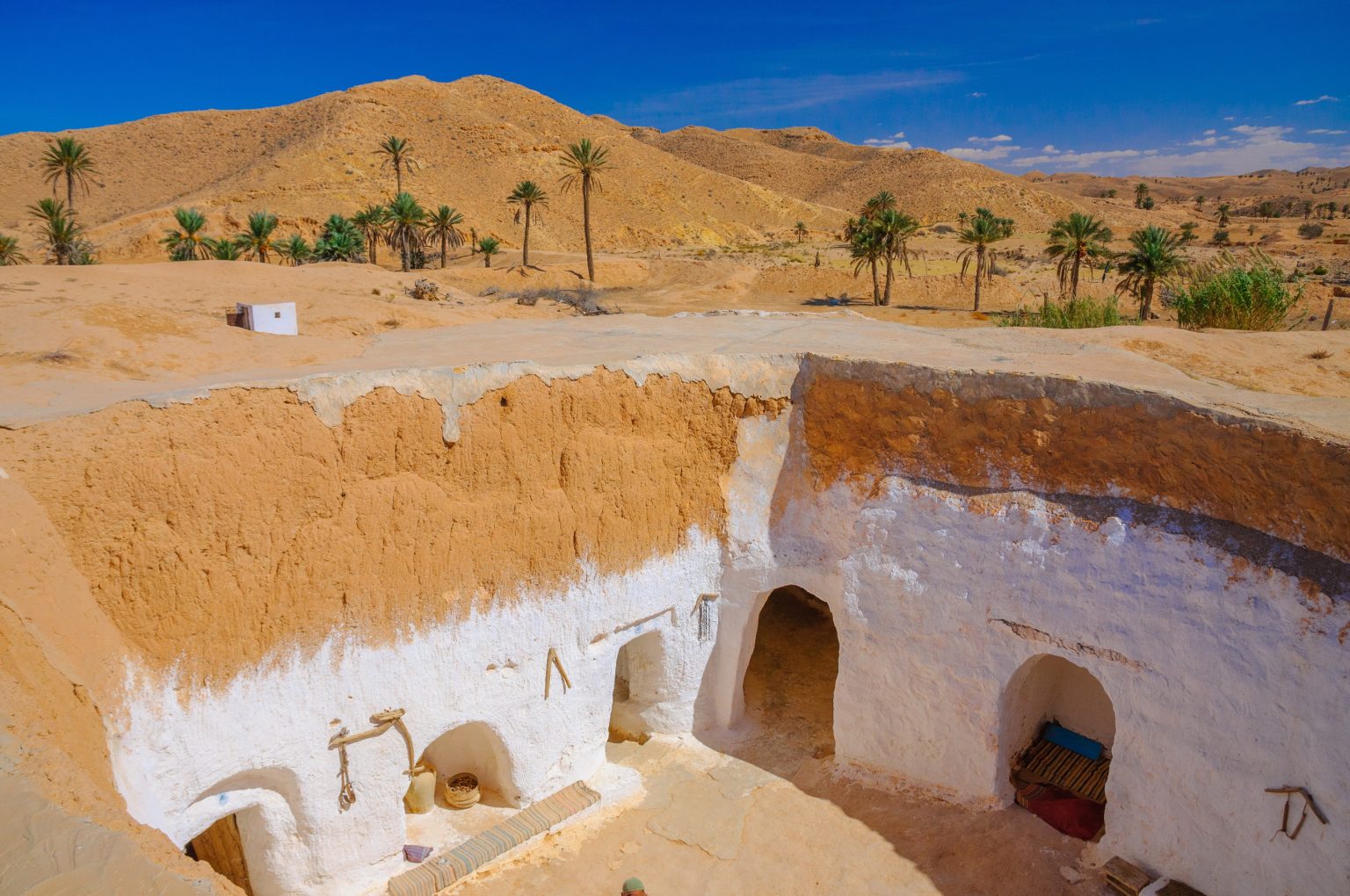
In southern Tunisia, Matmata is known for its distinctive underground homes, where entire courtyards and rooms were carved into the ground to provide protection from the region’s extreme climate. From the surface, the surrounding landscape appears dry and rugged, while below ground the homes remain sheltered from the heat.
- What Is Matmata and Where Is It Located?
- How to Get to Matmata
- Best Time to Visit Matmata
- Top Things to Do in Matmata
- Visit a Traditional Troglodyte Home
- Explore Hotel Sidi Driss, the Star Wars Site
- Discover Tamezret Village
- Hike the Matmata Mountains
- Visit Toujane
- Explore Local Markets
- Suggested 3-Day Matmata Itinerary
- Where to Stay in Matmata
- Culture and Traditions of Matmata
- Practical Travel Tips
- Hidden Gems Near Matmata
- A Living Example of Underground Desert Architecture
Matmata is one of Tunisia’s most unusual destinations and an important example of traditional desert architecture and local adaptation. It is also famous worldwide as a filming location for Star Wars, particularly as the setting used for Luke Skywalker’s home on Tatooine.
Beyond its connection with cinema, Matmata offers visitors an opportunity to learn about Amazigh heritage, traditional architecture, local food, and life in southern Tunisia.
What Is Matmata and Where Is It Located?
Matmata is located in the Gabès Governorate in southern Tunisia, about 40 kilometers southwest of Gabès. It lies between the Matmata Mountains and the northern edge of the Sahara Desert.
Distances from key locations:
- 110 km from Douz
- 80 km north of Ksar Ghilane
- 450 km south of Tunis
The area is divided into Old Matmata (Matmata Ancienne) and New Matmata. After severe floods in the 1960s, many residents relocated to newer settlements, but Old Matmata remains inhabited. Its underground homes continue to provide an important example of traditional Amazigh architecture in southern Tunisia.
How to Get to Matmata
From Gabès
The most direct route is by car along the C107 road, a scenic drive of around 40 minutes through mountain and rural landscapes. Shared taxis (louages) also operate between Gabès and Matmata.
From Djerba
Drive south toward Medenine, then continue west via Tamezret and Toujane. The journey takes about 2.5 hours and passes through mountain roads, desert valleys, and small settlements where visitors can stop for refreshments.
From Douz or Ksar Ghilane
Off-road routes connect Matmata with Douz and Ksar Ghilane. These tracks cross plateaus and desert terrain and are best explored with a 4×4 vehicle and a local guide.
Best Time to Visit Matmata
Matmata’s underground homes remain relatively cool in summer and sheltered in winter, but the most comfortable time to explore the area is generally from October to April.
Seasonal overview:
- October–April: 15–28°C, ideal for walking and photography
- May–June: 30–35°C, hot outside but cooler underground
- July–August: Over 40°C, visit early morning or evening when possible
- September: Warm, quieter, and suitable for sunset visits
The troglodyte architecture helps moderate temperatures inside the homes, making the underground rooms more comfortable during both hot and cold periods.
Top Things to Do in Matmata
Visit a Traditional Troglodyte Home
Several families open their traditional cave homes to visitors. A typical entrance leads through a narrow passage into a circular courtyard surrounded by rooms carved into the surrounding ground.
Hosts may serve mint tea and explain how these homes were constructed and used by local families.
Recommended visits:
- Dar Taliba and Dar Diyafa, family-run cave homes
- Dar Hedi Troglodyte Museum, showcasing traditional tools and crafts
Explore Hotel Sidi Driss, the Star Wars Site
Hotel Sidi Driss is Matmata’s best-known attraction and was used as the filming location for Luke Skywalker’s home on Tatooine in Star Wars.
Its distinctive white courtyards and underground passages remain recognizable from the films. Visitors can explore the site, and overnight stays are available for those who want to experience one of Tunisia’s most unusual hotels.
Discover Tamezret Village
Just 10 km west of Matmata, Tamezret is a hilltop Amazigh village known for its traditional stone buildings and views across the surrounding landscape.
The Maison Berbère de Tamezret introduces visitors to local pottery, weaving, and regional history.
Hike the Matmata Mountains
Hiking routes around Matmata provide views across dry valleys, olive terraces, and surrounding desert landscapes. Early morning and late afternoon offer more comfortable temperatures and better conditions for photography.
Visit Toujane
Toujane is a mountain village between Matmata and Medenine. It is known for traditional stone houses, mountain scenery, and locally produced handwoven carpets.
Explore Local Markets
Matmata’s weekly souk is relatively small but offers a look at everyday local commerce, with products such as rugs, silver jewelry, dates, and spices.
Suggested 3-Day Matmata Itinerary
Day 1: Underground Life
Arrive from Gabès or Djerba. Check into a troglodyte guesthouse or Hotel Sidi Driss. Explore Old Matmata, visit traditional cave homes, and enjoy Berber tea. Dinner can include couscous, lamb, and local olive oil.
Day 2: Amazigh Villages and Cinema History
Visit Hotel Sidi Driss in the morning, then drive to Tamezret and Toujane. Return in the evening to watch the sunset from the surrounding hills.
Day 3: Toward the Sahara
Travel south toward Douz or Ksar Ghilane, stopping at small cafés and villages along the way. The journey can optionally end in Gabès, known for its coastal oasis.
Where to Stay in Matmata
Troglodyte Hotels
- Hotel Sidi Driss, the famous Star Wars location
- Marhala Hotel, offering cave-style rooms and traditional meals
- Diar Abou Habibi, eco-lodge-style accommodation
Guesthouses
- Dar Taliba, family-run accommodation
- Dar Ayed, combining traditional architecture with modern facilities
Staying in a troglodyte property provides a direct way to experience the traditional architecture that makes Matmata distinctive.
Culture and Traditions of Matmata
Matmata’s inhabitants include Amazigh (Berber) communities whose cultural heritage is reflected in local architecture, language, music, food, and customs.
Key cultural elements:
- Architecture: Homes carved around a central courtyard for shelter and climate control
- Music: Traditional drums, flutes, and Amazigh chants
- Cuisine: Couscous, barley bread, harissa, dates, and olive oil
- Hospitality: Sweet tea and bread are commonly offered to guests
Although modern life has changed the region, traditional architecture and cultural practices remain an important part of Matmata’s identity.
Practical Travel Tips
- Best season: October to April
- Wear light layers because underground rooms can feel cool even when outdoor temperatures are high
- No ATMs in Matmata; bring cash from Gabès
- Ask permission before photographing people or private homes
- Bring water and sunscreen
- Mobile signal in Old Matmata can be limited
Hidden Gems Near Matmata
- Tamezret, known for sunset views and its Amazigh museum
- Toujane, with mountain scenery and carpet workshops
- Chenini and Douiret, ancient ksour near Tataouine
- Ksar Ghilane, a desert oasis with a hot spring and Roman fort
- Gabès Oasis, one of Tunisia’s distinctive coastal oasis landscapes
A Living Example of Underground Desert Architecture
Matmata is best known for its troglodyte homes, but the region offers much more than unusual architecture. Its villages, mountain landscapes, Amazigh heritage, traditional food, and connection with Star Wars give visitors several different ways to explore southern Tunisia.
The underground courtyards and rooms were designed to provide shelter from the region’s harsh climate, while the surrounding villages developed around the practical needs of desert life.
For travelers heading toward the Sahara, Matmata is a useful stop for understanding the architecture and cultural traditions of southern Tunisia before continuing toward Tataouine, Douz, or Ksar Ghilane.