
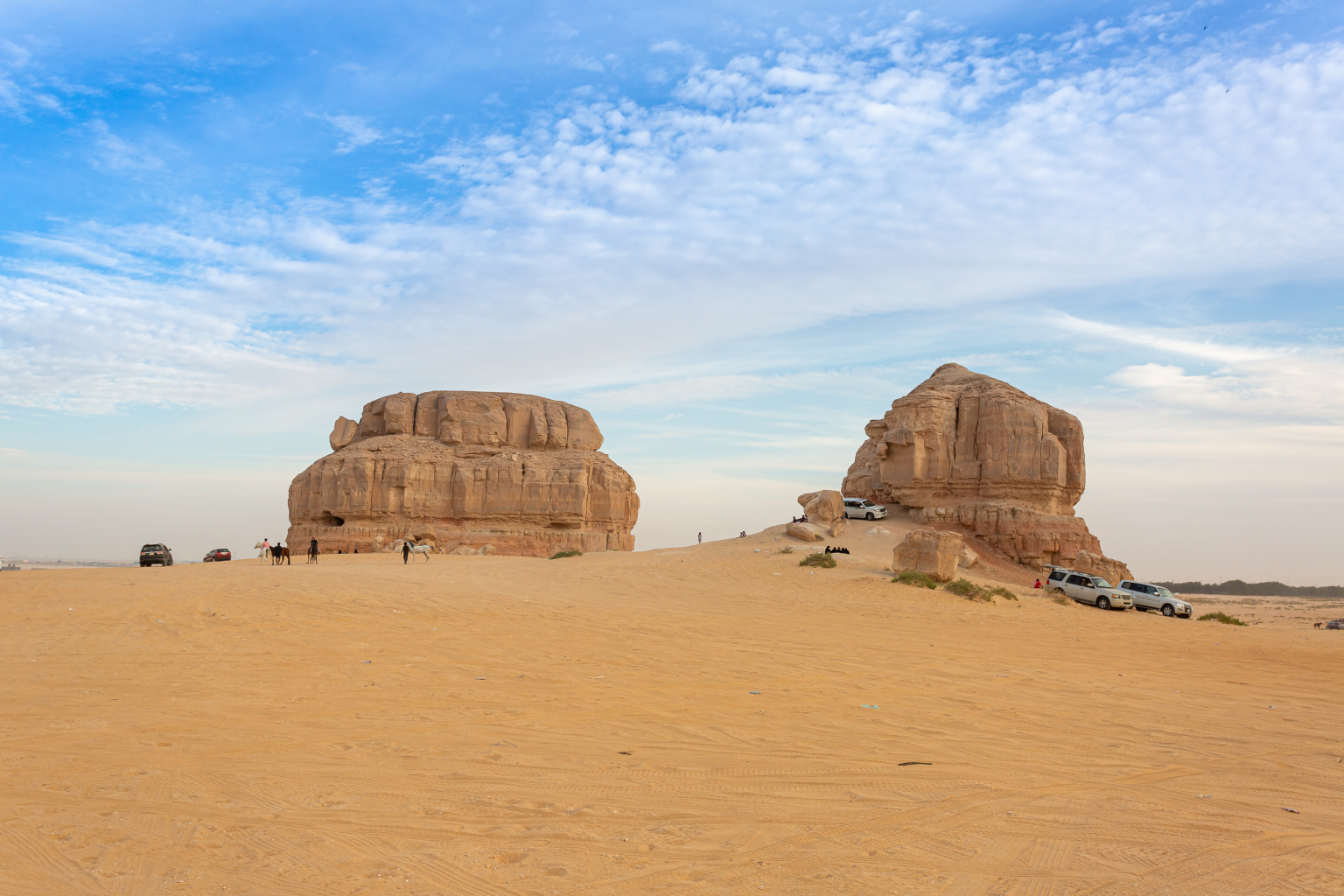
In the vast landscape of eastern Saudi Arabia, Al-Ahsa Oasis stands out as one of the region’s most important natural and cultural landscapes. Surrounded by the sands of the Ad-Dahna Desert, the oasis is known for its extensive palm groves, natural springs, historic settlements, and long agricultural tradition.
- Where Is Al-Ahsa Oasis Located?
- How to Reach Al-Ahsa Oasis
- Best Time to Visit Al-Ahsa Oasis
- Top Things to Do in Al-Ahsa Oasis
- Explore Al-Qarah Mountain (Jabal Qarah)
- Wander Through Souq Al-Qaisariya
- Visit Jawatha Mosque
- Relax at Al-Asfar Lake
- Walk the Springs and Palm Groves
- Discover Qasr Ibrahim Palace
- Taste Traditional Al-Ahsa Cuisine
- Suggested 2-Day Al-Ahsa Itinerary
- Where to Stay in Al-Ahsa
- Culture and Traditions of Al-Ahsa
- Practical Travel Tips
- Hidden Treasures of Al-Ahsa
- Where Water Shaped the Desert
One of the oldest centers of human settlement in Arabia, Al-Ahsa is recognized by UNESCO as a World Heritage Site and is widely known for the scale of its oasis landscape.
Al-Ahsa developed around its water sources, which made agriculture and permanent settlement possible in an otherwise arid environment. Date palms, traditional farms, historic markets, mosques, springs, and villages all form part of the landscape visitors can explore today.
Where Is Al-Ahsa Oasis Located?
Al-Ahsa Oasis lies in the Eastern Province of Saudi Arabia, forming a natural bridge between the Arabian Gulf and the interior desert.
- About 320 km east of Riyadh
- Around 150 km southwest of Dammam
- Roughly 100 km from the Arabian Gulf
Covering more than 85 square kilometers, the oasis contains:
- Over 2.5 million date palms
- Nearly 280 natural and artesian springs
- A complex network of canals, gardens, and farms
The oasis is bordered by the Gulf plains to the east and the Ad-Dahna Desert to the west, creating a striking contrast between cultivated land and surrounding desert.
Al-Hofuf, the main city, combines historic mosques, traditional markets, palm farms, and modern Saudi life.
How to Reach Al-Ahsa Oasis
From Riyadh
- Via Route 40 (Riyadh–Al-Ahsa Highway)
- Distance: 320 km
- Travel time: 3.5–4 hours by car or bus
- Saudi Railways operates daily trains between Riyadh and Hofuf
From Dammam or Al-Khobar
- Via Route 75, southwest
- Distance: 150 km
- Travel time: about 2 hours
From Bahrain
- Cross the King Fahd Causeway to Al-Khobar
- Continue by road to Al-Ahsa
- Total travel time: around 3 hours
Best Time to Visit Al-Ahsa Oasis
Thanks to its water sources and vegetation, Al-Ahsa has a somewhat different environment from the surrounding desert, although summers remain very hot.
- October to April: 18–30°C, generally comfortable for sightseeing and photography
- May to September: 35–45°C, with very hot daytime conditions
- Winter nights: 10–15°C, suitable for outdoor activities
The best months to visit are November to March, when temperatures are more comfortable for exploring the palm groves, historic sites, and surrounding landscapes.
Top Things to Do in Al-Ahsa Oasis
Explore Al-Qarah Mountain (Jabal Qarah)
Rising from the desert east of Hofuf, Jabal Qarah is one of Al-Ahsa’s most recognizable natural landmarks. Its caves and rock formations provide cooler conditions than the surrounding open desert, while elevated viewpoints offer broad views across the oasis.
Wander Through Souq Al-Qaisariya
More than 200 years old, Souq Al-Qaisariya is one of Arabia’s historic traditional markets. Its narrow lanes are lined with shops selling dates, spices, perfumes, traditional clothing, jewelry, and handmade products.
Visit Jawatha Mosque
Built in the 7th century, Jawatha Mosque is among the earliest mosques associated with Islamic history in the region. The second Friday prayer in Islam is traditionally believed to have taken place here. The site reflects the long religious and cultural history of the Al-Ahsa area.
Relax at Al-Asfar Lake
Located just outside Hofuf, Al-Asfar Lake is a seasonal wetland surrounded by desert and dunes. Depending on rainfall and local conditions, the area can attract migratory and resident bird species.
Walk the Springs and Palm Groves
Springs such as Ain Najm, Ain Al-Haqla, and Ain Al-Jawhariah have played an important role in the development of the oasis.
Walking or cycling through the palm groves provides a closer look at the agricultural landscape and the traditional irrigation systems that support farming in this dry region.
Discover Qasr Ibrahim Palace
Dating back to the 16th century, Qasr Ibrahim Palace combines military and Islamic architectural elements. Today, the historic site helps visitors understand Al-Ahsa’s role in regional administration, trade, and pilgrimage routes.
Taste Traditional Al-Ahsa Cuisine
Local dishes include harees, jareesh, Arabic coffee with dates, and freshly baked bread.
Dates are particularly important to Al-Ahsa’s food culture, with local varieties such as Khalas forming an important part of the region’s agricultural identity.
Suggested 2-Day Al-Ahsa Itinerary
Day 1 – Heritage and Oasis Life
Morning: Visit Qasr Ibrahim Palace and Jabal Qarah
Afternoon: Lunch and shopping at Souq Al-Qaisariya
Evening: Visit Al-Asfar Lake and enjoy dinner in Al-Hofuf
Day 2 – Nature and Culture
Morning: Explore springs and palm groves
Afternoon: Visit Jawatha Mosque and nearby villages
Evening: Optional trip toward the Ad-Dahna dunes, then return to Hofuf
Where to Stay in Al-Ahsa
Hotels
- Al Ahsa InterContinental – luxury accommodation near the oasis
- Somewhere Bliss Hotel – modern and comfortable
- Garden Plaza Hotel – a convenient base for exploring Al-Hofuf
Guesthouses and Eco-Lodges
- Palm Grove Retreat – family-run accommodation surrounded by farms
- Jawatha Camp – glamping option near historic sites
Culture and Traditions of Al-Ahsa
With over 6,000 years of history, Al-Ahsa is one of Arabia’s important historic settlement areas. The oasis is particularly known for its Khalas dates, which remain an important part of local agriculture and food culture.
Traditional crafts include palm-frond weaving, embroidery, ceramics, and Nabati poetry. Music, drumming, and the ardha dance are also part of the region’s cultural traditions, while hospitality remains an important part of everyday life.
The connection between agriculture, water, food, crafts, and settlement is one of the defining features of Al-Ahsa’s cultural identity.
Practical Travel Tips
- Best season: November–March
- Transport: rent a car or hire a local guide
- Dress modestly and lightly
- Currency: Saudi Riyal (SAR)
- Language: Arabic; English is widely spoken in hotels
- Always ask before photographing people
Hidden Treasures of Al-Ahsa
- Al-Qarah Caves with their distinctive rock formations and chambers
- Ain Najm Hot Spring, historically associated with the oasis
- Qaltat Al-Qarah Fort overlooking the surrounding landscape
- Ad-Dahna dunes west of the oasis
- Al-Uqair Beach, a historic Gulf port connected to the region’s trading history
Where Water Shaped the Desert
Al-Ahsa Oasis offers a different way to experience the desert landscapes of Saudi Arabia. Its identity comes from the relationship between natural water sources, agriculture, palm groves, historic settlements, and the surrounding desert.
For travelers, this combination makes Al-Ahsa more than a stop between Saudi Arabia’s major cities. A visit can bring together Jabal Qarah, traditional markets, historic mosques, palm farms, springs, local food, and nearby desert landscapes within the same journey.
The oasis remains one of the clearest examples of how water has supported agriculture, settlement, and culture in one of Arabia’s arid regions.