
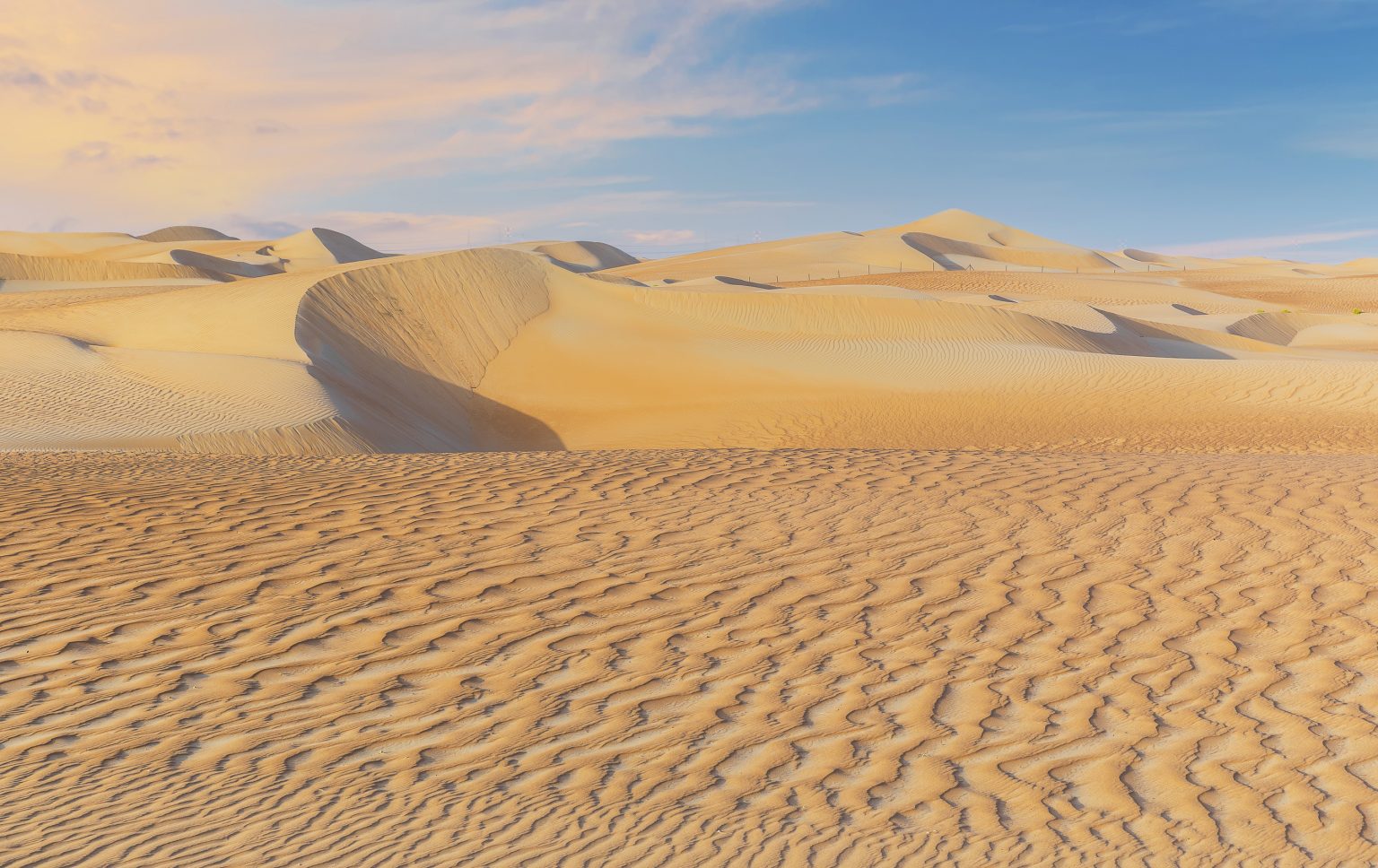
The Rub al Khali, also known as the Empty Quarter, occupies a vast area across the southern Arabian Peninsula. It is the world’s largest continuous expanse of sand desert, covering roughly 650,000 square kilometers across Saudi Arabia, Oman, the United Arab Emirates, and Yemen.
- What Is the Rub al Khali?
- How to Reach the Rub al Khali
- Best Time to Visit the Empty Quarter
- Desert Expeditions and 4×4 Safaris
- The Rub al Khali at Night
- Shaybah: A Remote Desert Outpost
- A Desert with a Wetter Past
- Liwa Oasis and the Northern Edge
- Wildlife of the Empty Quarter
- 3-Day Rub al Khali Expedition Itinerary
- Where to Stay Near the Rub al Khali
- Bedouin Culture and Traditions
- Essential Travel Tips
- Hidden Gems of the Rub al Khali
- The Vast Sand Desert of Arabia
The landscape is dominated by enormous dune fields, gravel plains, salt flats, and remote desert valleys. Some dunes rise several hundred meters, while large sections of the interior remain far from permanent settlements and paved roads.
For centuries, the region has been associated with Bedouin travel, caravan routes, and the wider history of southern Arabia. Today, access remains limited in many areas, but organized expeditions allow experienced travelers to explore selected parts of this immense desert.
The defining feature of the Rub al Khali is its scale. Its vast dune systems create one of the most remote and distinctive desert environments in the Arabian Peninsula.
What Is the Rub al Khali?
The name Rub al Khali means “Empty Quarter” in Arabic. It refers to the immense desert region occupying much of the southern Arabian Peninsula.
The desert extends across four countries:
- Saudi Arabia: The largest share of the Rub al Khali lies within Saudi territory, extending across parts of the Najran, Riyadh, and Eastern regions.
- Oman: The desert approaches the country’s interior and Dhofar region.
- United Arab Emirates: The northern edge includes the great dune systems around Liwa Oasis.
- Yemen: The desert extends toward northern parts of the country.
To the north, the Rub al Khali connects with the Ad-Dahna Desert, which forms part of Saudi Arabia’s larger chain of sandy deserts.
The remote Shaybah area in eastern Saudi Arabia is associated with major oil operations surrounded by extensive dune fields.
How to Reach the Rub al Khali
There is no single access route to the Empty Quarter. The appropriate starting point depends on which section of the desert you intend to visit.
From Riyadh
One possible northern approach leads south toward Wadi ad-Dawasir, roughly 700 kilometers from Riyadh. From there, remote desert travel requires a suitable 4×4, experienced drivers, and careful route planning.
This is not a standard road-trip destination. Travelers entering remote sections should use professional desert operators and confirm access requirements before departure.
From Najran
Najran provides access to parts of the southern Saudi desert. Local operators can arrange excursions into surrounding dune areas, although routes and access vary according to location and current regulations.
From the Eastern Province
Travelers approaching from Al-Ahsa or Hofuf can reach areas toward the eastern Rub al Khali and the Shaybah region.
Access to industrial areas and certain remote locations is controlled, so visitors should not assume that all parts of the desert are publicly accessible.
Because of the distances involved, serious preparation is essential:
- Properly equipped 4×4 vehicles
- Reliable navigation
- Adequate water and fuel
- Emergency and recovery equipment
- Satellite communication for remote journeys
- An experienced local guide or expedition operator
Best Time to Visit the Empty Quarter
The Rub al Khali has an extremely hot desert climate. Summer conditions can become dangerous, particularly in remote areas where emergency assistance may be far away.
For most travelers, the cooler months are strongly preferable.
- October to April: Generally the most suitable period for desert travel.
- December to February: Usually the coolest part of the year and particularly comfortable for camping.
- May to September: Extremely hot, with daytime temperatures potentially exceeding 45°C and becoming hazardous for prolonged outdoor activity.
- Winter nights: Can become surprisingly cold, especially under clear skies.
The best travel period therefore depends less on a single ideal month than on avoiding the extreme summer heat and planning activities around the cooler parts of the day.
Desert Expeditions and 4×4 Safaris
The safest way to explore remote sections of the Rub al Khali is through an organized expedition with experienced desert drivers.
Depending on the location and access arrangements, excursions may include:
- Wadi ad-Dawasir desert routes
- Liwa and northern dune areas
- Najran desert routes
- Selected areas around the eastern Rub al Khali
Large dunes are one of the defining features of the region, with some formations reaching 200 meters or more.
Expedition routes can involve long stretches without services, so route selection, fuel planning, vehicle preparation, and communication are critical.
The Rub al Khali at Night
The Empty Quarter offers excellent conditions for stargazing in remote areas because artificial light is very limited.
After sunset, temperatures fall quickly and the sky can become exceptionally clear when weather conditions are favorable.
Desert camps may include:
- Arabic coffee and dates
- Traditional meals
- Campfires
- Local music
- Poetry and storytelling
- Stargazing
The absence of nearby urban development is one of the main attractions of spending a night deep in the desert.
Shaybah: A Remote Desert Outpost
Shaybah is an important oil-production center located deep within the Saudi portion of the Rub al Khali. The settlement and industrial facilities stand in strong contrast to the surrounding dune fields.
Public access to the industrial area is restricted, and travelers should not assume they can enter the Shaybah facility itself.
However, the wider eastern Rub al Khali contains extensive dune landscapes, and authorized operators may arrange desert excursions in accessible areas around the region.
A Desert with a Wetter Past
The Rub al Khali was not always as dry as it is today. Geological and archaeological evidence indicates that parts of Arabia experienced periods of much wetter conditions in the past.
Ancient lakes, drainage systems, fossil deposits, and archaeological discoveries provide evidence of former environments that supported people and animals.
Research into these ancient landscapes has identified evidence of species such as large mammals and camelids in parts of Arabia. These findings help scientists understand how climate changes transformed the Arabian Peninsula over thousands of years.
The Rub al Khali therefore provides an important record of the region’s changing climate and environmental history.
Liwa Oasis and the Northern Edge
At the northern edge of the Rub al Khali, the Liwa Oasis forms a chain of settlements and cultivated areas surrounded by some of the region’s largest dunes.
The oasis is particularly associated with:
- Date-palm agriculture
- Traditional settlements
- Desert tourism
- Large dune landscapes
- Emirati heritage
Moreeb Dune, near Liwa, is one of the best-known large dunes in the United Arab Emirates and rises roughly 300 meters above its surroundings, although measurements vary according to the method used.
The area is also associated with desert festivals, motorsport, dune driving, and other seasonal events.
Wildlife of the Empty Quarter
Wildlife is relatively sparse compared with wetter environments, but the Rub al Khali and its surrounding regions support species adapted to extreme aridity.
Depending on the area, wildlife may include:
- Arabian oryx
- Arabian gazelles
- Fennec foxes
- Desert hares
- Desert birds
- Falcons and other birds of prey
- Reptiles and smaller desert mammals
Many species are most active during the cooler hours of the day or at night.
Wildlife sightings are never guaranteed, particularly in the most arid interior areas. Visitors should observe animals from a distance and avoid disturbing them.
3-Day Rub al Khali Expedition Itinerary
A three-day expedition is suitable only for a selected and accessible section of the desert. It should not be treated as enough time to cross the Empty Quarter itself.
Day 1: Entering the Desert
- Meet your professional guide and 4×4 convoy
- Enter the selected dune area
- Explore the first major dune formations
- Stop at suitable viewpoints for photography
- Establish camp before sunset
- Dinner and stargazing
Day 2: Deeper into the Dunes
- Early morning desert walk
- Breakfast with Arabic coffee and dates
- Continue through the dune fields
- Visit accessible geological or historical sites where permitted
- Sunset photography from a high dune
- Evening around the campfire
Day 3: Desert Exploration and Return
- Sunrise over the dunes
- Breakfast at camp
- Short morning exploration
- Begin the return journey
- Exit the desert with sufficient daylight remaining
Longer expeditions are preferable for travelers who want to reach more remote areas or combine several regions.
Where to Stay Near the Rub al Khali
Because much of the Empty Quarter is extremely remote, travelers generally stay either in nearby towns or in organized mobile camps.
Najran Region
Accommodation in and around Najran provides a practical base for southern desert excursions.
Al-Ahsa and Eastern Saudi Arabia
Travelers approaching from the east can stay in Al-Ahsa or Hofuf before continuing toward accessible desert areas.
Hotels such as InterContinental Al Ahsa provide a comfortable base for combining oasis and desert travel.
Mobile Desert Camps
Remote expeditions may use temporary camps equipped with:
- Sleeping tents
- Meals and drinking water
- Desert guides
- Cooking facilities
- Emergency equipment
- Satellite communication
Facilities vary considerably, so travelers should confirm exactly what is included before departure.
Bedouin Culture and Traditions
The wider Empty Quarter has long been connected with Bedouin communities whose knowledge of desert routes, water sources, livestock, weather, and navigation was essential for survival and travel.
Traditional elements of Arabian desert culture include:
- Gahwa and dates as symbols of hospitality
- Nabati poetry
- Camel herding
- Falconry
- Traditional music
- Oral storytelling
- Codes of hospitality and social responsibility
The rebab, a traditional bowed string instrument found in several Arab and North African cultures, is associated with some forms of regional Bedouin music.
Visitors should approach cultural experiences respectfully and recognize that desert communities are part of the contemporary social landscape of Arabia, not simply a historical attraction.
Essential Travel Tips
Remote travel in the Rub al Khali requires much more preparation than a conventional desert excursion.
- Check permits and access requirements before departure.
- Use a properly equipped 4×4 vehicle driven by an experienced desert driver.
- Travel with a professional local guide.
- Carry substantially more water than you expect to consume. At least 5 liters per person per day is a useful baseline, with additional reserves required for remote travel and hot conditions.
- Carry extra fuel and vehicle recovery equipment.
- Use GPS with offline maps.
- Carry a satellite communicator or satellite phone in areas without mobile coverage.
- Wear lightweight clothing during the day and warm layers at night.
- Avoid entering remote dune areas alone.
- Check weather and route conditions before departure.
- Follow environmental and local access regulations.
- Leave no waste behind.
Hidden Gems of the Rub al Khali
The most interesting lesser-known locations depend heavily on access permissions and the chosen route.
Possible areas of interest include:
- Umm ad Duma: Remote dune landscapes in the Saudi portion of the Empty Quarter.
- Al-Hashfa: Large dune formations known for their reddish and orange tones.
- Ancient lake deposits: Geological and archaeological evidence of former wetter periods.
- Old caravan routes: Traces of historic movement across parts of southern Arabia.
- Liwa’s outer dune fields: Large sand formations along the northern edge of the Empty Quarter.
Remote sites should only be visited with experienced operators because navigation and emergency access can be difficult.
The Vast Sand Desert of Arabia
The Rub al Khali is defined by its scale, remoteness, and enormous dune systems. Its landscape extends across four countries and includes environments ranging from towering sand dunes to gravel plains, salt-affected areas, and ancient lake deposits.
Its importance is not limited to scenery. The desert preserves evidence of changing climates, historic movement across Arabia, traditional Bedouin culture, and modern developments such as the oil facilities around Shaybah and the tourism landscapes of Liwa.
For travelers, the Empty Quarter offers a demanding but highly rewarding desert experience. With proper preparation, professional guidance, and respect for access and environmental rules, visitors can explore selected sections of one of the world’s largest continuous sand deserts while experiencing the geography, wildlife, history, and culture of southern Arabia.