
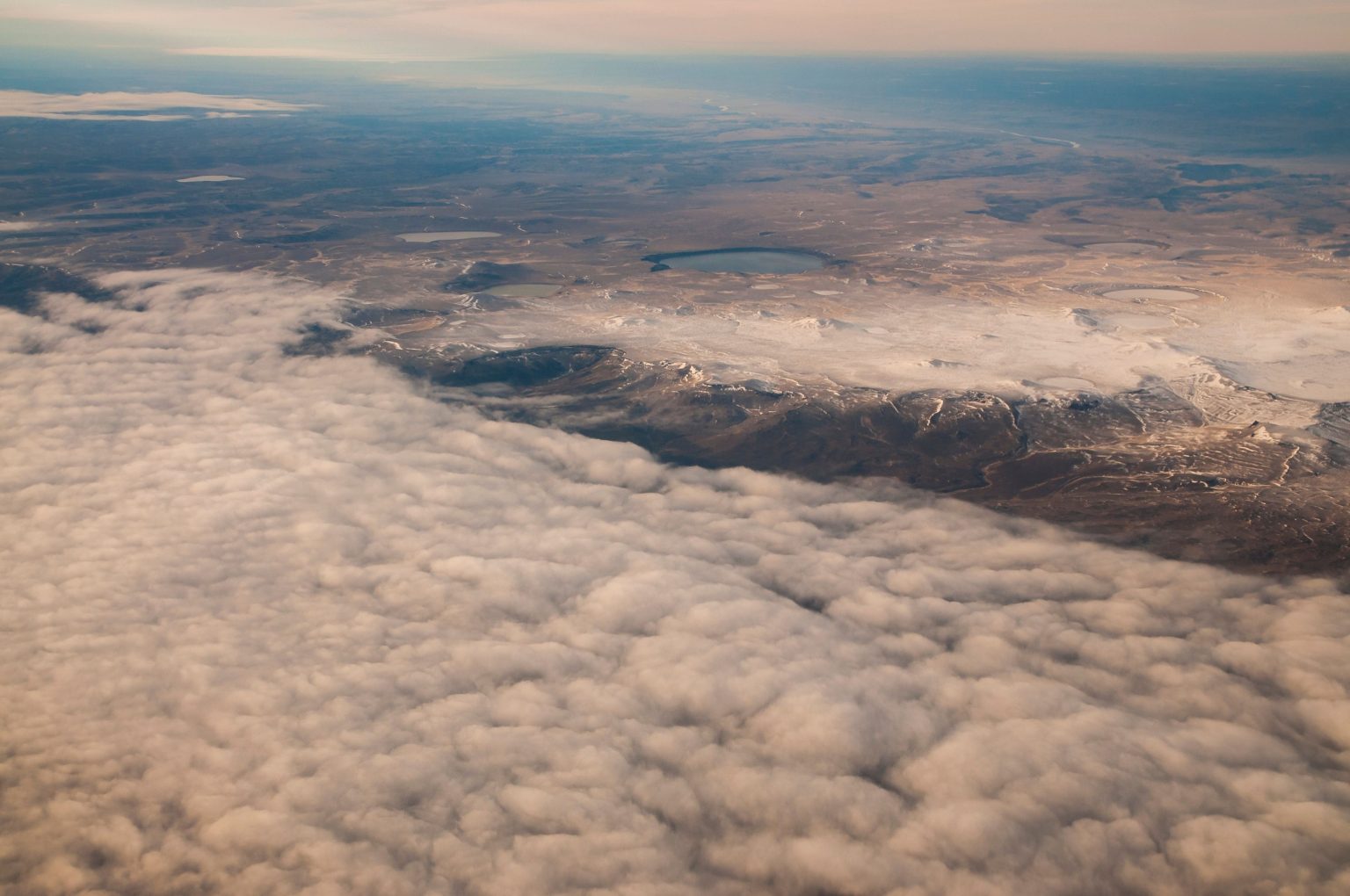
In southern Argentina, where the Andes Mountains give way to broad plateaus and open plains, lies the Patagonian Desert, also known as the Patagonian Steppe. Unlike sandy deserts, this vast region is shaped mainly by wind, gravel, volcanic terrain, and dry grasslands, creating one of the most extensive arid landscapes in South America.
- Where Is the Patagonian Desert Located
- Landscape and Terrain: A Desert of Gravel, Plateaus, and Open Plains
- Climate: A Cold and Windy Desert
- Wildlife of the Patagonian Steppe
- Cultural and Historical Roots
- Top Places to Visit in the Patagonian Desert
- Cueva de las Manos
- Península Valdés
- Somuncurá Plateau
- Trelew and the Chubut Valley
- Sarmiento Petrified Forest
- 2-Day Patagonian Desert Itinerary
- Where to Stay
- Essential Travel Tips
- Hidden Gems of Patagonia
- A Desert Shaped by Wind, Distance, and Wildlife
Covering more than 673,000 square kilometers, the Patagonian Desert is the largest desert in Argentina and one of the largest cold deserts in the world. Its landscape includes gravel plains, volcanic plateaus, eroded valleys, and sparse vegetation. Despite its dry conditions, the region supports a wide range of wildlife and contains important archaeological and fossil sites.
For travelers, Patagonia stands out for its scale, remote landscapes, wildlife, and archaeological heritage, with the Atlantic coast adding another dimension to the desert experience.
Where Is the Patagonian Desert Located
The Patagonian Desert (Desierto Patagónico) covers much of southern Argentina, extending from the Colorado River in the north toward the Strait of Magellan in the south.
It stretches across several provinces:
- Neuquén
- Río Negro
- Chubut
- Santa Cruz
The region extends roughly from 37°S to 52°S, with elevations commonly ranging between 300 and 900 meters above sea level, although terrain varies considerably across the region.
The Andes Mountains form the western boundary and create a strong rain-shadow effect by blocking much of the moisture arriving from the Pacific. The Atlantic Ocean lies to the east, where the dry interior eventually meets a long and biologically rich coastline.
Landscape and Terrain: A Desert of Gravel, Plateaus, and Open Plains
Unlike sandy deserts, the Patagonian Desert is characterized by gravel plains, volcanic plateaus, dry grasslands, rocky valleys, and eroded mesas. In many areas, loose stones and coarse sediment cover the ground, while low vegetation survives in exposed conditions.
Wind is one of the region’s most important natural forces. Strong winds transport sediment, erode exposed surfaces, and influence the growth patterns of shrubs and grasses. Volcanic activity in the wider Patagonian region has also contributed to the area’s varied geology.
The combination of open terrain, distant mountains, and sparse vegetation gives the landscape its distinctive appearance. In some areas, especially across remote plateaus, there may be very little development for long distances.
Climate: A Cold and Windy Desert
The Patagonian Desert has a cold desert and steppe climate, with conditions varying considerably according to latitude, elevation, and distance from the Andes.
Typical characteristics include:
- Low annual precipitation, with many areas receiving less than 200 millimeters per year.
- Warm summers, although temperatures vary significantly between regions.
- Cold winters, with freezing temperatures common in many inland areas.
- Strong winds, particularly across exposed plateaus and open plains.
- Large temperature differences between day and night in some locations.
The Andes rain shadow is the main reason for the region’s aridity. Pacific moisture rises over the mountains, leaving much drier conditions on the eastern side.
The wind is another defining feature. Travelers should expect strong gusts, particularly in exposed areas, and should plan clothing and driving conditions accordingly.
Wildlife of the Patagonian Steppe
Despite its dry and exposed environment, the Patagonian Steppe supports a diverse range of animals.
Land Animals
- Guanacos, relatives of llamas, are among the most recognizable mammals of the steppe.
- Patagonian maras are large rodents adapted to open grasslands and dry terrain.
- Culpeo foxes occur across many parts of Patagonia.
- Armadillos are found in suitable dry and semi-arid habitats.
- Pumas inhabit remote areas and are particularly associated with regions where prey populations are strong.
Birdlife
- Rheas (ñandú) are large flightless birds commonly associated with Patagonian grasslands.
- Eagles and falcons use the region’s strong winds to search for prey.
- Other steppe and wetland species can be found around rivers, lagoons, and protected areas.
Life Along the Atlantic Coast
The eastern edge of Patagonia provides a major contrast to the dry interior. Coastal areas support important marine ecosystems with species such as:
- Orcas
- Southern right whales
- Sea lions
- Elephant seals
- Penguins
This combination of arid land and productive coastal waters is one of the region’s strongest attractions for wildlife-focused travelers.
Cultural and Historical Roots
Long before modern national borders were established, Indigenous peoples lived throughout Patagonia and adapted to its cold, dry, and windy environment. The Tehuelche peoples have a particularly important place in the region’s history and cultural heritage.
One of the best-known archaeological sites is Cueva de las Manos, where rock shelters contain extensive paintings and hand stencils dating back thousands of years.
European exploration reached the region in the early 16th century. In 1520, the expedition led by Ferdinand Magellan reached Patagonia during its voyage around the southern tip of South America. Later, European settlers and gaucho traditions became part of the region’s cultural landscape, particularly around rural estancias.
Today, Patagonia’s heritage reflects Indigenous history, European settlement, rural traditions, and the continuing importance of livestock farming across parts of the steppe.
Top Places to Visit in the Patagonian Desert
Cueva de las Manos
A UNESCO World Heritage Site, Cueva de las Manos contains prehistoric rock art, including hand stencils and hunting scenes created thousands of years ago. The site provides an important record of early human occupation in Patagonia.
Península Valdés
This protected coastal area is one of Patagonia’s best destinations for wildlife observation. Depending on the season and location, visitors may see whales, sea lions, elephant seals, penguins, and orcas.
Somuncurá Plateau
The Somuncurá Plateau is a large volcanic tableland in northern Patagonia. Its remote terrain, rocky surfaces, and wide-open landscapes make it an interesting destination for travelers looking beyond the region’s better-known attractions.
Trelew and the Chubut Valley
The Chubut Valley forms a greener corridor through the surrounding dry landscape. Trelew is one of the main urban centers in the area and provides access to nearby archaeological, paleontological, and coastal attractions. The valley also preserves the heritage of Welsh immigrants who settled in the region.
Sarmiento Petrified Forest
Near Sarmiento, fossilized tree trunks preserve evidence of Patagonia’s very different environmental conditions in the distant past. The site offers an opportunity to explore the region’s geological and paleontological history.
2-Day Patagonian Desert Itinerary
A two-day trip can provide an introduction to selected areas of Patagonia, although the region is far too large to experience fully in such a short time.
Day 1: Archaeology and the Steppe
- Morning visit to Cueva de las Manos.
- Afternoon drive through selected areas of the Patagonian Steppe.
- Evening at a rural accommodation or campsite, depending on the route and conditions.
Day 2: Desert and Atlantic Wildlife
- Morning exploration of a selected area around Península Valdés or another accessible coastal reserve.
- Afternoon wildlife viewing along the Atlantic coast.
- Evening in Trelew or another nearby town, with an opportunity to experience local food and the cultural heritage of the Chubut Valley.
Because the main attractions are widely separated, travelers should plan their route carefully rather than attempting to cover the entire region in two days.
Where to Stay
Accommodation varies from established hotels in regional towns to remote rural properties.
- Puerto Madryn: Hotels such as Hotel Territorio and Dazzler Puerto Madryn provide a convenient base for exploring the coast and Península Valdés.
- Trelew: Rayentray Hotel is one option for travelers using the city as a base.
- Sarmiento: Local hotels provide access to the surrounding steppe and petrified forest.
- Rural estancias: A good choice for travelers interested in Patagonia’s rural and gaucho traditions.
- Camping: Suitable in designated areas and particularly attractive for travelers interested in the region’s open landscapes and night skies.
Essential Travel Tips
- Best time to visit: October to April generally offers the most favorable conditions for many outdoor activities, although the ideal season depends on the specific destination.
- Prepare for strong wind: Bring windproof and warm layers even during warmer months.
- Plan fuel stops: Distances between towns and fuel stations can be considerable.
- Choose the right vehicle: A 4×4 can be useful for remote gravel roads and rougher routes, while many major destinations are accessible with standard vehicles.
- Check road conditions: Weather can affect remote roads, especially outside the main tourist routes.
- Carry water and supplies: Services are limited in many remote areas.
- Respect protected areas: Follow local regulations and avoid disturbing wildlife or archaeological sites.
Hidden Gems of Patagonia
Travelers with additional time can explore less-visited places such as:
- Bosques Petrificados National Park, known for its fossilized trees and remote desert landscape.
- Cabo Dos Bahías, an important coastal area with penguin colonies.
- Laguna Blanca, a protected wetland associated with flamingos and other birdlife.
- Los Altares Canyon, known for its striking rock formations and archaeological heritage.
A Desert Shaped by Wind, Distance, and Wildlife
The Patagonian Desert is defined less by sand dunes than by its immense steppe, gravel plains, volcanic plateaus, strong winds, and sparse vegetation. Its scale becomes especially apparent when traveling between the small settlements scattered across the region.
The landscape also contains far more than dry terrain. Guanacos, rheas, foxes, pumas, and coastal wildlife share the region with important archaeological sites, fossil forests, Indigenous heritage, rural estancias, and historic settlements.
For travelers willing to cover long distances, Patagonia offers a distinctive combination of cold-desert landscapes, wildlife, geological history, and Atlantic coastline. Its defining character comes from the relationship between these elements and the sheer size of the region.