
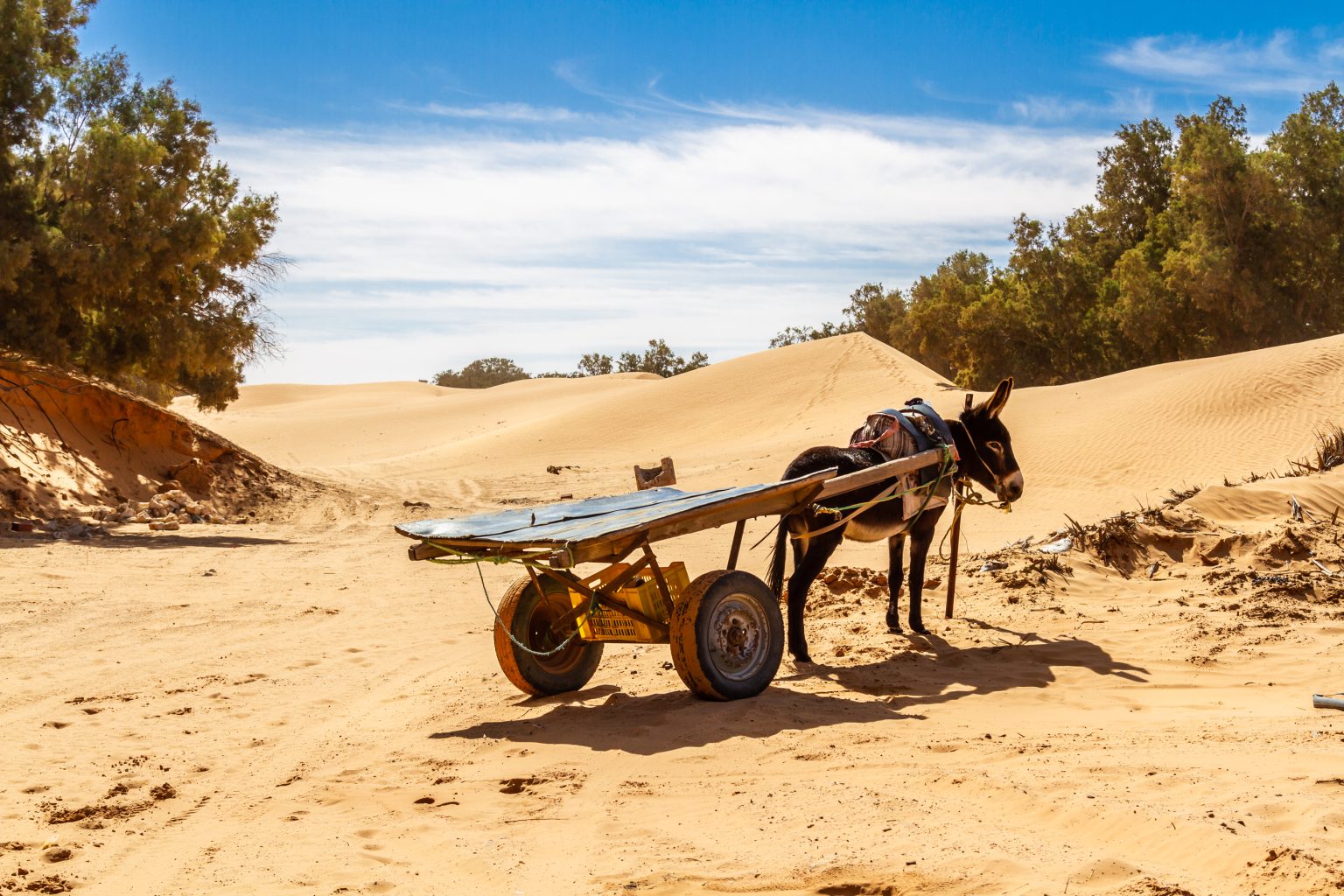
In southern Tunisia, Ksar Ghilane is a desert oasis surrounded by the dunes of the Grand Erg Oriental. Palm trees, a natural hot spring, and nearby Roman remains make it one of the most distinctive stops in the Tunisian Sahara.
- Where Is Ksar Ghilane Located?
- How to Reach Ksar Ghilane
- Best Time to Visit Ksar Ghilane
- Things to Do in Ksar Ghilane
- Relax in the Natural Hot Spring
- Visit Fort Tisavar
- Go Camel Trekking
- Explore the Desert by 4×4
- Quad Biking and Sandboarding
- Desert Camping and Stargazing
- Suggested 3-Day Itinerary
- Where to Stay
- Culture and Local Life
- Practical Travel Tips
- Hidden Places Nearby
- Where Water Meets the Sahara
The oasis is also a base for exploring the surrounding desert by 4×4, camel, quad bike, or on foot. Its remote location means that reaching Ksar Ghilane is part of the experience, with routes crossing rocky plains and sandy terrain before arriving at the oasis.
What sets Ksar Ghilane apart is the combination of water, desert scenery, and archaeological heritage in one location. Visitors can swim in the thermal spring, explore the remains of Fort Tisavar, spend a night in a desert camp, and continue toward other destinations in southern Tunisia.
Where Is Ksar Ghilane Located?
Ksar Ghilane lies in southern Tunisia, within the Kebili Governorate, in the wider desert region south of Douz.
It is approximately:
- 130 kilometers south of Douz
- 80 kilometers from Matmata, depending on the route
- Around 270 kilometers from Djerba by road
The oasis is located near the remains of the Roman fort Tisavar, within the northern part of the Grand Erg Oriental, a major sand-sea region of the Sahara.
The approach to Ksar Ghilane passes through different desert environments, including rocky hamadas, sandy plains, and dune areas.
How to Reach Ksar Ghilane
From Douz
Douz is one of the most common starting points for trips to Ksar Ghilane. The journey is roughly 130 kilometers and can take around three to four hours depending on road and track conditions.
The final section includes desert tracks, so a 4×4 vehicle and experienced local driver are recommended.
From Matmata and Tataouine
Travelers approaching from Matmata or Tataouine can combine mountain and desert landscapes in the same journey. Roads gradually give way to more remote desert tracks as the route approaches Ksar Ghilane.
This option works well for travelers building a wider southern Tunisia itinerary that includes the Berber villages and ksour around Tataouine.
From Djerba
The journey from Djerba is considerably longer, taking several hours depending on the route and stops. It can be combined with visits to southern Tunisian villages and desert sites rather than treated as a simple transfer.
Best Time to Visit Ksar Ghilane
Ksar Ghilane can be visited throughout the year, but October to April generally offers the most comfortable conditions for desert activities.
Seasonal conditions include:
- October to April: Cooler daytime temperatures, making this the preferred period for camping, camel trekking, and desert excursions.
- Late spring: Increasing temperatures, with outdoor activities best planned for the morning and late afternoon.
- Summer: Temperatures can exceed 45°C, making midday activities difficult and requiring additional precautions.
- September: Conditions begin to improve as temperatures gradually fall.
Winter nights can be cold despite comfortable daytime temperatures, so travelers staying in desert camps should bring warm layers.
Things to Do in Ksar Ghilane
Relax in the Natural Hot Spring
The oasis is best known for its thermal spring, where warm water provides a natural place to relax after traveling through the desert.
The spring is surrounded by palm trees and desert scenery, making it a popular stop for visitors staying overnight in the area.
Visitors should follow local guidance regarding bathing, cleanliness, and the use of the spring.
Visit Fort Tisavar
The remains of Fort Tisavar lie near Ksar Ghilane. The Roman fort was part of the network of installations used to control and monitor the southern frontier of Roman Africa.
The ruins provide an interesting contrast with the surrounding dunes and offer views across the desert landscape.
Go Camel Trekking
Camel rides are one of the traditional ways to explore the dunes around Ksar Ghilane.
Options range from:
- Short sunset or sunrise rides
- Half-day excursions
- Longer desert journeys with overnight camping
Longer trips allow travelers to move farther into the surrounding dunes and experience the desert away from the oasis.
Explore the Desert by 4×4
4×4 excursions connect Ksar Ghilane with destinations such as Douz, Tembaine, and the wider Grand Erg Oriental.
Depending on the route, excursions may include:
- Dune landscapes
- Rocky desert plains
- Remote viewpoints
- Desert tracks
- Cultural sites and nomadic areas
A local driver familiar with the terrain is strongly recommended for remote routes.
Quad Biking and Sandboarding
Quad biking offers a faster way to explore selected dune areas around the oasis. Sandboarding is also possible on suitable slopes.
Both activities should be undertaken through local operators who can identify appropriate routes and follow local environmental requirements.
Desert Camping and Stargazing
Overnight camping allows visitors to experience the desert after sunset, when temperatures fall and the surrounding dunes become much quieter.
Depending on the camp, an evening may include:
- Traditional dinner
- Campfire gathering
- Local music and drumming
- Moroccan-style or Tunisian tea
- Stargazing
The low level of artificial light around the oasis can provide good conditions for observing the night sky when weather conditions are clear.
Suggested 3-Day Itinerary
Day 1: Arrival and Oasis
- Travel to Ksar Ghilane from Douz, Tataouine, or another southern destination
- Settle into a desert camp
- Relax in the thermal spring
- Explore the oasis and surrounding dunes
- Watch sunset from a nearby dune
- Enjoy dinner at the camp
Day 2: Roman History and Desert Exploration
- Visit the remains of Fort Tisavar
- Explore the surrounding dunes by camel or 4×4
- Return to the oasis for lunch and free time
- Enjoy another desert evening and stargazing
Day 3: Sunrise and Departure
- Early morning walk or camel ride
- Breakfast and tea at the camp
- Depart toward Douz, Tataouine, or another destination
- Stop at suitable desert viewpoints or villages along the route
Travelers with more time can extend the trip by adding Tembaine, Chenini, Douiret, Matmata, or other destinations in southern Tunisia.
Where to Stay
Ksar Ghilane has several types of desert accommodation, ranging from basic camps to more comfortable tented stays.
Desert Camps
Many camps provide:
- Traditional or semi-permanent tents
- Meals
- Shared or private facilities depending on the camp
- Camel rides
- 4×4 excursions
- Transfers from nearby towns
Eco and Comfortable Camps
Some camps offer larger tents, private bathrooms, and more extensive services while maintaining a desert setting.
Family-Run Accommodation
Smaller locally operated options can provide a more personal experience and opportunities to learn about local food, customs, and daily life.
Because facilities are limited compared with larger Tunisian tourist centers, it is advisable to arrange accommodation and transport before arriving.
Culture and Local Life
The communities around Ksar Ghilane have strong connections with the pastoral and nomadic traditions of southern Tunisia. Historically, movement through the desert depended on knowledge of wells, grazing areas, caravan routes, and seasonal conditions.
Local hospitality remains an important part of the visitor experience. Tea, shared meals, conversation, music, and traditional storytelling are common elements of desert camps and local gatherings.
Visitors should remember that the people living and working around Ksar Ghilane are not part of a staged historical display. They are part of the contemporary communities of southern Tunisia.
Practical Travel Tips
Ksar Ghilane is remote, so basic preparation is important.
- Best travel period: October to April
- Transport: Use a suitable 4×4 for remote desert tracks.
- Cash: Carry enough Tunisian dinars because banking services are limited in the oasis.
- Sun protection: Bring sunscreen, sunglasses, and a scarf or head covering.
- Clothing: Pack light clothing for the daytime and warm layers for cool nights.
- Power: A power bank is useful because charging facilities can be limited.
- Connectivity: Mobile coverage can be unreliable.
- Navigation: Use an experienced local driver or guide for remote desert routes.
- Photography: Ask permission before photographing local people.
- Environment: Avoid leaving waste and respect the oasis, dunes, archaeological remains, and local wildlife.
Hidden Places Nearby
Ksar Ghilane can be combined with several destinations across southern Tunisia.
- Tembaine Mountain: A prominent desert landmark known for its elevated views across the surrounding dunes.
- Chenini: A historic Berber village built into the surrounding hills.
- Douiret: Another traditional hilltop settlement with old ksour and cave dwellings.
- Matmata: Famous for its traditional underground houses and distinctive landscape.
- Zemlet el Borma: A remote desert area that can be included in longer off-road itineraries.
- El Faouar: A desert settlement and palm-growing area offering another perspective on life in southern Tunisia.
Access conditions vary, especially for remote off-road locations, so local guidance is recommended.
Where Water Meets the Sahara
Ksar Ghilane is distinctive because several elements that rarely appear together in one desert destination are concentrated around the same oasis. A thermal spring provides water, palm trees mark the cultivated oasis, the Grand Erg Oriental supplies the surrounding dunes, and Fort Tisavar adds a Roman archaeological layer.
For travelers, this creates a varied desert experience rather than a single activity. A visit can combine swimming in the hot spring, exploring Roman remains, riding camels through the dunes, traveling by 4×4, and spending a night at a desert camp.
Ksar Ghilane is therefore best understood as an oasis at the meeting point of water, sand, history, and contemporary desert life, making it one of the most distinctive destinations in southern Tunisia.