
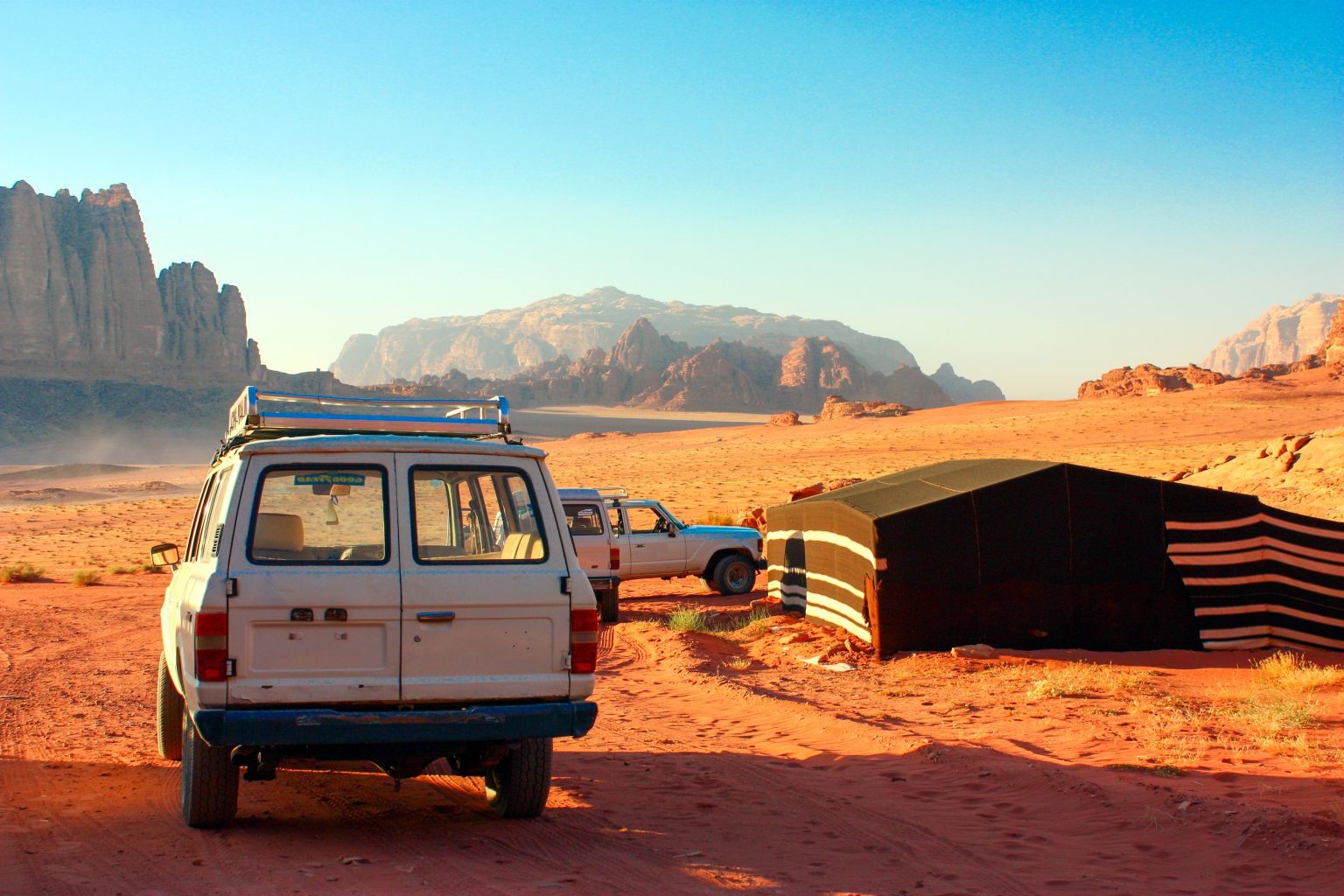
As evening settles over Wadi Rum, the sandstone cliffs take on deeper shades of red and purple, and stars gradually appear above the open desert. Away from busy towns, the changing light and quiet surroundings create a memorable setting for an overnight stay.
- Why Wadi Rum Is a Top Desert Camping Destination in Jordan
- Types of Desert Camps in Wadi Rum
- Best Areas to Explore During a Wadi Rum Camping Trip
- What to Expect During a Night at a Wadi Rum Camp
- What to Pack for Desert Camping in Wadi Rum
- Best Time to Camp in Wadi Rum
- Stargazing in Wadi Rum
- Responsible Desert Camping Etiquette
- A Sample Two-Day Wadi Rum Camping Itinerary
- Make Your Wadi Rum Camping Trip Count
Desert camping in Wadi Rum offers more than a night outdoors. It brings together striking landscapes, local Bedouin hospitality, traditional food, and opportunities to observe the night sky. Whether you choose a simple tent or a comfortable glamping retreat, Wadi Rum camping provides a distinctive way to experience Jordan’s desert heritage and natural scenery.
Why Wadi Rum Is a Top Desert Camping Destination in Jordan
Wadi Rum, often called the Valley of the Moon, is known for its red sand, towering sandstone formations, narrow canyons, and wide desert horizons. Part of the Wadi Rum Protected Area is recognized as a UNESCO World Heritage property, reflecting its natural and cultural significance.
The desert’s open landscapes and relatively limited artificial lighting in many areas can create excellent conditions for stargazing in Wadi Rum, although visibility depends on cloud cover, dust, moonlight, and the location of your camp.
Travelers choose Wadi Rum for several reasons:
- Expansive desert scenery: Red dunes, rugged mountains, and sandstone cliffs create varied landscapes throughout the day.
- Bedouin hospitality: Many local operators introduce visitors to regional food, customs, and desert traditions.
- Sunrise and sunset views: The changing light brings out different colors and textures in the rocks and sand.
- A choice of accommodation: Options range from basic desert camps to more luxurious tents and domes.
- Outdoor activities: Guided 4×4 excursions, short hikes, camel rides, and cultural experiences can be arranged through local operators.
The appeal lies in combining outdoor exploration with a comfortable place to rest after a day in the desert.
Types of Desert Camps in Wadi Rum
Accommodation varies considerably, so check the facilities, location, and services included before booking. The term “Bedouin camp” does not necessarily mean that every property offers the same traditional experience.
Traditional Bedouin Camps
Many camps are operated by local Bedouin families and provide an introduction to hospitality and everyday traditions in the region.
Depending on the property, accommodation may include shared or private tents, mattresses or beds, blankets, communal dining areas, and meals prepared by the camp team. Evenings may feature tea, music, storytelling, or informal conversations with hosts.
Some camps use traditional materials and designs, while others combine local decorative elements with modern facilities.
Traditional-style camps are often suitable for:
- Budget-conscious travelers looking for a straightforward desert stay.
- Cultural travelers interested in local food and hospitality.
- Small groups and families who prefer a relaxed communal atmosphere.
Ask whether bathrooms are private or shared, whether heating is available in colder months, and whether meals are included in the rate.
Luxury Glamping Camps
For visitors who want greater comfort, glamping in Wadi Rum combines desert surroundings with upgraded accommodation.
Depending on the camp, facilities may include:
- Private bathrooms and hot showers.
- Comfortable beds, seating areas, and private terraces.
- Panoramic windows or dome-style accommodation.
- On-site dining and arranged desert excursions.
- Air conditioning, heating, or Wi-Fi at selected properties.
Examples of accommodation options include Memories Aicha Luxury Camp, Aicha Deluxe Wadi Rum Bubble, and Hasan Zawaideh Camp. Facilities and room categories differ, so confirm the details directly before booking.
Luxury camps can suit couples, honeymooners, families, and travelers who prefer private facilities. However, a higher room rate does not necessarily mean that a property is more remote or offers better views.
Eco-Friendly and Remote Camps
Some camps emphasize lower-impact operations and quieter locations within the desert area. Their facilities and environmental practices vary, so look for clear information rather than relying on the term “eco-friendly” alone.
Features worth checking include:
- Solar power or other energy-saving measures.
- Responsible water use and waste management.
- Reusable or reduced single-use packaging.
- Clear procedures for protecting the surrounding landscape.
- Respect for local communities and employment.
Remote camps can provide a quieter setting, but their distance from the village may affect transfer arrangements, mobile coverage, and access to services. Confirm how you will reach the property and whether transport is included.
These camps may appeal to nature lovers and travelers who prioritize responsible desert tourism.
Best Areas to Explore During a Wadi Rum Camping Trip
The best location depends on the activities you want to enjoy and the camp you choose. Some places are landmarks visited during guided excursions rather than designated camping areas, and access may be controlled within the protected landscape.
Wadi Rum Village is the main settlement and a common starting point for visitors. It is convenient for meeting guides, arranging 4×4 tours, and reaching many camps.
Al-Hasany Dunes are known for their red sand and are often included in desert excursions. Depending on local conditions and the operator, visitors may enjoy walking on the dunes, taking photographs, or trying sandboarding.
Lawrence’s Spring is a well-known stop associated with the history and landscapes of Wadi Rum. The surrounding rock formations and routes are commonly explored during guided tours.
Khazali Canyon is notable for its narrow passage and ancient inscriptions. Visitors should follow their guide’s advice and respect archaeological features by avoiding contact with fragile surfaces.
Burdah Rock Bridge is a prominent natural arch reached by a more demanding route involving scrambling and exposed sections. It is better treated as a guided excursion for travelers who are comfortable with the physical requirements, rather than as a casual stop for every visitor.
Choose your camp based on its actual location, the activities included, and the transfer time from the village. Do not assume that every camp sits beside a particular landmark or that visitors can camp freely anywhere in the protected area.
What to Expect During a Night at a Wadi Rum Camp
A typical overnight stay often begins with a transfer from Wadi Rum Village or a meeting point arranged by the camp. Many visitors add a 4×4 desert tour to explore sandstone formations, dunes, and scenic viewpoints before sunset.
A common evening may include:
- Sunset viewing: Stop at a suitable viewpoint to watch the light change across the desert.
- Traditional dinner: Some camps serve zarb, a dish in which meat and vegetables are cooked in an underground oven. Menus vary by camp and may include other local dishes.
- Tea and social time: Mint tea or cardamom-flavored tea may be served while guests relax and talk with their hosts.
- Music and storytelling: Some camps organize Bedouin music or informal cultural activities, although these are not offered everywhere.
- Stargazing: On clear nights, guests can look for constellations and, when conditions allow, the Milky Way.
- Breakfast and departure: The following morning usually brings tea or coffee, breakfast, and an optional early excursion before returning to the village.
The experience depends on the season, the camp’s facilities, and the package you book. If a particular activity matters to you, confirm it in advance rather than assuming it is included.
What to Pack for Desert Camping in Wadi Rum
Desert conditions can change significantly between daytime and nighttime. Even after a warm afternoon, evenings may feel cold, especially during autumn and winter.
Useful items include:
- Layered clothing: Wear light, breathable clothes during the day and bring a warm jacket for the evening.
- A scarf or keffiyeh: This can help protect your face and neck from wind and blowing sand.
- Comfortable footwear: Closed shoes are useful for walking on uneven ground and rocky trails.
- A headlamp or flashlight: Helpful when moving around camp after dark.
- Personal toiletries and medication: Bring any essentials you need, particularly if staying at a remote camp.
- A reusable water bottle: Carry water during excursions and follow your guide’s advice about supplies.
- A power bank: Useful if charging points are limited or you plan to take many photographs.
- Sun protection: Sunglasses, sunscreen, and a hat are important during daytime activities.
For night photography, consider bringing a tripod and a camera capable of long exposures. A small telescope is optional, as many visitors can enjoy the sky without specialist equipment.
In winter, pack thermal layers and warm sleepwear. Ask your camp whether blankets, heating, and suitable cold-weather bedding are provided. Do not rely on a single temperature estimate for the whole desert, as conditions vary by date and location.
Best Time to Camp in Wadi Rum
Spring and autumn are popular periods for camping in Wadi Rum because daytime temperatures are often more comfortable for excursions. Summer can be very hot, while winter brings colder nights and the possibility of rain or unsettled weather.
Spring: March to May
Spring is a good time for hiking, 4×4 trips, and exploring the sandstone landscape. Days are often pleasant, but temperatures can still fall after sunset. Pack layers and check the forecast before departure.
Summer: June to August
Summer afternoons can become extremely hot, particularly in exposed areas with little shade. Plan outdoor activities for early morning or late afternoon, drink water regularly, and follow local guidance on heat exposure. Nights may be cooler than the daytime, but they are not guaranteed to be comfortable without ventilation or suitable bedding.
Autumn: September to November
Autumn often provides favorable conditions for desert excursions and photography. Daytime heat generally becomes less intense as the season progresses, although weather varies from year to year. October and November can be particularly appealing for travelers who prefer milder conditions.
Winter: December to February
Winter brings cold nights, and temperatures can approach freezing in some conditions. Rain and strong winds are also possible. Warm clothing and appropriate bedding are essential, and visitors should check whether their chosen camp provides heating.
April, May, and October are useful months to consider when planning a trip, but the best dates depend on current weather, your preferred activities, and accommodation availability.
Stargazing in Wadi Rum
Wadi Rum’s dramatic landscape extends into the night sky. Away from many sources of artificial light, clear evenings can reveal numerous stars and, under suitable conditions, the Milky Way.
For a better Wadi Rum stargazing experience:
- Check the lunar calendar and consider dates near the new moon for darker skies.
- Look for a camp or viewing area away from bright outdoor lights.
- Give your eyes time to adjust to the darkness.
- Use a tripod and a long exposure if you plan to photograph the stars.
- Ask whether the camp offers a guided astronomy session or works with a specialist operator.
Clouds, dust, moonlight, and seasonal conditions affect what you can see, so no particular view is guaranteed. You do not need expensive equipment to enjoy the sky, and a knowledgeable guide can help identify visible constellations.
Responsible Desert Camping Etiquette
Wadi Rum is both a natural landscape and a place where local communities live and work. Respectful behavior helps protect the area and supports a better experience for visitors and residents.
Follow these practical guidelines:
- Take your rubbish with you: Use the camp’s waste facilities and avoid leaving packaging or food scraps in the desert.
- Respect wildlife: Observe animals from a distance and never feed or chase them.
- Follow designated routes: Use authorized access points and follow your guide’s instructions in sensitive areas.
- Respect cultural customs: Ask before photographing people, dress appropriately for the setting, and follow your hosts’ guidance.
- Support local businesses: Consider booking with reputable local operators and buying services or products from the community.
- Reduce unnecessary waste: Use refillable bottles where safe drinking water is available and avoid disposable items when practical.
- Keep noise under control: Loud music and disruptive behavior can affect other guests and the surrounding environment.
Choose operators that explain their environmental practices clearly. Responsible travel is not just about leaving no rubbish; it also involves respecting the people and heritage that make Wadi Rum distinctive.
A Sample Two-Day Wadi Rum Camping Itinerary
This sample itinerary combines a guided desert excursion with an overnight stay. The order of stops may change according to your camp’s location, weather, and tour arrangements.
Day 1: Explore the Desert and Settle Into Camp
- Arrival: Meet your operator at the agreed point in Wadi Rum Village or the visitor area.
- Desert excursion: Take a guided 4×4 tour to selected sandstone formations, canyons, and viewpoints.
- Dune stop: Visit a suitable dune area for walking, photography, or sandboarding if offered and conditions permit.
- Sunset: Watch the changing colors of the landscape from an appropriate viewpoint.
- Dinner: Return to camp for the evening meal, which may include zarb or other local dishes.
- Overnight stay: Relax at camp and enjoy the night sky if conditions are clear.
Day 2: Sunrise and a Final Desert Visit
- Early morning: Enjoy tea or coffee and watch the sunrise if the weather and camp location allow.
- Breakfast: Eat at camp and prepare for departure.
- Morning activity: Depending on your interests and available time, visit Khazali Canyon or take a short guided walk.
- Return: Travel back to Wadi Rum Village or continue to your next destination using transport arranged in advance.
A two-day stay offers time to explore without rushing through every stop. If you want to hike to Burdah Rock Bridge or undertake a longer route, plan additional time and confirm the difficulty and guide arrangements before booking.
Make Your Wadi Rum Camping Trip Count
Camping in Wadi Rum brings together open desert scenery, distinctive sandstone formations, local hospitality, and the opportunity to spend an evening beneath a wide sky. The experience can be simple or luxurious, active or relaxed, depending on the camp and activities you choose.
Plan around the season, check the facilities before booking, and choose excursions suited to your fitness and interests. By respecting the protected landscape and local customs, you can enjoy a more rewarding Wadi Rum desert camping experience while helping preserve the area for future visitors.