
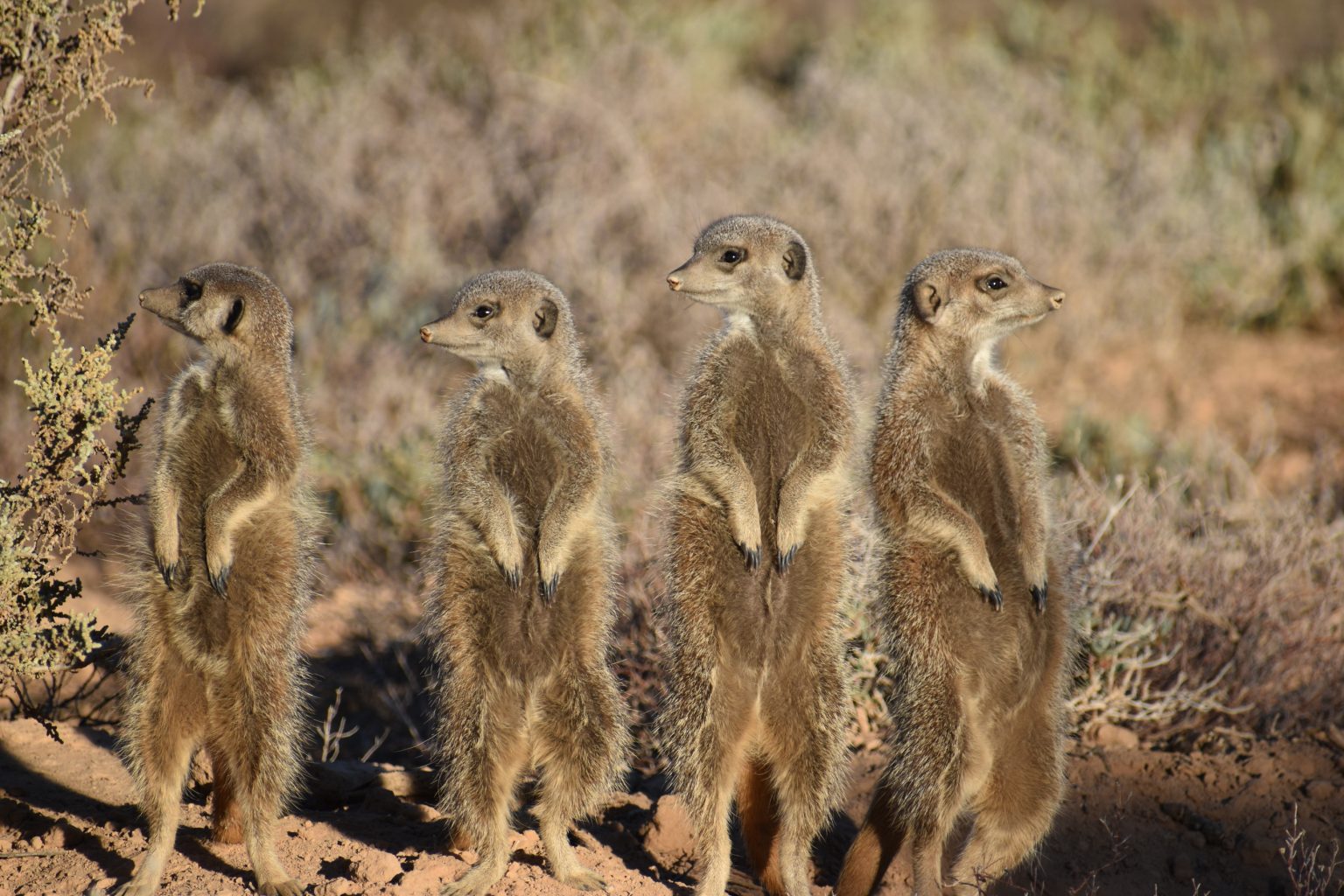
Far from South Africa’s busy cities and coastal destinations, the Kalahari Desert offers a vast landscape of red sand, dry grasslands, river valleys, and scattered trees. Extending across South Africa, Botswana, and Namibia, this South African desert supports an impressive variety of wildlife. Lions, cheetahs, springboks, gemsboks, and meerkats live across its open plains, making Kalahari wildlife one of the region’s main attractions.
- The Desert Landscapes of South Africa
- Animals That Live in South Africa’s Kalahari
- Kalahari Lions, Leopards, and Cheetahs
- Antelope and Other Herbivores
- Birds of the Kalahari
- Reptiles and Insects
- Plants That Can Survive in South Africa’s Kalahari
- Where to See Wildlife in South Africa’s Kalahari
- Things to Do in the Kalahari Desert
- Safari Trips Through the Dunes and River Valleys
- Meerkat Viewing
- Night Safaris
- Birdwatching and Photography
- What the Weather Is Like and When to Go
- How to Travel Safely in the Kalahari
- A Desert Defined by Wildlife and Open Space
The Desert Landscapes of South Africa
The Kalahari landscape is very different from the Sahara. Much of the South African section consists of red or reddish-brown sand, dry grassland, scattered trees, and broad valleys. Rather than being dominated by high dunes, the landscape often appears as a mixture of gently rolling sandy terrain and open plains.
The Auob and Nossob riverbeds are especially important for wildlife. Although they are usually dry, their valleys provide vegetation, shade, and access to underground water, making them natural routes for animals.
Summer rainfall can produce a noticeable change in the landscape. Grasses become greener, seasonal plants appear, and herbivores have more food. During the drier months, vegetation becomes less abundant and animals are often easier to spot around riverbeds and water sources.
The landscape becomes particularly impressive inside the Kgalagadi Transfrontier Park, where red dunes, grass-covered plains, and camel thorn trees create some of the region’s most recognizable scenery.
The South African Kalahari includes several types of dry landscapes:
- Red and reddish-brown sandy plains
- Low dunes and dune fields
- Dry river valleys
- Seasonal grasslands
- Scattered camel thorn and other desert-adapted trees
- Dry pans and open areas with limited vegetation
Animals That Live in South Africa’s Kalahari
The Kalahari supports a wide range of mammals, birds, reptiles, and insects. Its open terrain makes many species easier to observe, particularly along the Auob and Nossob river valleys.
Kalahari Lions, Leopards, and Cheetahs
Lions are among the best-known predators of the Kalahari. The lions of the Kgalagadi region are often recognized for their large size and, in some males, dark or black-tipped manes. They travel considerable distances across the dry landscape in search of prey and often rest beneath scattered trees during the hottest part of the day.
Other major predators include:
- Leopards, which are generally elusive and may use rocky areas, trees, or dense vegetation for cover.
- Cheetahs, which benefit from the Kalahari’s open terrain when pursuing prey.
- African wildcats, smaller predators that are difficult to spot because of their secretive behavior.
- Cape foxes, which are mainly active at night and feed on small mammals, insects, and other available food.
Antelope and Other Herbivores
The Kalahari is home to several antelope species that are well adapted to dry conditions. Among the animals visitors may encounter are:
- Springbok
- Gemsbok, or oryx
- Red hartebeest
- Eland
- Steenbok
Many of these species can survive with limited access to surface water because they obtain moisture from vegetation and have physiological adaptations that help them cope with heat and drought.
Smaller mammals add further variety to the landscape. Meerkats are particularly popular with visitors because they live in social groups and frequently stand upright outside their burrows while watching for predators.
Birds of the Kalahari
South Africa’s Kalahari supports a large variety of bird species, making it an excellent destination for birdwatching. The open terrain allows large birds of prey and ground-dwelling species to be observed across considerable distances.
Notable birds include:
- Kori bustards, among the heaviest flying birds in the world
- Bateleurs
- Martial eagles
- Pale chanting goshawks
- Sandgrouse
- Larks
- Weavers
- Doves
Sandgrouse are particularly well adapted to dry environments and can travel significant distances to reach water. Early morning is often one of the best periods for birdwatching, when temperatures are lower and bird activity is high.
Reptiles and Insects
The warm, dry climate provides suitable conditions for many reptiles and insects. Visitors may encounter:
- Geckos
- Skinks
- Agama lizards
- Puff adders
- Cape cobras
- Various tortoises and other reptiles
Snakes generally avoid human contact, but visitors should remain cautious when walking in areas where visibility is limited.
Insects are also an important part of the Kalahari ecosystem. Termites, ants, beetles, and other insects provide food for many birds, reptiles, and mammals. After rainfall, insect activity can increase significantly, and seasonal flowers may attract butterflies and other pollinators.
Plants That Can Survive in South Africa’s Kalahari
Despite the dry climate, the Kalahari supports a range of trees, grasses, shrubs, and seasonal plants. Many have adaptations that allow them to survive periods of limited rainfall.
The camel thorn tree is one of the most characteristic species of the region. Its deep root system allows it to access underground moisture, while its canopy provides shade for animals.
Other common vegetation includes:
- Camel thorn
- Black thorn and related acacia species
- Shepherd’s tree
- Dry grasses
- Low shrubs
- Seasonal flowering plants
Following good summer rainfall, some areas can become surprisingly green. Grass growth provides food for large numbers of herbivores, while flowering plants attract insects and birds.
Kalahari plants generally conserve water through features such as deep roots, small leaves, protective bark, and growth patterns adapted to seasonal rainfall.
Where to See Wildlife in South Africa’s Kalahari
The Kgalagadi Transfrontier Park is one of the most important wildlife destinations in the South African Kalahari. The park is jointly managed by South Africa and Botswana and provides a large protected area for predators, antelope, birds, and smaller desert-adapted species.
The Auob and Nossob river valleys are particularly productive areas for wildlife viewing. Early morning and late afternoon are usually good periods for game drives because temperatures are lower and many animals become more active.
Another option is the Tswalu Kalahari Reserve, a private conservation area known for luxury safari experiences and a diverse range of wildlife. The reserve offers a more exclusive approach to exploring the Kalahari landscape.
For photographers, the combination of red sand, open plains, wildlife, and changing light provides plenty of opportunities throughout the day.
Things to Do in the Kalahari Desert
Safari Trips Through the Dunes and River Valleys
Four-wheel-drive game drives are one of the main ways to explore the Kalahari. In Kgalagadi, visitors can follow established routes through sandy terrain and along dry river valleys while looking for predators, antelope, birds, and smaller mammals.
The open landscape can also make it easier to observe animal behavior from a safe distance.
Meerkat Viewing
Guided experiences can provide opportunities to observe meerkat colonies as they emerge from their burrows, particularly during the cooler hours of the morning.
Meerkats are social animals, and their constant lookout behavior makes them one of the most recognizable small mammals of the Kalahari.
Night Safaris
After sunset, a different group of species becomes active. Depending on the location and permitted activities, night drives may provide opportunities to see:
- Cape foxes
- Owls
- Porcupines
- Small nocturnal mammals
- Other animals that avoid the daytime heat
Night safaris should always be conducted with authorized guides because of the presence of large predators and other potentially dangerous wildlife.
Birdwatching and Photography
The Kalahari’s open terrain works particularly well for wildlife photography and birdwatching. Dry riverbeds, dunes, grasslands, and scattered trees each attract different species.
Early morning and late afternoon are especially useful for photography because of the softer light and increased animal activity.
What the Weather Is Like and When to Go
The Kalahari has a dry climate with hot summers and cooler winters. Temperature differences between day and night can be significant, particularly during the colder months.
May to September is generally a popular period for wildlife viewing because:
- Days are usually dry and comfortable.
- Vegetation is less dense.
- Animals are often easier to spot around river valleys and water sources.
- Nights and early mornings can be cold.
The summer period, particularly from December to February, can bring higher temperatures and rainfall. Thunderstorms may develop, and grasses and other vegetation can become greener after rain.
Summer can also be rewarding for visitors interested in landscapes, birdlife, young animals, and the seasonal changes brought by rainfall.
How to Travel Safely in the Kalahari
Travel in the Kalahari requires preparation, particularly when visiting remote areas.
- Stay on designated roads and routes.
- Carry sufficient drinking water.
- Do not approach, feed, or attempt to touch wild animals.
- Follow park rules and local instructions.
- Avoid walking outside designated areas without an authorized guide.
- Wear closed footwear when walking outdoors.
- Carry warm clothing because temperatures can fall quickly after sunset.
- Check road and weather conditions before entering remote areas.
- Make sure your vehicle is suitable for sandy and remote terrain when self-driving.
- Keep emergency supplies available when traveling far from services.
Staying at official camps or traveling with experienced guides is particularly useful in remote parts of the Kalahari. Wildlife encounters can happen unexpectedly, so visitors should always maintain a safe distance and follow professional guidance.
A Desert Defined by Wildlife and Open Space
The South African Kalahari is best understood through the relationship between its dry landscape and the wildlife that depends on it. Red sand, grass-covered plains, camel thorn trees, dry river valleys, and seasonal rainfall create an environment capable of supporting lions, cheetahs, springboks, gemsboks, meerkats, birds, reptiles, and countless smaller species.
For visitors, the experience is not limited to seeing individual animals. A drive through the Kgalagadi Transfrontier Park, a morning watching meerkats, a night safari, or a quiet stretch of the Auob or Nossob valley reveals how animals and vegetation adapt to a demanding environment.
The Kalahari offers a distinctive side of South Africa, combining desert scenery, wildlife, photography, and remote safari travel across one of the continent’s most recognizable dry landscapes.