
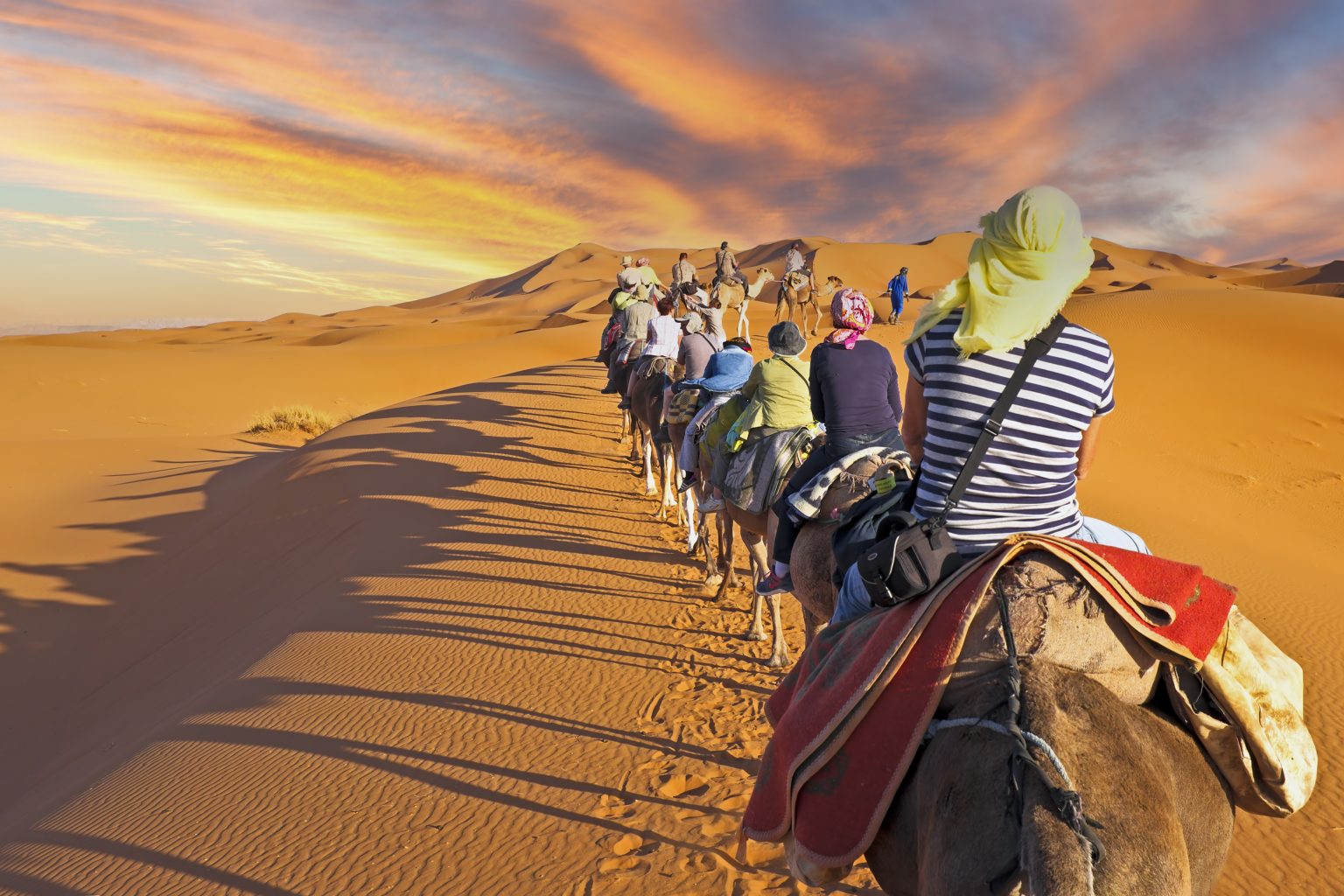
Some of the most distinctive landscapes in the Moroccan Sahara lie around Erg Chebbi and Erg Chigaga, two major dune areas that offer different ways to experience the desert. Erg Chebbi is known for its high golden dunes and convenient access from Merzouga, while Erg Chigaga appeals to travelers looking for a more remote journey across southern Morocco.
- The Iconic Dunes of the Moroccan Sahara
- High Plateaus, Valleys, and Oases
- Nomadic Culture and Traditional Life
- Preparing for Your Trip to the Moroccan Desert
- What to Bring to the Moroccan Desert
- Safety in the Moroccan Desert
- Exploring the Moroccan Desert
- Natural and Cultural Highlights
- Comfort and Food in the Desert
- Photography in the Moroccan Sahara
- Best Time to Visit the Moroccan Desert
- Making the Most of Your Moroccan Desert Journey
Beyond the dunes, the Moroccan desert landscape includes rocky plateaus, broad valleys, palm-filled oases, and historic routes connecting settlements across arid regions. Understanding these environments helps travelers prepare for changing conditions, choose suitable excursions, and explore the Sahara safely and respectfully.
The Iconic Dunes of the Moroccan Sahara
Erg Chebbi Dunes near Merzouga
Erg Chebbi is famous for its tall, golden dunes, which change in color as the sunlight shifts throughout the day. Located near Merzouga, it is one of Morocco’s best-known desert destinations and offers a range of guided excursions and overnight stays.
Popular activities include:
- Sunrise and sunset photography across the dunes.
- Camel rides with local guides.
- Overnight stays at desert camps.
- Stargazing away from bright artificial lights.
- Guided walks on the surrounding sandy terrain.
Erg Chebbi is a practical choice for first-time visitors because Merzouga provides accommodation, restaurants, and tour services within reach of the dunes. Conditions can still be demanding, particularly during hot weather, so visitors should follow local guidance and avoid walking long distances without sufficient water.
Erg Chigaga: A More Remote Desert Experience
Farther southwest, Erg Chigaga offers extensive dune fields and a more remote setting. Excursions commonly depart from the M’Hamid area and cross stretches of rocky desert, dry terrain, and sand before reaching the dunes.
Travel to Erg Chigaga generally requires a suitable 4×4 vehicle and knowledge of the route. Guided trips are the most practical option for visitors unfamiliar with the terrain.
The area appeals to travelers interested in:
- Large dune landscapes away from major settlements.
- Overnight camping in a remote setting.
- Photography across open sand and surrounding plains.
- A longer off-road journey through southern Morocco.
Facilities and services are more limited than around Merzouga, so confirm transport, meals, accommodation, and the expected return arrangements before departure.
High Plateaus, Valleys, and Oases
Wide Plateaus and Open Valleys
The Moroccan Sahara extends well beyond its famous dunes. Rocky plateaus, dry valleys, and open plains create a varied landscape across the country’s southern regions.
Areas around Zagora and the Draa Valley offer views of rugged terrain, desert roads, and settlements connected by long-standing travel and trade routes. These landscapes provide a different experience from the high sand dunes, particularly for visitors interested in road trips, geology, and rural life.
Travelers can explore these areas through:
- Scenic drives between southern towns.
- Guided visits to villages and historic sites.
- Short walks in suitable locations.
- Landscape photography of rock formations and open valleys.
Distances between destinations can be considerable. Plan fuel stops and travel times carefully, especially when leaving main roads or visiting remote locations.
Oases and Palm Groves
Oases are important features of southern Morocco’s arid landscapes. Palm groves, cultivated plots, and traditional irrigation systems support agriculture and settlement where water is available.
The Draa Valley is particularly known for its extensive palm groves and villages. Depending on the location, visitors may learn about date cultivation, local farming practices, and the management of scarce water resources.
Oasis visits are useful for:
- Taking a break from exposed desert terrain.
- Photographing palm groves and cultivated land.
- Learning about traditional irrigation and agriculture.
- Discovering local villages and their surrounding landscapes.
Respect private farmland and ask permission before photographing residents or entering cultivated areas.
Nomadic Culture and Traditional Life
Cultural Traditions of the Moroccan Sahara
Southern Morocco has a rich cultural history shaped by Amazigh communities, pastoral traditions, trade, and movement across arid regions. Cultural practices differ between communities and locations, so visitors should avoid assuming that every desert settlement follows the same customs.
Depending on the area and the experience offered, travelers may encounter:
- Traditional tents and examples of desert camping.
- Locally made crafts, textiles, and jewelry.
- Moroccan mint tea served during visits.
- Regional music and storytelling.
- Local markets and small cultural museums.
Guided visits can provide useful context about the relationship between communities, livestock, water, and seasonal conditions. Choose experiences that explain local traditions accurately and treat residents respectfully.
Preparing for Your Trip to the Moroccan Desert
Choosing the Right Base
The best starting point depends on which landscapes you want to visit and how much time you have.
Common bases include:
- Merzouga: Convenient for exploring Erg Chebbi, with a range of hotels, guesthouses, restaurants, and desert camps.
- M’Hamid El Ghizlane: A common starting point for guided trips to Erg Chigaga.
- Zagora: Useful for exploring the Draa Valley, nearby oases, and southern desert routes.
These destinations offer different services and travel options. Before booking accommodation, check the distance to your planned excursion, whether transfers are included, and how long the journey to the dunes will take.
Understanding Desert Conditions
The Moroccan Sahara is generally dry and receives strong sunlight, but conditions vary by season, elevation, and location. Walking on loose sand can be tiring, while rocky terrain and long drives create different physical demands.
For a more comfortable trip:
- Walk at a manageable pace.
- Drink water regularly.
- Take breaks, particularly during warm weather.
- Follow local advice about route conditions.
- Allow extra time for journeys between remote destinations.
Do not assume that a short distance on a map means a quick journey. Sandy tracks and rough roads can make travel considerably slower than expected.
Planning and Booking Ahead
Desert excursions often begin early in the morning or later in the afternoon to make better use of cooler conditions and suitable light for photography. During popular travel periods, advance reservations can help secure accommodation and guided transport.
Before confirming a guided desert tour, check:
- The route and expected duration.
- Whether transport and a local guide are included.
- Whether meals, drinking water, and overnight accommodation are provided.
- The type of vehicle used for off-road sections.
- Cancellation arrangements if weather or access conditions change.
For remote journeys, experienced local guides provide valuable route knowledge and help travelers respond to changing conditions.
What to Bring to the Moroccan Desert
Clothing for Desert Weather
Desert temperatures can vary considerably between daytime and night. Lightweight clothing is useful in warm weather, while additional layers are important during cooler evenings and winter nights.
Pack items such as:
- Lightweight, breathable shirts and trousers.
- A warm layer for evenings.
- A cheich, or traditional head covering, or another suitable scarf to help protect against sun and blowing sand.
- A hat and sunglasses.
- High-SPF sunscreen.
Choose clothing that protects your skin and allows you to move comfortably. If you plan to spend a night at a desert camp, check expected temperatures rather than relying on the afternoon forecast.
Footwear and Essential Equipment
Closed, sturdy shoes are useful for walking on sand and rocky ground. Sandals may be convenient around camp, but they offer less protection on uneven terrain.
Useful items include:
- A small backpack.
- A reusable water bottle.
- A flashlight or headlamp.
- A fully charged mobile phone.
- A power bank.
- Personal medication and identification.
For remote excursions, ask your guide which additional supplies are required. Keep essential items accessible during transfers and overnight stays.
Hydration and Personal Care
Dry air, sunlight, and physical activity can increase the risk of dehydration. Carry enough water for the planned excursion and drink regularly throughout the day.
Other useful supplies include:
- Lip balm and moisturizer.
- Sunscreen.
- A basic first-aid kit.
- Electrolyte products for demanding activities, when appropriate.
- Tissues and personal hygiene supplies.
Do not rely on shops or drinking water being available once you leave populated areas. Confirm how water and emergency supplies will be managed on longer trips.
Safety in the Moroccan Desert
Managing Sun and Heat
Sun exposure can become intense in the Sahara, particularly during the warmer months. Plan walking and camel-riding activities for cooler parts of the day and avoid strenuous exertion during peak heat.
Follow these precautions:
- Wear sun-protective clothing.
- Apply sunscreen regularly.
- Drink water before and during activities.
- Rest in shade when available.
- Tell your guide immediately if you feel dizzy, nauseated, unusually weak, or confused.
Confusion, collapse, or other signs of severe heat illness require urgent medical attention. Stop the activity and seek help rather than trying to continue.
Avoiding Fatigue
Long drives, walking on soft sand, and repeated activities can become tiring, even when the weather feels comfortable. Build rest periods into your itinerary and adjust the pace to your fitness level.
To reduce fatigue:
- Avoid scheduling too many demanding activities in one day.
- Take regular breaks during walks.
- Eat adequately before longer excursions.
- Carry water and essential medication.
- Tell your guide if you need to stop or slow down.
Camel rides and dune walks can be more physically demanding than they appear, especially in hot weather.
Remote Areas and Connectivity
Mobile coverage can be unreliable in remote parts of the Sahara. Travelers heading into isolated dune fields or across rough desert tracks should not depend entirely on a phone for navigation or emergency communication.
For safer travel:
- Use an experienced local guide for remote routes.
- Share your itinerary with someone when travelling independently.
- Confirm the return plan before leaving.
- Check vehicle suitability and recovery arrangements for off-road journeys.
- Avoid entering deep sand without appropriate experience and equipment.
Independent off-road driving requires preparation beyond having a suitable vehicle. Guided travel is generally the more practical option for visitors unfamiliar with the region.
Exploring the Moroccan Desert
Guided Desert Tours
Guided excursions can combine several landscapes and activities in one itinerary. Depending on the route and operator, a tour may include:
- Transport to Erg Chebbi or Erg Chigaga.
- Visits to oases and desert valleys.
- Scenic stops across rocky plateaus.
- Overnight stays at desert camps.
- Information about local history, geology, and cultural traditions.
Compare itineraries carefully. Some tours focus mainly on dune activities, while others include longer drives and visits to villages or historic sites.
Hiking and Trekking
Short walks near established camps and accessible dunes can be suitable for many visitors when conditions are comfortable. Longer treks require more planning, sufficient water, suitable footwear, and knowledge of the terrain.
Before choosing a trek:
- Ask about the distance and expected walking time.
- Check the amount of shade and access to water.
- Consider temperature and wind conditions.
- Hire a qualified guide for remote routes.
- Avoid setting out alone across unfamiliar dunes.
Follow local advice and turn back if the conditions become uncomfortable or unsafe.
Natural and Cultural Highlights
Nomadic Heritage
The Sahara’s cultural heritage includes pastoral traditions, travel across arid terrain, local crafts, music, and hospitality. In southern Morocco, these traditions vary between communities and should be understood within their local context.
Visitors may learn about traditional desert life through guided conversations, craft demonstrations, local markets, or organised cultural visits. Ask before photographing people, homes, or private gatherings, and choose experiences that represent local communities respectfully.
Colorful Valleys and Rock Formations
The wider southern Moroccan landscape includes rocky slopes, dry valleys, and formations in shades of red, brown, and ochre. These areas contrast with the smoother sand dunes of Erg Chebbi and Erg Chigaga.
For photography and sightseeing, consider:
- Scenic sections of the Draa Valley.
- Rocky terrain along southern desert routes.
- Viewpoints accessible from established roads.
- The changing colors of the landscape in morning and evening light.
Conditions and access vary by location, so check routes before setting out and avoid entering restricted or unstable terrain.
Comfort and Food in the Desert
Traditional Moroccan Desert Cuisine
Food served during desert trips often includes familiar Moroccan dishes, although menus vary between camps and tour operators.
Common options may include:
- Tagine, prepared with vegetables, meat, or other regional ingredients.
- Couscous, often served with vegetables and sometimes meat.
- Soups and lentil dishes.
- Fresh bread.
- Moroccan mint tea.
Meals at desert camps are often shared, providing an opportunity to experience local hospitality. If you have allergies or dietary requirements, inform the operator before the trip and confirm what alternatives can be provided.
Staying Comfortable
A little preparation makes long days in the desert easier. Keep your water, sun protection, and personal items within easy reach, and avoid filling your itinerary with activities that leave no time for rest.
Helpful habits include:
- Drinking water regularly.
- Taking breaks between excursions.
- Wearing comfortable clothing suited to the weather.
- Keeping small belongings secured against wind and sand.
- Bringing a warm layer for the evening.
- Checking camp facilities before an overnight stay.
Photography in the Moroccan Sahara
Best Photography Moments
The dunes and valleys of southern Morocco offer different subjects throughout the day. Low sunlight can bring out the contours of the sand, while palm groves and rocky terrain provide variety beyond the main dune fields.
Consider photographing:
- Erg Chebbi at sunset, when the dunes can take on warm golden and orange tones.
- Erg Chigaga at sunrise, with light spreading across the open sand.
- Palm groves and villages in the Draa Valley.
- The night sky away from bright artificial lighting.
- Rocky plateaus and valleys in the late afternoon.
Light and visibility depend on weather and season. Give yourself time to explore several viewpoints rather than relying on a single planned shot.
Protecting Your Equipment
Fine sand can enter camera bodies, lenses, bags, and other electronics. Protect your equipment before travelling into exposed or windy areas.
Useful precautions include:
- Carrying a protective camera bag.
- Keeping spare batteries and memory cards in sealed storage.
- Avoiding lens changes in windy conditions.
- Using a suitable lens cloth and cleaning tools.
- Storing equipment securely when it is not in use.
- Bringing a power bank for longer outings.
Do not rub dry sand across a lens or screen. Remove particles carefully using suitable cleaning equipment.
Best Time to Visit the Moroccan Desert
Ideal Seasons
The most comfortable periods for many visitors are generally March to May and September to November, although the best dates depend on the route and planned activities.
Winter can offer pleasant daytime conditions, but temperatures may fall sharply at night. Summer brings intense heat, particularly in exposed areas, making demanding daytime activities less comfortable and potentially unsafe.
Before choosing your dates, consider:
- Daytime and nighttime temperatures.
- The length of your planned drives.
- Whether you intend to camp overnight.
- Your tolerance for heat and cold.
- The availability of guided excursions and accommodation.
Check the forecast close to departure because conditions can vary from one part of southern Morocco to another.
Making the Most of Your Moroccan Desert Journey
Common Mistakes to Avoid
A successful desert trip depends on preparation as much as scenery. Avoid these common mistakes:
- Carrying too little water.
- Ignoring sun protection.
- Underestimating cold nights.
- Wearing unsuitable footwear or clothing.
- Planning long excursions without rest breaks.
- Attempting remote off-road routes without experience.
- Leaving rubbish behind or disturbing wildlife.
Building a Balanced Itinerary
Combining different activities provides a fuller picture of the Moroccan Sahara. Depending on your route and available time, you could include:
- A camel ride across the dunes.
- Sunrise or sunset photography.
- An overnight stay at a desert camp.
- A visit to an oasis or village.
- Stargazing after dark.
- A guided journey through the rocky landscapes around southern Morocco.
Allow enough time between destinations, and avoid rushing from one attraction to the next. Local guides can help you choose activities that fit the season, road conditions, and your interests.
From the accessible dunes of Erg Chebbi to the more remote sands of Erg Chigaga, the Moroccan Sahara offers a varied journey through dunes, valleys, oases, and living cultural traditions. With thoughtful preparation, respect for local communities, and suitable guidance, travelers can explore these landscapes comfortably while protecting the environments that make southern Morocco distinctive.