
The Gobi Desert is one of the most famous wilderness regions in Asia. Stretching across northern China and southern Mongolia, it covers a vast area with dramatic landscapes, extreme temperatures, and a long history of human movement and settlement.
- Where Is the Gobi Desert Located?
- Landscape of the Gobi Desert: Stone Over Sand
- Climate: One of the Coldest Deserts on Earth
- Desert Flora: Life on the Edge
- Wildlife of the Gobi Desert
- The Gobi and the Silk Road
- The Gobi and the Mongol Empire
- Flaming Cliffs and Dinosaur Fossils
- Things to Do in the Gobi Desert
- Visit Khongoryn Els (Singing Dunes)
- Explore the Flaming Cliffs
- Stay in a Nomadic Ger
- Camel Trekking
- Stargazing
- Best Places to Visit in the Gobi Desert
- 2-Day Gobi Desert Itinerary
- Practical Travel Tips
- A Desert Shaped by History and Survival
Covering nearly 1.3 million km² (500,000 sq mi), the Gobi is not a classic sand desert. Much of the region consists of gravel plains, rocky plateaus, dry valleys, and isolated dune fields, shaped by wind, temperature changes, and geological processes over millions of years.
The Gobi has played an important role in the history of Central Asia. Trade routes crossed its margins, nomadic communities adapted to its conditions, and major archaeological and paleontological discoveries have revealed much about the region’s past.
Where Is the Gobi Desert Located?
The Gobi Desert spans two countries and a vast portion of Central Asia.
Geographic Range
- China: Xinjiang, Gansu, and Inner Mongolia
- Mongolia: Ömnögovi and Dornogovi provinces
Natural Boundaries
- North: Mongolian Plateau and Altai Mountains
- South: Hexi Corridor and the Tibetan Plateau
- East: Greater Khingan Range
- West: Pamir and Tien Shan Mountains
Approximate coordinates: 42°N, 105°E
The Gobi forms a natural transition between the Central Asian steppes and the more temperate regions of eastern China.
Landscape of the Gobi Desert: Stone Over Sand
Unlike dune-dominated deserts, much of the Gobi Desert is defined by hard surfaces and wide open terrain.
Key features include:
- Vast gravel and stone plains shaped by wind
- Exposed bedrock and rocky plateaus
- Dry riverbeds and seasonal salt lakes
- Isolated sand dune systems, especially in the south
- Mountain ridges rising abruptly from otherwise open terrain
One of the most iconic features is Khongoryn Els, the Singing Dunes, where moving sand can produce a distinctive low humming or booming sound under certain conditions.
The combination of rocky plains, mountains, dry valleys, and isolated dunes gives different parts of the Gobi a noticeably varied appearance.
Climate: One of the Coldest Deserts on Earth
The Gobi Desert climate is extreme, with major seasonal and daily temperature changes.
- Annual rainfall: 50–200 mm (2–8 inches)
- Summer temperatures: 40–45°C (104–113°F)
- Winter temperatures: down to −40°C (−40°F)
- Frequent snowfall in winter
The Gobi is a cold desert, and temperatures can vary dramatically between seasons. Winter brings freezing conditions and snow in some areas, while summer can bring intense heat and strong winds.
Desert Flora: Life on the Edge
Vegetation is sparse but important to the Gobi ecosystem.
Common plant life includes:
- Saxaul trees, whose deep roots help stabilize the soil
- Salt-tolerant shrubs and desert herbs
- Steppe grasses near the desert margins
These plants provide food and shelter for wildlife and support the livestock of nomadic and semi-nomadic communities.
Wildlife of the Gobi Desert
The Gobi supports a range of animals adapted to its dry climate, limited water, and large temperature variations.
Notable Animals
- Bactrian camels, adapted to both hot summers and cold winters
- Snow leopards in mountainous areas
- Mazaalai (Gobi bear), one of the world’s rarest bear populations
- Wolves, foxes, gazelles, and jerboas
- Golden eagles and other birds of prey
Some species move seasonally in response to water availability, vegetation, and temperature.
The Gobi and the Silk Road
The Gobi Desert played an important role in the development of the Silk Road.
Rather than crossing the most difficult sections of the desert directly, many caravans traveled along routes around its edges and through important settlements such as:
- Dunhuang
- Zhangye
- Jiayuguan
- Karakorum, the former Mongol capital
These routes connected East Asia with Central Asia and beyond, supporting trade and cultural exchange across the region.
The Gobi and the Mongol Empire
The Gobi is closely connected to Mongolia’s history.
The region provided the environment in which nomadic pastoral societies developed highly mobile ways of life based on herding and seasonal movement. In the 13th century, Genghis Khan united Mongol tribes and established an empire that eventually became the largest contiguous land empire in history.
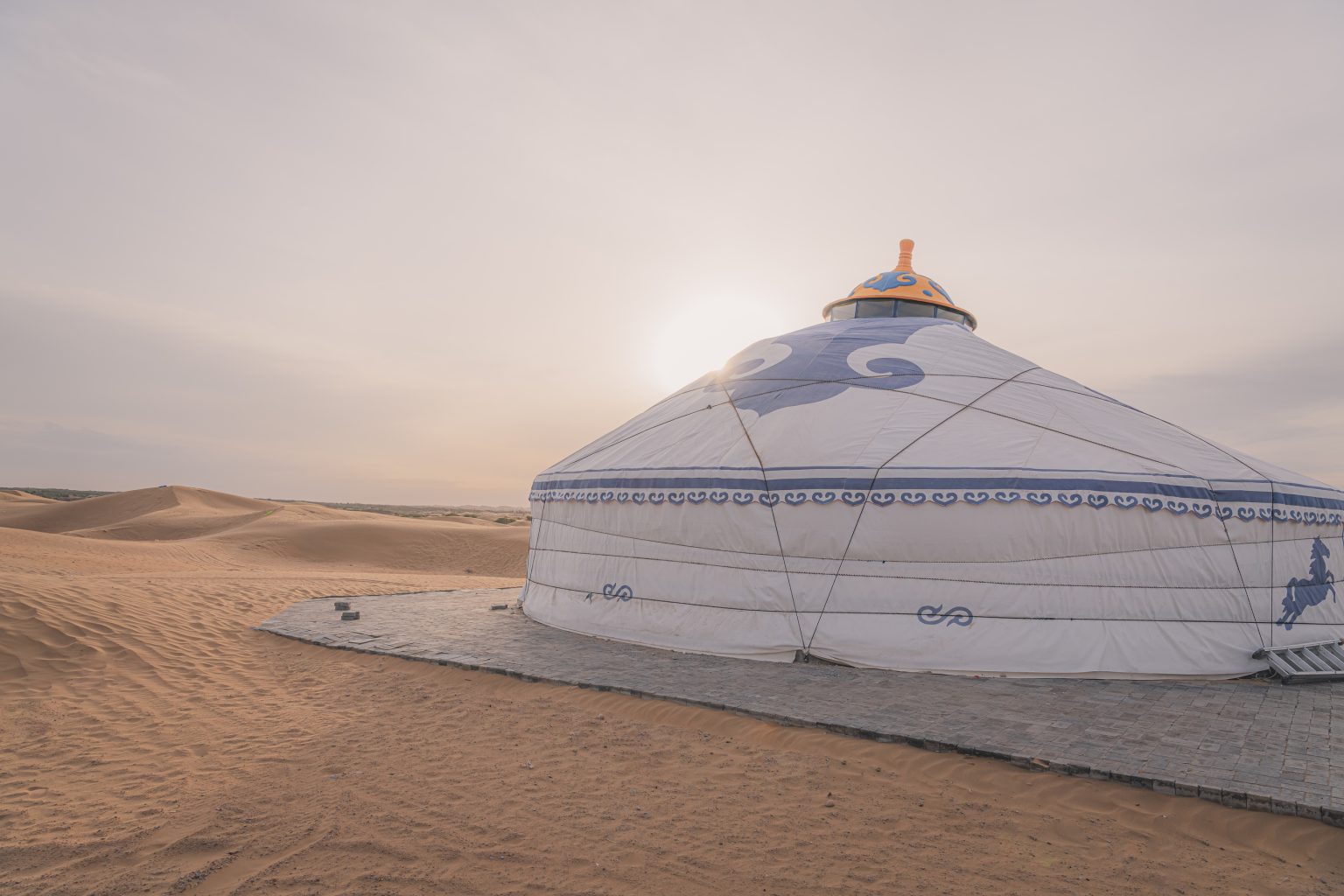
Traditional ger (yurt) camps can still be found across parts of the Gobi, where pastoral families continue to raise livestock and move according to seasonal conditions.
Flaming Cliffs and Dinosaur Fossils
At Bayanzag, also known as the Flaming Cliffs, the Gobi became the site of one of the most important paleontological discoveries of the 20th century.
- The first scientifically recognized dinosaur eggs were discovered here in the 1920s
- Red sandstone cliffs become particularly striking in the changing light
- Fossil discoveries continue to provide information about prehistoric ecosystems
The Gobi remains one of the world’s important regions for dinosaur fossils and other prehistoric remains.
Things to Do in the Gobi Desert
Visit Khongoryn Els (Singing Dunes)
Visit the dunes around sunrise or sunset, when the changing light creates strong contrasts across the sand. Under suitable conditions, moving sand can also produce the characteristic sounds for which the dunes are known.
Explore the Flaming Cliffs
Walk among the red sandstone formations at Bayanzag and learn about the dinosaur fossils discovered in the surrounding area.
Stay in a Nomadic Ger
Spend a night in a traditional ger camp and learn more about pastoral life, local food, and the practical adaptations used by communities living in the Gobi.
Camel Trekking
Ride a Bactrian camel across the open desert landscape and former caravan routes.
Stargazing
With relatively low light pollution in many remote areas, the Gobi offers excellent conditions for viewing the night sky on clear evenings.
Best Places to Visit in the Gobi Desert
- Khongoryn Els
- Flaming Cliffs (Bayanzag)
- Yolyn Am Ice Gorge
- Dunhuang and the Mogao Caves (China)
- Remote nomadic ger camps
2-Day Gobi Desert Itinerary
Day 1
Morning: Flaming Cliffs
Afternoon: Fossil exploration
Evening: Overnight in a ger camp
Day 2
Morning: Camel trek at Khongoryn Els
Afternoon: Drive across rocky plains
Evening: Stargazing in the open desert
Practical Travel Tips
- Best season: May to September
- Dress in layers to prepare for large temperature changes
- Protect yourself from sun, wind, and dust
- Travel with experienced local guides
- Respect nomadic traditions, private camps, livestock, and wildlife
A Desert Shaped by History and Survival
The Gobi Desert is a vast region where geology, wildlife, archaeology, and nomadic culture come together. Its rocky plains and dunes have supported pastoral communities, influenced trade routes, and preserved important fossils from prehistoric life.
For travelers, the Gobi offers a wide range of experiences, from the dinosaur-rich Flaming Cliffs and the dunes of Khongoryn Els to remote ger camps and mountain valleys. Its size and variety make it one of the most distinctive desert regions in Asia.