
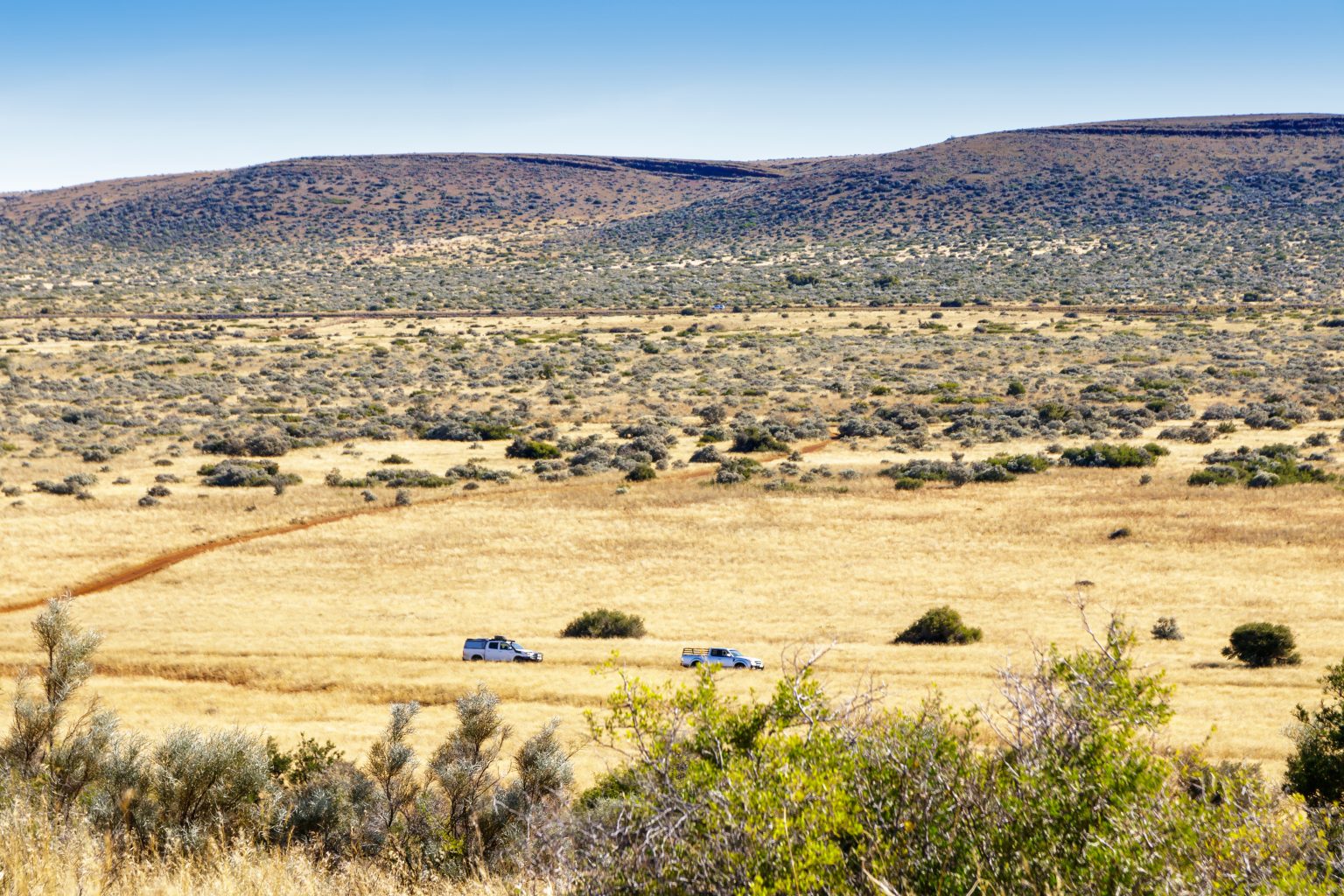
South Africa’s drylands offer striking contrasts, from the red dunes and wildlife of the Kalahari to the rocky plains and fossil-rich landscapes of the Karoo. Exploring these regions reveals how geology, climate, plants, animals, and human communities have adapted to some of the country’s driest environments. This guide to South Africa’s desert landscapes introduces the best places to visit, wildlife encounters, scenic drives, and practical advice for planning a Kalahari and Karoo travel adventure.
- The Kalahari: South Africa’s Desert of Wildlife
- Best Places to Explore in South Africa’s Kalahari
- The Karoo: South Africa’s Drylands of Stone and Time
- Must-Visit Destinations in the Karoo
- Kalahari vs. Karoo: Understanding the Difference
- Things to Do in South Africa’s Kalahari and Karoo
- Best Time to Visit the Kalahari and Karoo
- May to September: Cooler Weather and Wildlife Viewing
- October and November: Warmer Days and Spring Changes
- December to April: Summer Heat and Possible Rain
- What to Pack for South Africa’s Drylands
- Responsible Travel in the Kalahari and Karoo
- A Practical Five-Day South African Drylands Itinerary
- Discover the Contrasting Landscapes of South Africa
Although both regions are associated with dry conditions, they are not identical. The Kalahari is a vast sandy, semi-arid landscape extending across several southern African countries, while the Karoo includes different semi-desert and arid environments across South Africa’s interior. Understanding these differences helps travelers choose destinations that match their interests, whether they prefer wildlife safaris, remote roads, geological history, or desert stargazing in South Africa.
The Kalahari: South Africa’s Desert of Wildlife
The Kalahari is often described as a desert, but much of it is better understood as a semi-arid landscape with grasses, shrubs, scattered trees, and extensive sandy areas. It stretches across Botswana and Namibia and reaches into South Africa, including parts of the Northern Cape.
The region supports wildlife adapted to limited rainfall and seasonal water availability. Its red dunes, dry riverbeds, and open savanna create a distinctive setting for game viewing and photography.
What Makes the Kalahari Unique
- Red sand dunes: Sandy ridges and open dune landscapes change color as the sun moves across the sky.
- Desert-adapted wildlife: Gemsbok, springbok, meerkats, and predators such as lions occur in suitable areas.
- Cultural heritage: San communities have diverse histories and continuing connections to parts of the wider Kalahari region.
- Open night skies: Areas far from towns can offer excellent stargazing when the weather and moonlight are favorable.
The Kalahari is not lifeless or uniformly covered in bare sand. Vegetation, wildlife, and seasonal conditions vary between locations, creating a more complex environment than its desert reputation might suggest.
Best Places to Explore in South Africa’s Kalahari
Kgalagadi Transfrontier Park
Kgalagadi Transfrontier Park spans South Africa and Botswana, with the wider conservation area extending across a landscape of red dunes, dry riverbeds, and open thornveld. It is one of the region’s best-known destinations for wildlife viewing.
The park is particularly associated with black-maned Kalahari lions, although sightings are never guaranteed. Cheetahs, leopards, gemsbok, springbok, and numerous birds may also be encountered.
Highlights include:
- Wildlife viewing: Look for predators and grazing animals along established park roads and near waterholes.
- Red dunes and dry riverbeds: Photograph the contrast between sand, thorn trees, and open sky.
- Self-drive safaris: Explore permitted routes at a pace suited to the park’s road conditions and travel rules.
- Remote accommodation: Choose from established rest camps and selected wilderness camps.
- Stargazing: Enjoy dark skies after sunset, especially away from artificial lighting.
Twee Rivieren, Nossob, and Mata-Mata are established rest camps on the South African side. Several wilderness camps offer a more secluded stay, but accommodation types, access requirements, and facilities vary. Some routes and camps require a 4×4 vehicle, so check the official park guidance before booking.
Kgalagadi is best suited to wildlife enthusiasts, photographers, and travelers prepared for long distances between facilities. Plan fuel, food, water, and overnight stops carefully, and remain inside your vehicle when required by park rules.
Witsand Nature Reserve
Witsand Nature Reserve, near Postmasburg in the Northern Cape, is known for its striking contrast between pale dunes and surrounding reddish terrain. Its shifting sands have earned attention for a phenomenon often called the roaring sands, in which certain conditions can produce a low humming or rumbling sound.
The reserve offers a different experience from the wildlife-focused Kgalagadi. Its appeal lies in the unusual dune landscape, walking opportunities, and natural scenery.
Visitors can enjoy:
- The white dunes: Explore designated areas and photograph the contrast with the surrounding landscape.
- Walking and nature observation: Follow permitted routes and watch for local plants and birds.
- Photography: Visit in softer morning or late-afternoon light to capture the dunes’ changing textures.
- A quieter outdoor stay: Check current accommodation and camping options before traveling.
Do not assume that every dune is open for unrestricted climbing or that sandboarding is available. Confirm permitted activities and current facilities with the reserve before your visit.
Witsand suits travelers interested in unusual geology, scenic walks, and a less conventional desert landscape.
Tswalu Kalahari Reserve
Tswalu Kalahari Reserve is a large private conservation area in the Northern Cape, known for its focus on wildlife protection and low-impact tourism. Its landscapes include open plains, sandy areas, rocky hills, and habitats supporting a range of mammals and birds.
Depending on the season and the location, visitors may have opportunities to see species such as meerkats, antelope, aardvarks, and pangolins. Sightings vary, particularly for elusive or nocturnal animals.
Experiences may include:
- Guided wildlife drives: Explore selected habitats with knowledgeable guides.
- Conservation-focused visits: Learn about the reserve’s wildlife and habitat management.
- Landscape photography: Capture open plains, dunes, and rocky terrain.
- High-comfort accommodation: Stay in a lodge booked through the reserve’s available packages.
Tswalu is a private reserve rather than a public camping area. Access, activities, and accommodation are arranged through its own booking system, so check current options before planning a visit.
It is especially suitable for travelers seeking a guided conservation experience with a higher level of comfort.
The Karoo: South Africa’s Drylands of Stone and Time
The Karoo is a broad region of South Africa’s interior, known for open plains, rocky hills, sparse vegetation, and a rich geological record. It includes different environments rather than one uniform desert, with the Great Karoo and Little Karoo among its commonly recognized subdivisions.
The Karoo semi-desert landscape is especially important for its fossil deposits, which preserve evidence of life from ancient geological periods. Historic towns, farmsteads, mountain passes, and protected areas add cultural and scenic variety to the region.
What Defines the Karoo
- Ancient fossils: The region contains important geological and paleontological evidence, including fossils of ancient vertebrates.
- Rocky plains and plateaus: Much of the scenery is shaped by erosion, sedimentary rock, and long periods of geological change.
- Historic towns: Small settlements offer local food, architecture, museums, and insight into regional history.
- Dark night skies: Remote locations can provide excellent conditions for stargazing when skies are clear.
- Distinctive plant life: The Karoo’s vegetation varies between its different ecological zones and responds to rainfall and seasonal conditions.
Unlike a landscape dominated by tall sand dunes, much of the Karoo is rocky, shrub-covered, and open. Its appeal comes from geological depth, broad horizons, and the contrast between dry plains and surrounding mountains.
Must-Visit Destinations in the Karoo
Tankwa Karoo National Park
Tankwa Karoo National Park lies in a dry region between the Roggeveld Escarpment and the Cederberg area. Its landscape includes sparse vegetation, rocky terrain, open plains, and expansive views that are particularly attractive to photographers.
The park is also known for its dark night skies and remote atmosphere. It offers designated accommodation and camping, along with activities such as birdwatching, game viewing, scenic drives, and selected 4×4 routes.
Things to enjoy include:
- Stargazing: Clear nights can reveal a striking view of the stars away from city lighting.
- Scenic drives: Gravel roads cross broad plains and provide views of the surrounding mountains.
- Birdwatching: Look for species suited to the region’s dry habitats.
- Camping: Use designated campsites and prepare for limited facilities.
- Landscape photography: Capture changing light across the open terrain.
Tankwa is remote, and visitor services are limited. Fuel is not available inside the park, while many roads are gravel or dirt. A vehicle with good ground clearance and suitable tires is advisable, although not every route requires a 4×4. Check road conditions and park guidance before departure.
The park is an excellent choice for travelers who value solitude, dark skies, and self-sufficient outdoor travel.
Karoo National Park near Beaufort West
Karoo National Park, near Beaufort West, protects a landscape of rugged mountains, dry plains, and semi-arid vegetation. It provides an accessible introduction to the Great Karoo’s scenery and natural history.
The park offers opportunities for wildlife viewing, scenic drives, walking, and learning about the region’s fossil record.
Highlights include:
- The Fossil Trail: A short, accessible trail with displays that introduce visitors to the Karoo’s geological and paleontological history.
- Scenic routes: Explore the park’s varied terrain from designated roads.
- Wildlife viewing: Look for animals adapted to the region’s dry conditions, while remembering that sightings depend on luck and season.
- Nature walks: Follow permitted trails and check current guidance before setting out.
- Overnight accommodation: Stay at designated park facilities if you want to explore at a relaxed pace.
The park is particularly suitable for families, road-trippers, and visitors interested in geology as well as wildlife. It should not be treated as a typical sandy desert destination, because its scenery is dominated by mountains, rocky slopes, and open semi-arid terrain.
Prince Albert and Swartberg Pass
Prince Albert is a historic town on the edge of the Great Karoo, known for its Cape Dutch-style architecture, local produce, and views toward the Swartberg Mountains. It offers a cultural counterpoint to the region’s remote national parks.
Nearby Swartberg Pass crosses dramatic mountain scenery and connects the Karoo with the Little Karoo. The road is known for its winding route, steep slopes, and striking geological formations.
Visitors can enjoy:
- Historic architecture: Explore the town’s older buildings and local heritage.
- Regional food: Sample locally produced foods and seasonal specialties.
- Mountain scenery: Take in the changing landscape around Swartberg Pass.
- Photography: Capture the contrast between dry plains and rugged mountain slopes.
Road conditions can change, and the pass is not suitable for every vehicle or weather situation. Check current conditions before driving, allow time for the winding route, and avoid treating it as an off-road trail.
Prince Albert works well for travelers who want to combine cultural stops with the Karoo’s broader natural landscapes.
Kalahari vs. Karoo: Understanding the Difference
Although the Kalahari and Karoo are both associated with dry environments, they offer different landscapes and travel experiences.
The Kalahari is known for sandy terrain, wildlife-rich conservation areas, and large stretches of semi-arid savanna. Destinations such as Kgalagadi are especially rewarding for game viewing and desert photography.
The Karoo is more closely associated with rocky plains, fossil-rich geology, historic settlements, and broad mountain horizons. Places such as Tankwa Karoo National Park appeal to travelers seeking remote scenery and dark skies.
For a trip focused on wildlife, the Kalahari is often the stronger choice. For geology, historic towns, and quiet scenic drives, the Karoo offers a different kind of exploration. Travelers with enough time can experience both, but they should plan separate regional itineraries rather than assume the two are close together.
Things to Do in South Africa’s Kalahari and Karoo
Activities depend on the destination, access rules, season, and local providers. The following options are available in selected areas rather than throughout both regions.
- 4×4 driving: Explore designated routes in Kgalagadi or Tankwa Karoo where vehicle requirements and road conditions permit.
- Wildlife photography: Look for Kalahari predators, antelope, birds, and other animals from permitted viewing areas.
- Camping and stargazing: Stay at designated campsites or approved accommodation and enjoy the night sky when conditions are clear.
- Birdwatching: Observe species adapted to dryland habitats, using local checklists to identify what occurs in each area.
- Fossil interpretation: Visit the Fossil Trail at Karoo National Park or other established museums and heritage sites.
- Scenic drives: Travel through the Karoo’s open plains and mountain passes, allowing extra time for gravel roads.
- Cultural visits: Learn about regional heritage through reputable local guides and community-led experiences.
Sandboarding should not be assumed to be available in Witsand, Augrabies, or other dryland destinations without confirmation from the relevant reserve or operator. Choose activities that are explicitly offered and permitted at your chosen location.
Best Time to Visit the Kalahari and Karoo
The best time to visit depends on your priorities. Wildlife viewing, comfortable driving, photography, and camping each respond differently to seasonal temperatures and rainfall.
May to September: Cooler Weather and Wildlife Viewing
The cooler months can be comfortable for daytime exploration, although winter nights may become very cold. In the Kalahari, dry conditions can make wildlife easier to spot around water sources, but animal movements and sightings remain unpredictable.
In the Karoo, clear winter nights can provide good stargazing opportunities. Bring warm clothing, particularly if camping or spending extended periods outdoors after sunset.
October and November: Warmer Days and Spring Changes
Spring brings warmer temperatures, and some areas may show seasonal changes in vegetation following rainfall. Conditions vary between the Kalahari, Nama-Karoo, and Succulent Karoo, so flowering periods and wildlife activity should not be generalized across the entire region.
This period can work well for photography and scenic drives, provided you plan around the forecast and avoid excessive midday heat.
December to April: Summer Heat and Possible Rain
Summer can bring high temperatures, particularly in exposed inland areas. Rainfall patterns vary across South Africa’s drylands, and thunderstorms may affect roads or access in some locations.
For summer travel:
- Plan outdoor activities for the cooler hours of the day.
- Carry enough water for driving, walking, and unexpected delays.
- Check road conditions after heavy rain.
- Confirm campsite access and weather-related restrictions.
- Avoid remote travel without adequate supplies and a clear route plan.
For many visitors, the cooler months offer a practical balance of daytime comfort and nighttime stargazing, but the ideal dates depend on the exact destinations.
What to Pack for South Africa’s Drylands
Preparation is particularly important in remote areas where fuel, shops, accommodation, and mobile reception may be limited.
Essential Items
- Layered clothing: Bring breathable clothing for warm days and warm layers for cold nights.
- Sun protection: Pack a hat, sunglasses, and sunscreen.
- Drinking water: Carry enough for everyone and allow extra for heat, walking, and delays. Needs vary with conditions and activity.
- Food and snacks: Bring sufficient supplies for the planned route, especially in areas with few services.
- Navigation tools: Download offline maps and carry a reliable route plan.
- Communication equipment: Keep your phone charged and consider additional communication options for remote journeys.
- First-aid supplies: Bring a basic kit and any personal essentials.
- Camera and binoculars: Useful for wildlife viewing, birds, and distant landscapes.
- Camping equipment: If camping independently, carry suitable shelter, sleeping equipment, lighting, and cooking gear.
- Vehicle preparation: For remote drives, check tires, spare wheels, fuel range, and recovery equipment appropriate to your vehicle and route.
Do not assume that every itinerary requires a 4×4. Some gravel roads can be driven in a suitable two-wheel-drive vehicle, while certain wilderness routes require high clearance or four-wheel drive. Confirm requirements for the specific route.
Responsible Travel in the Kalahari and Karoo
Both regions contain fragile habitats and important cultural and geological heritage. Responsible travel helps protect these places while supporting local communities and conservation work.
- Stay on permitted roads and tracks: Avoid creating new vehicle routes across vegetation or fragile terrain.
- Leave no waste behind: Pack out rubbish and use designated disposal facilities.
- Keep a respectful distance from wildlife: Never feed, chase, or approach animals for photographs.
- Protect fossils and archaeological sites: Do not collect, remove, or mark fossils, rocks, or cultural objects.
- Follow park rules: Observe speed limits, gate hours, camping restrictions, and fire regulations.
- Support local operators: Choose reputable guides, community-linked experiences, and accommodation that respects conservation requirements.
- Prepare for limited services: Carry enough water and fuel, and share your plans when traveling into remote areas.
In these dry environments, small disturbances can persist for a long time. Responsible driving and camping are essential parts of a successful visit.
A Practical Five-Day South African Drylands Itinerary
The Kalahari and Karoo are separated by long road distances, so a five-day trip should focus on one region rather than attempt to cover both in a single rushed loop. The following options provide two more practical ways to plan your time.
Option A: Five Days in the Kalahari
Day 1: Arrive in Upington
Use Upington to organize supplies, check your vehicle, and confirm park bookings before continuing to Kgalagadi Transfrontier Park.
Day 2: Enter Kgalagadi
Travel to your booked camp and explore permitted park roads, allowing time for wildlife viewing and stops at designated viewpoints.
Day 3: Wildlife and Scenic Drives
Spend another day exploring the park. Keep your schedule flexible because animal sightings depend on location, season, and chance.
Day 4: Explore a Different Area of the Park
Choose a route suited to your accommodation and vehicle. Do not attempt a remote wilderness route unless you meet its vehicle, booking, and safety requirements.
Day 5: Return Toward Upington
Leave enough time for the return journey, fuel planning, and any stops along the way.
Option B: Five Days in the Karoo
Day 1: Arrive near Beaufort West
Settle into your accommodation and prepare for a visit to Karoo National Park.
Day 2: Explore Karoo National Park
Enjoy scenic drives, wildlife viewing, and the Fossil Trail.
Day 3: Travel Toward the Tankwa Region
Plan the road journey carefully and confirm your accommodation before entering remote areas. Allow extra time for gravel roads.
Day 4: Tankwa Karoo National Park
Explore designated routes, enjoy the open landscape, and spend the evening stargazing if weather conditions allow.
Day 5: Return via a Planned Route
Check road conditions before departure and allow enough time to reach your next destination safely.
Combining both regions is possible on a longer road trip, but it requires careful route planning and additional travel days. Avoid treating Upington, Kgalagadi, Witsand, Tankwa, and Beaufort West as nearby stops on a compact itinerary.
Discover the Contrasting Landscapes of South Africa
The Kalahari and the Karoo reveal different sides of South Africa’s drylands. The Kalahari offers sandy landscapes, wildlife, and conservation areas, while the Karoo is distinguished by rocky plains, ancient fossils, historic towns, and expansive mountain scenery.
Choosing the right route allows you to experience these differences without rushing between distant destinations. Whether your priority is a wildlife safari in Kgalagadi, the unusual dunes of Witsand, or the dark skies of Tankwa Karoo National Park, thoughtful planning will make the journey more rewarding.
Together, these regions show that South Africa’s drylands are not one uniform desert. They are a varied collection of ecosystems and landscapes, each with its own natural history, wildlife, and reasons to explore.