
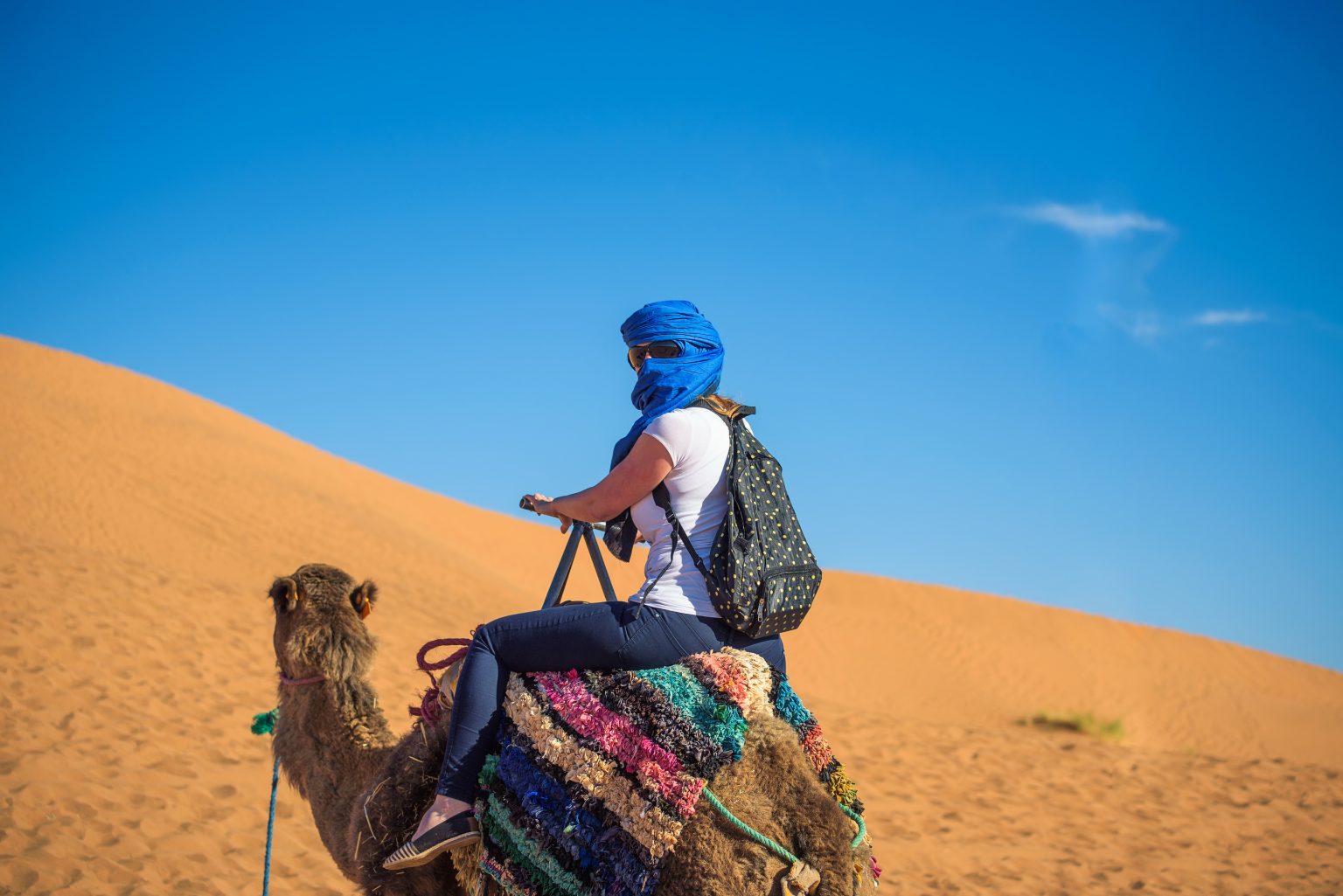
Camel trekking in Morocco offers a way to explore the Sahara at a slower pace while learning about the country’s desert landscapes and cultural heritage. For generations, camels played an important role in transporting people and goods across arid regions, connecting settlements, trading routes, and oases. Today, visitors can experience guided camel rides among the Erg Chebbi dunes near Merzouga or arrange longer desert journeys toward Erg Chigaga near M’Hamid El Ghizlane. This guide covers the main routes, what to expect, the best time to travel, and how to choose a responsible desert experience.
- Why Choose Camel Trekking in the Moroccan Sahara?
- Best Camel Trekking Routes in Morocco
- What to Expect During a Camel Trek
- Best Time for Camel Trekking in Morocco
- How to Prepare for a Camel Trek
- Amazigh Hospitality and Cultural Exchange
- Photography and Filming in the Sahara
- Responsible Camel Trekking in Morocco
- Camel Trekking Prices and Available Tours
- Safety Tips for Camel Trekking
- A Suggested Two-Day Camel Trek in Erg Chebbi
- Explore Morocco’s Sahara at a Slower Pace
Why Choose Camel Trekking in the Moroccan Sahara?
Camel trekking provides a different perspective on the desert from traveling by 4×4. The slower pace allows more time to observe dune patterns, desert plants, changing light, and the landscapes around traditional settlements.
Reasons to consider a camel trek include:
- A slower way to explore: Travel across sandy terrain at a pace that allows time for observation and photography.
- Desert scenery: Experience sunrise or sunset over the dunes, when the changing light reveals their shapes and textures.
- Cultural connections: Learn about regional history and daily life from local guides who know the surrounding landscape.
- Overnight camping: Selected tours combine a camel ride with dinner, accommodation in a desert camp, and an early-morning return.
- Photography opportunities: Capture camel caravans, dune ridges, and the colors of the desert at different times of day.
Camel trekking is not the only way to experience the Sahara, and the best option depends on your destination, available time, and comfort preferences. A short ride can suit first-time visitors, while longer expeditions require more preparation and time in the saddle.
Best Camel Trekking Routes in Morocco
Erg Chebbi near Merzouga
Erg Chebbi is one of Morocco’s best-known dune fields, located near Merzouga in the southeastern part of the country. Its tall, golden dunes and established tourism services make it a practical destination for travelers who want to combine camel trekking with an overnight desert stay.
Popular experiences include:
- Sunset camel rides: Travel into the dunes during the late afternoon and watch the changing light.
- Overnight camel excursions: Ride to a desert camp for dinner and a night under the stars, then return the following morning.
- Longer desert journeys: Some local operators arrange extended treks toward remote areas, including routes in the direction of Taouz, depending on the itinerary.
- Desert camping: Choose between basic traditional-style camps and accommodation offering additional comfort.
- Visits to Khamlia: Explore the village near Merzouga, known for its Gnawa musical heritage, through a separate excursion or an itinerary that includes the village.
Erg Chebbi is accessible by road from Merzouga, with a range of accommodation and tour providers in the surrounding area. However, Merzouga is a substantial journey from major cities such as Marrakech and Fez, so allow enough time for road travel.
For photography, early morning and late afternoon usually provide softer light and more defined shadows. Ask your guide to stop at suitable locations without disturbing other visitors or putting the animals at risk.
Erg Chigaga near M’Hamid El Ghizlane
Erg Chigaga is a large, relatively remote dune system west of M’Hamid El Ghizlane, at the southern end of the Draa Valley. It appeals to travelers looking for a more remote Sahara experience, with fewer nearby settlements and long stretches of sandy and rocky terrain.
What makes Erg Chigaga distinctive:
- Extensive dunes: Some dunes are reported to reach around 300 meters in height.
- Remote landscapes: The journey passes through open desert terrain away from major towns.
- Multi-day camel treks: Longer itineraries can travel through the desert toward the dunes, with overnight stops arranged by local operators.
- Desert camps: Accommodation ranges from simple bivouacs to camps with more facilities.
- Night-sky viewing: The distance from large urban areas can provide excellent stargazing when skies are clear and moonlight is limited.
Reaching Erg Chigaga usually involves a 4×4 transfer from M’Hamid or another suitable access point. Multi-day camel treks are also possible, but they require advance planning and should not be confused with a short camel ride offered near a roadside camp.
This destination is particularly suitable for travelers who have additional time and want a more remote expedition. Confirm the route, duration, overnight arrangements, and the amount of time spent riding each day before booking.
The Draa Valley and Zagora
The Draa Valley stretches through southern Morocco, with palm groves, villages, historic kasbahs, and desert landscapes surrounding the route toward Zagora and M’Hamid.
The area offers several ways to experience the desert without committing to a long expedition.
Options include:
- Short camel rides: Local operators may arrange rides around accessible dunes near Zagora.
- Tinfou Dunes: These smaller dunes are a convenient option for visitors looking for a brief desert outing.
- Overnight camps: Selected operators offer overnight stays combined with local meals and cultural activities.
- Palm groves and villages: Explore the agricultural landscapes and settlements that form part of the wider Draa Valley.
- Longer Sahara journeys: Use Zagora as a starting point for a trip toward M’Hamid and, with suitable arrangements, Erg Chigaga.
The dunes around Tinfou are smaller and more accessible than Erg Chebbi and Erg Chigaga. They are useful for a short introduction to sandy desert landscapes, but they should not be presented as equivalent to a multi-day trek deep into the Sahara.
If your main goal is an extended camel expedition, check whether the operator begins the trek near Zagora, M’Hamid, or another location. These starting points involve different routes and travel times.
What to Expect During a Camel Trek
A camel trekking experience in Morocco varies according to the location, tour length, and operator. A short excursion may last around an hour or two, while an overnight trip combines riding with time at a desert camp.
A typical overnight experience may include:
- Departure in the afternoon: Meet your guide, receive instructions, and begin the ride when conditions are suitable.
- A journey through the dunes: Travel at the camel’s pace, with stops depending on the route and the needs of the group.
- Sunset viewing: Pause at a suitable location to enjoy the landscape and take photographs.
- Dinner at camp: Meals may include Moroccan dishes such as tagine, salads, or bread, depending on the provider.
- An overnight stay: Sleep in a tent or other accommodation provided by the camp.
- Morning in the desert: Enjoy the early light before returning by camel or another arranged form of transport.
Camel movement can feel unfamiliar, particularly when the animal stands up or kneels. Follow your guide’s instructions when mounting and dismounting, and ask for assistance if you feel unsteady.
Longer rides can cause discomfort in the hips, back, or legs. Wear suitable clothing, take breaks when possible, and tell your guide if you experience pain. A camel trek should be enjoyable, not a test of endurance you did not sign up for.
Best Time for Camel Trekking in Morocco
The most comfortable months for camel trekking in Morocco’s Sahara are generally in autumn, winter, and early spring. Conditions vary between destinations and from one day to another, so check the forecast before departure.
- October to November: Temperatures often become more comfortable after summer, making this a good period for outdoor activities.
- December to February: Daytime conditions can be pleasant, but nights may be very cold, especially in open desert camps.
- March to April: Spring can offer comfortable mornings and evenings, although daytime temperatures gradually rise.
- May to June: Heat becomes more challenging, particularly around midday. Short rides may still be possible during cooler hours, depending on conditions.
- July to August: Extreme heat can make prolonged outdoor activities unsafe. Avoid strenuous rides during dangerous conditions and follow local advice.
- September: Temperatures begin to ease in many areas, although hot weather can continue.
For many visitors, October through April is a practical period for camel trekking, with November through March often offering comfortable conditions for outdoor exploration. No month guarantees ideal weather, and winter nights require suitable warm clothing.
Plan longer rides for cooler hours whenever possible. Responsible operators should adjust or postpone activities when heat, wind, or other conditions could put visitors or camels at risk.
How to Prepare for a Camel Trek
Packing appropriately helps make a desert excursion more comfortable, particularly when it includes an overnight stay.
Essential items
- Lightweight, breathable clothing: Long sleeves and long trousers can help protect your skin from the sun.
- A scarf or head covering: Useful for protection from sunlight and blowing sand.
- Sunglasses and sunscreen: Strong sunlight can cause discomfort even during cooler months.
- Comfortable footwear: Choose shoes that stay securely on your feet and protect them when walking over sand.
- Drinking water: Confirm what the operator provides and carry additional water when appropriate.
- A warm layer: Essential for evenings and early mornings during the cooler season.
- A small day bag: Keep personal essentials accessible without carrying unnecessary weight.
Useful extras
- A headlamp or flashlight: Helpful when moving around camp after dark.
- A camera or phone: Protect electronic equipment from fine sand.
- A power bank: Useful when charging facilities are limited.
- Personal medication: Bring what you need for the duration of the trip.
- A reusable water bottle: Helps reduce single-use plastic when safe refilling options are available.
Ask your operator whether bedding, blankets, meals, drinking water, and luggage transport are included. Requirements differ between camps, especially on remote routes.
You do not need special athletic training for a short camel ride, but longer treks require more stamina and tolerance for repeated hours in the saddle. If you have mobility difficulties or concerns about riding, discuss the demands with the operator before booking.
Amazigh Hospitality and Cultural Exchange
The Sahara is home to diverse communities, including Amazigh people whose languages, customs, and histories vary across Morocco. Local guides may share knowledge of desert travel, regional history, traditional food, and life in settlements around the dunes.
Depending on the experience, cultural encounters may include:
- Mint tea: A familiar part of hospitality in many Moroccan households and camps.
- Moroccan meals: Traditional dishes vary by location, household, and the arrangements made by the camp.
- Music: Some camps arrange local performances, while other experiences focus on conversation and the desert environment.
- Stories of the region: Guides may explain routes, seasonal conditions, and the history of nearby communities.
- Amazigh language: Learning a greeting such as Azul can be a friendly way to begin a conversation, although usage varies between Amazigh languages and regions.
Do not assume every guide or camp offers the same traditions, music, or food. Ask what is included and whether a cultural activity is led by local practitioners.
When photographing people, ask permission first. Approach cultural encounters with curiosity and respect, and remember that local communities are living societies, not simply part of a tourist attraction.
Photography and Filming in the Sahara
The changing light across the dunes makes Morocco’s desert regions attractive to photographers. Sunrise and sunset can reveal patterns in the sand that are less visible under the stronger midday sun.
Practical tips include:
- Photograph early or late: Softer light and longer shadows can bring out the contours of the dunes.
- Use a tripod for night photography: This helps keep the camera steady during longer exposures.
- Protect your equipment: Keep lenses and cameras covered when wind carries sand.
- Check focus after dark: Autofocus may struggle in low light, so manual focus can be useful.
- Include the landscape: A camel, person, or tent can provide scale when photographed with permission.
- Respect other visitors: Avoid blocking paths or interrupting other groups to obtain a photograph.
Clear desert skies can offer excellent views of the Milky Way, particularly when the moon is not bright. However, visibility depends on the weather, light pollution, and time of year.
If you plan to film a camel caravan, ask the guide where you can safely stand and avoid directing the animals or riders into uncomfortable positions for the sake of a shot.
Responsible Camel Trekking in Morocco
Responsible trekking should protect both the desert environment and the welfare of the animals. Camels are working animals, and their condition, handling, workload, and access to water matter throughout the experience.
Before booking, look for operators who:
- Check animal condition: Camels should appear alert and reasonably healthy, without obvious untreated wounds or signs of severe distress.
- Manage workloads responsibly: Animals should receive appropriate rest and should not be overloaded.
- Provide water and suitable care: Ask how the operator manages water, feeding, shade, and veterinary attention.
- Use appropriate equipment: Saddles and straps should fit properly and not cause obvious rubbing or injury.
- Respect the environment: Routes should avoid unnecessary damage to vegetation and fragile desert habitats.
- Support local communities: Choose transparent operators who work fairly with local guides, camp staff, and suppliers.
During the trek, tell your guide if you notice an animal limping, struggling, or showing signs of distress. Avoid demanding extra rides or activities when conditions are too hot.
Visitors can also reduce their environmental impact by carrying rubbish back to camp, limiting disposable plastics, and respecting private land and local customs.
Camel Trekking Prices and Available Tours
The cost of camel trekking in Morocco varies according to the destination, duration, group size, season, accommodation, and services included. Prices advertised by different operators are not always directly comparable.
Common options include:
- Short sunset ride: Usually a brief excursion near a popular dune area, sometimes with tea or transport included.
- Overnight camel trek: Often combines a ride, camp accommodation, dinner, and breakfast.
- Multi-day camel expedition: A longer journey with meals, overnight stops, guide support, and additional logistics.
- Private desert experience: A customized itinerary for travelers who prefer a private guide or a flexible schedule.
- Luxury desert stay: May include upgraded tents, private facilities, and additional services, with the camel ride offered as one part of the package.
Before booking, confirm:
- Whether transport to the starting point is included.
- The actual riding time and total duration.
- Whether meals, drinking water, bedding, and camp accommodation are provided.
- Whether the excursion is private or shared.
- The operator’s cancellation policy and arrangements if weather conditions change.
- How the camels are cared for and how their workloads are managed.
Avoid relying on fixed price ranges without checking current offers. Request a clear breakdown in the currency you will pay, and compare what each package includes rather than choosing on price alone.
Safety Tips for Camel Trekking
The Sahara is a remote environment, and conditions can change quickly. Even a short excursion requires sensible preparation.
Follow these precautions:
- Choose an experienced guide: Local knowledge is especially important on remote routes and overnight journeys.
- Carry sufficient water: Confirm the supply arrangements and bring additional water when advised.
- Protect yourself from the sun: Wear suitable clothing, use sunscreen, and plan around the heat.
- Follow mounting instructions: Wait for the camel to kneel fully and follow the guide’s assistance when getting on or off.
- Secure your belongings: Keep phones, cameras, and bags from swinging or falling during the ride.
- Tell your guide about discomfort: Do not continue silently if you experience pain, dizziness, or signs of heat illness.
- Check the itinerary: Make sure someone knows your arrangements on longer excursions and confirm emergency procedures with the operator.
If weather conditions become unsafe, postpone the trek. A reliable operator should put the safety of visitors and animals ahead of the planned schedule.
A Suggested Two-Day Camel Trek in Erg Chebbi
This itinerary is a practical example of an overnight camel experience near Merzouga. Exact departure times, routes, and camp arrangements depend on the provider and current conditions.
Day 1: Merzouga to a Desert Camp
Meet your guide in Merzouga and receive instructions before beginning the camel ride. Travel into the dunes during the late afternoon, stopping at suitable viewpoints for photographs and rest.
Reach the camp before dark, where the evening may include dinner and time to enjoy the desert surroundings. Some camps arrange music or other cultural activities, but these should be confirmed when booking.
Day 2: Sunrise and Return to Merzouga
Wake early if weather conditions permit and enjoy the changing light across the dunes. After breakfast, return to Merzouga by camel or another transport option included in your package.
If time allows, arrange a separate visit to Khamlia to learn about the village’s Gnawa musical heritage. Confirm the transport and schedule in advance rather than assuming the visit is automatically included in the camel trek.
For travelers who want a more remote experience, a multi-day journey toward Erg Chigaga is an alternative. It requires a different itinerary and more time, so it should be planned separately.
Explore Morocco’s Sahara at a Slower Pace
Camel trekking offers a distinctive way to experience Morocco’s desert landscapes, whether you choose the accessible dunes of Erg Chebbi, the remote expanse of Erg Chigaga, or a shorter excursion in the Zagora region. Each destination provides a different balance of scenery, travel time, accommodation, and cultural experiences.
Choose a route that matches your schedule, travel during comfortable weather, and ask clear questions about the itinerary and animal welfare before booking. With thoughtful preparation and respect for local communities, camel trekking in Morocco can become a rewarding part of a wider Sahara journey.