
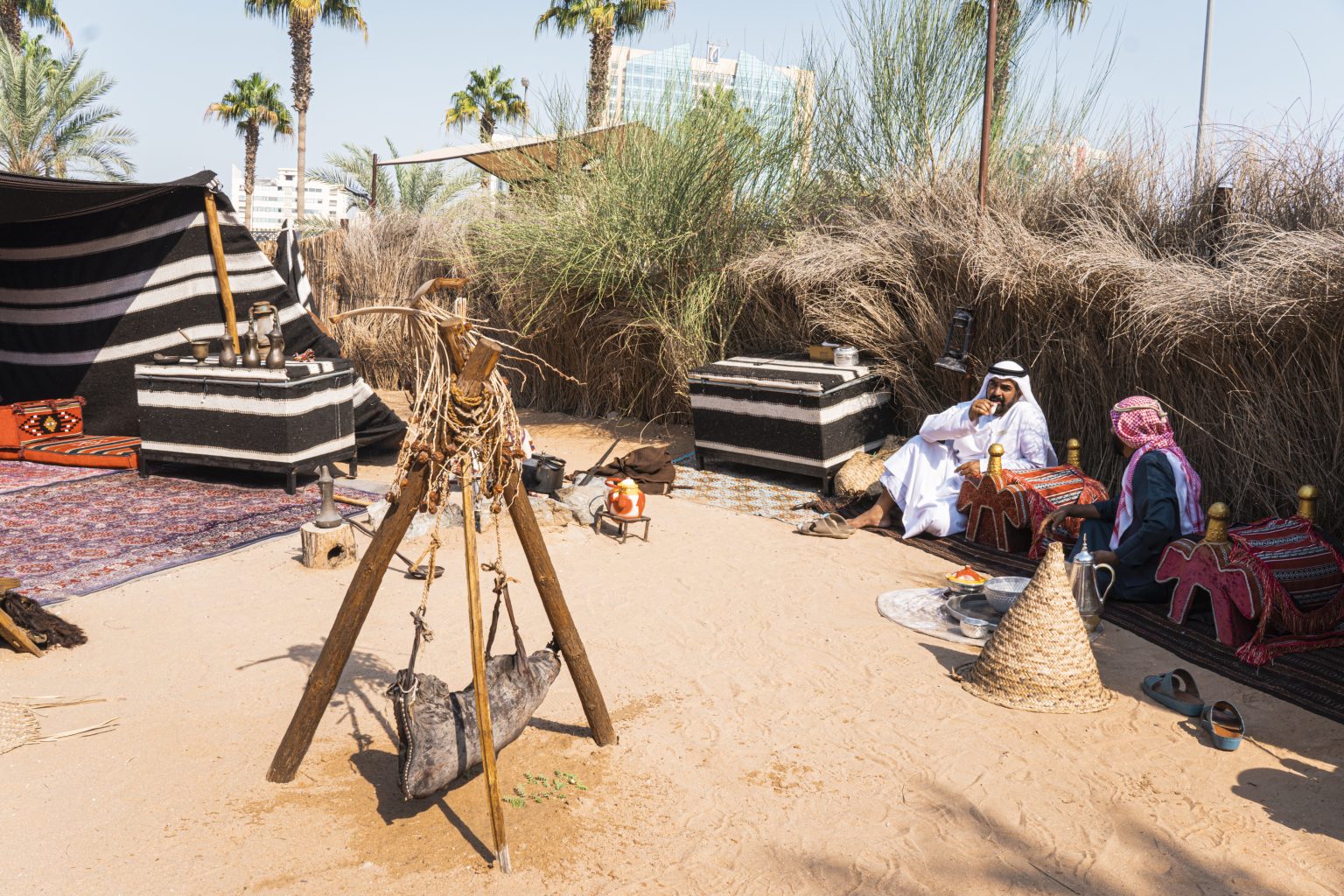
Long before modern highways and city skylines transformed the United Arab Emirates, desert communities developed ways of life shaped by scarce water, seasonal movement and close knowledge of the land. Their heritage included camel husbandry, falconry, oral poetry, traditional crafts and a strong culture of hospitality.
- Who Are the Bedouins of the UAE?
- Camel Culture and Desert Life Today
- Falconry: A Living Tradition of the Desert
- Poetry, Music and Oral Traditions
- Bedouin Hospitality and the Arabic Coffee Tradition
- Traditional Clothing and Emirati Craftsmanship
- Where to Experience Bedouin Heritage in the UAE
- Al Marmoom, Dubai
- Liwa Oasis and the Al Dhafra Region
- Mleiha, Sharjah
- Al Ain and Its Cultural Heritage
- Abu Dhabi’s Heritage Attractions
- Festivals Celebrating Emirati Heritage
- A Three-Day Emirati Heritage Journey
- Day 1: Discover Emirati Heritage in Dubai
- Day 2: Travel to Liwa Oasis
- Day 3: Explore the Liwa Landscape and Local Heritage
- Responsible Cultural Travel in the UAE
- Why Bedouin Heritage Still Matters in the UAE
Bedouin culture in the UAE remains an important part of Emirati heritage, even as lifestyles have changed across the country. From the dunes of Liwa to heritage experiences near Dubai and the historic oasis of Al Ain, visitors can discover traditions that connect the modern Emirates with its desert past. This UAE Bedouin culture guide explores traditional life, camel heritage, poetry, hospitality and places where travelers can learn about Emirati customs respectfully.
Who Are the Bedouins of the UAE?
The word Bedouin derives from the Arabic badawi, a term associated with people of the desert. Historically, Bedouin communities lived across large areas of the Arabian Peninsula, adapting their livelihoods to local conditions and the availability of grazing, water and trade opportunities.
In the territory that is now the UAE, different communities lived in the interior deserts, around oases and along the coast. Some families moved seasonally with livestock, while others combined pastoral activities with farming, fishing, trade or settlement in established villages and towns.
Bedouin heritage is not identical across every Emirati family or region. Customs, livelihoods and traditions varied according to geography, community history and access to resources.
Several values are closely associated with traditional Emirati social life:
- Hospitality: Welcoming guests and sharing refreshments are important expressions of generosity.
- Family and community ties: Extended family relationships and social responsibilities have traditionally played an important role.
- Adaptability: Knowledge of the environment helped people manage heat, scarce water and changing grazing conditions.
- Knowledge of the land: Understanding routes, weather, plants and animal behavior supported travel and pastoral life.
- Oral tradition: Poetry, storytelling and spoken knowledge helped preserve history, experience and community identity.
These traditions continue to influence cultural events, social gatherings and heritage programs, although modern Emirati life encompasses a wide range of lifestyles and experiences.
Camel Culture and Desert Life Today
The camel has long been important to life in the Arabian desert. It provided transport across difficult terrain and supplied milk, while camel ownership could also carry economic and social significance.
Today, camels remain prominent in Emirati heritage, particularly through racing, breeding, festivals and organized desert experiences.
Camel Racing in the UAE
Camel racing is a major traditional sport in the Emirates. Modern races use organized tracks and advanced timing systems, while breeding and racing communities continue to maintain knowledge associated with camel care and performance.
Visitors may be able to watch races at venues such as:
- Al Marmoom Camel Race Track near Dubai: A major venue for camel racing and related heritage activities.
- Al Wathba near Abu Dhabi: Known for its camel-racing facilities and events.
- Liwa in the Al Dhafra Region: A destination where camel heritage forms part of wider desert festivals and traditional competitions.
Race schedules vary by season and venue, so check the current calendar before planning a visit.
Camel Festivals and Breeding Traditions
Camel festivals bring together owners, breeders, visitors and cultural organizations. Depending on the event, activities may include racing, beauty contests, exhibitions and competitions celebrating the camel’s place in Emirati heritage.
Camel beauty contests focus on selected physical characteristics and lineage. They are part of a wider cultural tradition surrounding camel breeding and ownership.
Camel milk is also associated with the region’s food heritage. Visitors may encounter it at cultural experiences or local food outlets, but availability varies by location and provider.
Falconry: A Living Tradition of the Desert
Falconry has a long history in the Arabian Peninsula. Before modern transport and food supply systems, trained falcons helped hunters pursue wild quarry. The practice required knowledge of birds, prey, weather and the surrounding landscape.
Today, falconry is both a cultural tradition and a specialized activity involving training, handling and caring for birds of prey. It is recognized on UNESCO’s Representative List of the Intangible Cultural Heritage of Humanity, reflecting its transmission across generations in several countries, including the UAE.
Visitors may learn about falconry through:
- Falconry demonstrations: Some desert experiences introduce guests to trained falcons and explain traditional equipment.
- Specialist falconry facilities: Programs vary, so check visitor access and booking arrangements before travelling.
- Cultural exhibitions: Heritage festivals and events sometimes include displays about falconry and other traditional practices.
- Guided educational sessions: Experienced handlers can explain the birds’ care, training and role in regional history.
Falconry is more than a performance. Responsible experiences should prioritize the birds’ welfare and provide accurate information about the skills involved.
Poetry, Music and Oral Traditions
Spoken poetry has been an important way of expressing identity, preserving memories and communicating ideas in Emirati culture. Poetry could accompany journeys, celebrations and gatherings, allowing words and melodies to carry knowledge between generations.
Nabati Poetry and Al-Taghrooda
Nabati poetry is a form of vernacular Arabic poetry associated with the Arabian Peninsula. It addresses a wide range of subjects, including love, community, history, praise and daily life.
One related tradition is Al-Taghrooda, a form of chanted Bedouin poetry associated with the UAE and Oman. Historically, it could be performed during camel journeys and other activities, with verses exchanged between participants.
Another Emirati poetic tradition is Al-Azi, a performance involving praise, pride and fortitude. These forms demonstrate how poetry can function as both artistic expression and shared cultural memory.
Traditional Music and Performance
Emirati heritage includes several forms of music and performance, with practices differing by community and occasion.
Visitors may encounter:
- Al-Ayyala: A traditional group performance associated with the UAE and Oman, involving coordinated movement, rhythmic drumming and chanting.
- Al-Razfa: A traditional Emirati performance combining poetry, rhythmic movement and music.
- Traditional instruments: Instruments and musical arrangements vary between performances and regional traditions.
The rababa and oud are associated with wider regional musical traditions, but they should not be presented as instruments used uniformly in every Bedouin gathering.
Festivals and heritage centers can provide opportunities to see these performances in context, particularly when guides explain their meaning rather than presenting them only as entertainment.
Bedouin Hospitality and the Arabic Coffee Tradition
Hospitality is a central theme in Emirati cultural heritage. Offering refreshments to visitors expresses welcome and generosity, and the preparation and serving of Arabic coffee follow established social customs.
Arabic coffee, commonly called gahwa in Emirati Arabic, is traditionally prepared with ingredients such as cardamom and may include saffron. It is served from a dallah, a traditional coffee pot, into small handleless cups.
Dates are commonly offered alongside coffee, reflecting their longstanding importance in the region’s food culture.
Understanding Coffee Etiquette
When participating in a traditional coffee gathering, visitors can observe several customs:
- The host or server generally offers coffee to the most senior or important guest first.
- The server typically holds the dallah in the left hand and offers the cup with the right.
- Guests commonly receive and return the cup using the right hand.
- Coffee is usually poured in a small amount, allowing it to be refilled.
- One to three cups are customary in many settings. A gentle shake of the cup can signal that the guest has finished.
These practices are associated with Emirati hospitality, although details may vary between households and occasions. Visitors should follow their host’s guidance rather than assuming every gathering follows exactly the same routine.
Traditional Clothing and Emirati Craftsmanship
Traditional clothing in the UAE reflects the region’s climate, cultural preferences and social customs. Garments are often designed to provide comfort in hot conditions while maintaining a distinctive local style.
Traditional Dress
Common examples include:
- Kandura: A long garment traditionally worn by Emirati men.
- Ghutra: A head covering commonly worn by men, often secured with an agal.
- Abaya: A loose outer garment worn by many Emirati women.
- Embroidered garments and accessories: Styles vary according to personal preference, occasion and family tradition.
Traditional dress is not exclusive to Bedouin communities, and contemporary Emirati clothing reflects a range of styles and individual choices.
Crafts and Textiles
Handicrafts preserve skills that have been passed between generations. Traditional practices include weaving, embroidery, palm-leaf work, metalwork and the making of objects used in daily life.
Examples include:
- Al Talli: A traditional decorative embroidery technique used to embellish garments and textiles.
- Palm-leaf weaving: A craft using date-palm fibers to make practical household items and other objects.
- Traditional textiles: Materials and techniques vary according to the intended use and regional practice.
- Silver jewelry and decorative objects: Available in heritage markets and specialist shops, with designs varying by maker and tradition.
Visitors interested in authentic crafts can explore cultural markets, artisan workshops and heritage centers. Ask about the maker and production method, especially when buying products described as handmade or traditionally crafted.
Where to Experience Bedouin Heritage in the UAE
Al Marmoom, Dubai
The Al Marmoom Desert Conservation Reserve offers opportunities to explore desert landscapes and learn about Emirati heritage through organized experiences. Some operators provide camel caravans, traditional food, falconry demonstrations and storytelling.
The nearby Al Marmoom Heritage Village is associated with heritage events and camel racing, including the Al Marmoom Heritage Festival.
Before booking, confirm which activities are available on your chosen date. A cultural package may be a curated visitor experience rather than a direct representation of everyday life in a traditional Bedouin household.
Best for: Travelers staying in Dubai who want an accessible introduction to desert heritage.
Liwa Oasis and the Al Dhafra Region
Liwa lies in the Al Dhafra Region of Abu Dhabi and is known for its oasis landscapes, date cultivation and large dunes. The region has deep connections with the history of settlement and life in the desert.
Visitors can explore:
- Liwa Oasis: An area of date-palm cultivation and settlements surrounded by arid landscapes.
- Liwa Date Festival: An event celebrating date cultivation, agricultural knowledge and Emirati heritage.
- Liwa International Festival: A seasonal event combining desert sports, cultural activities, exhibitions and traditional competitions.
- Moreeb Dune: A prominent dune associated with desert motorsports and the Liwa festival program.
Festival dates and activities change from year to year. Check the official event calendar before arranging accommodation or transport.
Best for: Travelers interested in desert landscapes, date-palm heritage and large cultural events.
Mleiha, Sharjah
The Mleiha Archaeological Centre introduces visitors to the archaeology and natural history of Sharjah’s interior. The surrounding landscape contains archaeological sites and desert terrain that help explain how people lived and travelled in the region over different periods.
Depending on the current program, visitors may be able to join guided excursions, explore archaeological displays or take part in outdoor activities.
Mleiha is particularly useful for understanding the longer history of human settlement in the UAE. However, archaeology and modern Bedouin culture are related but distinct subjects, so not every activity should be described as a direct experience of traditional Bedouin life.
Best for: History enthusiasts, families and travelers interested in archaeology and desert landscapes.
Al Ain and Its Cultural Heritage
Al Ain, in Abu Dhabi’s eastern region, is known for its oases, historic buildings and archaeological sites. The city’s cultural landscape includes the traditional relationship between settlement, agriculture and water management.
Places to consider include:
- Al Ain Oasis: A historic date-palm oasis with traditional irrigation systems.
- Al Jahili Fort: A landmark associated with the region’s history.
- Traditional markets: Places to explore local products, food and everyday commerce.
- Heritage and museum sites: Venues that interpret the history and culture of the region.
The Cultural Sites of Al Ain are inscribed on the UNESCO World Heritage List. The designation applies to specific cultural properties, rather than meaning that the entire city is a UNESCO-listed site.
Best for: Visitors seeking a broader understanding of Emirati history, oasis life and traditional architecture.
Abu Dhabi’s Heritage Attractions
In Abu Dhabi city, heritage attractions provide a way to learn about Emirati history without travelling deep into the desert.
Qasr Al Hosn is one of the city’s major historic landmarks. Its surrounding cultural venues and programs explore the development of Abu Dhabi, traditional crafts and social customs.
At heritage festivals, visitors may encounter demonstrations of coffee preparation, poetry, music, crafts and other traditional practices. Programs vary by event and season, so check the official calendar.
Best for: Travelers who want a cultural introduction to the UAE before visiting its desert regions.
Festivals Celebrating Emirati Heritage
Festivals provide opportunities to experience traditional skills, performances and community activities in a public setting. Some focus on particular aspects of heritage, while others combine cultural programming with sports and family entertainment.
Al Dhafra and Liwa Festivals
Events in the Al Dhafra Region may feature camel competitions, traditional crafts, poetry, agricultural exhibitions and desert sports.
The Liwa Date Festival focuses on date cultivation and the cultural and economic importance of the date palm. The Liwa International Festival combines desert activities, motorsports and heritage programming around the Liwa landscape.
Al Marmoom Heritage Festival
Dubai’s Al Marmoom Heritage Festival is associated with camel racing and displays of Emirati culture. Visitors may also find traditional products, local food and other heritage-related activities.
Al Hosn Festival
Held at the historic Al Hosn site in Abu Dhabi, the Al Hosn Festival celebrates the emirate’s heritage through cultural activities, crafts, performances and interpretation of historic places.
Festival names, dates and programs can change. Check official announcements before planning a trip around a particular event.
A Three-Day Emirati Heritage Journey
This itinerary combines desert experiences with historic and cultural attractions. It is a suggested route, not a fixed traditional journey, and activities should be booked according to current availability.
Day 1: Discover Emirati Heritage in Dubai
Begin with a visit to a heritage attraction in Dubai to learn about the city’s history and traditional life. In the afternoon, travel to an organized Al Marmoom desert experience if available.
A suitable program may include:
- An introduction to desert life and local customs.
- A camel experience with an operator that prioritizes animal welfare.
- A demonstration of falconry or traditional skills.
- Arabic coffee, dates and a regional meal.
Return to your accommodation in Dubai or stay at a camp if your booking includes an overnight experience.
Day 2: Travel to Liwa Oasis
Travel from Dubai toward Liwa in the Al Dhafra Region. Allow sufficient time for the journey and confirm accommodation before departure.
Depending on your dates, explore the oasis landscape, learn about date cultivation or attend a scheduled festival. If no event is taking place, a local guide can help arrange an introduction to the region’s heritage and desert environment.
Day 3: Explore the Liwa Landscape and Local Heritage
Spend the morning exploring suitable viewpoints and authorized routes around Liwa. Visit a heritage attraction or local market where available, and ask before photographing residents or entering private agricultural land.
Return to your next destination with sufficient daylight. If you plan to drive across dunes, use an experienced operator and appropriate safety arrangements rather than attempting an unfamiliar route independently.
This itinerary offers a balanced introduction to the UAE’s desert heritage while recognizing that cultural experiences depend on local schedules, access and community participation.
Responsible Cultural Travel in the UAE
Learning about Bedouin heritage requires respect for the people who maintain these traditions. A staged tourism experience can provide useful insight, but it should not be treated as a complete picture of every Emirati family or community.
Use these guidelines when visiting cultural sites or taking part in desert activities:
- Ask before taking photographs: Respect people who prefer not to be photographed.
- Dress appropriately: Follow local expectations at cultural and religious sites.
- Respect hosts and customs: Listen to explanations and follow guidance during gatherings.
- Support local craftspeople: Buy directly from makers or reputable heritage businesses when possible.
- Choose responsible animal experiences: Check that camels and falcons are handled by trained people and treated appropriately.
- Protect the desert: Stay on authorized routes and take all waste with you.
- Approach traditions with curiosity: Ask questions respectfully and avoid treating a single performance as representative of all Emirati culture.
Responsible cultural travel supports the continued transmission of heritage while recognizing that traditions evolve as communities respond to modern life.
Why Bedouin Heritage Still Matters in the UAE
The United Arab Emirates has changed dramatically over the past century, but its desert heritage remains visible in hospitality, poetry, camel traditions, falconry, crafts and public celebrations.
These traditions are not simply reminders of a distant past. They are part of a living cultural landscape, maintained through families, practitioners, cultural institutions and community events.
Exploring Bedouin culture in the UAE offers a way to understand how people adapted to desert conditions and how inherited knowledge continues to influence Emirati identity. Whether you visit Liwa’s oasis landscapes, attend a heritage festival or share Arabic coffee at a cultural gathering, approach the experience with respect and an awareness that no single visit can tell the whole story.