
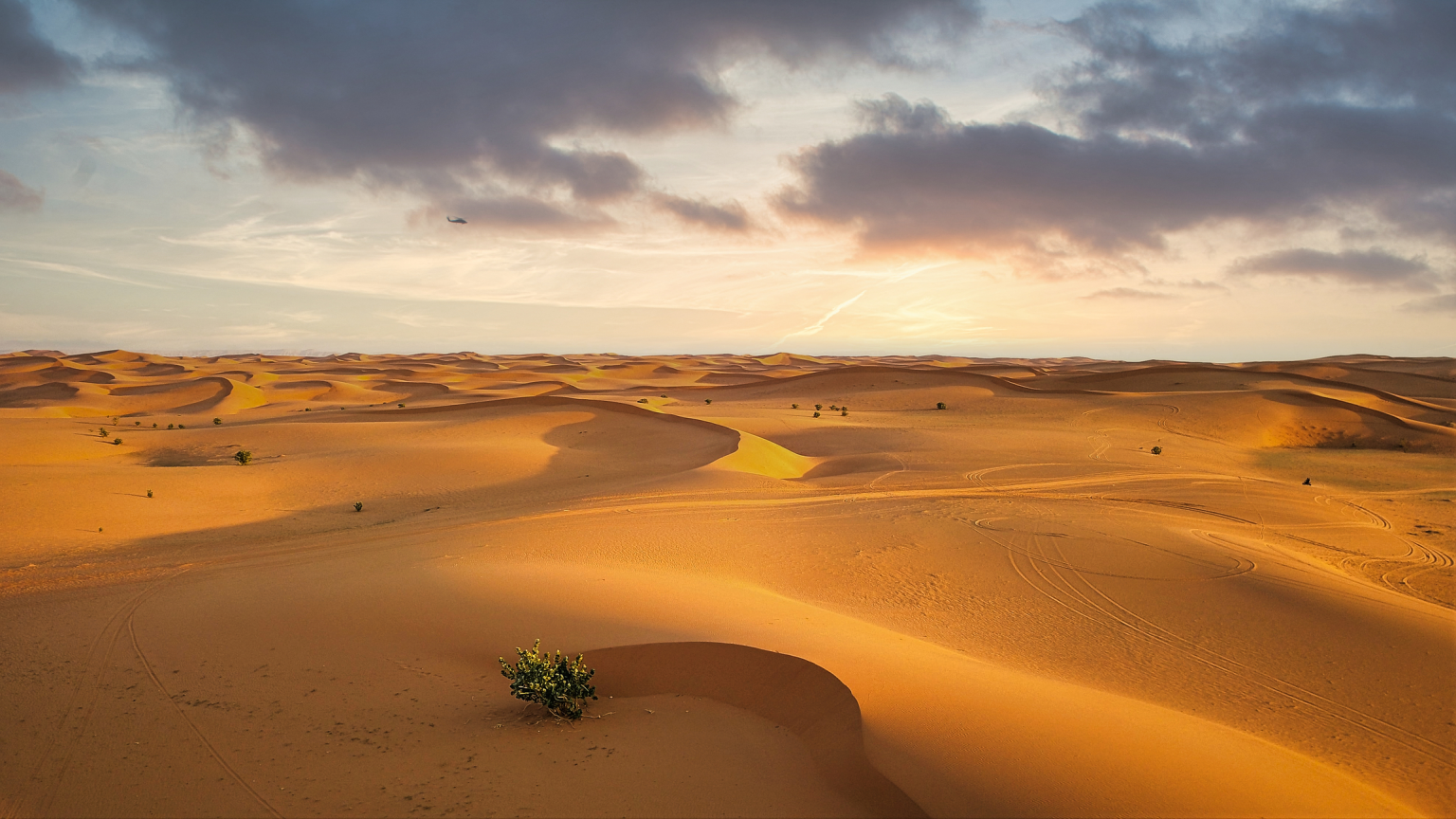
The Ad-Dahna Desert stretches across central and eastern Saudi Arabia, forming a long belt of red sand between some of the Arabian Peninsula’s largest desert regions. Often described as the link between the An-Nafud Desert and the Rub al Khali (Empty Quarter), Ad-Dahna is known for its distinctive crescent-shaped dunes and its position along the eastern edge of the Najd Plateau.
- Where Is the Ad-Dahna Desert Located?
- How to Reach the Ad-Dahna Desert
- Best Time to Visit the Ad-Dahna Desert
- Top Things to Do in the Ad-Dahna Desert
- 4×4 Dune Driving
- Desert Camping and Stargazing
- Sandboarding and Dune Bashing
- Photography and Filmmaking
- Exploring Ain Heet Cave and Al-Summan Plateau
- Suggested 2-Day Ad-Dahna Desert Itinerary
- Where to Stay Near the Ad-Dahna Desert
- Bedouin Heritage and Desert Traditions
- Practical Travel Tips
- Hidden Places Near Ad-Dahna
- Where Ad-Dahna Connects Saudi Arabia’s Deserts
For centuries, Bedouin communities, traders, and caravans crossed these sands as part of wider routes connecting settlements and desert regions. Today, Ad-Dahna attracts travelers looking for dune landscapes, desert camping, off-road driving, photography, and a closer look at the natural and cultural heritage of central Saudi Arabia.
Its main character comes from its geography: a long sandy corridor connecting northern and southern desert systems while passing close to important cities and historic routes.
Where Is the Ad-Dahna Desert Located?
The Ad-Dahna Desert lies in central and eastern Saudi Arabia, forming a natural corridor between two major desert regions:
- An-Nafud Desert to the north
- Rub al Khali (Empty Quarter) to the south
It runs along the eastern edge of the Najd Plateau, extending for more than 1,200 kilometers and reaching widths of up to 80 kilometers in some areas.
Nearby Major Cities
Several important cities and settlements provide access to different parts of the desert:
- Riyadh to the west
- Al-Ahsa and Hofuf to the east
- Al-Kharj and Haradh as access points for desert routes
Ad-Dahna is particularly recognizable for its long chains of crescent-shaped dunes, which create regular patterns across the landscape.
How to Reach the Ad-Dahna Desert
From Riyadh
Travel east from Riyadh along Route 40 toward Al-Ahsa. Depending on the exact destination within the Ad-Dahna belt, the drive to accessible dune areas can take around 2 to 3 hours. Guided desert excursions are also available from Riyadh.
From Al-Ahsa
The southern parts of Ad-Dahna around Haradh and the Al-Summan Plateau can be reached from Al-Ahsa by road. The distance is roughly 250 kilometers, depending on the route and destination.
From Qassim
The northern edge of Ad-Dahna approaches the Qassim region, where the desert connects with the southern part of the Nafud. This area is of particular interest to off-road travelers exploring routes between the major desert systems.
Best Time to Visit the Ad-Dahna Desert
Ad-Dahna has a typical Arabian desert climate, with very hot summers and considerably more comfortable conditions during the cooler months.
- October to April: Generally the most comfortable period for camping, photography, and outdoor activities
- May to September: Very hot, particularly during the middle of the day, with temperatures that can exceed 40°C
- Winter nights: Can become considerably cooler than daytime temperatures, making warm clothing useful for overnight camping
The period from November to March is generally the most suitable for extended outdoor activities, especially dune driving, camping, and photography.
Top Things to Do in the Ad-Dahna Desert
4×4 Dune Driving
The long dune formations of Ad-Dahna provide excellent terrain for experienced off-road drivers. Routes vary from relatively accessible desert tracks to more demanding sand sections that require proper equipment and driving skills.
Popular areas include:
- Eastern dune areas accessible from Riyadh
- Southern Ad-Dahna around Haradh
- Routes toward the Qassim-Nafud transition zone
Driving in deep sand should be undertaken with an appropriate 4×4 vehicle, recovery equipment, navigation tools, and sufficient experience.
Desert Camping and Stargazing
Camping is one of the most popular ways to experience Ad-Dahna, particularly during the cooler months. Away from urban areas, the desert can offer good conditions for observing the night sky.
A traditional-style desert camp may include:
- Rugs and cushions around a fire
- Arabic coffee and dates
- Grilled meals
- Evening gatherings and stargazing
Sandboarding and Dune Bashing
The longer slopes of Ad-Dahna’s dunes can be suitable for sandboarding, while organized desert excursions may combine dune driving with camping and other outdoor activities.
Winter weekends are particularly popular for these experiences.
Photography and Filmmaking
The red and orange tones of Ad-Dahna’s dunes change noticeably throughout the day. Early morning and late afternoon provide softer light and stronger contrasts across the dune ridges.
The desert is well suited to:
- Landscape photography
- Sunrise and sunset photography
- Aerial photography where permitted
- Film and video production
- Night-sky photography
Exploring Ain Heet Cave and Al-Summan Plateau
The wider landscape around Ad-Dahna also includes limestone formations and underground features that contrast with the surrounding sand dunes.
Two notable sites are:
- Ain Heet Cave, near Riyadh, known for its underground water
- Al-Summan Plateau, a limestone plateau containing caves and geological features
These sites provide a different perspective on the geology of the region beyond the better-known dune landscapes.
Suggested 2-Day Ad-Dahna Desert Itinerary
Day 1: From Riyadh to the Dunes
- Morning departure from Riyadh
- Visit to Ain Heet Cave
- Continue toward the Ad-Dahna dune areas
- Afternoon desert exploration
- Sunset at the dunes
- Traditional dinner and overnight camping
Day 2: Desert Exploration and Return
- Early morning walk among the dunes or sandboarding
- Breakfast with Arabic coffee
- Continue through the southern dune areas where suitable
- Return toward Riyadh in the afternoon
For travelers planning more extensive off-road exploration, additional time is advisable rather than trying to cover large sections of the desert in two days.
Where to Stay Near the Ad-Dahna Desert
Near Riyadh
Accommodation options around Riyadh and its eastern outskirts can be combined with a day trip into the desert:
- Nofa Wildlife Resort, offering a resort setting with access to desert and wildlife experiences
- Local desert camps and organized Bedouin-style camping experiences around accessible desert areas
Near Al-Ahsa
Travelers approaching from the east can combine Ad-Dahna with an Al-Ahsa stay:
- InterContinental Al Ahsa, suitable for travelers combining oasis and desert visits
- Seasonal or mobile desert camps in areas around Haradh, where available
For travelers seeking an overnight desert experience, camping provides the closest connection to the landscape and is best planned through an experienced local operator.
Bedouin Heritage and Desert Traditions
Ad-Dahna lies within a wider cultural landscape associated with Bedouin communities and historic movement across central Arabia. Tribes including Aniza, Mutair, and Qahtan have longstanding connections with the region and surrounding areas.
Desert traditions include:
- Nabati poetry
- Camel culture
- Falconry
- Arabic coffee and hospitality
- Oral traditions and storytelling
Hospitality is commonly expressed through dates and gahwa, while Nabati poetry has long been an important form of cultural expression across the Arabian Peninsula.
These traditions add an important human dimension to a landscape that was historically crossed by travelers, herders, and trading groups.
Practical Travel Tips
Traveling into Ad-Dahna requires preparation, particularly when leaving established roads and populated areas.
- Use a 4×4 vehicle for off-road travel.
- Carry sufficient drinking water. 3–5 liters per person per day is a useful minimum for desert travel, with more needed in hot weather or during strenuous activity.
- Tell a reliable person, local guide, or tour operator about your route before entering remote areas.
- Carry GPS navigation and offline maps, as dune landscapes can make route-finding difficult.
- Bring recovery equipment when driving in deep sand.
- Avoid traveling alone into remote areas.
- Follow local regulations and respect protected or environmentally sensitive areas.
- Remove waste and avoid damaging dunes, vegetation, caves, or geological formations.
Hidden Places Near Ad-Dahna
Several nearby locations can add variety to a desert trip:
- Ain Heet Cave: An underground geological site near Riyadh.
- Al-Summan Plateau: A limestone landscape with caves and other geological features.
- Al-Ahsa Oasis: A major cultural and agricultural landscape that can be combined with a visit to eastern Ad-Dahna.
- Haradh dune fields: An option for travelers exploring the southern part of the Ad-Dahna belt.
- Qassim-Nafud routes: Desert routes connecting the northern Ad-Dahna area with the wider Nafud region.
Where Ad-Dahna Connects Saudi Arabia’s Deserts
Ad-Dahna is best understood through its position within Saudi Arabia’s larger desert system. Its long band of red dunes connects the An-Nafud in the north with the Rub al Khali in the south, while its eastern edge runs along the Najd Plateau.
For visitors, this geography translates into a varied desert experience: red dunes, open sand routes, camping areas, limestone landscapes, nearby oases, and historic cultural traditions. Its accessibility from Riyadh and its connection to other major desert regions also make Ad-Dahna an important destination for travelers exploring Saudi Arabia beyond the better-known Empty Quarter.
Rather than being defined by a single landmark, Ad-Dahna stands out because of the role it plays in the Arabian Peninsula’s desert landscape: a long corridor of dunes linking northern and southern deserts and offering a practical route into one of Saudi Arabia’s most distinctive sandy environments.